How did mechanical parking spaces become white elephants?
For new drivers, one of the most frustrating parking scenarios is parallel parking, and the other is undoubtedly the mechanical parking space.
For many new drivers, mechanical parking spaces are nothing short of a nightmare.
For example, the driver below forgot to pull the handbrake, causing the car to directly "dive" from the second floor.
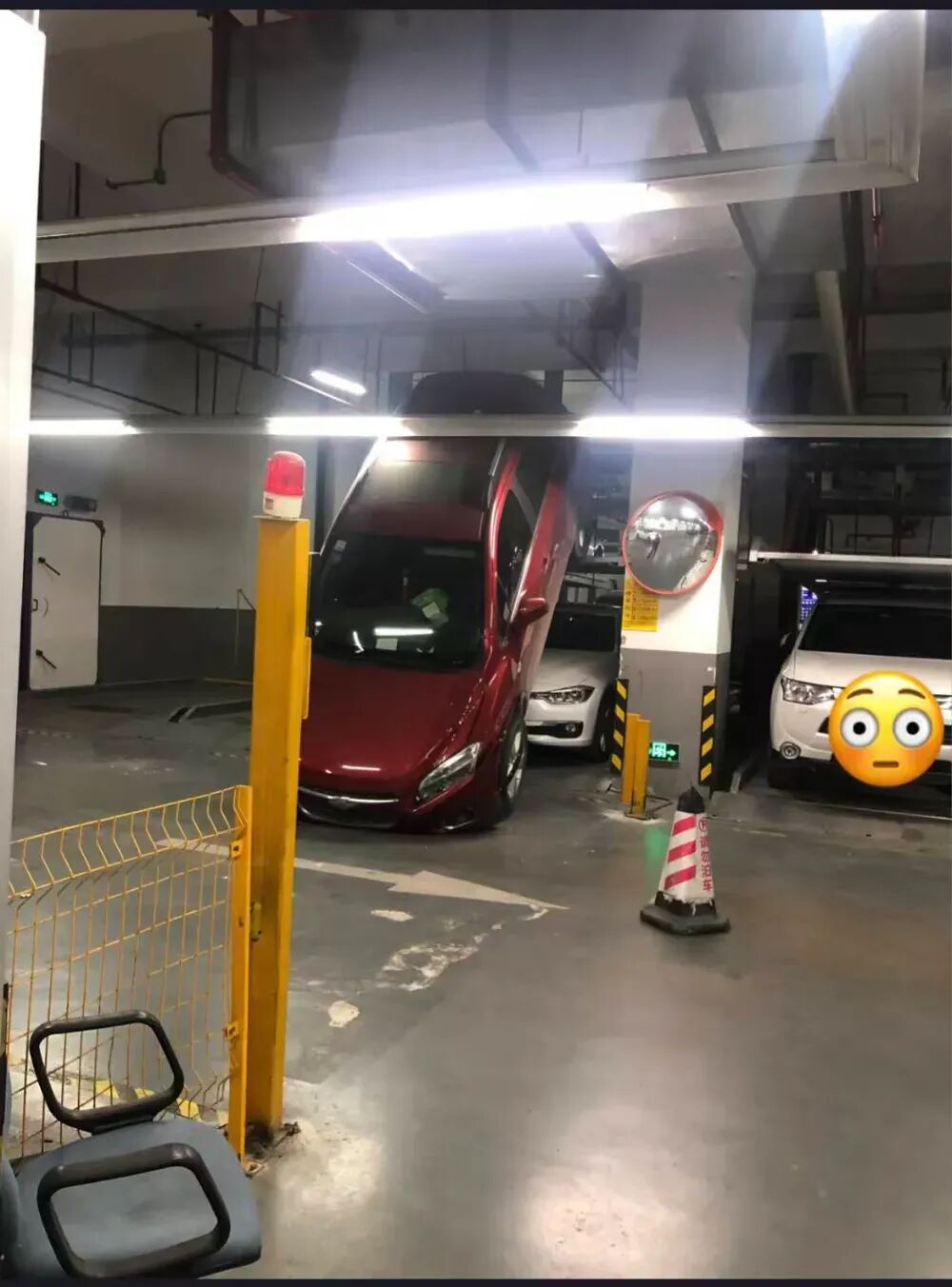
Many people may wonder:
How could there be such a poorly designed thing as a mechanical parking space?
01
First, solve the problem of no available parking spots
Speaking of mechanical parking spaces, all drivers have seen them, and they roughly look like the following.
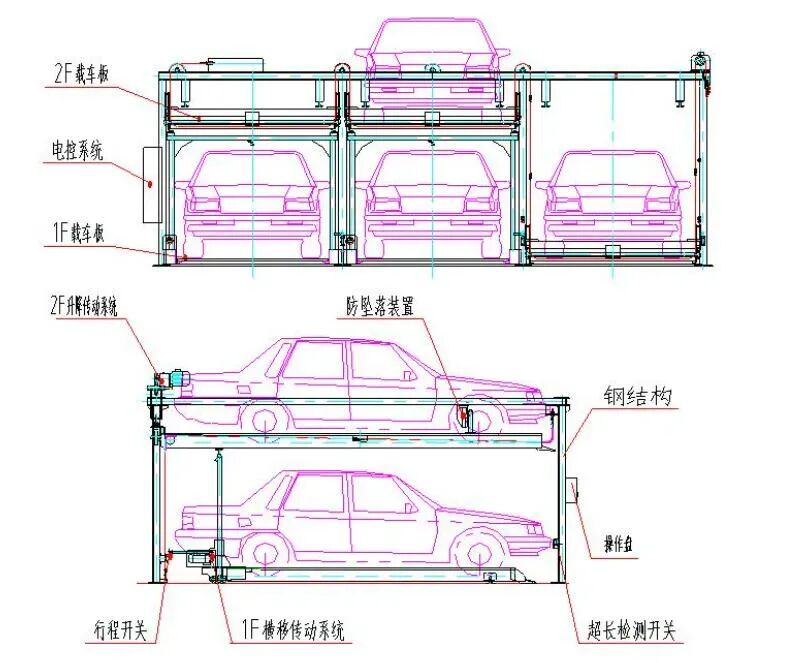
Schematic diagram of the structure of mechanical parking spaces
It is a parking equipment driven by mechanical transmission. Car owners drive their cars into the equipment, and through operations such as lifting and lowering, the cars are raised, lowered and moved around, helping us complete parking and car retrieval.
This facility first appeared in Chicago, the United States in the 1920s, and was first used by a hotel on West Washington Street.
It began to appear in our country in the 1980s.
In 1997, the state included three-dimensional parking garages in the scope of policy-encouraged development, and subsequently formulated relevant industry standards.
The key factor behind this is that private cars are becoming more and more popular, and the difficulty of parking has become a major problem.
By 2011, with the accelerated pace of urbanization and the increasing popularity of automobiles, the number of car ownership in our country officially exceeded the 100 million mark.
Especially in the first 10 years of this century, the national car ownership increased by 10 times.
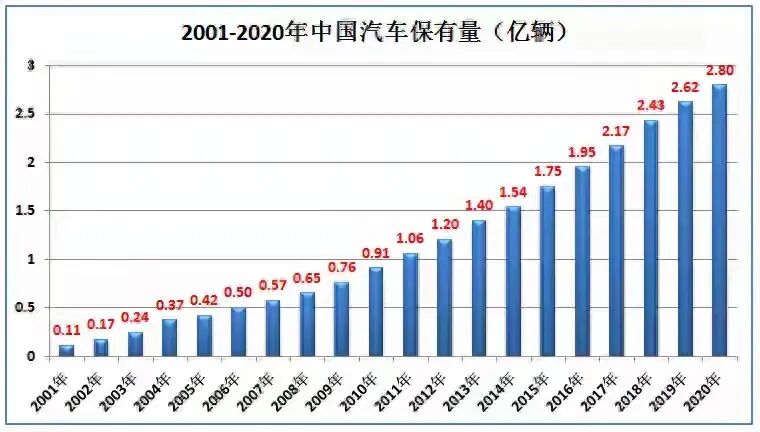
China's car ownership from 2001 to 2020
This growth rate exceeded the expectations of the vast majority of people.
In reality, the speed of urban construction planning lags behind the completion speed of parking spaces. The contradiction of parking spaces in many residential areas is prominent, and the ratio of car ownership to parking spaces is 5:1.
In the following years, the national car ownership grew towards 300 million, the problem of inconvenient parking became more serious, and the contradiction between supply and demand of parking spaces became increasingly prominent.
Previous survey data showed that half of the respondents thought parking was difficult.
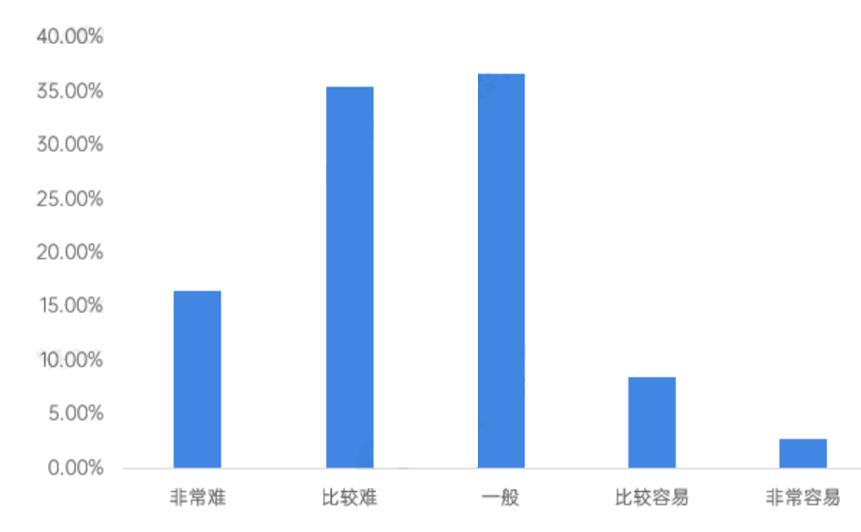
Survey data shows that half of the respondents think parking is difficult
Mechanical parking spaces have also developed under the support of relevant policies to solve the problem of insufficient parking spaces and difficult parking.
To this day, mechanical parking spaces are still very common in places with large pedestrian flow such as shopping malls and hospitals in old urban areas.
02
Not as easy to use as imagined
A significant advantage of mechanical parking spaces is space saving.
In the period of rapid real estate development in previous years, the maximum newly completed area reached more than 2 billion square meters, which also drove the construction of parking spaces.
For core urban areas where the land transfer fee is as high as tens of millions of yuan per mu, the core value of three-dimensional garages in saving land area makes developers and property management companies willing to invest in construction.
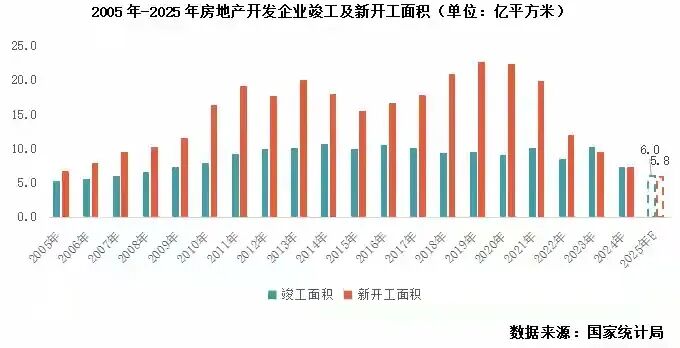
Completed and newly started construction area of real estate development enterprises from 2005 to 2025
As a result, a large number of investors flooded into this sector, and the number of such parking spaces showed explosive growth.
According to data, by the end of December 2024, the total number of berths of mechanical parking garages in China has reached 9.85 million, approaching the 10 million mark.
But the reality is very cruel.
Mechanical parking spaces have two fatal flaws: first, the maintenance cost is too high.
Mechanical parking spaces belong to special equipment in China. Three-dimensional garages require professional personnel to carry out regular maintenance, and must comply with safety specifications.
Xinhua News Agency once reported that "the construction cost of a single parking space for ordinary lifting and translation garages is about 10,000 to 20,000 yuan, and that of vertical circulation garages can reach 40,000 to 50,000 yuan, and the cost of dedicated personnel for maintenance and operation is not low."
Considering the reality, the operating parties including the property management are under great pressure, which leads to the fact that some parking spaces have not undergone equipment maintenance, renewal and upgrading for years.
For example, mechanical parking spaces in some areas have been unused for many years due to excessive operation and maintenance costs.
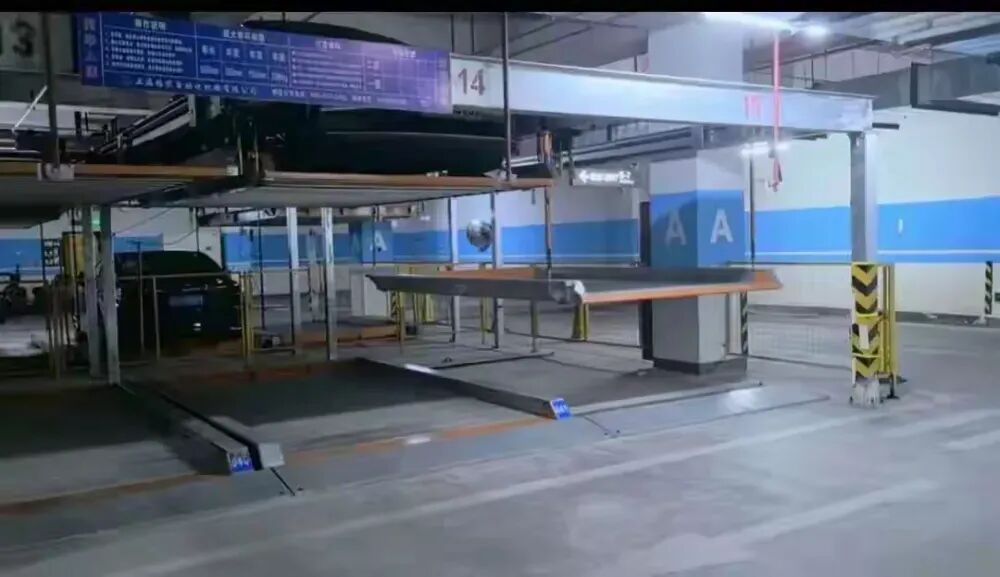
Empty mechanical parking spaces
Second, poor practicality and unsatisfactory experience.
Mechanical garages will have constant faults after being used for a long time, but the manufacturers have gone bankrupt, so there is no way to repair or upgrade them.
In addition, the space of mechanical parking spaces is too narrow, and a little carelessness will scratch the car body or tires.
The good three-dimensional garage has directly returned to a single layer, and even the bottom layer cannot be used.
Like the garage below, it occupies a large open space in front of the residential building. It is a two-story steel structure with a shed on the top, and the whole body is covered with rust spots. The console has long been a decoration. On the steel frame, there are no relevant words, not to mention the manufacturer and equipment specifications.
The whole garage looks like an empty frame, and only the parking space on the ground floor can be used to park cars.
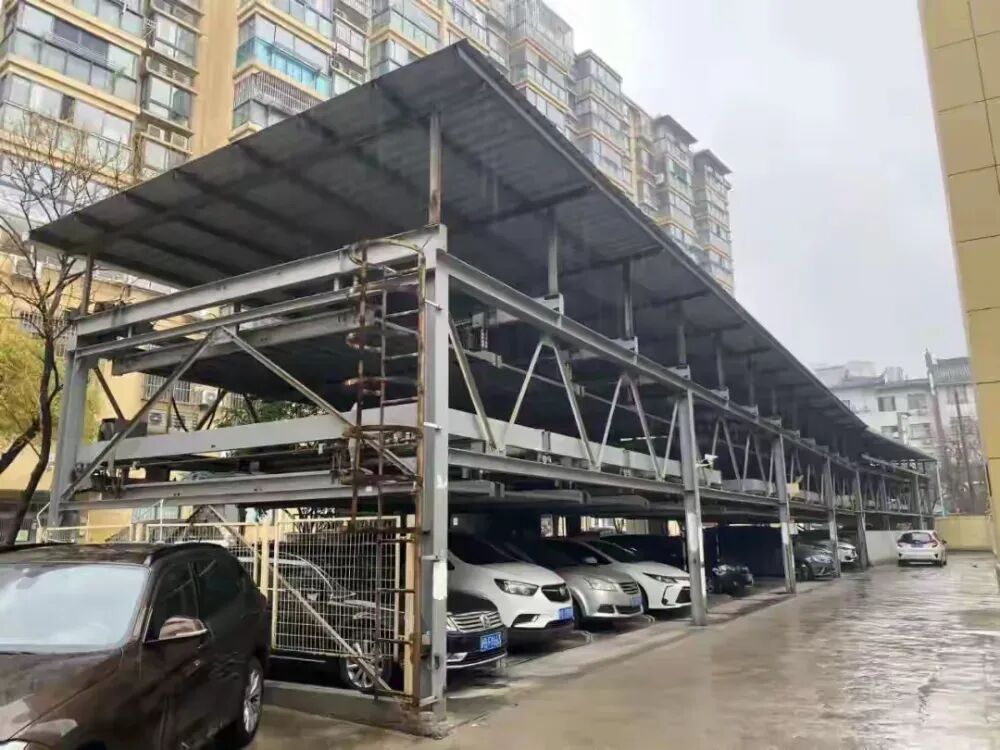
Mechanical parking spaces
Moreover, when parking, you have to align carefully to reverse the car in. Residents all complain that this mechanical garage is a complete chicken rib that "tasteless to eat but a pity to discard". It occupies such a large area but does not add many extra parking spaces. It is really better to demolish it directly.
03
Cannot keep up with the era of new energy vehicles
What is more serious is that it is disconnected from the demand of new energy vehicles.
Mechanical parking spaces themselves have more and more problems, but now they are facing a new situation: the explosive growth of new energy vehicles is disconnected from the design standards of traditional three-dimensional garages.
To put it bluntly, the party responsible for the design of mechanical parking spaces and even the entire industry have lagged behind in adapting to the changes of the times, which may lead to insufficient specifications of mechanical parking spaces.
Most of the design standards for mechanical parking spaces refer to fuel vehicles.
But in fact, even for fuel vehicles, parking in these spaces is a great test of driving skills, and the narrow spacing is easy to cause scratches on the wheel hub and rearview mirror of the car.
If it is a larger SUV, car owners are generally unwilling to operate it by themselves at the risk of collision, and the lifting process is also very troublesome.
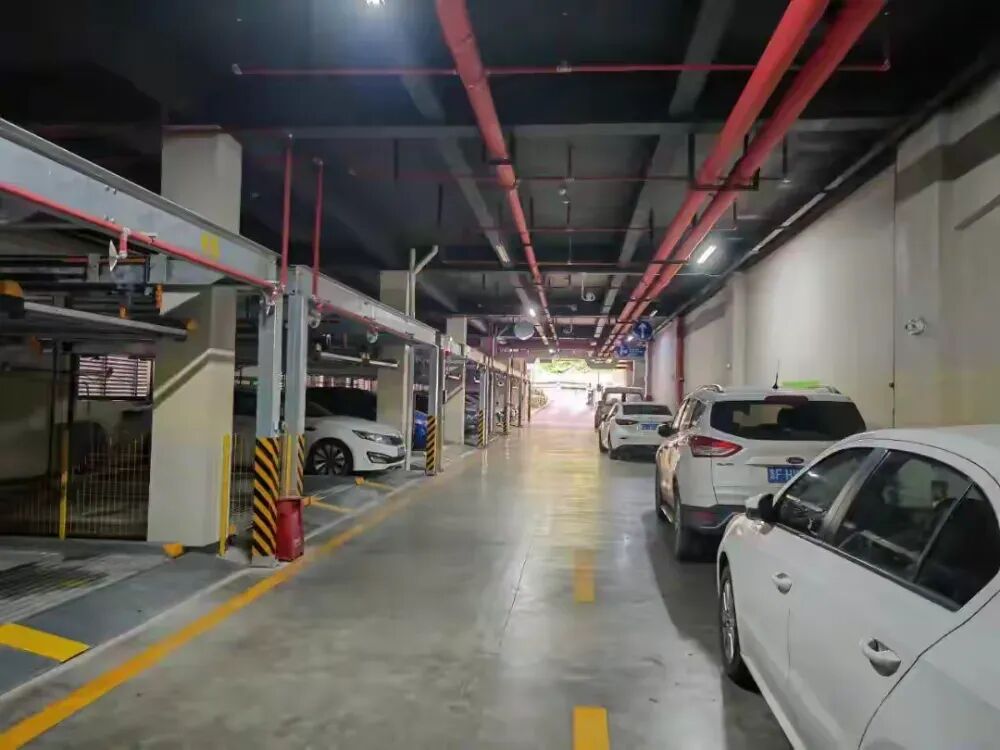
Drivers who are unwilling to park in mechanical parking spaces choose to park their cars at the intersection next to them
This situation where you can neither go up nor down, neither enter nor exit, is unacceptable to anyone.
What is more serious is the problem of new energy vehicles.
The penetration rate of new energy vehicles in our country exceeds 50%, but the vast majority of three-dimensional garages still follow the "Code for Design of Garage Buildings" issued in 2015, which takes traditional fuel vehicles as the design standard. At that time, the code stipulated that the length limit of medium-sized vehicles was 4.8 meters, the width was 1.8 meters, and the height limit was 2 meters. However, the common medium and large new energy vehicles today generally have a width close to 2 meters, far exceeding the traditional standard.
Moreover, new car-making forces are making cars larger and larger, and there are more and more "large cars" with a length of more than 5 meters. Large five-seat and large six-seat family models are selling well.
Although not all car owners buy large and medium-sized cars, and not all mechanical parking spaces are used for new energy vehicles, for mechanical parking spaces that are originally positioned as a supplement to parking spaces, this will definitely reduce part of their customer base.
Because for car owners, such adaptation gap means real trouble. Assuming that parking once is full of anxiety, they would rather circle around to find a flat parking space than use the three-dimensional parking space.
The size and load-bearing restrictions of traditional mechanical parking spaces have been difficult to meet the needs of new energy vehicles now. The mismatch between supply and demand leads to a large number of parking spaces being left unused. After the standards become outdated, the insufficient design size of the parking spaces, coupled with the aging of equipment, makes the old mechanical parking spaces face "size anxiety".
Up to now, under the influence of many factors, mechanical parking spaces were once as popular as they are now rejected.
Let's look at a set of data first. According to the data from the China Heavy Machinery Industry Association, at present, nearly 40% of the mechanical parking spaces on average are not utilized, and the idle rate in some places even exceeds 60%. After the completion of construction, the number of people and cars that use the parking spaces has decreased, resulting in a waste of more than 1.2 million berth resources every year.
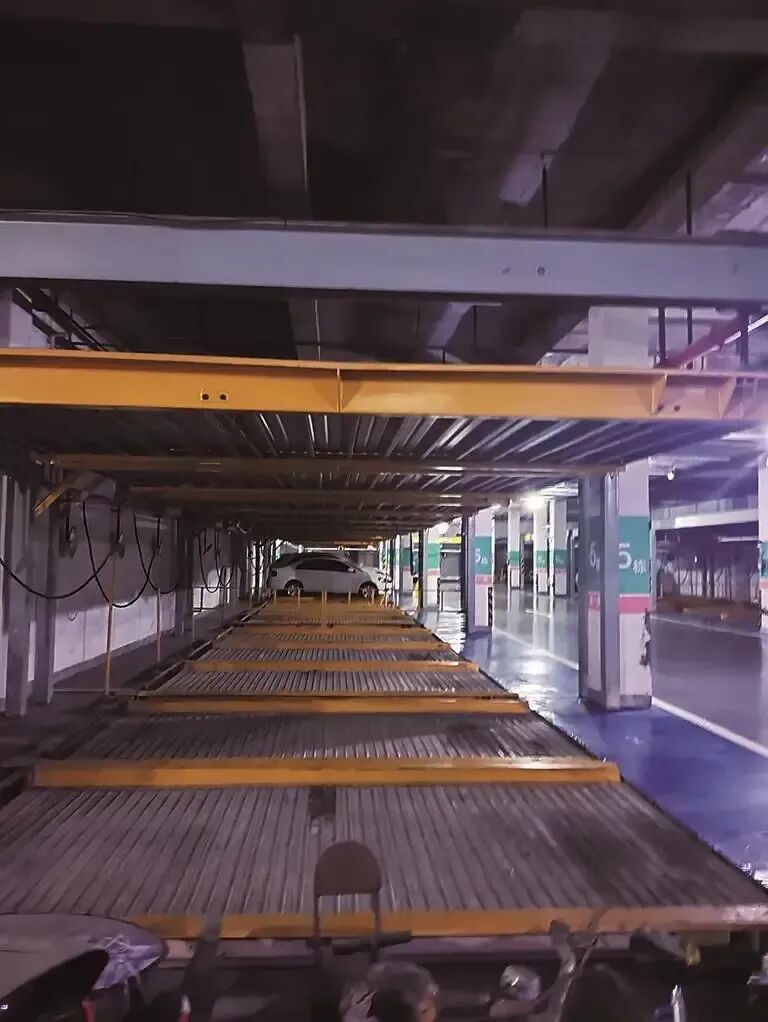
Idle mechanical parking spaces
This leads to a more critical problem: the upstream and downstream of an industry are always closely related. Today, with the faster and faster iteration of automobiles, the upstream usually considers market demand when doing product definition and model design. On the contrary, the practitioners in the downstream parking space industry lack keen insight and judgment on the market.
04
Do mechanical parking spaces still have a future?
Now, the market size of mechanical parking spaces is on the decline.
According to the data of "2024 China Parking Industry Development White Paper", since 2020, the annual total sales of mechanical parking equipment and the number of newly added berths have been declining year after year, and the number of newly added berths in 2024 is less than half of that in 2020.
People are reluctant to invest too many resources in mechanical parking spaces.
In the era when a large number of mechanical parking spaces are left idle, how to revitalize the old parking spaces and how to build new ones has become the key.
In fact, the idle three-dimensional garages are not worthless. The key to getting rid of the dilemma is to make the facilities adapt to the demand and make the resources circulate efficiently. This involves two problems: how to carry out transformation and upgrading, and what scheme should be used for efficient resource utilization.
Regarding the first point, it is essentially a governance problem.
In accordance with the relevant provisions such as the "Regulations on Property Management", the demolition or transformation of mechanical parking spaces should be voted and approved by a certain proportion of owners. If the owners themselves cannot reach a good consensus, the developers probably will not intervene.
After all, the idle dilemma of three-dimensional parking garages is fundamentally the adaptation problem of limited urban space resources in the change of supply and demand. Now new energy vehicles have become the mainstream of the market, and people's demand for parking has changed from "whether there is a parking space" to "whether it is easy to use". The traditional facility construction and management model has been difficult to keep up with the pace of the times.
In the summer of 2025, Beijing once transformed the three-dimensional parking building of Yindao Commercial Building, which provides a total of 104 parking spaces, 53 more than before. Moreover, the largest parking space is 5.3 meters long and 2.05 meters high, which can better adapt to some SUVs and large-seat models.
