Product Insight | A former OPPO veteran has developed a pair of AI travel glasses, whose crowdfunding has exceeded 400,000 US dollars.
Author | Qiu Xiaofen
Editor | Yuan Silai
In the past few years, AI glasses can be regarded as one of the most volatile categories in the consumer electronics industry.
It initially advanced along the AR direction, with display, optical waveguide and spatial computing regarded as the only way to the next-generation computing platform, but weight, power consumption, cost and mass production difficulty soon formed practical constraints. After the rise of generative AI, glasses were packaged as a "portable Agent" and "all-weather perception entry", and even endowed with the imagination of replacing mobile phones.
Nowadays, several paths in the industry are still evolving at the same time. Meta has further launched Meta Ray-Ban Display with display and wristband interaction from non-display shooting-type smart glasses; Google also announced that smart glasses equipped with Gemini are scheduled to be launched in the fall of 2026.
For start-ups with limited resources, a more realistic question is: should they chase a pair of all-powerful general-purpose glasses, or first find a specific scenario that users are willing to pay for?
L'Atitude 52°N, a smart glasses brand under Shenzhen APOM Optical Technology Co., Ltd. (hereinafter referred to as APOM), has chosen a path that is not grand and even somewhat against the trend. They did not define the product as a "mobile phone worn on the face", but narrowed it down to a pair of AI smart sunglasses for travel and outdoor scenarios.
APOM was founded in 2024, and its core team is a group of senior mobile phone industry practitioners.
Gary, founder and CEO, has nearly 18 years of experience in the mobile phone industry. He started his career in Android R&D in the early years, and was engaged in mobile phone software and system framework R&D at HTC. After joining OnePlus in 2016, he switched from R&D to product and operation, and was later responsible for operating system-related businesses. After OnePlus was merged into OPPO, he was responsible for multi-brand software product planning and participated in strategic research in software, AI and other directions.
Zheng Xiaohua, co-founder and CTO of the company, once served as the head of the image R&D department of OnePlus mobile phones and OPPO flagship phones.
After years of immersion in the hardware track, APOM is well aware that the top priority for a start-up is to complete product verification. According to 36Kr, the first pair of glasses of L'Atitude 52°N is priced at $399 onwards, the total crowdfunding amount is close to 400,000 US dollars, and the annual stocking volume in 2026 is expected to be about 20,000 pairs, the products are mainly targeted at the European and American markets. At present, the company is opening a new round of financing.
This set of data means that APOM has obtained the first batch of paying users and begun to move from crowdfunding to small-scale commercialization. Next, they still need to prove: can a pair of travel AI glasses become a sustainable business?
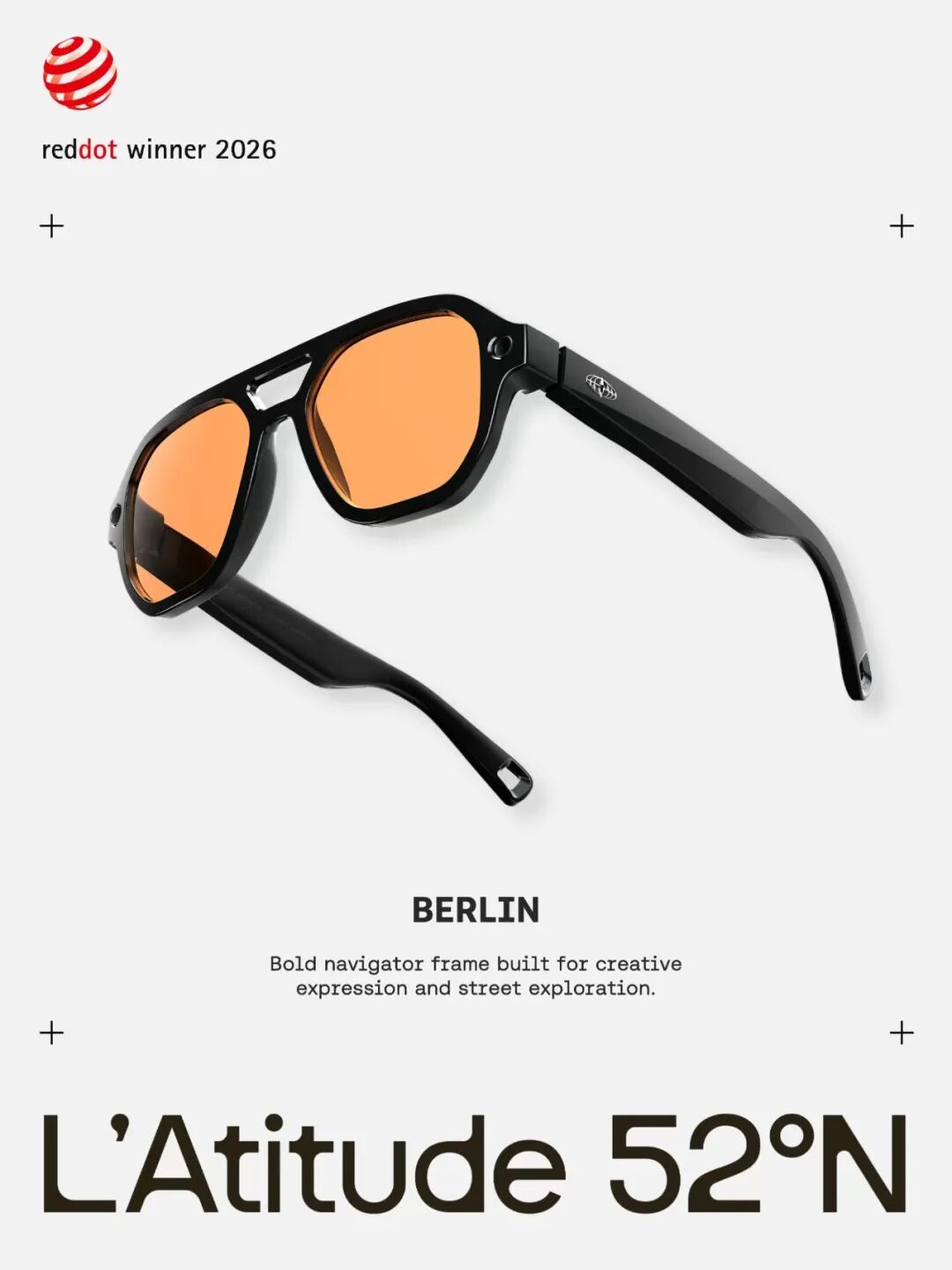
L'Atitude 52°N won the 2026 Red Dot Design Award
A group of mobile phone industry practitioners do not want to "create" a new category
Working on mobile phones for a long time makes Gary believe that AI and multimodal interaction will definitely change the human-computer relationship, but also makes him remain vigilant about "creating a brand new category".
The "cut-down principle" can be regarded as their product philosophy.
On L'Atitude 52°N, they cut off functions such as recording, meeting transcription, and voice notes, and the core experience focuses on first-person perspective imaging, real-time translation and AI tour guide.
At the same time, they focused a lot of energy on parts that are not easy to generate "imagination" in the eyes of the public, such as waterproofing, drop resistance, integrated injection molded front frame, glasses design and charging case.
Behind this set of choices lies a basic judgment of Gary, founder of APOM: smart glasses should first be an upgrade of traditional glasses, rather than a brand new category waiting for users to adapt to again.
Past experience has basically confirmed this point. Throughout the history of hardware, a large number of popular smart hardware often completes upgrades on existing categories. For example, TWS headphones "cut" the connecting wire, but did not change the basic way people listen to music. In his view, the same is true for smart glasses. New capabilities are certainly important, but every basic experience decline caused by adding functions - heavier, thicker, more fragile - will eventually be abandoned by users.
Since smart glasses are an upgrade of traditional glasses, their product logic cannot completely copy that of mobile phones.
Gary told 36Kr that mobile phones are general-purpose devices, and people will not change different mobile phones for travel, running or work; but glasses are closely related to face shape, dressing style and usage scenarios. For this reason, the end point of AI glasses may not be covered by a few general-purpose products like mobile phones. For start-ups, the opportunity is not necessarily to challenge Meta and Google head-on, but to first find a solid and specific usage scenario.
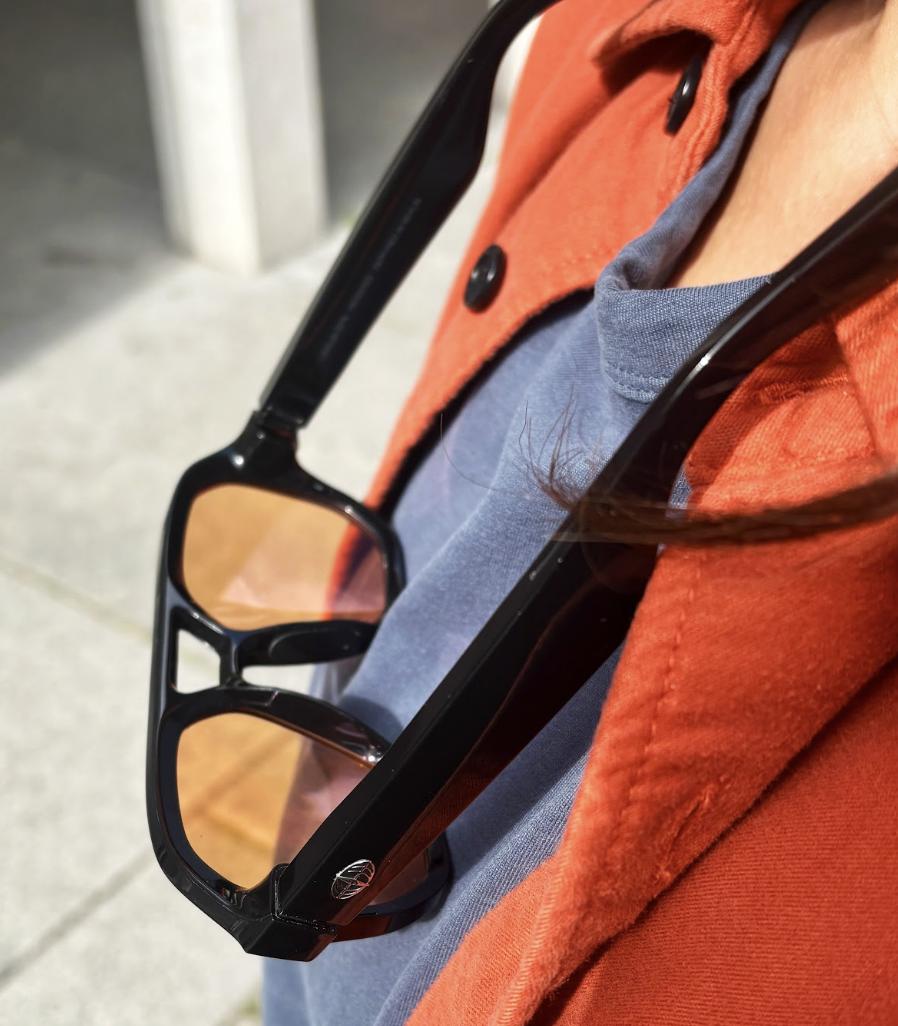
L'Atitude 52°N
The entry point chosen by APOM is exactly the travel market in Europe and the United States.
On the one hand, European and American users have more common habits of wearing sunglasses; on the other hand, travel is also a scenario where the convenience of smart glasses is easier to perceive - in the office, mobile phones, computers and power supplies are within easy reach, and glasses may not provide irreplaceable value; while in museums and outdoor routes in strange cities, users need to shoot and understand the things in front of them, and also need to communicate with people speaking different languages. Frequently taking out mobile phones will interrupt the experience.
Based on this judgment, APOM prioritizes the tour guide and translation functions required during travel.
Gary told 36Kr that he wants users to form the perception that "I can bring it when I go out to travel", rather than "this is a pair of AI glasses with many functions but none of them are excellent".
Design a closed-loop travel experience
In fact, taking photos, translation and AI Q&A are not unique functions of L'Atitude 52°N. What it really tries to build is a complete closed-loop travel experience.
The first is the camera. At present, the cameras on many AI glasses mainly undertake the function of multimodal perception, helping AI see the objects in front of users. But all along, image quality has never been the core of such products - limited by the space of the frame, it is difficult for smart glasses to accommodate larger sensors and complex optical structures.
But L'Atitude 52°N tries to go further.
It is not only equipped with a 12-megapixel camera module, but also adds a special AI image chip in addition to the conventional SoC and image processing solution. When the user presses the "shutter" on the temple, this independent chip can identify the scene and optimize the texture, edge, noise, color and light and shade relationship in real time.
Gary told 36Kr that this chip can improve the low-light images of buildings, street views and natural scenery that frequently appear during travel, and reduce noise, flicker and wind noise in videos. They are trying to migrate the computational photography experience accumulated in the mobile phone industry to smaller and more constrained glasses carriers.

(Left: Ray-Ban Meta; Right: L'Atitude 52°N)
In addition to imaging, L'Atitude 52°N extends the AI tour guide function around "what you see during travel".
When users see a work or building in a museum, historical block or city attraction, they can tap the temple lightly to let the glasses recognize the object in front of them, and then play the explanation through the open speaker.
In order to avoid general answers, they have also built a knowledge base for art works, historical buildings and cultural content, and organize answers through the RAG retrieval system and tour guide Agent, just like equipping the glasses with an AI tour guide.
This AI tour guide is named Goya, named after the famous Spanish painter Francisco Goya. It not only answers "what is this", but also explains why a work was born and why it is worth seeing.

L'Atitude 52°N
If AI tour guide solves how travelers understand the works, buildings and cities in front of them, real-time translation deals with more specific interpersonal communication after users enter a strange environment - when ordering in a restaurant, asking for directions on the street or checking in, language barriers are often not complicated, but they will directly affect whether a journey is smooth.
To this end, L'Atitude 52°N uses a five-microphone array to collect the voices of the wearer, the conversation partner and the environment, and independently develops human voice separation and environmental noise reduction algorithms to reduce the misidentification of irrelevant sounds in noisy environments.
After obtaining relatively clear voice, the system will also carry out real-time streaming processing through the newly self-developed audio compression algorithm combined with Google's latest Gemini 3.5 Live Translate voice model. Different from the previous translation mode, it will adjust the meaning of words and expressions according to the context, try to reduce the mechanical word-for-word conversion, and make the translation effect more in line with the actual conversation habits.
Imaging, tour guide and translation thus form a complete travel experience chain: users see the world in front of them and record it from the first-person perspective; when encountering strange things, they can let AI explain; when facing people who speak different languages, they complete the communication through the translation in their ears.
However, in order to further adapt the glasses to the outdoor tourism scenario, L'Atitude 52°N has made more interesting attempts. For example, they have added the intercom function to the small glasses lanyard, so that multiple companions can automatically form a network and keep in touch in an environment with weak mobile phone signal.

L'Atitude 52°N
It is also very easy to use. Just buckle the two ends of the lanyard into the ring at the end of the temple, and the built-in induction device will automatically wake up and complete the pairing with the glasses. The whole process does not need to turn on manually, nor does it need to search for the glasses device manually.
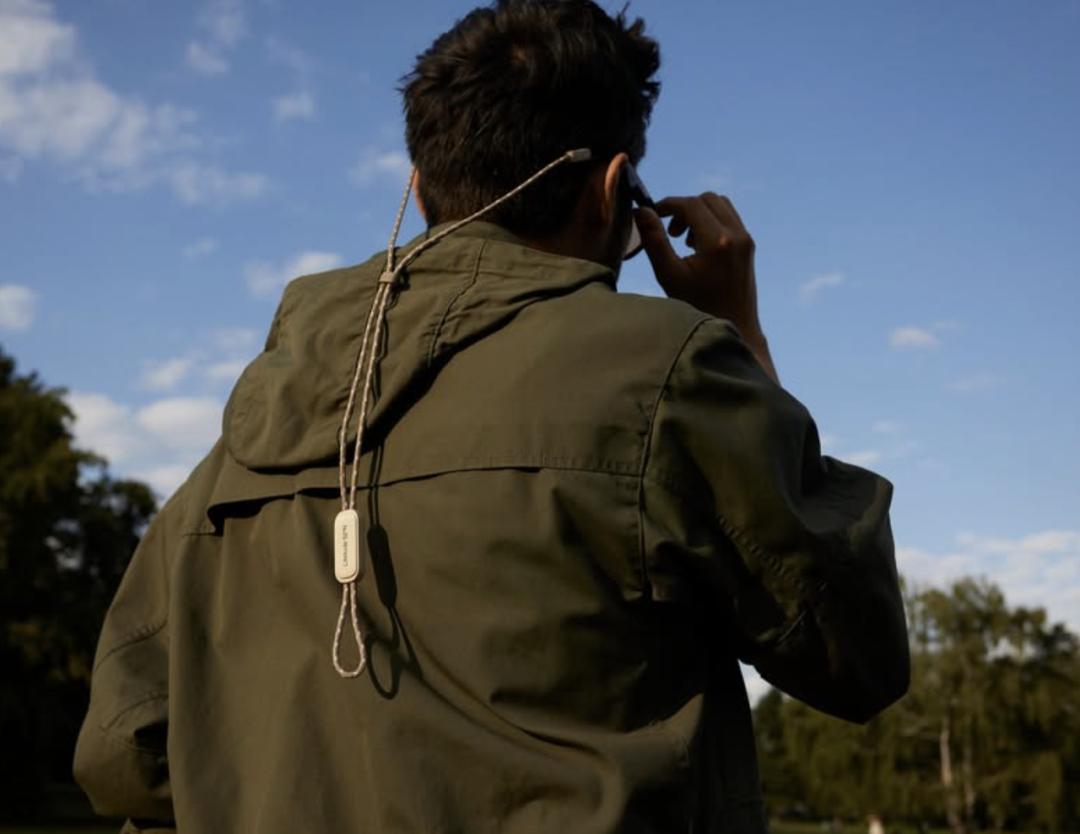
L'Atitude 52°N
In addition, they also incorporated reliability into the product definition. The glasses are designed with a drop resistance of about 1.8 meters and IP65 dustproof and waterproof. The front frame also adopts an integrated injection molding process, which greatly reduces splicing and potential water inlet points.
In fact, when these capabilities are taken out alone, they may not constitute an overwhelming barrier, but when independent AI image chips, vertical tour guide, translation and outdoor performance are combined into a closed loop around the travel scenario, the product gradually begins to form recognition.
Focus on small details
When a team with a mobile phone background wants to make professional AI glasses, Gary admits that they need to supplement the traditional glasses industry's understanding of style, face shape and wearing experience.
Gary went to Germany many times to look for practitioners with many years of experience in the traditional glasses industry. After many communications, the team gradually formed a cross-industry division of labor: the German and Italian teams are responsible for style, aesthetics and traditional wearing experience, and the Shenzhen team is responsible for electronic systems, structural engineering, software and mass production.
The judgment standards of different teams often collide. The European team thinks that some frames are too thick and the colors are not natural enough; the Shenzhen team must leave space for cameras, batteries and circuits. What both sides need to solve is not the abstract "good-looking or not", but how to achieve a balance between electronic devices, structural strength and frame proportion.
To this end, the team has successively produced nearly a hundred prototypes, and combined with the trial feedback from European users, finally selected three frame styles: Berlin, Antwerp and Milan.
Solving the shape and wearing experience of the frame only completes half of the design. Since L'Atitude 52°N is defined as a travel equipment, how users store it and charge it during the journey is also part of the product experience. Therefore, the design of L'Atitude 52°N does not stop at the frame, but extends to the glasses case.
In the past few decades, the glasses case has often been an easily overlooked packaging accessory. But smart glasses are different. It contains precision electronic components, needs to be charged, and is more resistant to extrusion, collision and moisture than ordinary glasses. Therefore, the charging case should not just be a container that is ignored after use. It not only needs to charge the glasses, but also provides reliable protection during moving, and should continue the design language of the product itself.
Therefore, L'Atitude 52°N designed a transparent shell - this is not only a modeling choice, but also undertakes the function of information display: users do not need to open the cover to see the charging status of the glasses; pick up the case and shake it, you can also know the remaining power in the case.
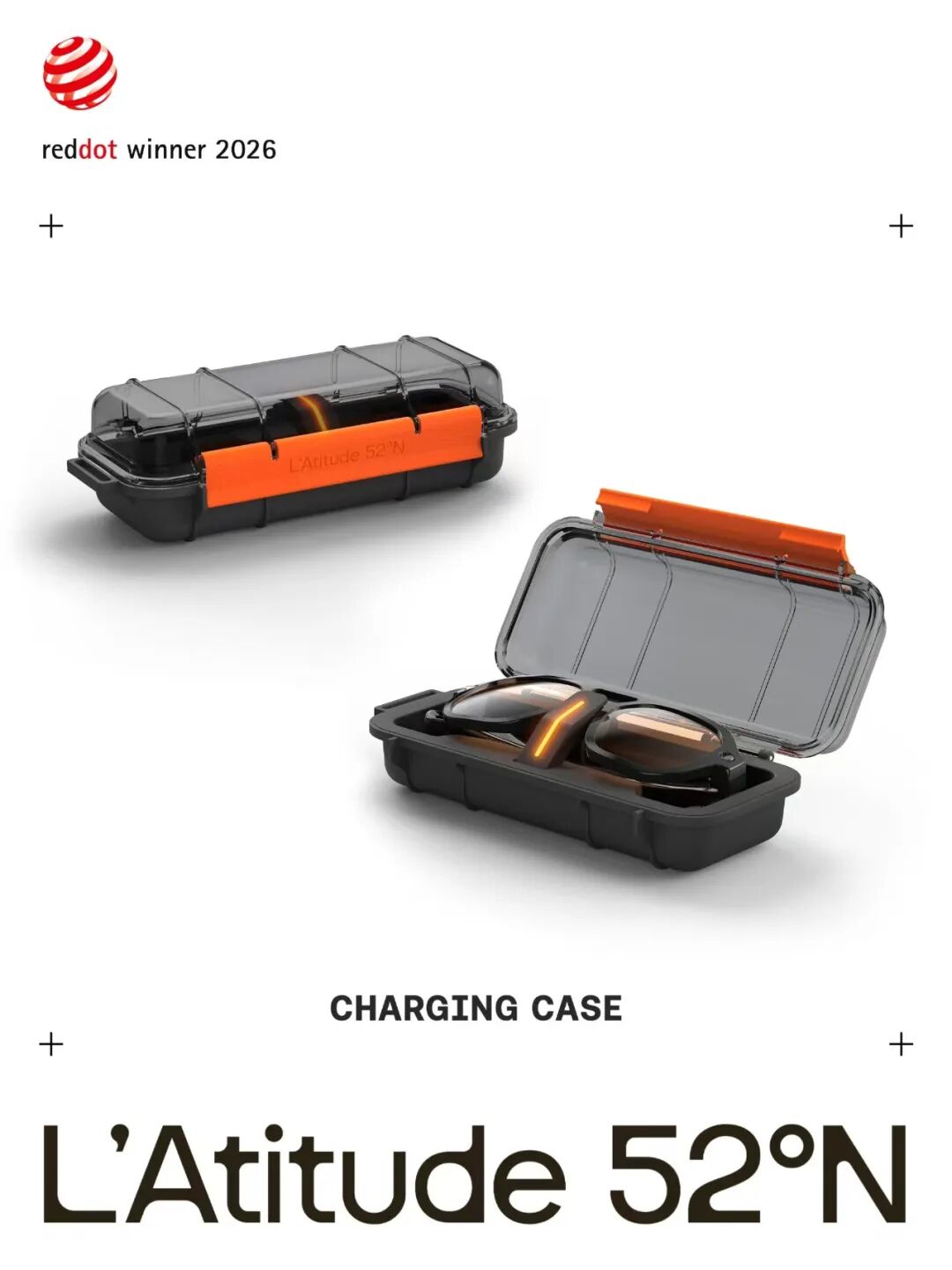
L'Atitude 52°N
Gary told 36Kr that its inspiration came from the bento box. Even if you don't