The move of using Claude to remove ads from Xiaomi TV has gone viral, and this generation of users has started to use AI to rectify the irregularities in the smart hardware sector.
Do young people still place TVs in their homes these days? Not to mention that video streaming platforms offer an enormous range of content, even if you keep a TV at home, what pops up first after turning it on may not be the program you want to watch, but a row of recommendations, advertisements and useless pre-installed applications, which is extremely off-putting.
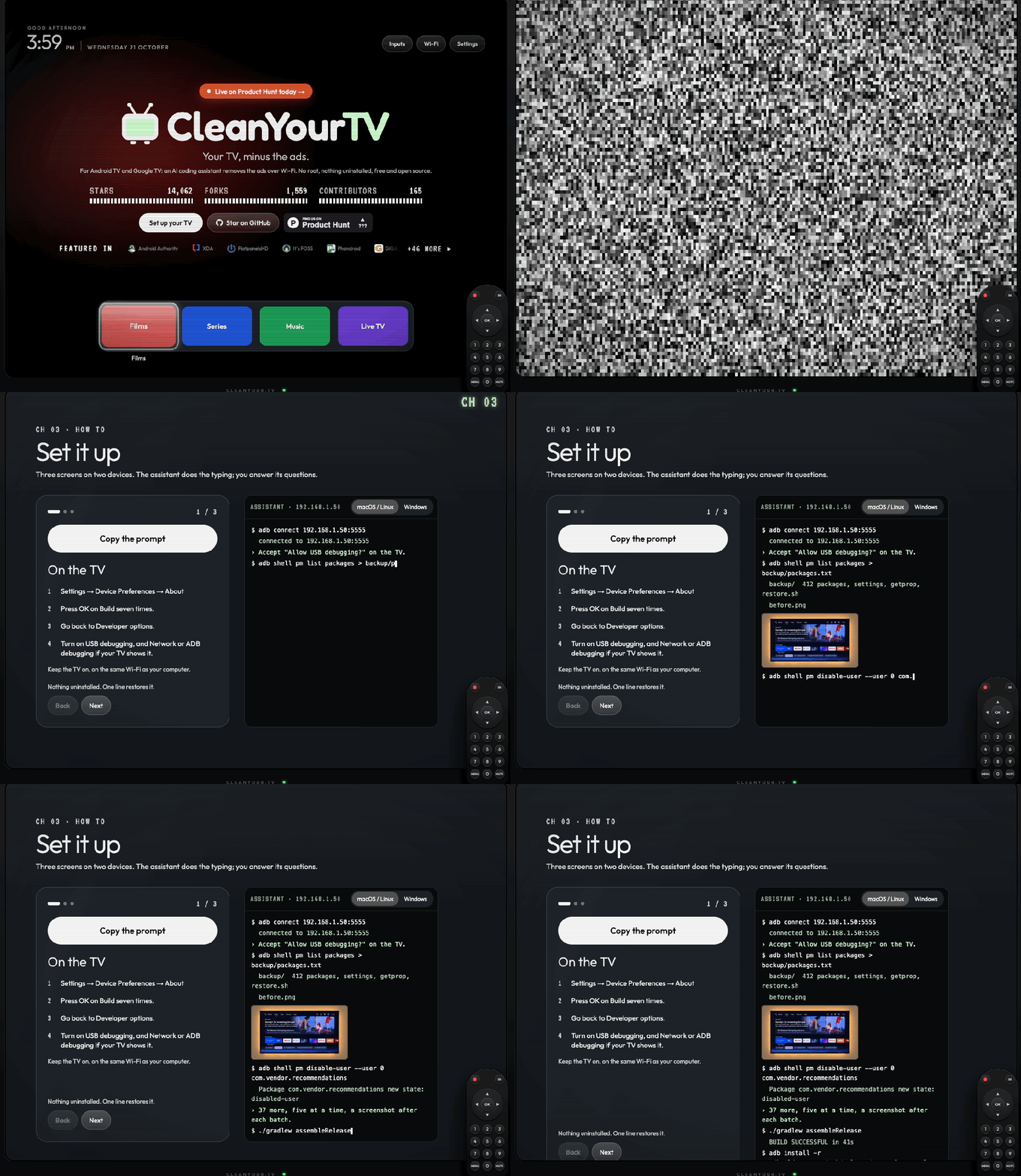
Recently, some users submitted their TV model to Claude Code, connected it to the Android TV under the same Wi-Fi network, had it identify which software was running in the background, then turned off ad services and pre-installed applications one by one, and installed a home screen that only retains frequently used apps. This whole set of operations eventually became an open-source project called TV Detox.
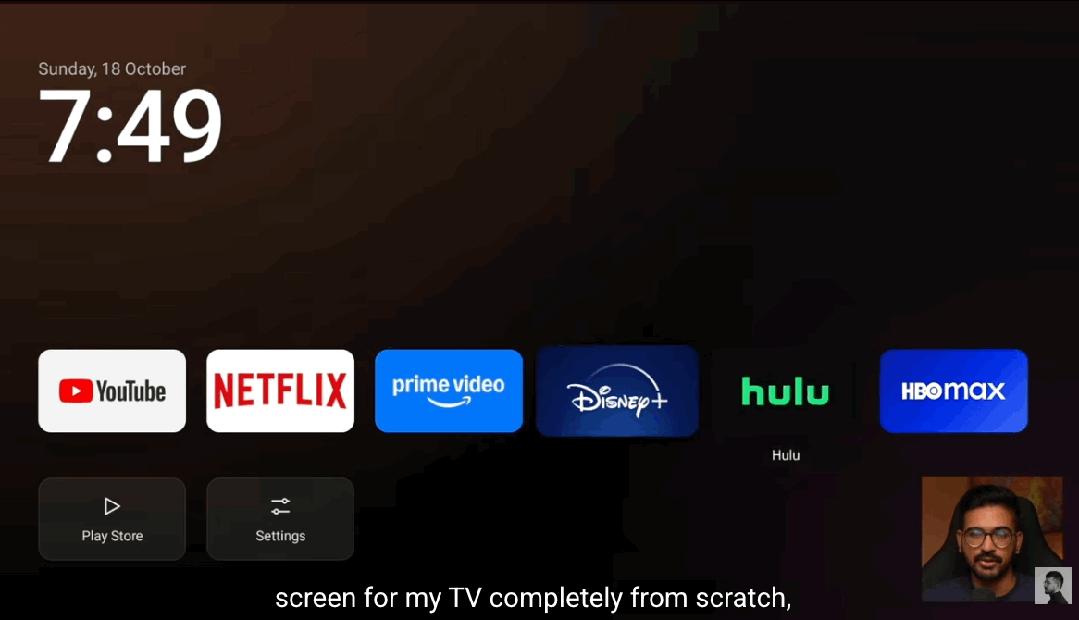
"Detox" refers to removing toxins, which is a clear allusion that the old TV systems are "toxic". Introducing AI to take charge of identifying software and executing commands, users only need to confirm before each modification.
This kind of modification has a mature technical foundation, as Android originally has debugging tools, and experienced users could complete it manually long ago. In the past, however, you had to find a long list of incomprehensible program names by yourself, and judge which one can be closed, and which one maintains the functions of the remote control, screen casting or TV startup; now you can let the programming assistant scan the TV first, then translate what it finds for you.
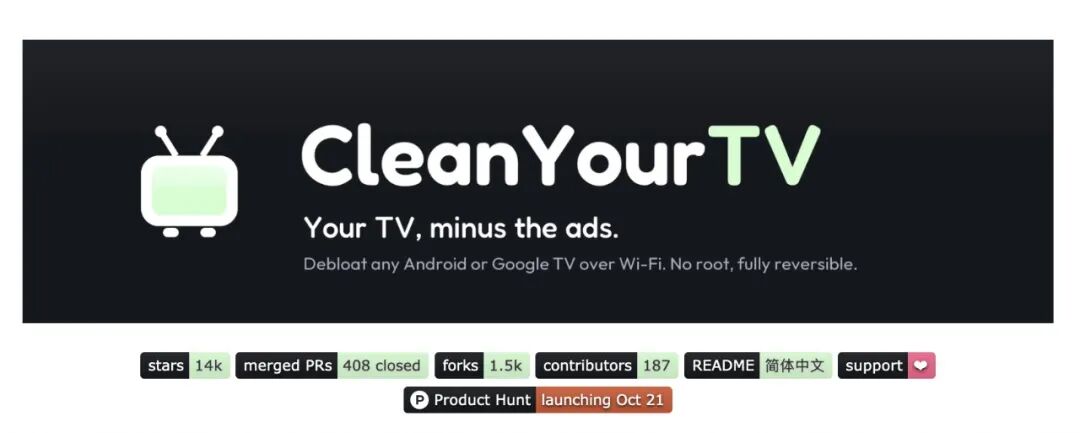
Since similar operations can be easily reproduced via vibe coding, a "CleanYourTV" community has now been established.
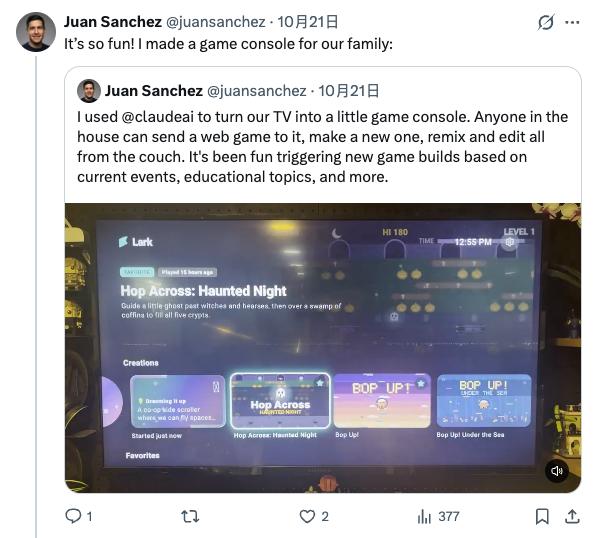
Many netizens have set their sights on the TVs that have long dissatisfied them, and started major modifications. For example, some users used Claude to turn their TV into a personal game console dashboard for running various small games.
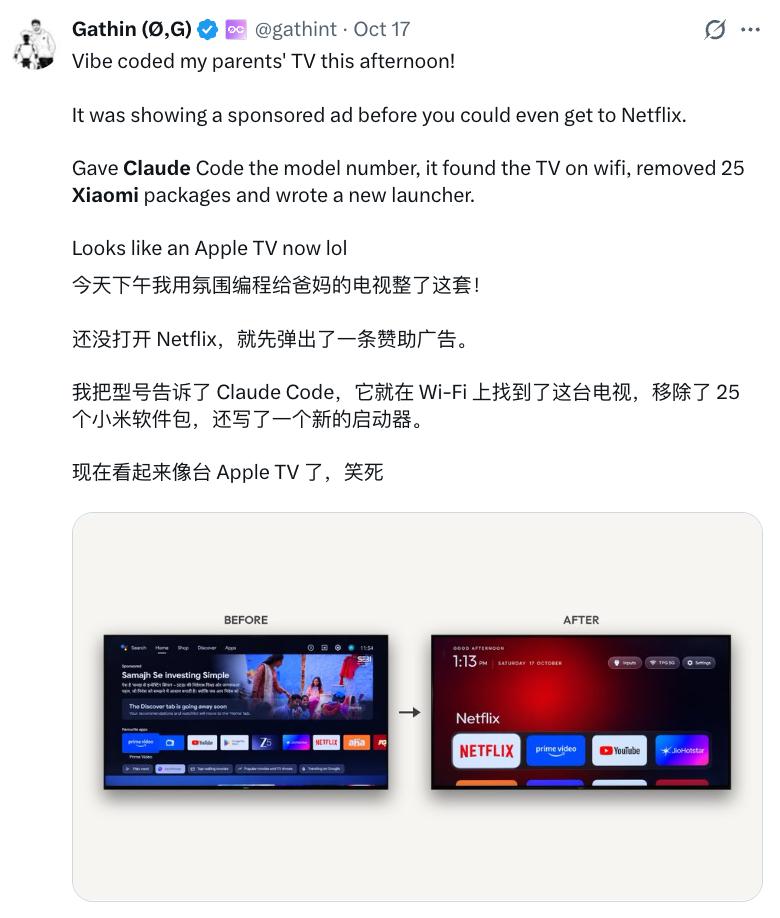
Many users also directly modified the TV for their parents, which is a very rigid demand, not only removing ads but also rewriting the launcher.
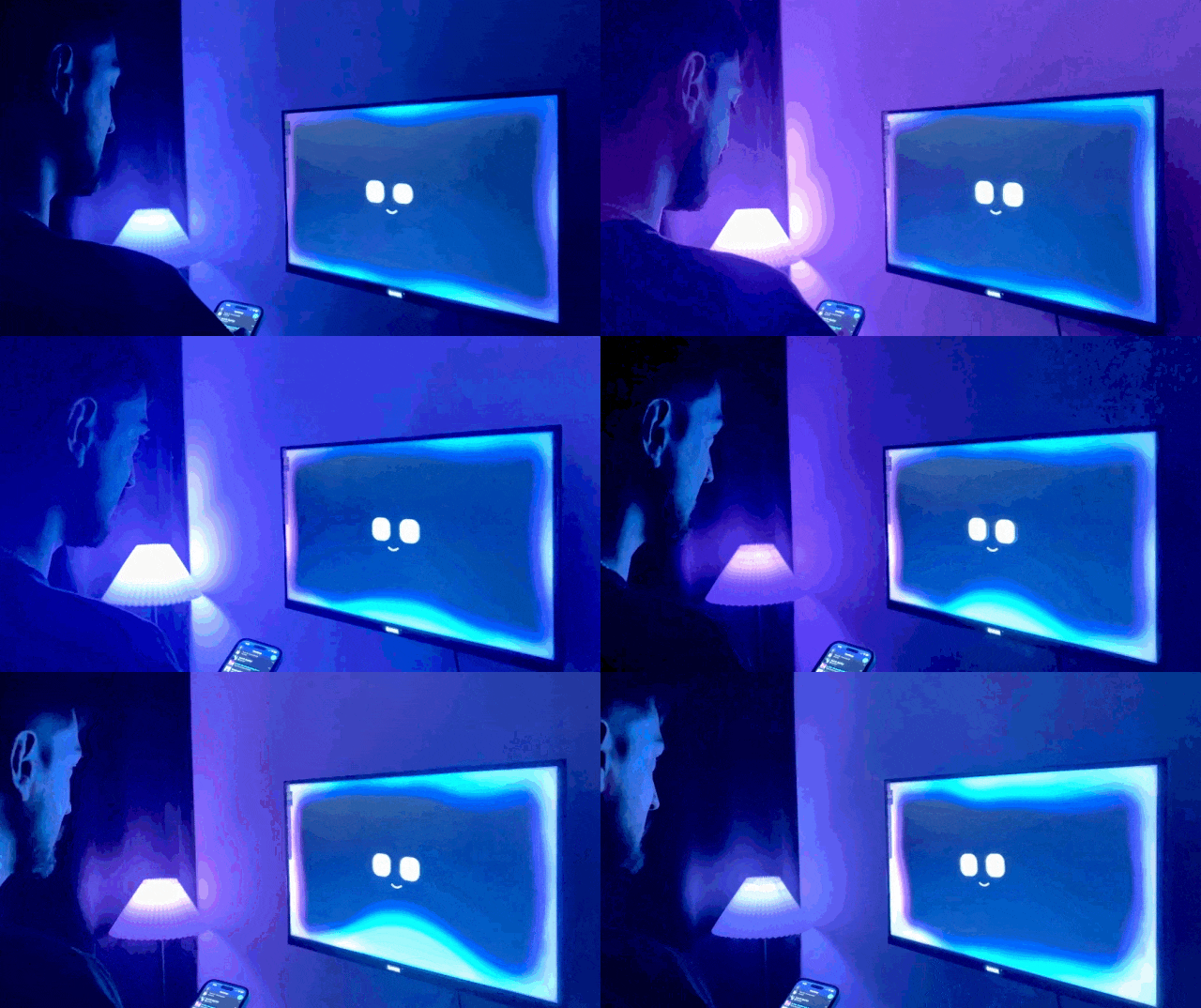
Some users even linked the modified TV with Spotify, turning it into a large ambient atmosphere display wall.
Can similar operations be extended to other old, outdated devices similar to TVs?
The answer is yes, absolutely.
The Hardware Still Works, But the Software Has Become Obsolete
In the past, this kind of modification was mostly done by a small number of enthusiasts who loved tinkering with devices. Vibe coding makes the feasibility of hands-on modification visible to more people, so the same trend has also appeared in electronic musical instruments.
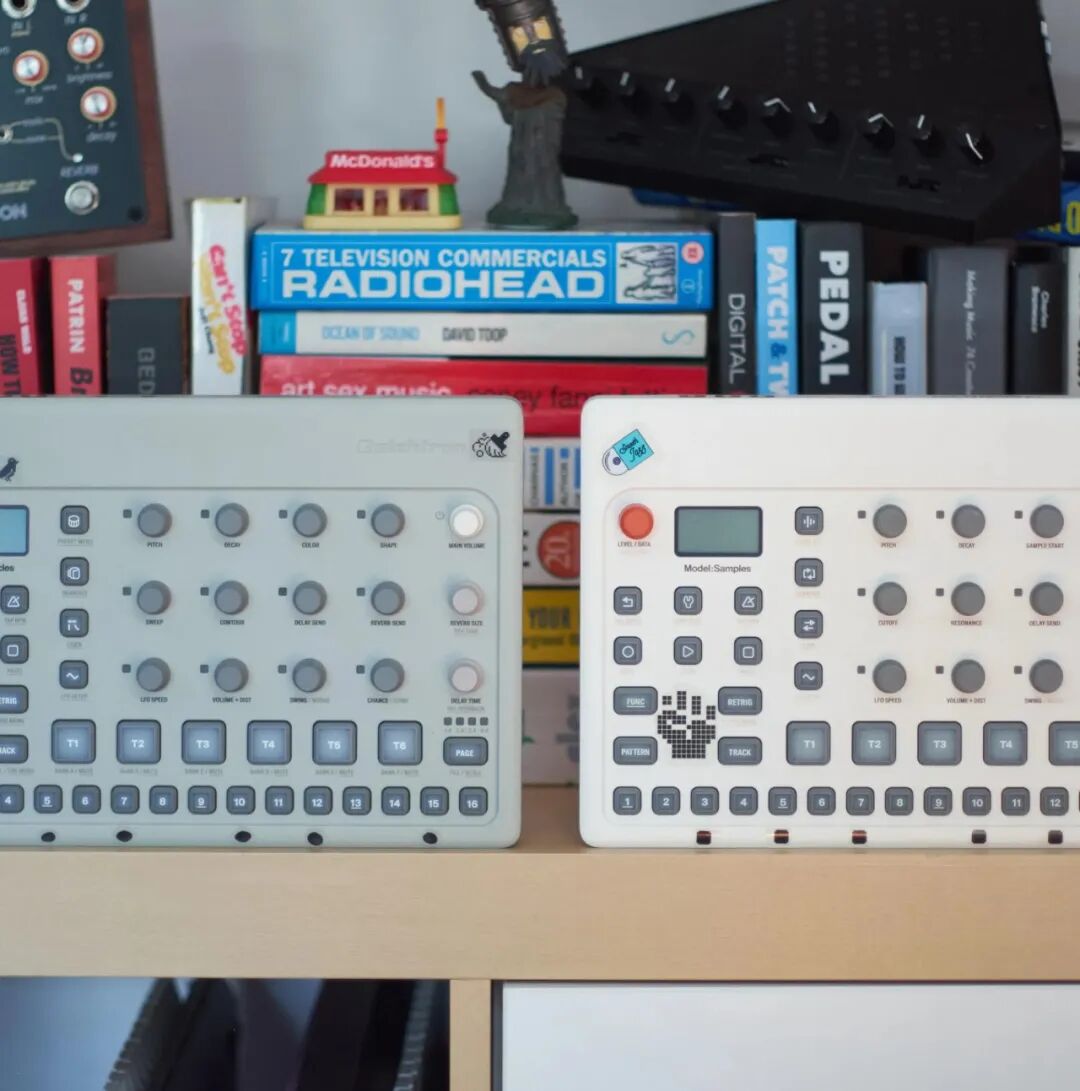
Players recently interviewed by *The Verge* used AI-assisted programming to write customized firmware, adding new functions to drum machines and effectors that have not received official updates for many years. One player added the capability of 6-track audio output via USB to the Elektron Model:Cycles, and many other users later joined in subsequent modifications.
Manufacturers warn that customized firmware may cause the device to fail to boot, or conflict with future official updates. When an Agent participates in the modification, the most critical point to note is the depth of modification. The TV Detox project page requires AI to back up the software list before making any changes, ask for user confirmation item by item, retain key components such as the system interface, keyboard, Bluetooth, and input sources, and finally restart for inspection.
For some Google TV devices, the project has recorded cases of repeated restarts after closing the native home screen, and fixing such issues even requires a factory reset.
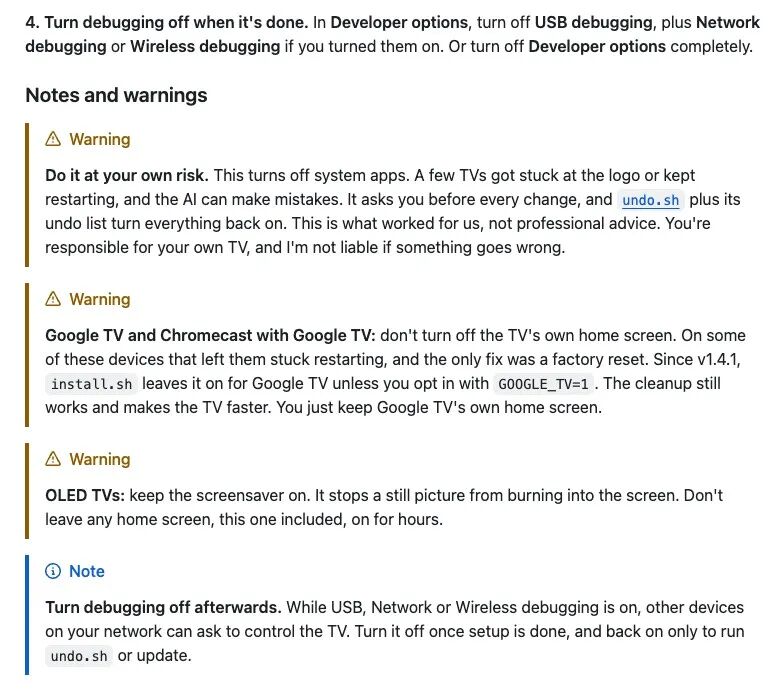
These reminders are part of the project. The UX design in TV has practical functions, not just for good looks. A seemingly irrelevant service may be responsible for the buttons on the remote control at the same time; a system interface that you dislike may also be involved in the boot process.
However, TV manufacturers have not taken the initiative to develop an "ad-free, lightweight" system for these users, which prompts people to trim the software on the existing hardware to keep it working. AI can accelerate the process of searching and trying, but humans still need to decide which functions are worth retaining and how much risk to take. The screens and chips that users purchased are still functional, but the user experience may change along with software updates, commercial recommendations and pre-installed services.
Outdated device systems obviously have too many problems to deal with. Apart from the device system itself, the problems also lie in the code.
The Code in Banks That Can't Be "Almost Right"
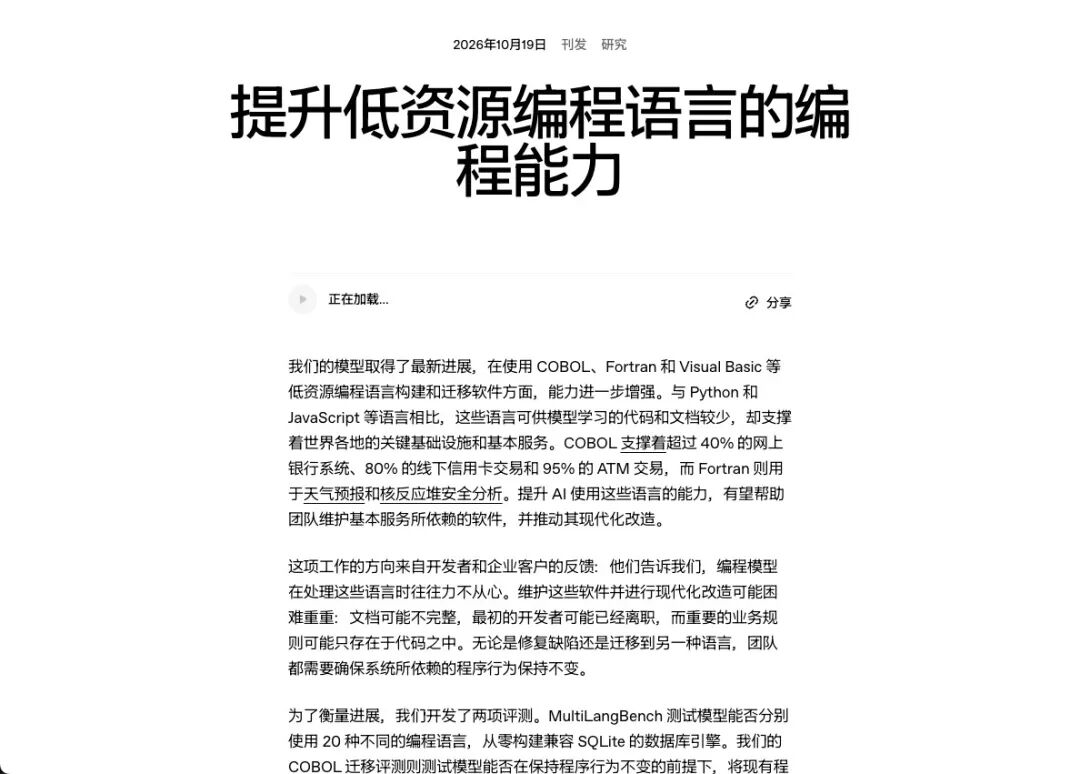
COBOL was born in the last century, and its name sounds like an exhibit in a computer museum. It is a typical representative in a new set of evaluations for "low-resource programming languages" newly released by OpenAI.
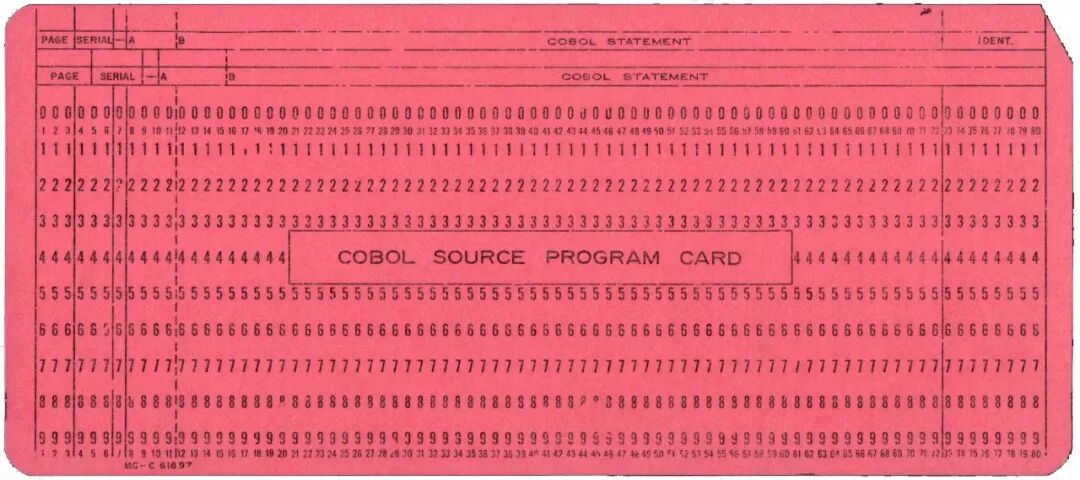
This is a real COBOL source program punch card, with the words "COBOL SOURCE PROGRAM CARD" printed directly on its surface.
"Low-resource" does not mean insufficient computing power. It refers to programming languages that, due to their long history, have too little code, documentation and Q&A content available online for models to learn from, so the learning materials are far less abundant than those of Python and JavaScript. In addition to COBOL, Fortran and Visual Basic are also on this list. OpenAI pointed out in its new research that although these programming languages are outdated, they still support a large number of financial transactions to this day; Fortran is also used in fields such as weather forecasting and nuclear reactor safety analysis.
Systems that have been running for many years usually do not only have old code. The people who originally wrote the programs may have left their jobs long ago, the documentation may not keep up with multiple modifications, and some business rules even only exist in the specific writing logic of the programs. Enterprises want to replace them with new languages that are easier to recruit engineers to maintain, but they are worried that overly radical replacement will bring more troubles. After all, the unwritten rule is "don't modify the code that is already running normally".
Moreover, before making adjustments, you have to first figure out exactly what results the program will output under various extreme conditions. For example, when a COBOL program processes amounts of money, it directly discards excess decimal places. If AI rewrites it into another language and uses the more common rounding method by the way, the new program can start up and the calculated numbers look correct, but it may fail to read data in certain transactions.
Therefore, one of OpenAI's evaluations requires that after the model migrates the COBOL program to other languages, the output must be byte-for-byte consistent with the old program in hidden tests. In this evaluation, GPT-6.1 Sol achieves a maximum accuracy of 97.9%; another test requires the model to build a SQLite-compatible database from scratch in 20 different languages, and COBOL still gets the worst performance among all of them.
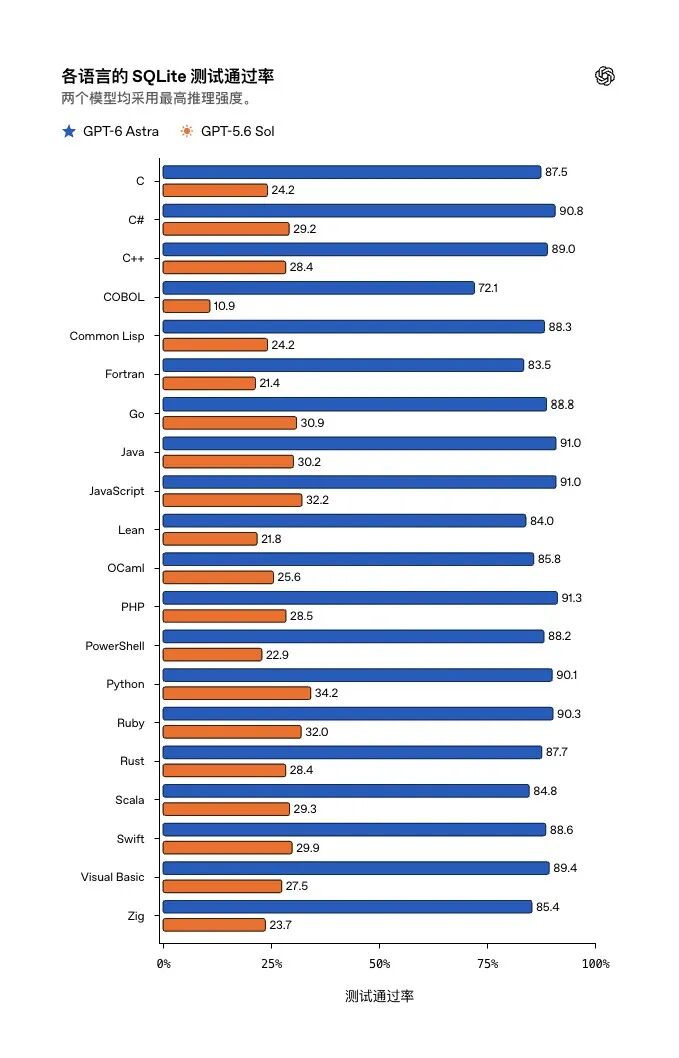
OpenAI's evaluation proves that the model has made great progress in well-designed tests, but it still cannot prove that a bank system that is processing real transactions can be handed over to it for rewriting now. OpenAI itself also clearly states that expert review is still required in production environments, and tests should be carried out according to specific business rules and system dependencies.
Who Decides What Counts As "Still Usable"?
The gap between old TVs and COBOL seems to be the gap between the technology of the old era and the technology of the new century. They coexist. When new technologies come out, old technologies will not exit the stage immediately. They still complete their work every day, but get less and less attention equal to that of new products.
An old TV can be modified, but a bank program cannot be shut down whenever you want. The more difficult it is to roll back a modification, the more necessary it is for someone to understand its original operation logic and confirm that the newly written part does not quietly change the results.
AI programming tools usually demonstrate their capabilities by showing "what you can build from scratch". Writing new interfaces for old devices and supplementing maintenance capabilities for niche languages show another kind of skill: entering old systems that have been running for many years and are still in use, first figuring out how they work, and then carefully modifying part of them.
This also explains why this kind of work is not as easy as it looks. If you make a mistake modifying a TV, you can try to restore factory settings; if you break the customized firmware, you may need to find a professional to repair it; but if the bank system miscalculates an amount of money, the users of the system will bear the cost. The more critical an old system is, the more necessary it is for AI to clearly explain all its modifications, leaving a verifiable and reversible path.
As for that TV, it never became an "AI TV" from beginning to end. After the cleanup is completed, the AI can leave, and the owner can pick up the remote control as usual and press the app he wants to watch. Perhaps this is the best result brought by the modification action: something that was already usable originally becomes easy to use again.
This article is from the WeChat Official Account "APPSO", the author is APPSO who discovers tomorrow's products, and 36Kr publishes it with authorization.