Did the liberal arts student who failed to get into top internet giants later go to work in chip manufacturing?
Li Ran (pseudonym) still remembers the scene outside the presentation venue of a leading internet company in Wangjing during the 2021 campus recruitment season.
It was mid-September, and the weather in Beijing had not turned cool yet. She deliberately wore a newly bought white shirt and arrived 40 minutes in advance, only to find the queue had curved from the lobby on the first floor all the way to the steps outside the building. The security guard shouted through a loudspeaker for people to leave their resumes on the ground and move forward, and she was pushed along by the crowd for 50 meters without even catching a clear glimpse of the HR's face. Out of the 20 printed resumes she brought, only 3 were handed out in the end, 2 of which were even given to the on-duty staff maintaining order.
She was 22 that year, with a bachelor's degree in Chinese Language and Literature from a non-double-first-class university. The most outstanding experiences on her resume were serving as deputy editor of the campus newspaper and an operation internship at a short-video platform. She applied for operation positions at 37 internet companies, got 4 interview invitations and zero offers. In a group interview at a top internet company, 6 out of 8 candidates held overseas master's degrees. She sat at the far end of the long table, and halfway through her self-introduction, the interviewer opposite looked down to check their phone.
Four years later, she saw a similar long queue again at the offline job fair of Hefei Changxin Technology.
The line stretched from the gymnasium entrance all the way to the curb. Some job seekers dragged suitcases, while others edited their resumes on tablets, and the sun was full of dark, crowded backs of heads. The difference was that this time, what she held in her hand was the master's student ID of the School of Microelectronics, Hefei University of Technology and a resume marked with the direction of "Process Integration", instead of her bachelor's diploma in Chinese Language and Literature.
"I squeezed through the door of the internet industry three times but failed to get in. For the door of the chip sector, I queued for two years and finally touched the door frame."
Two years of preparing for the postgraduate entrance exam, two cross-disciplinary transitions, and the journey from Wangjing to Hefei, all are hidden behind this calm sentence.
1
The Third Career Transition?

After graduating with a bachelor's degree in Chinese Language and Literature in 2021, Li Ran applied for operation positions at 37 internet companies, received 4 interview invitations and 0 offers. That year, the headcount for campus recruitment at large internet companies had started to shrink, but "operation" was still the most crowded entry point for arts students. She remembered that in a group interview at a top internet company, 6 out of 8 candidates held overseas master's degrees.
She admitted frankly, sitting there as a graduate from a non-double-first-class university, I felt like I had walked onto the wrong set.
In 2022, she settled for a lower-tier option and joined the education and training industry as a course operator. Half a year later, the industry faced shocks, and her entire department was laid off. In 2023, she entered an internet company as a contractor to do content moderation, with a monthly salary of 6,500 yuan working three shifts.
That year, I moderated roughly 120,000 short videos, and the biggest gain was learning to stay emotionally stable at 3 a.m.
The real turning point came at the end of 2023.
She came across a short video saying that a chip factory in Hefei was recruiting technicians, requiring only a college diploma, with a three-month training period and a total monthly salary of over 10,000 yuan after becoming a full-time employee. In the comment section, some people posted their payslips, while others asked if arts students would be considered.
Li Ran was tempted, but she soon found that the ceiling of the technician position was visible to the naked eye, while what she wanted to reach were those engineer positions that required a master's degree in microelectronics plus tape-out experience.
So she made a decision that seemed nearly crazy to others: to quit her job and prepare full-time for the postgraduate entrance exam, applying for the microelectronics major across different disciplines.
She failed the first attempt in 2024, and got admitted to the School of Microelectronics of Hefei University of Technology in the second attempt in 2025. During the 2026 autumn recruitment, she sat in the interview room of Changxin Technology.
"The interviewer asked me why I changed my career. I said that I had moderated 120,000 short videos, so I know what traffic can create, and what it cannot." The interviewer smiled, then asked her a question about FinFET process.
She answered stutteringly, but finally got the offer for the process integration position.
The content moderation position as an internet contractor paid 6,500 yuan per month, the course operation position in the education and training industry paid 8,000 yuan per month, and the total annual compensation for the process integration position at the chip factory is about 220,000 yuan in the first year.
But she said what really made her feel at ease was not the numbers, but the work content of this position, which will most likely still exist three years later.
The *2026 Job Hunting and Recruitment Insight for Top University Students* released by Maimai High-Recruitment Talent Think Tank shows that from January to May 2026, among the top 50 most searched companies by students from top universities, the number of semiconductor-related enterprises increased from 3 in 2024 to 9, including Cambricon, CXMT, Moore Threads and YMTC all on the list.
At the same time, the campus recruitment headcount of large internet companies has shrunk for three consecutive years. Industry surveys show that the annual average recruitment reduction rate of leading platforms is between 15% and 20%. After Changxin Technology was listed on the Sci-Tech Innovation Board in July this year, long queues of job seekers formed at offline job fairs, and some people sighed that "now you can't even squeeze through the door".
Young people are not chasing a fleeting trend, but looking for a chair that they can sit on for longer.
2
Can't Even Squeeze Through the Door?
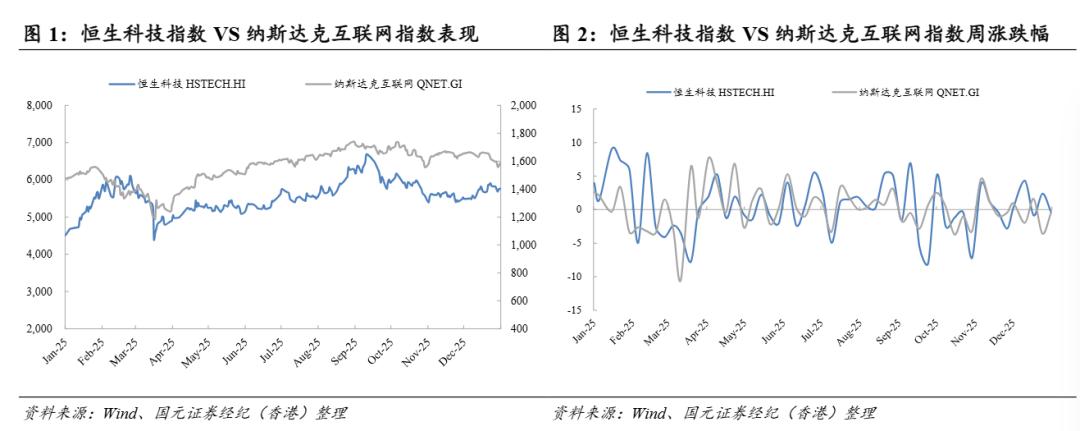
Image source: [Guoyuan Securities (Hong Kong)] Internet Industry Weekly: The Earnings Season is Approaching, AI Commercialization Needs Verification
There is bustling activity at the entrance of the job fair, but many squeeze in while few can stay.
The talent gap in the chip industry is real, but the shape of the gap is different from what most people imagine. Process, equipment and yield positions in the manufacturing end account for a considerable proportion, and the salary attractiveness of these positions is much lower than that of the design end.
Although the design end offers high salaries, the threshold is also high. Sample statistics show that more than 70% of chip design job descriptions require a master's degree plus 1-2 tape-out experiences. The digital IC verification position, where career changers are most concentrated, is rapidly becoming saturated. Data from a recruitment platform shows that the resume delivery ratio for digital verification positions in 2026 rose from 1:8 in 2024 to 1:23, while the resume delivery ratio for process integration positions and equipment engineer positions in wafer fabs remains at around 1:5. However, the requirements for backgrounds in physics, materials and chemistry for such positions have blocked a large number of students from "crash courses".
During the 19th-century American Gold Rush, the people who made steady money were not the gold diggers, but the shovel sellers. But the "shovel" in the chip industry is not the courses of training camps, but tape-out opportunities and process experience. These two things cannot be provided by crash courses, and can only be obtained through formal academic training and production line practice. The people pouring into the job fair are holding a beautifully printed instruction manual for using shovels, but what HR cares about is how much soil you have dug.
The "involution" in the internet industry can be compensated by brushing questions and doing internships, while the "involution" in the chip industry is stuck at the hardware threshold. Without several tape-out experiences, you can't even pass the resume screening.
Two years of preparing for the postgraduate entrance exam brings a formal academic identity. Most people who try to cross the barriers built by others over six years in just six months end up stuck in the non-priority channel.
3
The Hot Search List Has Changed
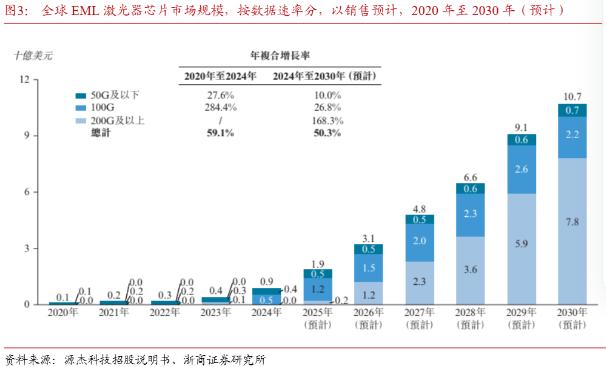
Image source: [Zheshang Securities] Special Industry Report: Sorting out the Optical Chip Industry
The professional narrative in the internet era is traffic dividend plus equity wealth creation: choose the right track, iterate quickly, and cash in options. Young people's sense of professional dignity is built on growth. The narrative in the hard technology era is domestic substitution plus industrial self-reliance: successful tape-out, yield improvement, process node breakthrough. The sense of dignity is built on finished products.
At least three layers of logic drive this round of career migration.
The third phase of the National Integrated Circuit Industry Investment Fund has been launched, and domestic substitution has changed from a slogan to a KPI. The expansion cycle of wafer fabs has directly driven the talent demand curve.
The capital expenditure of the semiconductor industry is characterized by a long cycle. It usually takes two to three years for a production line to go from construction to full capacity, which means that recruitment demand is not pulsed, but sustainable.
The "strangled core technology" narrative has profoundly influenced the career choices of this generation of young people. The Maimai report shows that the search popularity of keywords related to "domestic substitution" in job searches of top university students has multiplied several times within two years, while the search volume of words like "options" and "wealth creation" has dropped significantly.
This reminds people of the last wave of "fleeing from the pit majors". Ten years ago, materials, chemistry and microelectronics were jokingly called the four "big pit" majors of "biology, chemistry, environment and materials", which top university students tried to avoid, and switching to coding to work in the internet industry was considered the "right path".
Now the trend has reversed. The same microelectronics major has changed from a major for transferred students to a popular major with high admission scores.
However, it is worth noting that when all top university students pour into the same "hot search list", new congestion and the top of a new cycle are also forming.
The semiconductor industry follows its own objective laws, with long investment cycles, slow returns and limited job capacity.
At its peak, the internet industry could absorb tens of thousands of top university graduates a year, while leading chip enterprises usually only recruit hundreds to over a thousand new graduates through campus recruitment every year. The 9 semiconductor enterprises on the hot search list combined cannot absorb the incremental job seekers released by the annual recruitment reduction of large internet companies.
In other words, the elimination rate of this round of migration may be higher than that of the internet industry.
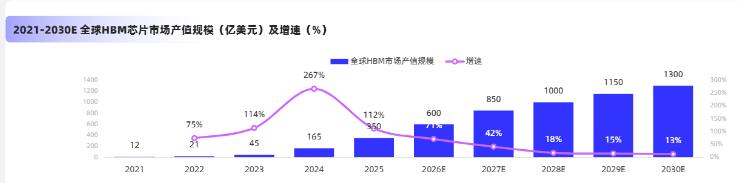
Image source: [Jiashi Consulting] 2026 HBM Chip Industry Report
The first Moments post Li Ran made after joining Changxin was a selfie in a cleanroom suit, with the caption: "I used to moderate videos shot by others, now I shoot the suit I'm wearing."
Someone commented and asked if working at a chip factory is very stable. She thought for a long time and did not know how to reply.
Stable? The process integration position requires working on the production line, and shift work is the norm. When there is a problem with the yield, she cannot sleep well for a whole week. The salary is higher than that of the internet contractor position, but the hourly wage may not be. The only difference is that she no longer worries that her entire department will be laid off when she wakes up the next day. A wafer fab will not shut down a production line just because of a bad quarterly financial report.
This is perhaps the most real point of this round of migration: young people are not fleeing from involution to a place without involution, but switching from one kind of uncertainty to another kind of certainty. However, the price of the latter is a higher threshold, longer cycle and slower feedback, but at least the direction is clear.
The internet used to be a certain trend in the eyes of young people, but now the momentum of this trend is weakening. The chip industry is ushering in a new wave of popularity, but this new land does not welcome speculators. It needs people who can complete tape-out, people who can survive the yield ramp-up, and people who can stay focused in cleanroom suits.
Li Ran said she is still adapting. She is adapting to the rhythm of the production line, adapting to the technical terms that she barely managed to understand after two years of preparing for the postgraduate entrance exam, and adapting to a working method that no longer measures value by viral hits and daily active users.
But she thinks it is worth it. In the past, I was always looking for the next door that I could squeeze into. Now what I think is that once I get through this door, I will not squeeze out again.
From Wangjing to Hefei, from BAT to Cambricon, every door that young people have squeezed through and every queue they have stood in will eventually become the job-hunting map they draw for themselves.
Where the center of the map lies, there lies the answer of this generation.
References:
[Guoyuan Securities (Hong Kong)] Internet Industry Weekly: The Earnings Season is Approaching, AI Commercialization Needs Verification
[Jiashi Consulting] 2026 HBM Chip Industry Report
[Zheshang Securities] Special Industry Report: Sorting out the Optical Chip Industry
This article is from WeChat official account "Rixi Vision", author: Xian Xian, editor: Xian Xian, authorized for release by 36Kr.