The capital of new consumption has created another smash hit.
A few days ago, the first KINLIPIN store in Shanghai opened its doors. Even on a weekday, long queues formed outside the store, and the 400-square-meter space was packed with customers, leaving no doubt about the massive popularity of the "queuing king" in the fresh snack sector.
Since it expanded out of Hunan and opened its first East China store in Nanjing back in May this year, KINLIPIN has rapidly landed in Wuxi, Wuhan, Shenzhen, Hangzhou, Nanchang, Foshan, Zhuhai, Guangzhou and other cities in just half a year, with the total number of stores quickly expanding to 50. The phrase "storming KINLIPIN" quickly became a viral meme on social platforms.
The same crowd of queuing customers that once appeared at Wenheyou a few years ago, as well as the products featuring spicy and savory snacks, reveal its inherent origin: Changsha has nurtured yet another new consumer brand.
Before that, Chayan Yuese and Wenheyou used to be the most eye-catching city labels of Changsha. But as consumer trends shift, these brands have hit development bottlenecks one after another. How "internet-famous" brands can maintain long-term popularity once puzzled this "capital of new consumption". The current boom of KINLIPIN proves that Changsha's ability to create hit consumer brands remains strong. But the question of how to achieve long-lasting success is still waiting to be answered.
01
Creating the Track
In January this year, Mingmang Mangmang Group, one of the "five rising stars" of Changsha's new consumption sector, was listed on the Hong Kong Stock Exchange, with its share price surging 80% at opening and its market cap once exceeding HK$90 billion during intraday trading.
Over the past few years, the bulk snack industry has developed by leaps and bounds. Driven by the two leading brands Snacks Busy and Zhaoyiming Snacks, Mingmang Mangmang Group saw its store count grow 20 times in 3 years, with more than 20,000 stores by the end of last year.
As the lower-tier markets are continuously divided up, and bulk snack stores can be found all over the pedestrian streets in county towns, a discussion has been brewing in the industry: Who will take over the baton of the new consumption track? The "fresh snack" sector has provided the answer.
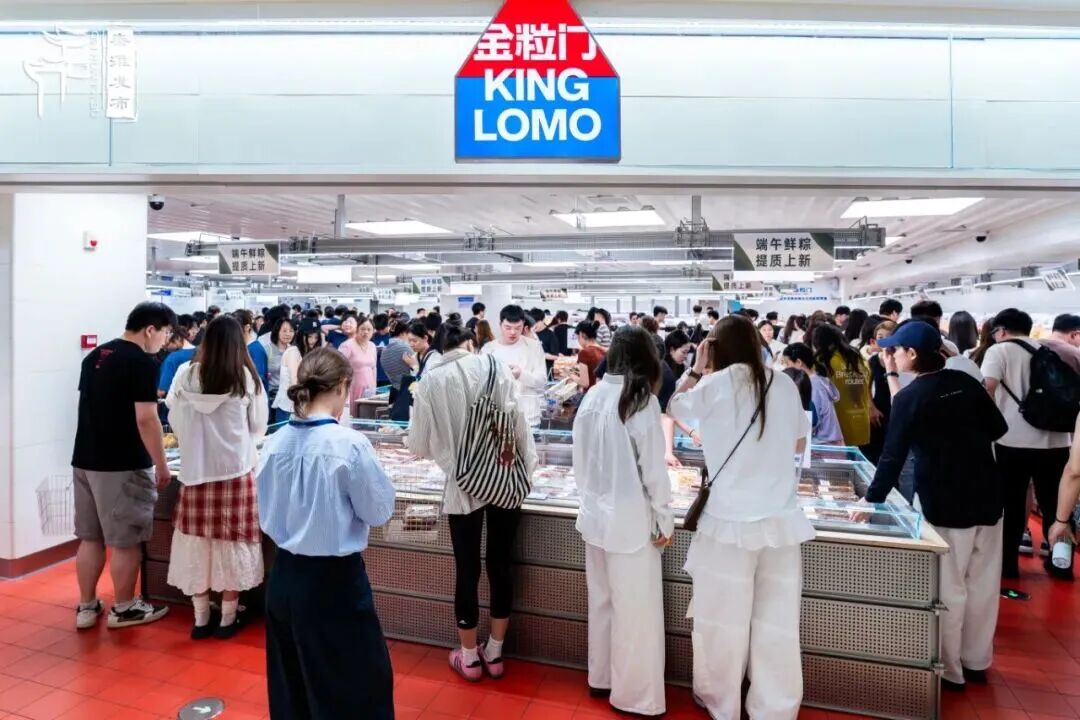
Image source: "Qinhuai Release" official account of Nanjing
It is hard to name the very first enterprise that brought fresh snacks to the market, but Changsha is undoubtedly one of the most important birthplaces of this trend.
The predecessor of "KINLIPIN" was "Jinlimen", a traditional roasted nuts brand based in Changsha. In 2020, its founders Liu Chang and Tao Feng put forward the concept of "fresh snacks" and pushed for brand transformation, replacing large-packaged bulk roasted nuts with small-packaged freshly made products, and expanding the product portfolio from mainly selling roasted chestnuts to covering 200 different snack items.
Before 2026, KINLIPIN only operated more than 10 stores in Hunan and Hubei, gaining a certain level of popularity among local residents and tourists. It was not until the opening of its first Nanjing store in May this year that the brand truly ushered in explosive growth: its reputation spread rapidly on social platforms, and the total number of stores has increased all the way to 50.
One view holds that fresh snacks cater to consumers' new demands for food freshness, quality and consumption experience. For KINLIPIN in particular, "short shelf life" and "clean ingredient list" have become its selling points; its blue-red color scheme, exquisitely designed storefronts and shopping bags have abandoned the tacky style commonly seen in bulk snack stores, becoming its viral password on social media. In addition, fresh snack stores have also expanded from streetfront locations into large shopping malls -- KINLIPIN stores can almost always be found in Mixc malls across different cities.
The importance of timing is even more evident in the case of Jidu Quan, another Changsha-based brand. Last May, Heise Jingdian, a brand that started with stinky tofu, opened its first Jidu Quan store dedicated exclusively to fresh snacks based on its existing storefronts. Lu Lucheng, founding partner of the brand, revealed in a previous interview that the company tried to transform in 2019 but ended up with failure. Five years later, the results this time "exceeded expectations: the previously declining performance suddenly stopped sliding and started growing steadily, which proves that this model is well received by the market".
Nowadays, Jidu Quan has opened more than 200 stores, far outnumbering most fresh snack brands, and it stands alongside KINLIPIN as the two leading players from Changsha. After that, more and more brands were born in Changsha, many of which were transformed from well-known established consumer brands.
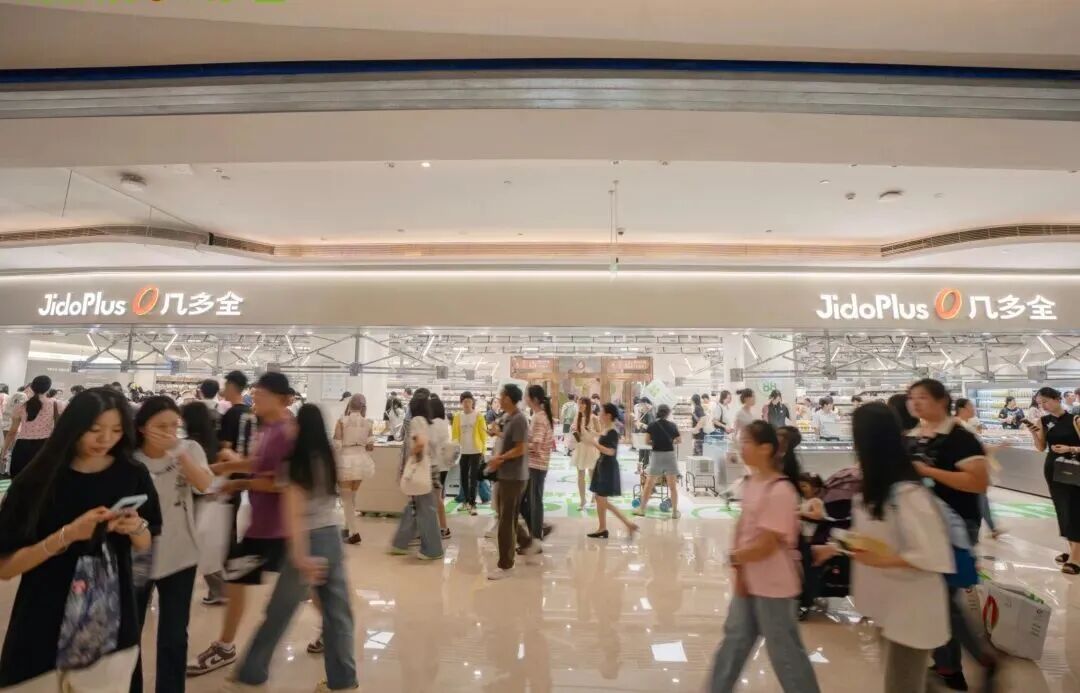
Image source: Xiaoxiang Morning Herald
For example, Chayan Yuese opened its first Jishi Tasting store in April this year, bringing the "toppings" of milk tea into a dedicated fresh snack store; Juewei Duck Neck opened its first "Juewei Fresh Snacks" store in Changsha and Chengdu simultaneously during the May Day holiday this year, expanding its product portfolio from marinated food to nuts, western pastries, fruit drinks and more.
The "queuing boom" not only reignites consumption enthusiasm, but also lets capital sniff out new opportunities.
Last month, industrial and commercial information shows that Hunan Explorer, one of the main operating entities of KINLIPIN, added two new shareholders: Wu Yuening, founder of KK Group, and Kuaike E-commerce, the main operating entity of KK Group, each holding a 5% stake. The public speculates that KINLIPIN has taken the lead in obtaining the first publicly announced external industrial capital equity investment in the fresh snack track.
02
Supply Chain
The new consumption track is bringing forth new innovations again. Why is Changsha, once again, the leader behind this trend?
When Changsha went viral last time, many people turned their attention to the local city character and consumption characteristics. A representative view, as Huang Si, head of industrial research at Changsha New Consumption Research Institute, puts it: "Changsha people's love for consumption, passion for life and joy for entertainment are rooted in their nature. Even if they only have 10 yuan left in their pocket, they will spend 9 yuan first to buy a bowl of rice noodles."
Looking back at the predecessors of fresh snack brands, many of them grew up from the lively street food culture of downtown neighborhoods; and the categories that usually bring foot traffic to stores, such as marinated food and cakes, are all categories that have been fully verified in the Changsha market. Not to mention the large number of young consumers who are willing to try new things, which naturally forms a scenario that tests new consumption tracks.
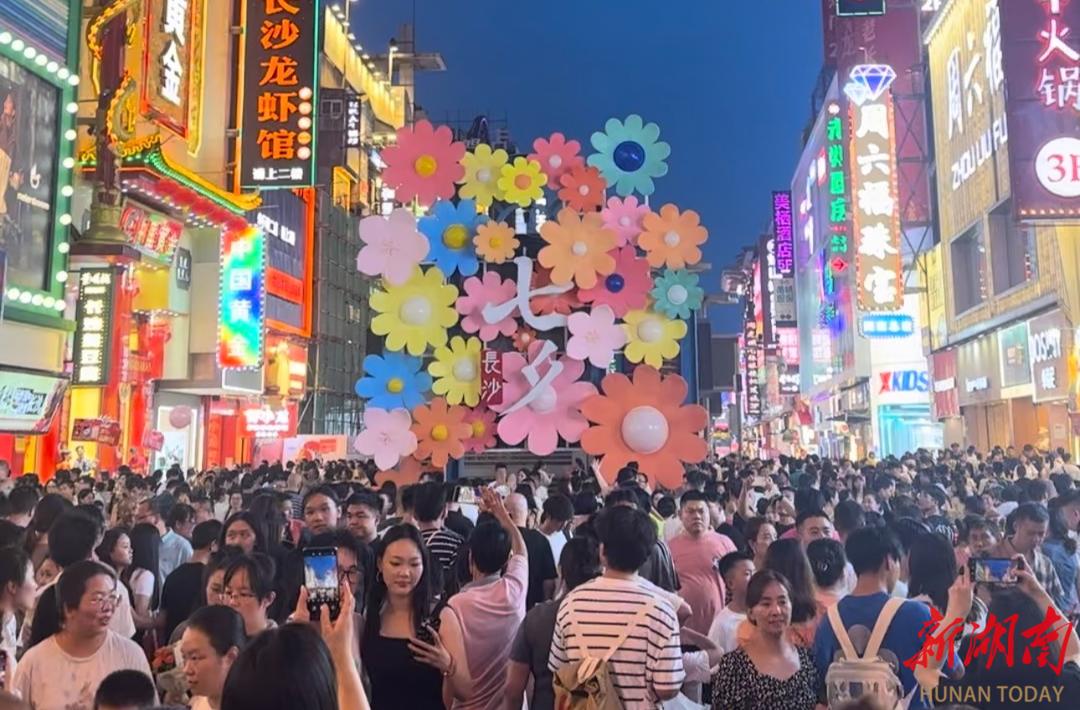
Image source: Hunan Daily
Lu Lucheng once said bluntly, "Changsha people are really brave to try new products, inclusive to new brands, and give direct feedback: good is good, bad is bad, which allows brands to quickly adjust their products and polish their operation models. In addition, Changsha people value consumption experience, love to share, and are sensitive to health and product quality, which perfectly aligns with the positioning of Jidu Quan. Not to mention the new consumption ecosystem of this city, which boasts abundant talents, smooth logistics and inherent city traffic. Jidu Quan has been growing on the fertile soil of Changsha since the very beginning."
The consumption "testing ground" that facilitates brand growth is only the surface reason why fresh snack brands emerged in Changsha.
Wang Zhigang, founding partner of Ruishuo Capital and vice president of Shanghai Chain Operation Association, once analyzed to the media that the front-end costs of short-shelf-life products such as cold chain logistics and warehousing are inherently higher than long-shelf-life products, and the product loss rate is also higher. However, in order to maintain cost-effectiveness, the terminal selling price of the stores has to be kept low. This requires brands to have extremely strong control over supply chain operation and turnover efficiency.
Digging deeper behind these brands, the supply chain hidden in Changsha and even the entire Hunan province is the "root system" that provides solid support. According to statistics from local media, there are nearly 180 foundries behind KINLIPIN and Jidu Quan, most of which are located in Hunan, especially in Changsha.
Take KINLIPIN as an example: 16 local Hunan factories in its supply system contribute 54 SKUs, 11 of which are located in Changsha. Jidu Quan follows the same pattern: 34 Hunan factories support more than 100 SKUs, 24 of which are in Changsha, accounting for over 70% of the total.
Hunan's prominent position in the national snack industry is thus revealed. Data shows that the annual output value of Hunan's snack food industry accounts for 1/3 of the national total, and the national market share of the three categories of spicy gluten, casual fish products and marinated products all exceed 50%. For example, the two core categories of short-shelf-life baked goods and freshly made marinated food are exactly the strengths of Changsha-based suppliers.
There is a saying that Changsha "relies on its deep manufacturing foundation, activates the stock space with scenario innovation, reconstructs consumption relationships with emotional value, and finally completes the value closed loop in the capital market".
03
New Consumption?
However, just like several previous rounds of new consumption attempts in Changsha, the fresh snack track is also full of hidden worries.
Behind the high dependence on the supply chain lies the two-sided squeeze challenge facing the fresh snack sector. As Wang Zhigang puts it, there are no channels such as near-expiry discount stores to handle short-shelf-life products. Once customer flow is not enough to support rapid consumption, a large amount of product loss will occur. To maintain product cost-effectiveness and get lower supply prices, brands have to rely on the negotiation advantage brought by large procurement volumes. Once customer flow decreases or store expansion slows down, the procurement scale will shrink, and the price advantage of the supply chain will disappear accordingly.
In this regard, when these brands expand out of Changsha, solving supply chain problems becomes a top priority. In the fiercely competitive Yangtze River Delta region, KINLIPIN has built a base worth over 100 million yuan in Changzhou to cover the daily distribution demand of short-shelf-life products in East China, while Jidu Quan's East China supply chain base is located in Gaochun, Nanjing.
More importantly, it remains a question mark for how long the snack sector itself can support the growth of the new consumption industry.

Image source: 58pic_502505378
In fact, looking back at the hit new consumption categories in Changsha over the past few years, from new-style tea drinks to new Chinese-style pastries, from Hunan-style snacks to packaged food, a "hit product" model that allows different food categories to take turns to go viral has been formed. The latest booming fresh snack sector is the "masterpiece" that covers almost all the above hot spots, and different brands have taken "copy and paste" to the extreme -- all of them have milk tea drinks to drive sales, and similar products such as potato chips, dried fruits, roasted nuts, marinated duck products are all aligned with each other.
No wonder some people argue that fresh snacks only push food consumption towards homogenization again, and essentially fail to bring a truly new consumption track. The "affordable Sam's Club" can hardly replace Sam's Club in the real sense, and the freshness brought by fresh snacks can hardly be maintained only by a hodgepodge of different products.
The shrinking innovation space in the food sector may also affect Changsha's performance in the new consumption field.
If the label of "capital of new consumption" comes from Changsha's local consumption and manufacturing capacity, the previously widely verified achievements are mainly concentrated in the local food industry.
Last year, when Changsha launched the "five rising stars of new consumption", it intentionally included Anke Innovation and Water Sheep Technology into the list. The former represents the technology sector, while the latter focuses on beauty and skincare. But up to now, the brands that have the highest public attention are still Wenheyou and Chayan Yuese.
In contrast, in other cities, new consumption has expanded to more fields. Shanghai has created new forms of the ACG economy, Kaifeng has rewritten the inherent paradigm of the theme park economy with the Wansui Mountain Scenic Area...
For Changsha, whether it can participate in defining new consumption in more fields will also affect the brand effect of its "capital of new consumption" title. The answer to this new consumption question is far from being revealed.
This article is from the WeChat official account "City Evolution", written by Yang Qifei, authorized for release by 36Kr.