Selling cars is not profitable, so why are automakers competing to pour tens of billions of funds into chip manufacturing?
Chen Shihua, Deputy Secretary-General of the China Association of Automobile Manufacturers (CAAM), previously disclosed at an industry forum that "from January to May 2026, the average profit margin of China's complete vehicle manufacturing sector was only 1.5%. Calculated at an average price of 200,000 yuan per vehicle, automakers only earn about 3,000 yuan for each car sold." Even with such meager profits, these auto companies are still collectively investing billions of yuan in chip development.
None of the new EV-making forces namely Nio, Li Auto and Xpeng has been left behind. Moreover, they are no longer developing chips merely for self-use. Recently, Maher Technology, Li Auto's chip subsidiary, just secured 1.6 billion yuan in financing; in February this year, Nio's Shenxi signed a 2.2 billion yuan agreement, marking that its chip business began independent financing and started supplying products to external customers.
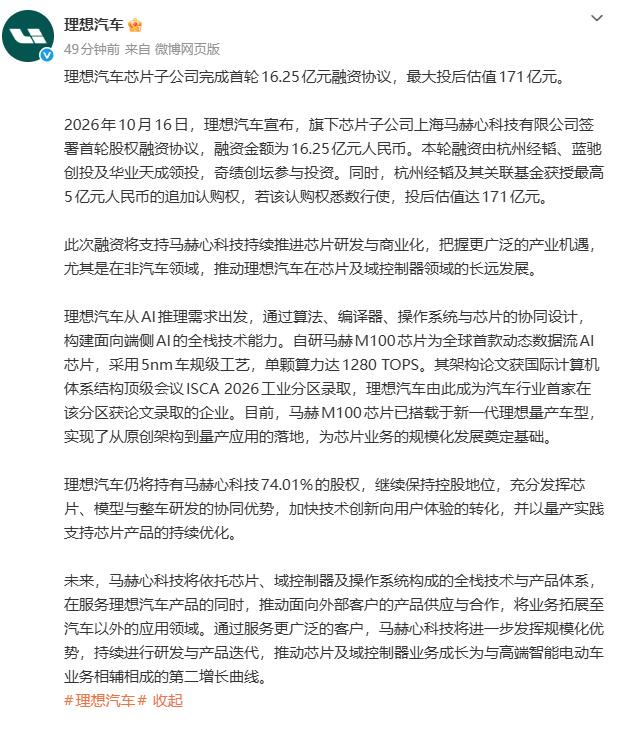
Is the ultimate destination of automobile manufacturing "chip development"? Today we will talk about what this chip-making boom is all about, why auto companies are flocking into this sector, and how many of them can truly turn chip development into a profitable business?
Auto Companies Flock into Chip Development
The move of automakers developing chips is not a new thing that just emerged today.
Tesla took the lead in exploring this path, with its mass-produced vehicles equipped with the AI4 chip, and the next-generation AI5 is also under development.
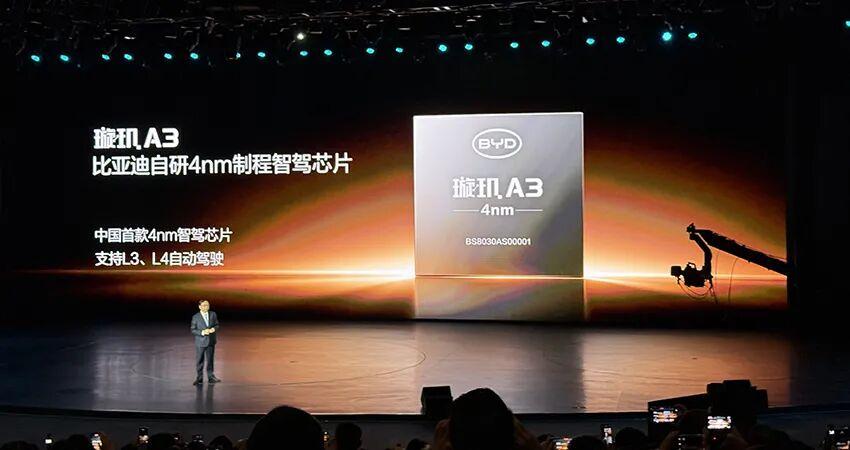
Chinese domestic automakers followed suit with different focuses: BYD adopts a comprehensive layout strategy, its semiconductor business covers multiple categories such as MCU and IGBT, and its latest intelligent driving chip Xuanji A3 adopts 4nm process and has achieved large-scale mass production. The new EV-making forces focus more on intelligent driving: Xpeng is concentrating on the Turing chip, Nio is betting on the Shenxi chip, and Li Auto has launched the M100 chip, each taking their own positions to accelerate the replacement of overseas solutions.
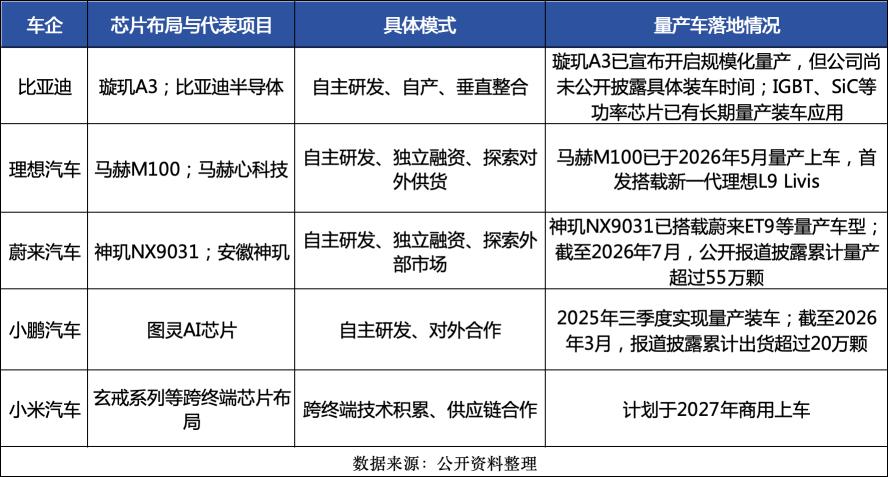
Behind these actions lies a clear evolution track.
The past few years were the 1.0 stage of chip development, where the primary goal was to get the chips ready first and then improve their performance. The core objective was to develop the chips and install them in their own vehicles for operation, with the layout mainly through independent R&D or cooperation with the supply chain. Now the pace has changed, and it has entered the 2.0 stage of chip development, shifting from self-use to external supply.
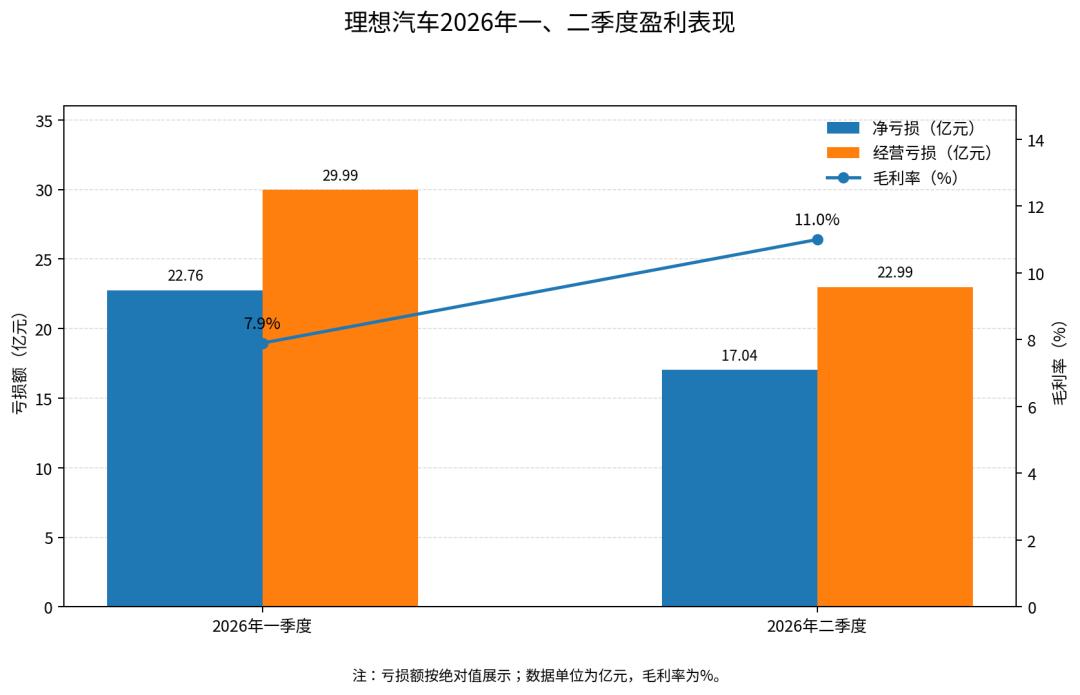
Behind this trend lies the realistic financial pressure. Li Auto posted a net loss of 2.3 billion yuan in the first quarter of this year, with its gross profit margin dropping to 7.9%, and its operating loss in the second quarter still reached 2.3 billion yuan. While sustaining continuous losses, they have to keep investing heavily in chip R&D, which is a pressure that not every automaker can withstand. Independent financing can not only support the continuous R&D, but also disperse the financial risks of the main entity.
Two of the three new EV-making forces have already taken this step.
Maher Technology under Li Auto recently completed its first round of financing, and the official announcement clearly states that it will carry out chip and domain controller business for external customers, with a focus on non-automotive sectors.
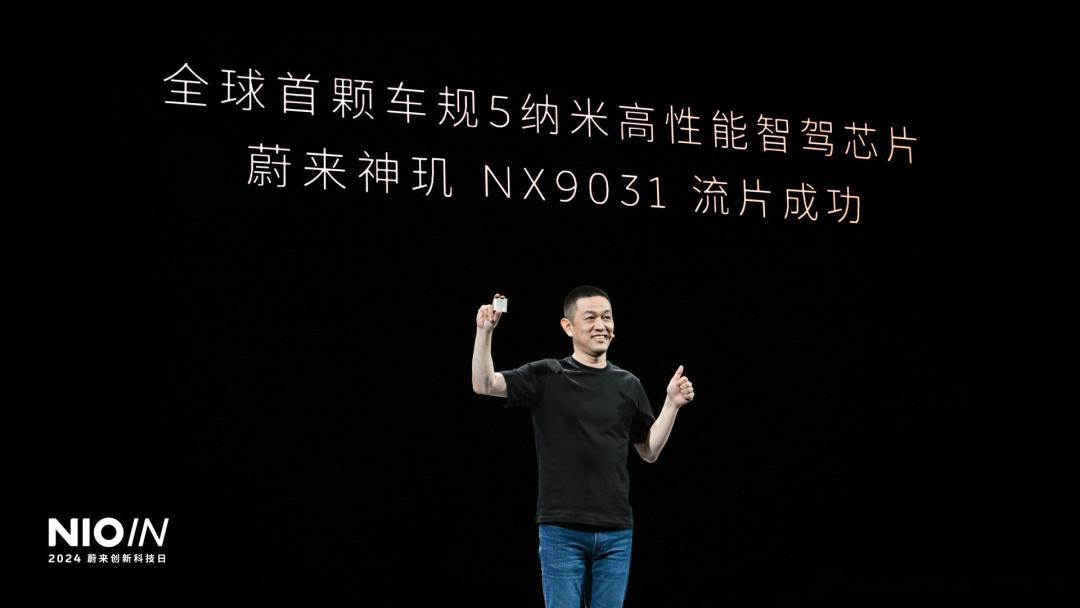
Nio's Shenxi moved faster: it established a joint venture with Axera and OmniVision, its high-level intelligent driving chip has completed tape-out, and it is currently in contact with potential customers such as Leapmotor and Geely.
Although Xpeng has not carried out independent financing for its chip business, its Turing chip has obtained the mass production designation from Volkswagen. He Xiaopeng directly announced at the Paris Motor Summit that it will package the chips and intelligent driving systems to provide solutions to global partners.
Why Are They All Flocking to Chip Development?
Automakers' move to develop chips is not a whim, and there are three solid logics behind it.
First, to grasp the defining power of intelligent driving.
In the new energy era, intelligent driving has stepped onto the center of the stage, and the underlying foundation of intelligent driving is chips plus algorithms. But here comes the problem: if the algorithm is independently developed while the chips are purchased from others, there is a natural coupling difficulty between the two. General-purpose chips are not customized for specific enterprises, so only part of the computing power can be utilized, and the rest is wasted in vain.
Wang Chuanfu of BYD once made a metaphor: buying general-purpose chips is like buying a fully furnished apartment, which is labor-saving and worry-free, but cannot 100% meet your needs; developing chips independently is like buying land to build a villa, which is troublesome and requires large investment, but can be customized according to actual needs, bringing better experience and faster iteration.
He Xiaopeng also said similar words: the standard solution of suppliers covers all kinds of demands in terms of computing power, but Xpeng may only use part of it. Independently developed chips are tailored for its own AI large model, which greatly improves the utilization efficiency of computing power.
Second, to ensure supply chain security.
In the past few years, the intelligent driving and intelligent cockpit of Chinese automakers have been highly dependent on NVIDIA and Qualcomm, making their core capabilities constrained by others.
For example, NVIDIA's Thor series chips were originally scheduled to be mass-produced in mid-2024, but the launch has been delayed again and again. As a result, the launch of some new Zeekr models was postponed, Nio accelerated its pace of independent R&D, and the facelift rhythm of Li Auto's L series was also affected, all of which are more or less related to this incident.
Third, not developing chips independently may cost even more.
Li Bin once said that Nio spent tens of billions of yuan just buying NVIDIA chips in 2024. One Shenxi NX9031 chip can replace four ordinary chips. Official data shows that it can reduce the cost of a single vehicle by about 10,000 yuan.
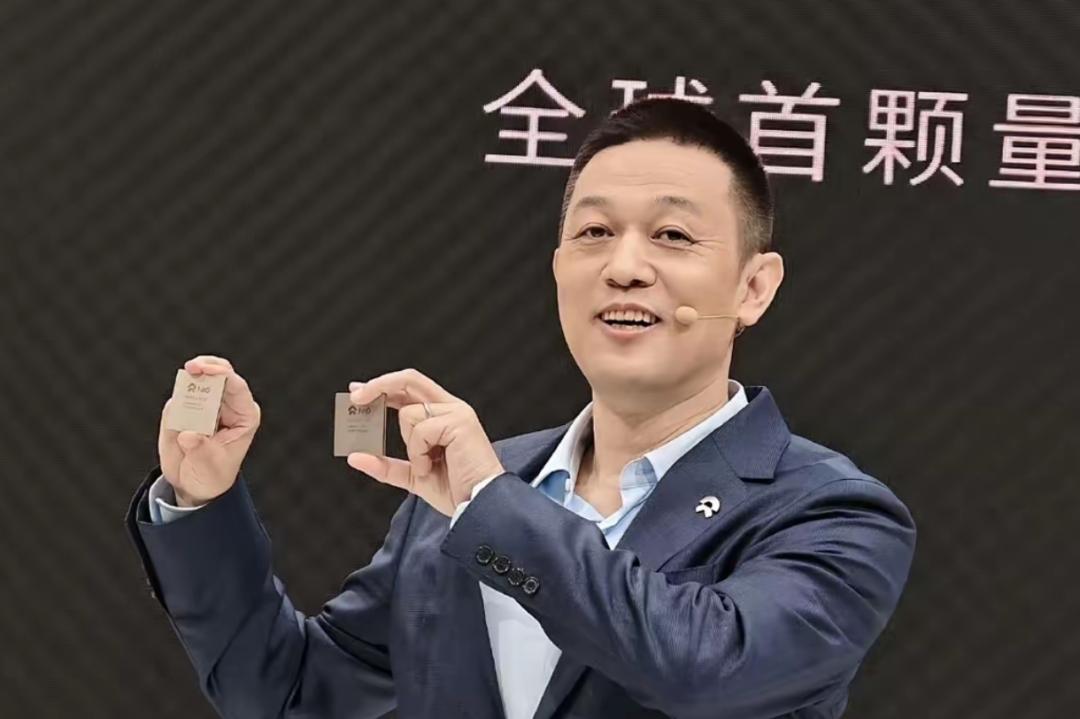
Xie Yan, Chief Technology Officer of Li Auto, also did the math: the current cost of intelligent driving chips for high-end models is about 1,600 to 2,000 US dollars, and it may rise to 2,500 to 3,000 US dollars in the future. Enterprises that develop chips independently can cut the cost by half.
At a time when the profit margin of the automotive industry has dropped to 3.6%, the allure of cost reduction is self-evident.
The Pitfalls of Chip Development
Of course, no matter how many advantages it has, not every automaker is qualified to step into this field.
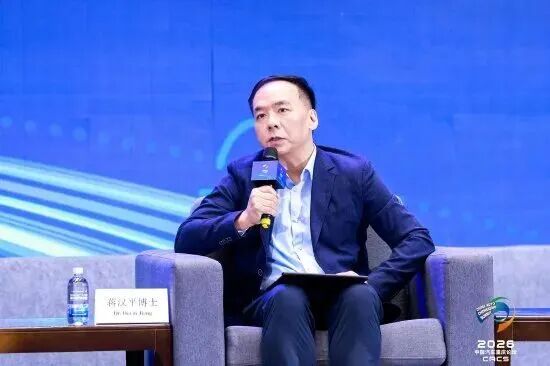
At the 2026 Chongqing Auto Show Forum, Jiang Hanping, Vice President of Corechip Technology, said: "Car manufacturers are eager to try independent R&D of chips, but we need to stay calm when doing this. There are few independent surviving companies that rely entirely on automotive-grade chips in the world, and the number in China is approaching double digits. The life cycle of automotive-grade chips is 10 to 15 years. Who can guarantee that these companies and their supply chains will still exist 5 years later?"
Why is that? First of all, the scale threshold for chip development is extremely high, which most automakers cannot reach at all.
According to previous estimates by IBS, a 5nm automotive-grade intelligent driving chip requires 540 million US dollars, equivalent to about 3.9 billion yuan, just in the design and tape-out stage. Li Bin revealed that the R&D investment of Shenxi NX9031 is equivalent to building 1,000 battery swapping stations, reaching the level of tens of billions of yuan.
Secondly, the development cycle is too long, leaving almost no room for error.
Automotive-grade chips are typical high-tri projects: high investment, high risk and high threshold. From design to mass production and installation on vehicles, it takes 3.5 to 5.5 years, and after being installed on vehicles, it is necessary to guarantee continuous supply and upgrade for 5 to 10 years. The R&D team usually has 300 to 500 people. Once the capital chain breaks in the middle, or the chip test fails, or the performance does not meet the standards, the investment of tens of billions of yuan may be completely lost.
Therefore, some automakers hold a conservative attitude, and Leapmotor is a ready example. In 2019, it cooperated with Dahua to develop the Lingxin 01 chip, but stopped the investment in 2020, and shifted its focus to algorithms and complete vehicles. Zhu Jiangming put it bluntly: "If Leapmotor becomes a company as large as Toyota one day, we will consider developing chips independently. Before that, we will focus on core components that can generate more value."
Independent chip development is a must-answer question for leading automakers, but it is not the correct answer for all automakers. In your opinion, behind this "chip development" boom, who is qualified to participate in this game, and who is just following the trend and taking reckless risks?
This article is from the WeChat Official Account "Auto Market Story" (ID: autostinger), written by Peng Fei, published with authorization from 36Kr.