Behind the boom of self-operated retail, where does it come from and where is it heading?
Step into a supermarket, and you will see an increasing number of products carrying the retailer's own brand. From Sam's Club Member’s Mark, Walmart's Great Value to ALDI, Pang Donglai, and Yonghui's private labels, almost all retail enterprises are participating in product development in a more in-depth manner; at the same time, instant retail players are also extending their reach to procurement, quality control and offline physical stores.
In August 2026, a report released by the China Chain Store & Franchise Association and Boston Consulting Group shows that among the 30 surveyed retail enterprises, 60% have adopted the in-depth customization model, and 77% plan to upgrade their supply chain and quality control capabilities.
The changes in retailers stem from shifts in consumer demand. Take the purchase of a box of fresh meat that is to be cooked that same night as an example: consumers want the product to be fresh, safe, reasonably priced, and delivered in time for meal preparation. These seemingly ordinary requirements respectively involve procurement, testing, cold chain, inventory and distribution. Any problem in any link will affect customers' evaluation of the store.
Therefore, why are self-operated retailers diving deeper into products and supply chains? To continuously meet user demands, what goals do they need to achieve, and how will this reshape the relationship between retailers and their industrial partners?
01
The in-depth development of self-operation is driven by user experience
From the perspective of meeting consumer demands, the 1.0 era of retail mainly solved the demand of "accessibility": retailers were responsible for moving products to the vicinity of consumers, and prime locations and store networks were their core competitive advantages. In the 2.0 era, the retail industry further realized "rich choices and convenient shopping": products became more abundant, and e-commerce and instant delivery broke the constraints of time and location on shopping.
When products and channels are sufficiently diverse, consumers hope to spend less time comparing products, worry less about quality, and pay less attention to prices and delivery times. This defines the connotation of the current Retail 3.0 era: around a complete shopping experience, retailers need to excel at product selection, product development, quality management and delivery fulfillment as a whole, making it easier for customers to buy suitable and reliable products.
Purely increasing product richness or speeding up delivery cannot automatically solve all problems. Faced with more than a dozen types of eggs and dozens of kinds of milk, consumers still need to compare their origins, specifications, shelf lives and unit prices. People may be willing to spend time researching a new mobile phone upgrade, but it is hard for them to put the same amount of effort into deliberating over daily groceries. Selecting and vetting products in advance for customers has become a more valuable task for retailers.
From another perspective, this trend also creates opportunities for retailers to accumulate trust across different product categories. For a familiar and trusted retailer, when a customer chooses a type of biscuit they have never bought before, they can rely on their past experience of buying milk and fruits at this store. What retailers strive for is to make customers willing to entrust their product selection decisions to them.
To gain continuous trust from consumers, enterprises need to know where the events affecting product quality take place. For example, the condition of a box of fruit is related to the time of picking, transportation and storage, and the consistency of food taste involves raw materials and production techniques. Consumers' demand for cost performance will also be transmitted to the upstream supply chain. The more retailers know about how products are produced and circulated, the more opportunities they have to reduce unnecessary costs while retaining the quality that customers care about.
Self-operation means that retailers directly operate their products and assume corresponding responsibilities for inventory, loss and after-sales service. Direct procurement, private labels and customized development give retailers the access to directly participate in these tasks. They can find and manage high-quality supply sources, discuss more appropriate specifications with factories, and move quality requirements forward to the production end.
This is also changing the focus of procurement. Directly bearing inventory and loss means that unsalable goods, unstable quality and lost customers will all affect their own revenue. Retailers need to continuously judge whether a product is worth introducing, whether it should be retained, and how to improve it. In other words, the in-depth development of self-operation makes "selecting good products for customers" a more thorough and continuous business operation, and the value of retail is extended in this process.
02
From managing shelves to managing every single product
How can retailers move their work further upstream?
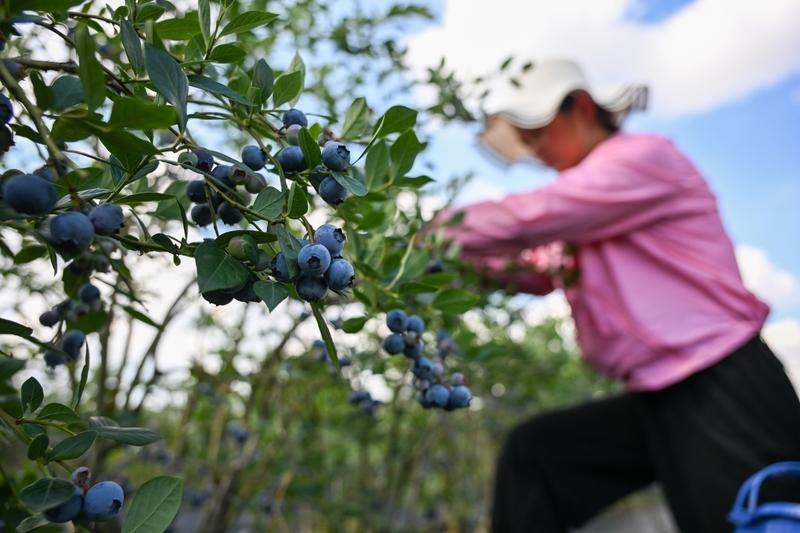
Take a box of Yunnan blueberries commonly seen on shelves as an example: after long-distance transportation, the blueberries arrive at the warehouse, and if they are found to be substandard during acceptance, the transportation and time costs have already been incurred. According to public reports, to solve the problem of high rejection losses caused by the long transportation distance of Yunnan blueberries, Xiaoxiang Supermarket moved the quality inspection forward to the orchard, completed the inspection before shipment, shortened the acceptance and delivery time after the blueberries arrive at the warehouse, and reduced losses. What customers see is still a box of blueberries, but what has changed behind the scene is the way the orchard, warehouse and sales end cooperate with each other.
By taking one step further to participate in the process in this way, retailers can also develop more products better than ever before. For example, customer feedback such as "the portion is too large", "I can't finish it" and "it is inconvenient to use" may seem like minor issues, but they correspond to different life scenarios behind them.
Retailers that are close to the consumer end can identify these requirements from sales performance and user reviews, then further discuss development with suppliers to translate the demands into actual products. Decisions on the size of packaging, selection of raw materials, adjustment of formulas and reasonableness of pricing all need to be considered together with production techniques, minimum order quantities, transportation and storage conditions. As a result, procurement work becomes more detailed. After the products are launched to the market, continuous adjustments will be made based on actual purchase and usage feedback.
In the final analysis, once a product is directly endorsed by the retailer, the retailer needs to take responsibility to customers for every quality fluctuation. The real competitive advantage accumulated by retailers is their ability to understand what customers need, to make the products right, and to maintain this capability continuously.
03
The in-depth development of self-operation relies on closer retailer-supplier relationships
How deeply retailers participate in each link and how they cooperate with all parties depends on user demands and the enterprise's own capabilities. Full-link experience does not mean that every link has to be completed by the enterprise itself. Customers do not care about the division of labor between different enterprises, they only care whether every step is connected, and whether someone will take responsibility if something goes wrong. With well-executed professional division of labor, the full-link experience can be better delivered.
When retailers start to define products based on user demands, the content of discussions with brands and factories will further extend to product development and production arrangement.
From Sam's Club, Pang Donglai to Xiaoxiang Supermarket, retailers' in-depth expansion into the product side is also changing the way they cooperate with brands and factories. Sam's Club has launched customized Ambrosial yogurt with Mengniu, adapting the product and packaging to the breakfast scenario; in product development, Pang Donglai participates in the formulation of raw material standards, production processes and delivery standards for suppliers; the cooperation between Xiaoxiang Supermarket and Junlebao extends from customization of specifications, flavors and packaging to coordinated production scheduling and delivery. The retail end's understanding of consumer demands, combined with the R&D, manufacturing and supply capabilities of production enterprises, not only improves customers' shopping experience, but also provides references for brands to adjust products and expand consumption scenarios. As a result, the cooperation between retailers and suppliers extends from supply transactions to the joint improvement of product development and supply chain capabilities.
The value of this type of cooperation lies in enabling the production end to obtain specific demand information at an earlier stage. Sales feedback indicates which products need to be adjusted, restocking expectations help arrange raw materials and production capacity, and clear quality standards provide a basis for process investment. The demand insights accumulated by retailers in self-operation thus become resources that the upstream supply chain can utilize. More stable cooperation expectations also help suppliers make continuous investments in R&D and quality improvement.
Such collaboration does not only take place in the self-operation scenario. The "single-person meal" scenario in instant retail has brought demand for small-grain packaged grain, oil and condiments. After platforms and merchants identify this change, brands adjust product specifications accordingly, and then reach customers through distribution and delivery. All parties retain their own professional capabilities, and jointly develop products that are more suitable for new scenarios.
Looking back from this perspective, the core significance of self-operation is that it enables every choice made by consumers to be transmitted to the production end faster and more accurately, so that products, quality and services can be improved with each round of feedback. The full-link user experience of Retail 3.0 relies exactly on this kind of division of labor and collaboration. Ultimately, what is worth accumulating is customers' trust in the store, and their habit of entrusting their next purchase to it.