The robot has rolled off the production line. Elon Musk said that it will take one year to achieve a weekly output of 20,000 units.
After market hours on October 21 Eastern Time, Tesla explicitly stated for the first time in its business update report that Optimus has started production on the high-volume production line at the Fremont factory. The robots that rolled off the line are the first batch of products with mass production quality, and the existing manufacturing process is already suitable for commercial production.
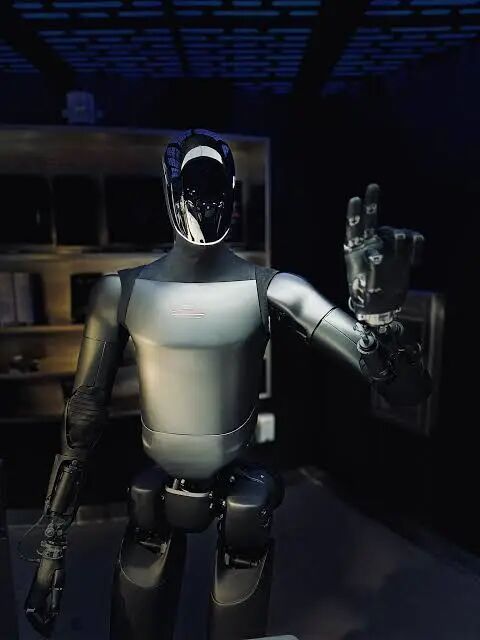
Prior to this, Tesla's disclosures about Optimus were limited to R&D progress and production capacity planning, and this is the first confirmation that production-grade robots have rolled off the production line. The dismantling and renovation of the original Model S and Model X production lines took only 46 days.
Elon Musk mentioned in the subsequent conference call that most of the equipment for the million-unit-level production line in Fremont is already in place, but to reach a speed of 20,000 units per week, which translates to an annualized million-unit output, at least one more year is needed, and possibly longer.
His explanation is that the product is too new. The growth of Optimus follows an S-curve, with a very shallow slope at the initial stage and fluctuations along the way, because producing one robot requires getting roughly 10,000 things right, and the progress speed depends on the slowest and most unlucky one among them.
In his exact words, the robot cannot break down after just one month of use.
The unresolved part on the hardware side is the hand. The drives for walking and torso movement have been finalized, while the hand is far more complex than motion actuators. It needs to meet four requirements at the same time: wear resistance, the ability to grasp fragile items, sensor integration, and no damage after repeated operations, and the custom gears are still under pressure in terms of energy consumption and reliability.
This is also why Tesla chose to start mass production before the hand design is finalized. The production line, supply chain and AI software can only be iterated in parallel. If the launch is delayed until the hand solution is finalized, the time cost will be higher. On the software side, it is stated that there is still a lot of work to do before the robot can truly be competent for open-ended tasks.
Training data is another major hurdle.
Optimus does not have a vehicle fleet like automobiles to collect data, so it can only first build 10,000 to 20,000 robots for self-play, and build the Optimus Academy at the same time to let them practice various tasks. This is the clumsy method he himself admitted, and it is also the only feasible method at present.
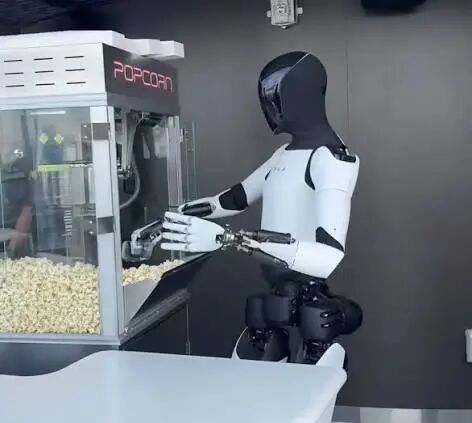
The specific path is to use human demonstration data for pre-training first, then put the robots into simulation and real production lines for large-scale self-play, so that every failure can become a training sample for the next round. Before this process is fully rolled out, the generalization ability of the robot cannot be improved.
The external delivery time is set to around the end of 2027. Musk expects problems in AI, electromechanical design, reliability and service life to be resolved around the end of next year, which is the time for delivery to companies outside Tesla. In the initial stage, only industrial scenarios will be covered, with high-risk, repetitive and all-weather operations as priorities, and household scenarios will be arranged later.
The chip schedule has also been released. AI5 is planned to be integrated into robots next April, with computing power about an order of magnitude higher than AI4. To adapt to robot scenarios, the memory of AI5 has been reduced to 72GB, half of the original design, and AI6 will further reduce it by one-third to 144GB. The company stated that this will not affect performance.
A demonstration video will be released in one or two months. He specifically emphasized that no preset actions should be set, and the real robot should handle unencountered situations. This statement is aimed at peers in the market whose demonstrations are completed by remote control and staged shooting.
Compared with the previous caliber, this time it is a clear calibration.
The statement at the beginning of the year was to produce 50,000 to 100,000 units in 2026, and at Davos in January he said that the public sale would start in 2027 with the cost controlled to 20,000 US dollars per unit. Now it is adjusted to deliver to enterprise customers first at the end of 2027.
The production line status has shifted from the construction phase to the early ramp-up phase. The Fremont production line has a designed annual capacity of 1 million units, and the second production line in Texas is still under construction with a long-term designed annual capacity of 10 million units.
The supply chain is another underrated variable. Musk mentioned at a meeting on the 10th of this month that China's new rare earth regulations once set the project progress back by two to three months, which is still a practical constraint to this day. The import license for rare earth magnetic materials required by robots is an unavoidable part.
Tesla's Q3 revenue was 28.046 billion US dollars, basically flat year-on-year. Its attributable net profit was 787 million US dollars, down 43%, and its operating profit was 718 million US dollars, down 56%. The full-year capital expenditure guidance was lowered from the previous over 25 billion US dollars to about 20 billion US dollars. After the earnings report was released, the stock price fell by more than 4% in after-hours trading.
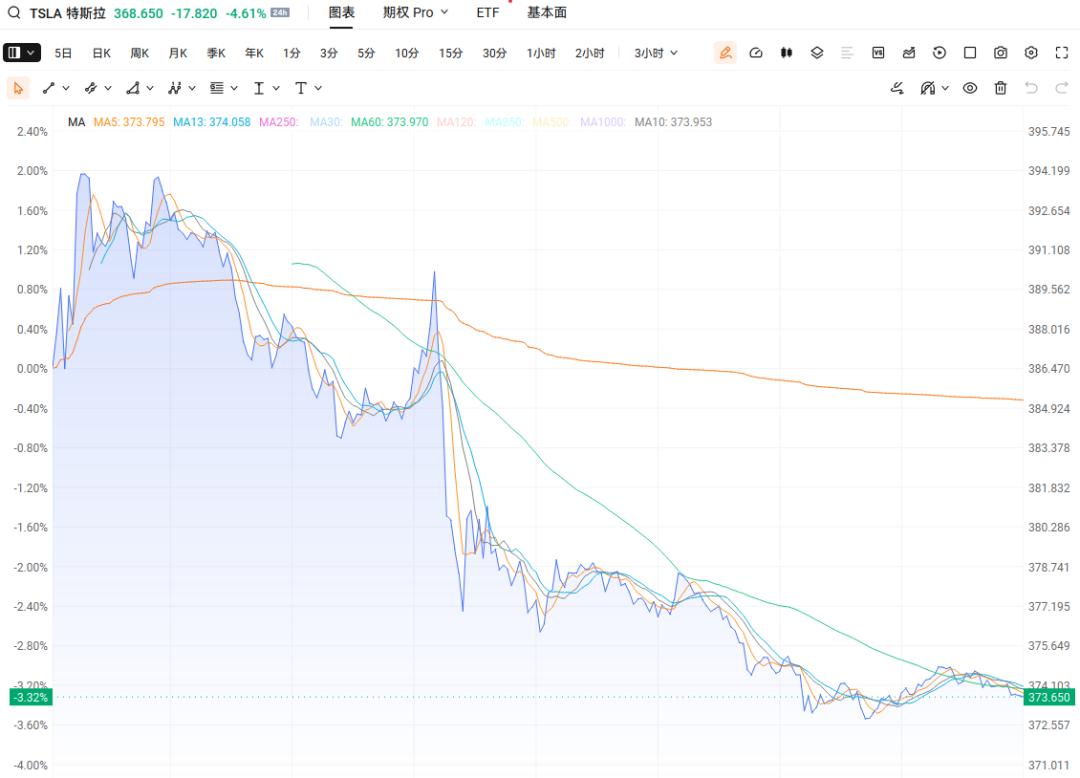
This forms a contradiction. The industrial side is moving forward, while the financial side is contracting. The market's pricing for robots can only rely on the discount of future production capacity, and the tolerance for current profits is declining.
Institutions define 2027 as the year of small-batch delivery and scenario verification, and large-scale volume growth can only be realized when three things are completed at the same time: the hand design is finalized, the supply chain is straightened out, and AI5 is deployed.
The next nodes to be verified are still those ones: whether AI5 can be deployed as scheduled next April, whether the demonstration video in one or two months is truly free of preset actions, when the custom gears for hands will be finalized, and whether the external delivery at the end of 2027 will be postponed for the fourth time.
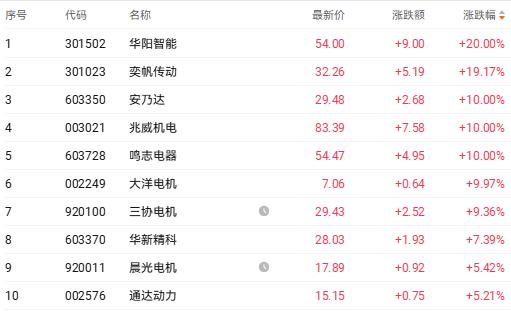
Back to today's A-share market. Daye Co., Ltd. sealed its fifth consecutive daily limit, closing at 14.51 yuan. Shenzhen Zhaowei Machinery & Electronics Co., Ltd. also hit the daily limit, closing at 83.39 yuan. While Fulai New Materials, which rose in tandem in the morning session, fell back from 8.39% to 7.11%, and Deman Technology fell back from 4.10% to 1.83%. The Shanghai Composite Index fell 1.09% on the same day, with 1961 stocks declining and only two stocks sealing the daily limit.
Musk's sentence that "Optimus will become the greatest product on Earth, and no one in the general-purpose humanoid robot field can come close to Tesla" has been repeated many times in the past two years.
This article is from the WeChat Official Account "Gelonghui APP" (ID: hkguruclub), the author is Godzilla, and 36Kr publishes it with authorization.