Harvard top achiever launches a startup selling "fabric straps": priced at 2,000 yuan apiece, the products are frantically snapped up by the middle class, bringing in an annual revenue of 7 billion yuan.
As smartwatches keep piling on features and almost evolve into "a second phone screen", a counter-trend track is quietly booming.
According to a report released by market research institution Smart Analytics Global, in the second quarter of 2026, the global shipment of screenless health tracking bands (hereinafter referred to as "screenless bands") increased by 122% year-on-year. Among them, the US brand Whoop ranks first in the world with a 54% market share, followed by Chinese smart hardware brand Amazfit and Finnish sports brand Polar with 21% and 14% shares respectively.
Abhilash Kumar, chief research consultant of the institution, judged: "Screenless bands were originally an ultra-premium product, but they are now gradually being accepted by a wider audience. These products also pair well with analog watches without making too many compromises in terms of fashion and lifestyle."
A "cloth strap" with no screen and no way to check the time, how can it achieve large-scale sales with a subscription fee of hundreds of dollars a year or a hardware price of thousands of yuan, turn top athletes like Cristiano Ronaldo and LeBron James from users into investors, and attract tech giants like Google to enter the track in person?
Three highlights of this track are worth paying attention to:
1. Growth rate and pattern: The niche category is entering a volume release period. Data shows that the global shipment of screenless bands in the second quarter of 2026 increased by 122% year-on-year. A screenless segmented category is spreading from ultra-high-end users to a broader crowd.
2. Counter-intuitive business: No screen, no way to check the time, yet it has achieved large-scale sales. Screenless bands enter the market with a subscription fee of hundreds of dollars a year or a hardware price of thousands of yuan. Whoop's valuation once soared to tens of billions of dollars. What it sells is not screens and interaction, but judgments on physical load, recovery and sleep.
3. Competition watershed: Giants enter the market, subscription system and one-time purchase system go head-to-head. Tech giants such as Google have entered the market in person, while Garmin and Amazfit have sold out their products with the "subscription-free + one-time purchase" route. The competition of screenless bands is shifting from "whether there is a screen" to "whether users can be persuaded to pay for continuous health data".
What is a screenless health tracking band?
Essentially, a screenless health tracking band is a wrist-worn health tracking device that completely removes the display screen, cuts off all notification and interaction functions, and only retains high-precision physiological sensors and data acquisition modules.
It does not support functions such as notifications, time checking, and music playback. Instead, it continuously collects data such as heart rate, heart rate variability, blood oxygen saturation, skin temperature and sleep stages 24 hours a day, and then provides users with actionable health judgments through the mobile app or AI coach.
The product logic of screenless bands is most fully embodied in Whoop, the category pioneer. Whoop was founded by Will Ahmed in Boston, USA in 2012. The reason for its establishment was that when he served as the captain of the Harvard University squash team, the team could not accurately quantify physical load for a long time and repeatedly fell into the dilemma of overtraining.
To this end, Will Ahmed and two partners founded the Whoop brand, aiming to serve athletes and professional training groups, focusing on monitoring three dimensions: recovery, sleep and training load.
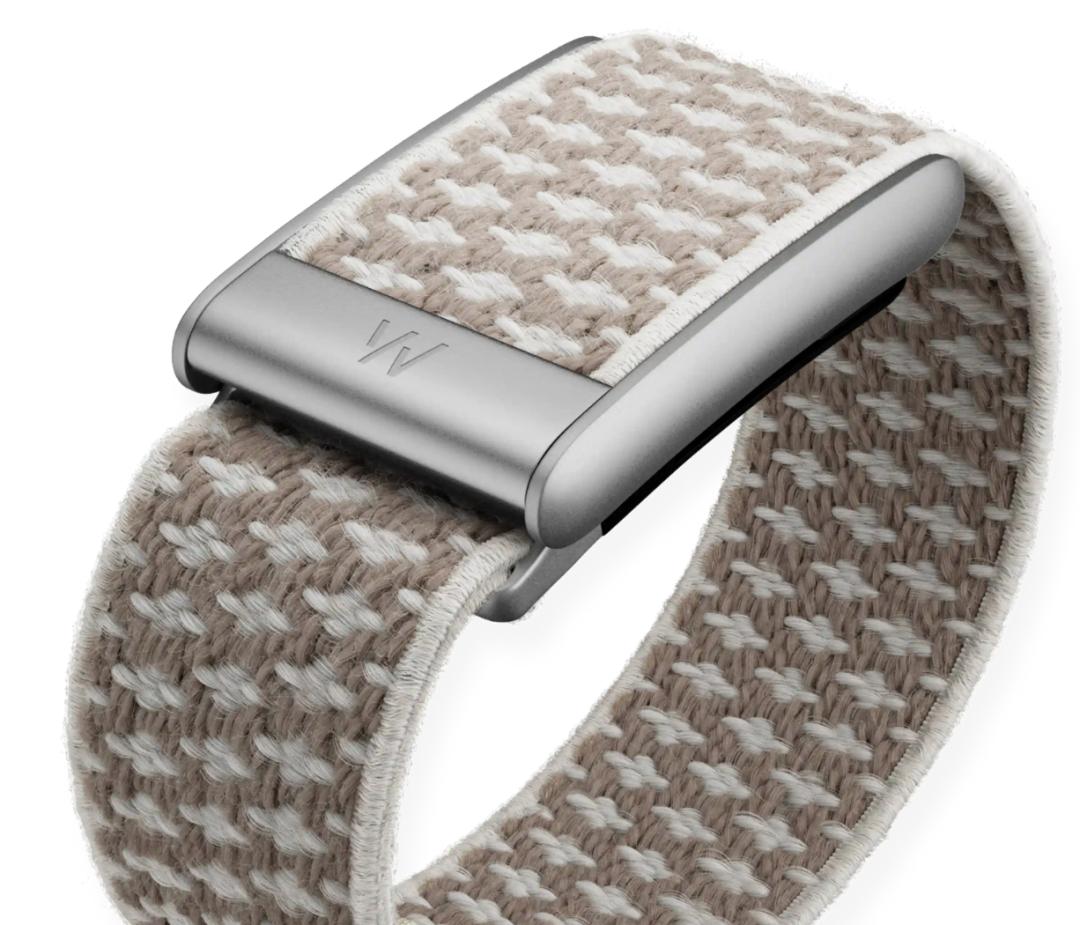
Whoop screenless band, source from Whoop official website
Whoop compiles complex physiological data into three indicators: Strain, which quantifies the physical and mental pressure the human body bears throughout the day by continuously monitoring heart rate variability, resting heart rate and cardiovascular output;
Recovery Index, which analyzes nighttime sleep quality, resting heart rate and respiratory rate to give a "body readiness score" when users wake up in the morning, telling users whether they are suitable for high-intensity training or complete rest that day;
Sleep Management, which deeply tracks various sleep stages, sleep debt and wake cycles, and gives customized sleep duration suggestions. In other words, what screenless fitness bands sell is not the data itself, but the judgment of "how to train and rest today".
The difference between it and smartwatches lies not in the sensor accuracy, but in the product philosophy. Smartwatches move notifications, calls, payments and other functions to the wrist, with the screen as the interaction hub, at the cost of frequent pop-ups and range anxiety of daily charging. The screenless band completely removes the screen, bringing a weight of 10 to more than 20 grams and a battery life experience of up to 14 days.
Who is paying for this device?
The core selling point of screenless bands is "digital burden reduction", and this logic determines that its users are not the general public.
The first type of core users are professional athletes and high-intensity trainers. For example, football star Cristiano Ronaldo, NBA stars LeBron James, Kevin Durant and others, they need extremely accurate and strict data to adjust the training cycle and avoid overtraining. Today, many top athletes have become personal investors of Whoop.
The second type of core users are the middle class and professionals in high-pressure environments. For these users, energy management, stress recovery and deep sleep quality have higher priority than replying to a WeChat message immediately.
The third type of core users are people pursuing "digital detox" and with health anxiety. They are tired of information overload and the continuous fragmentation of attention by screens, but they do not give up the grasp of their own health indicators. The screenless band just provides a compromise solution: the device fades to an unperceivable position, and the data still accumulates in the background.
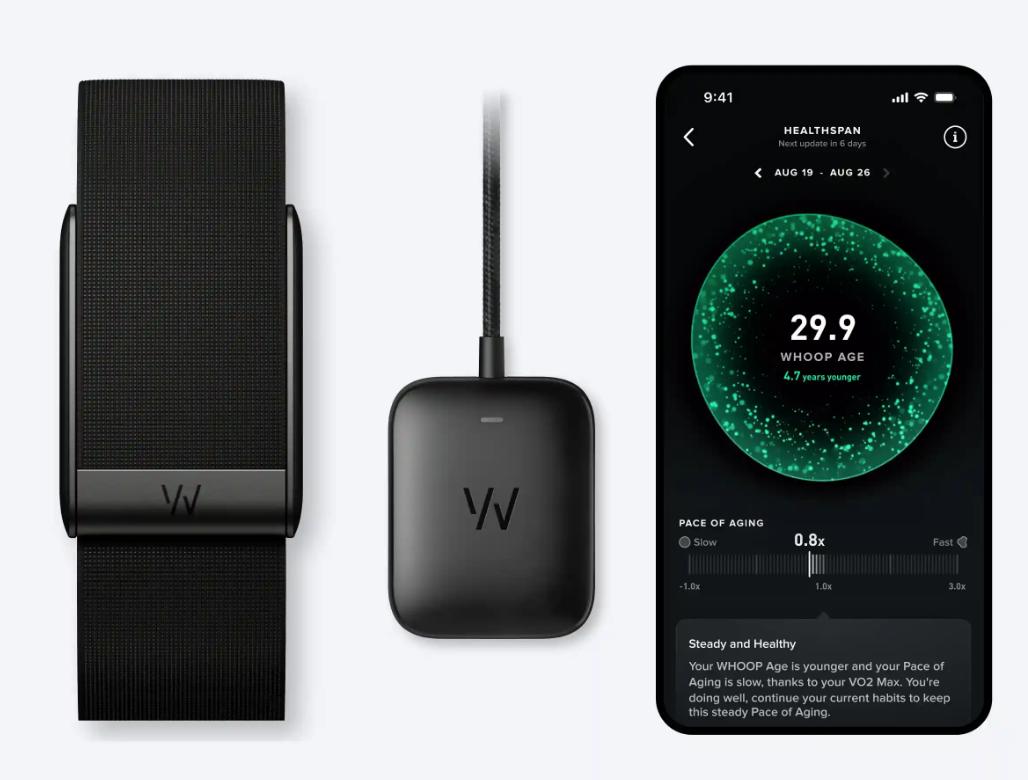
Monitoring status of screenless band, source from Whoop official website
As the pioneer of the track, Whoop has significant first-mover advantages. In 2025, Whoop had more than 2.5 million paying members, subscriptions and reservations both increased by 103% year-on-year, with annualized revenue reaching 1.1 billion US dollars (about 7.3 billion RMB), and achieved positive cash flow for the first time.
In March 2026, Whoop completed a $575 million Series G financing, with its valuation soaring to 10.1 billion US dollars (about 67.5 billion RMB). Its investors include Qatar Investment Authority, Abbott, as well as star athletes such as Cristiano Ronaldo, LeBron James and Rory McIlroy. The company even considers launching an IPO in the next two years.
Competition patterns are diverging
Although the functions of screenless bands are limited, the payment threshold is not low.
Take Whoop as an example, this product adopts a full subscription business model: the band is free of charge, and users get services through annual or monthly fees. The annual fee ranges from 199 US dollars to 359 US dollars (about 1300 yuan to 2400 yuan), and the device cannot be used without renewing the subscription.
The followers have their own respective strategies. Garmin released the CIRQA band, which is priced at 200 US dollars, has a battery life of up to 10 days, supports 80 types of sports records and seamlessly connects to Garmin's sports ecosystem. After the product was launched, it was severely out of stock due to unexpectedly strong sales, and order delivery in many places was delayed for 5 to 8 weeks.
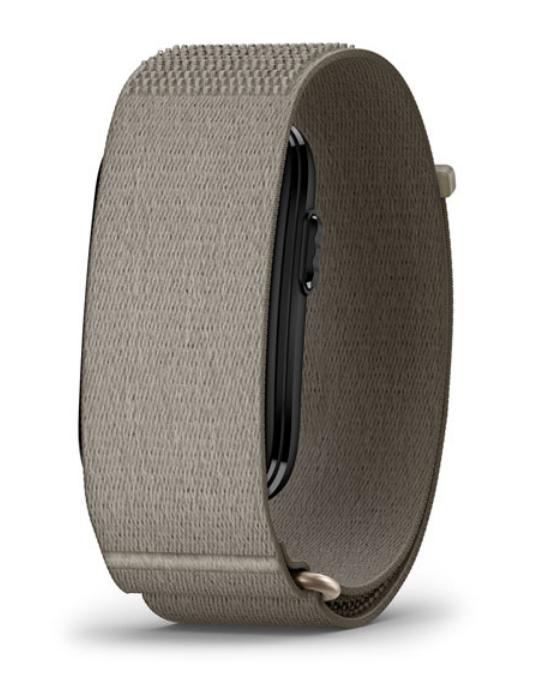
CIRQA band under Garmin, source from Garmin
Amazfit launched the screenless band Helio Strap in June 2025, which also takes "subscription-free training and recovery tracking" as its core selling point, priced at 99 US dollars with high cost performance, and was once sold out after launch.
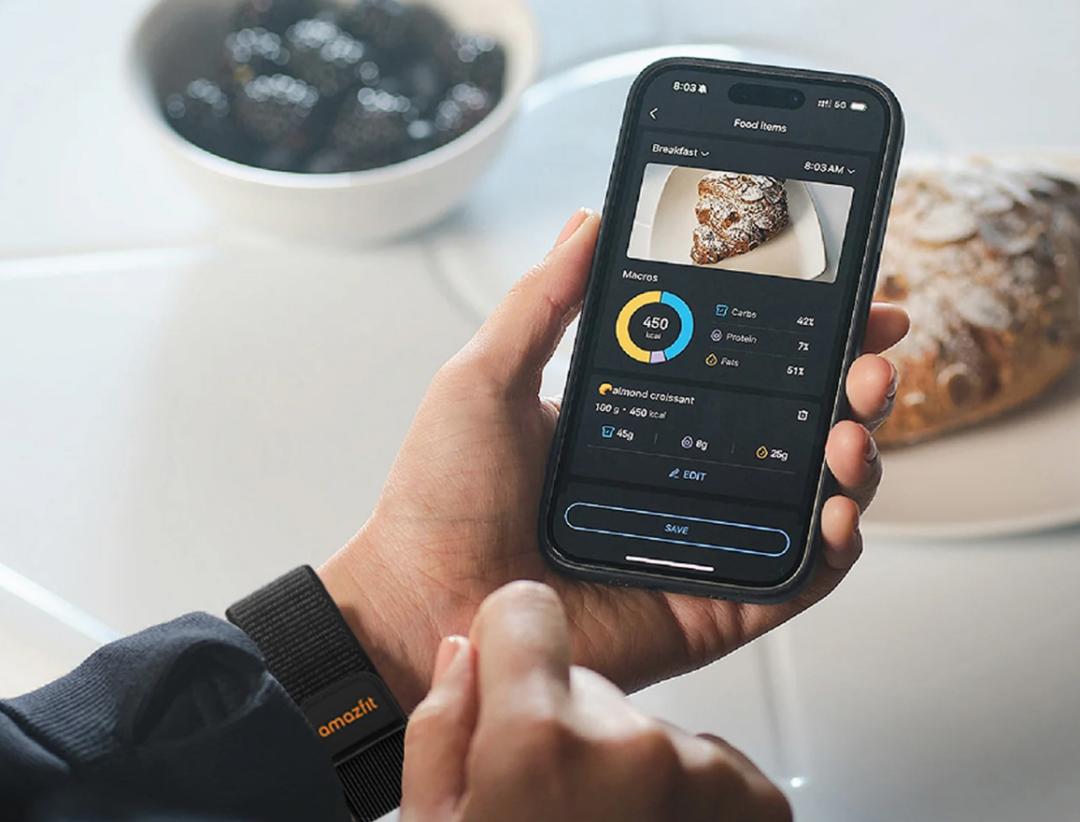
Helio Strap, source from Amazfit official website
The popularity of screenless bands is far from reaching its peak. According to third-party forecasts, the shipment of this category will reach 6 million units in 2026, and rise to 8.8 million units in 2027, with a year-on-year increase of about 48%.
Facing this fast-growing market, giants are also rapidly making up their positions. In May 2026, Google launched the screenless band Fitbit Air priced at 99.99 US dollars (about 710 RMB). Basic activity, sleep and heart rate monitoring can be used without paid subscription; to access the Gemini AI-powered health coach function, users need to pay 9.99 US dollars per month or 99.99 US dollars per year.
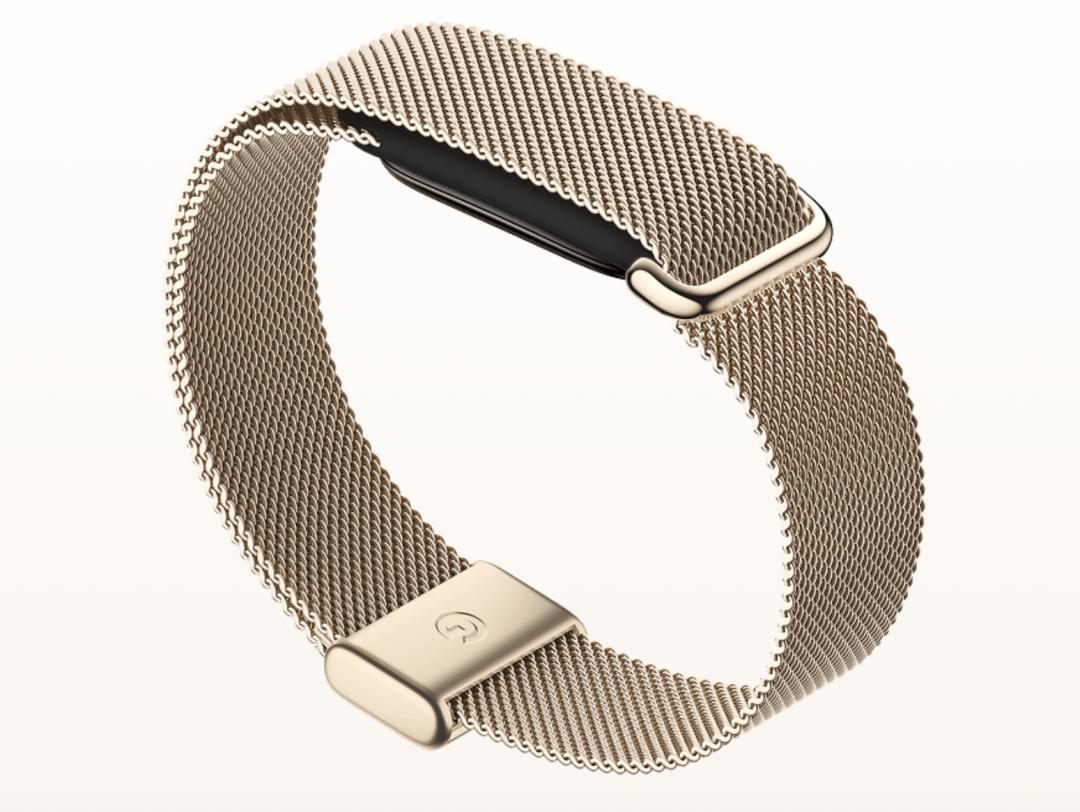
Fitbit Air, source from Google
This model contrasts with Whoop's "full-featured subscription system". Google makes "recording" free and "interpretation" paid, which essentially shifts the competition focus from hardware prices to the differentiation of AI analysis capabilities.
Apple is also taking actions. According to the latest exclusive report by well-known tech journalist Mark Gurman, Apple is also actively exploring and promoting the prototype development of Whoop-style screenless health trackers, which is expected to debut as early as 2028.
The rise of screenless bands is essentially an epitome of the wearable device industry shifting from "feature competition" to "scenario competition". Smartwatches hold the entrance of instant interaction and attention, while screenless bands focus on all-weather, low-interference physiological recording.
The real watershed of this track is not whether there is a screen, but whether users can be persuaded to pay for continuous health data. When feature piling makes people tired, whoever can turn one-time hardware sales into long-term services will open up a brand new business territory in this subtraction track.
This article is from WeChat Official Account "Tianxia Wangshang" (ID: txws_txws), written by Tianxia Wangshang, published with authorization from 36Kr.