Selling its mainland China business for a mere 1 yuan, why did GOGOX lose the intra-city freight business?
GOGO, which once spared no effort to burn 524 million yuan in sales expenses in one year to fight a price war, now plans to offload its mainland China business asset package for only 1 yuan.
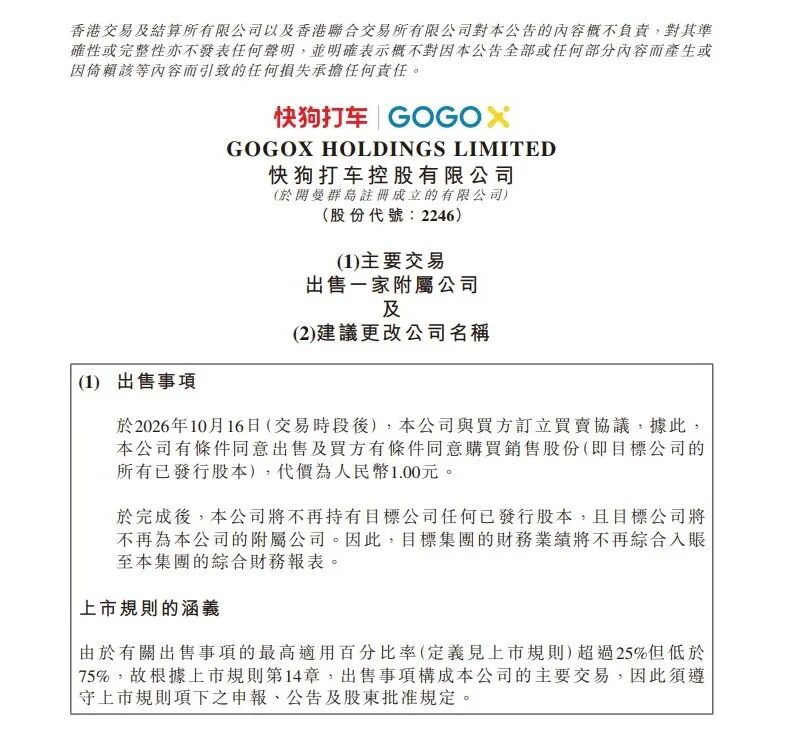
On October 16, GOGO issued an announcement, stating that it intends to sell all issued share capital of its wholly-owned subsidiary GGEx Holdings Limited for RMB 1.00, and proposes to change the Chinese name of the company from "GOGO Holdings Limited" to "GOGO Tech".
After the completion of the sale, the Group will no longer operate any business in mainland China under the "GOGO" brand. Its business will shift to focusing on Hong Kong and other overseas markets, operating under the "GOGOX" brand.
Source: Official website of the Hong Kong Stock Exchange
The announcement immediately triggered discussions that GOGO would withdraw from the mainland market. In response, GOGO stated that some media's interpretation of the sale of its mainland business as "withdrawing from the mainland market" is inconsistent with the facts in the company's announcement. The company emphasized that this transaction only involves the change of the shareholder structure of the mainland operating entity, and does not involve business shutdown, liquidation, deregistration or operation termination. The service agreements signed between the platform and users as well as drivers will continue to be valid.
This response does not change the Group's move to divest its mainland business. After all, the loss-making mainland business has already become a drag on the Group.
In the past nearly ten years, the fate of GOGO has gone through a closed loop, and now it has returned to the original point.
Nine years ago in 2017, 58 Suyun, the predecessor of GOGO, completed the merger with Hong Kong freight company GoGoVan. The next year, Chen Xiaohua, founder and chairman, changed the company's name from 58 Suyun to GOGO. The word "GOGO" is the Chinese name of GoGoVan, and the word "Dache" (ride-hailing) is to highlight the C-oriented nature of the platform.
At that time, GOGO hoped to shift from its past focus on small B-end customers to C-end users as soon as possible, breaking into the core market of Lalamove.
But up to now, GOGO's C-end transformation has been declared a failure.
The real money the company spent did not grab users from Lalamove, nor did it retain users. The company's share in the mainland intra-city freight market has shrunk to 0.5%, with almost no sense of existence. The company's business direction has returned to the past, still mainly focusing on B-end customers.
The domestic business that is about to be sold by GOGO is currently in a state of consecutive years of losses and continuous liabilities. Investors have retreated one after another, and the financing channel has narrowed. GOGO can only discard this burden with an announcement and a consideration of 1 yuan.
Even Chen Xiaohua himself has left the stage in advance. He resigned from the positions of chairman and executive director in December 2023, and no longer holds any position in the Group. The brand name he carefully changed will also leave the stage together with him.
Once the second largest player in the industry and a company with the aura of "the first share of intra-city freight", why did it reach the point of selling its mainland business for 1 yuan in four years? Is intra-city freight a business that is difficult to make profits?
1
Sell mainland business for 1 yuan,
The first intra-city freight listed company cuts its wrist to survive
Behind the 1-yuan pricing is the urgency of GOGO Group to divest its domestic business.
According to GOGO's announcement, GGEx Holdings Limited, which is sold this time, is an investment holding company registered in the British Virgin Islands, wholly owned by GOGO's listed entity. Through China GOGO Group Co., Ltd. and its subsidiaries, as well as relevant entities controlled by agreement arrangements, the company carries out logistics distribution and technical service business in mainland China, which is the Chinese business entity of GOGO.
Judging from the information disclosed in the announcement, GGEx is indeed not a target worthy of purchase.
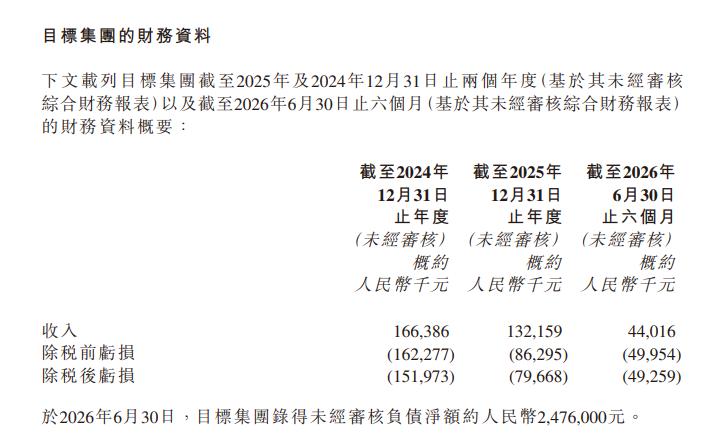
As of June 30, 2026, GGEx's unaudited net liabilities were about 2.476 million yuan, and it was trapped in perennial losses. The loss after tax in 2024 was 152 million yuan, 79.668 million yuan in 2025, and 49.259 million yuan in the first half of 2026. The cumulative loss in two and a half years exceeded 280 million yuan.
Performance of GOGO's China region, Source: Official website of the Hong Kong Stock Exchange
In terms of revenue, GGEx's revenue in 2024 and 2025 was 166 million yuan and 132 million yuan respectively, accounting for 25% and 20% of the Group's total revenue respectively in the two years.
In the first half of this year, GGEx's revenue was only 44.016 million yuan, accounting for only 15% of the Group's total revenue.
If the transaction is completed, GGEx's financial results will no longer be included in the Group's consolidated financial statements, and it will no longer drag down the Group's finance and performance.
Looking back at GOGO's past, it was not a company that started with overseas business.
Its predecessor was 58 Suyun, a representative of domestic small B-end freight enterprises in the early days, founded in 2014, which mainly engaged in the freight business between wholesale markets, express delivery companies and large retail companies. Before 2017, it had covered more than 100 cities, with a peak of 400,000 orders per day, 3 million users and 1 million registered drivers.
Now GOGO's overseas assets mainly come from the merger with GoGoVan in 2017, which enabled the Group's business to cover mainland China, Hong Kong, Taiwan, Singapore, South Korea and other places, claiming to be the largest intra-city freight platform in Asia.
At that time, the domestic market where GOGO was located was very hot. Intra-city freight was regarded as another trillion-yuan market with imagination space after local travel, and it was also the main position for GOGO to shift from B-end to C-end.
In 2018, GOGO first received a large financing of 250 million US dollars, led by Huaxin Investment, followed by Cainiao, China-Russia Fund, Qianhai Mother Fund and other institutions, with Alibaba's participation. Later, it was officially renamed, and released the narrative of shifting to C-end strategy, competing head-on with Lalamove, which had already gained a firm foothold in C-end freight at that time.
According to media reports at that time, there was a saying in the market that "Lalamove in the south, GOGO in the north". The two platforms issued coupons for moving and freight to users on the one hand, and threw out subsidies and reward policies to drivers to seize capacity on the other hand, and the price war was in full swing.
GOGO's sales expenses in 2018 reached 524 million yuan, even exceeding the overall revenue of that year.
In 2020, Didi Freight entered the market with traffic and subsidies, starting from Chengdu and Hangzhou, quickly occupying markets with low-price coupons and driver subsidies. The original two-hero confrontation evolved into a three-party scuffle.
In such a fierce competition, GOGO successfully went public on the Hong Kong Stock Exchange in 2022, winning the title of "the first share of intra-city freight". Its issue price was HK$21.5, and it rose to HK$23.15 during intraday trading on the first day of listing, with the highest market value once exceeding HK$14 billion.
Perhaps GOGO never expected that four years later, the mainland business that was once advancing triumphantly would become a negative asset that the Group was eager to divest. Why did GOGO, which once had accumulation, ambition and dared to compete, fail to laugh last?
2
GOGO chose the wrong business model?
If judged from the current industry trend, intra-city freight is not an easy business to do.
This market seems to belong to the asset-light model, with stable demand and a high frequency of obtaining orders. However, cargo owners are extremely sensitive to prices, and drivers flow across platforms. If the platform wants to stabilize the order pool and driver pool, subsidies and investment can hardly stop.
In addition, the freight service itself is non-standard. The driver's service scope involves driving, loading and unloading, handling, etc. The charging items are complicated, covering floor fee, large item fee, whether to carry goods upstairs, handling duration, cargo damage and many other aspects. Related disputes emerge in endlessly, and the cost of performance and customer service is also very high, so the profit margin is easily compressed.
In addition, after many rounds of fierce competition in the current industry, the growth space is not large.
According to data from Frost & Sullivan, based on the closed-loop freight transaction volume in 2025, Lalamove's market share in the mainland is about 61%, Didi Freight ranks second with about 12.4%, and the two together take more than 70% of the orders. Among the remaining share, Sheng Sheng Freight under Full Truck Alliance is also continuously penetrating.
Intra-city freight is a typical scale game. If the order density is not enough, the empty driving rate of drivers will be high, and the attractiveness of the platform will continue to decline, which will easily fall into a vicious circle of getting smaller and smaller.
But these do not mean that GOGO's past transformation from B-end to C-end was the wrong direction.
In the industry narrative at that time, although the B-end business was stable, it had a clear ceiling: customers were concentrated, with strong bargaining power and long account periods, it was difficult to quickly expand the order scale, and it was also difficult to support the high valuation of the Internet platform.
In the market, there have been brands like Lalamove that have achieved scale through the scattered order model of C-end moving and individual freight. A large number of C-end orders continuously feed the capacity pool, and in turn harvest B-end orders, gradually squeezing the original basic market of 58 Suyun.
Therefore, GOGO made up its mind to transform and spent real money to fight against Lalamove, which is understandable.
But the problem is that GOGO ignored many issues.
At that time, the models adopted by GOGO and Lalamove were actually different. Lalamove adopted a membership system, where drivers had to pay monthly fees to receive orders; while GOGO understood intra-city freight as a freight version of ride-hailing, and adopted a commission-deduction model.
Therefore, compared with Lalamove, GOGO, which had just joined the battle, had poorer restraint on drivers, so it needed to attract drivers with stronger subsidies.
At the same time, it is not a stable choice to fight the price war by making sales expenses exceed the total annual revenue.
This model of burning money for scale is highly dependent on continuous external financing blood transfusion, and the loyalty of cargo owners and drivers obtained is very weak. Once the subsequent funds cannot keep up and the subsidies are reduced, orders and capacity are likely to be lost quickly, which is difficult to help the company build a stable basic market.
In fact, as early as 2019, GOGO had already shown signs of fatigue. At that time, Lalamove reduced the freight rate for long-distance orders above 81 kilometers from 3 yuan per kilometer to 1.8 yuan per kilometer, a decrease of nearly 40%. In the face of this round of aggressive long-distance price adjustment, GOGO did not choose to follow up synchronously, and the outside world interpreted this move as its ammunition reserves were already tight.
In addition, GOGO did not have the group traffic and financing blood transfusion capability like Didi Freight. When Didi Freight entered the market, GOGO had long lost the investment momentum it had in 2018.
In 2021, GOGO's sales and marketing expenses rebounded from 195 million yuan in the previous year to 335 million yuan, and remained at 321 million yuan in 2022, then began to decline year by year. By 2025, this expense had dropped to 82 million yuan, a reduction of more than 70% in five years.
Corresponding to the weak subsidy situation is the market share.
According to Frost & Sullivan's data, based on the total transaction volume of online intra-city logistics in 2021, Lalamove's mainland share was 52.8%, Didi Freight's share was 5.5%, and GOGO's share was only 3.2%, which had already slipped to the third place in the industry at that time.
By 2025, based on the closed-loop freight transaction volume, Lalamove's mainland share is about 61%, Didi Freight's share is about 12.4%; GOGO has shrunk to 0.5%, almost squeezed out of the main track.
Coupled with the impact of negative news such as frequent reduction of holdings by early shareholders such as Alibaba and the founder's choice to leave, GOGO's share price has fallen all the way.
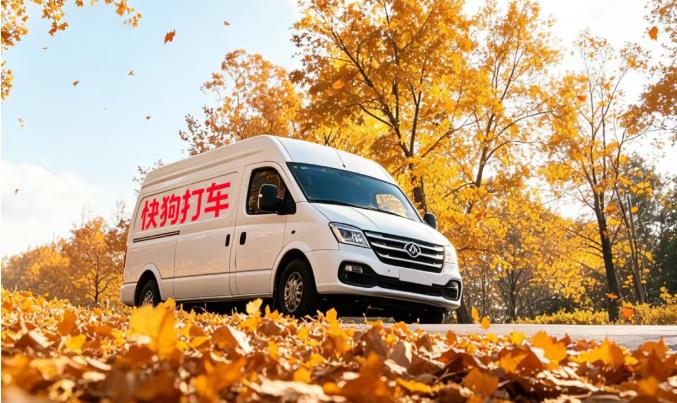
Source: GOGO's official WeChat public account
As of October 16, 2026, the company's share price closed at HK$1.12, with a total market value of only about HK$74 million, shrinking by more than 99% compared with the high point of over HK$14 billion in the early stage of listing.
Now GOGO no longer has the chips to change its strategy and make a comeback. It did not choose the wrong business, but chose the wrong way to do business.