Why can large model manufacturers not decide their own position in the field of embodied intelligence?
Recently, DeepSeek was exposed to plan to lead the seed round investment of Winverse AI. This enterprise has been established for only a few months, and its founder Hu Han was previously in charge of Hunyuan multimodal and embodied foundation models at Tencent.
Prior to this, DeepSeek had participated in the strategic placement of Unitree Robotics with 141 million yuan in August, with a lock-up period of 36 months, and the two sides signed a two-way priority procurement memorandum.
Sam Altman, CEO of OpenAI, disclosed on a podcast that OpenAI is laying out the humanoid robot R&D track, and the relevant project will take the R&D of robot intelligent systems as the core key direction. He predicted that OpenAI is expected to launch a striking demonstration prototype in 2027.
Large model vendors such as Zhipu AI and Kimi are also deploying embodied intelligence. In July this year, Zhipu AI took shares in general embodied intelligence company Forcelink AI, and jointly open-sourced the 2.6 billion parameter VLA model ZR-0 and the supporting robot dataset. Its affiliated fund has previously invested in many robot ontology companies; Kimi is recruiting talents in the direction of embodied intelligence.
In this regard, the most straightforward interpretation is that "large model vendors are collectively entering the embodied intelligence track". However, the method chosen by DeepSeek is investment, which does not involve ontology manufacturing or production line construction; OpenAI has shifted from investing in others to independent R&D, manufacturing its own actuators, building its own data collection system, and managing its own supply chain.
Beyond the question of whether to enter the track, the data from SenseTime provides another observation perspective, which may bring more thinking and imagination space.
SenseTime connected GPT-6 Astra to the RoboDojo test platform and ran a set of robot operation tasks. The results are very interesting: 9 tasks that had previously failed 5 times in a row became 5 consecutive successes after the model was allowed to try with more steps, pushing the success rate to 81.9%. From the perspective of the improvement in success rate, the capability has indeed taken a solid step forward.
But the test also recorded another set of figures: to complete these tasks, stacking bowls takes about 131 minutes and costs 19 US dollars, and putting pens into pen holders takes about 263 minutes and costs 55 US dollars. In a real scenario, what it wants to replace is a job that a worker could have completed in just a few minutes.
The cost of a single robot execution is several times that of manual labor, and the time consumed is dozens of times that of manual labor. This means that even if the model achieves a success rate of 81.9% in the test environment at this stage, the time and money cost it pays to complete each task in the real scene is still so high that almost no factory or warehouse is willing to pay for it.
Then the bottleneck of physical interaction does not lie in whether the capability has made a breakthrough, but at what price and at what speed it can be realized.
Therefore, the order-of-magnitude gap in the cost structure can also explain why DeepSeek and OpenAI seem to be entering the embodied intelligence track, but are moving in opposite directions at the starting point.
Mechanical Island tries to analyze the following issues in this article: Why did DeepSeek and OpenAI face the same threshold but go in opposite directions? What pushed each of them to their current positions? In the entire market, who is paying for the fixed cost of physical interaction, and who is avoiding it? How long can these different positions last when the cost curve changes?
I. Two Opposite Choices
First look at DeepSeek. None of its two investments in the embodied intelligence track points to the ownership of robot ontology or real machine data.
The core clause of the 141 million yuan strategic placement for Unitree is two-way priority procurement: Unitree will give priority to DeepSeek when purchasing model training services, and DeepSeek will give priority to Unitree when exploring embodied business. Multiple industry insiders confirmed that Winverse AI, which it plans to lead the investment in, is "more focused on underlying infrastructure and model acceleration" and is not a full embodied robot company.
DeepSeek uses capital to lock in the access right to the "body" and the interface for "brain" acceleration, but does not pay fixed costs for any production line or any data collection factory.
OpenAI took a different path. As of October 2026, 27 positions can be searched on its official website with the keyword "robotics", while this number was only 11 in May this year. The newly added positions cover actuators, motor design, manufacturing, supply chain and data collection.
Among them, the actuator position clearly requires designing custom robotic actuators, covering motors, transmission, sensing and thermal management. On the data collection side, it is recruiting technical project managers who can combine robots, sensors, operator interfaces and data pipelines into a "production-ready" system to track utilization, cycle time, throughput and downtime.
This is almost a set of factory production indicators. Judging from the recruitment information, OpenAI is building bodies designed for AI control, and at the same time wants to build a factory that produces data for the bodies.
The reason is that DeepSeek's advantages in language models are algorithm efficiency and reasoning cost control, but this advantage cannot be directly converted in the physical world, because the bottleneck of physical interaction cost is not model parameters, but the collection of real machine data and the fixed investment of training sites.
According to public industry estimates, the collection cost of valid data per hour of real machine data is 500-1000 yuan. A training site covering thousands of square meters requires an investment of tens of millions to hundreds of millions of yuan. Fixed costs such as equipment, manpower, scene construction and maintenance will not be automatically diluted with the improvement of model efficiency.
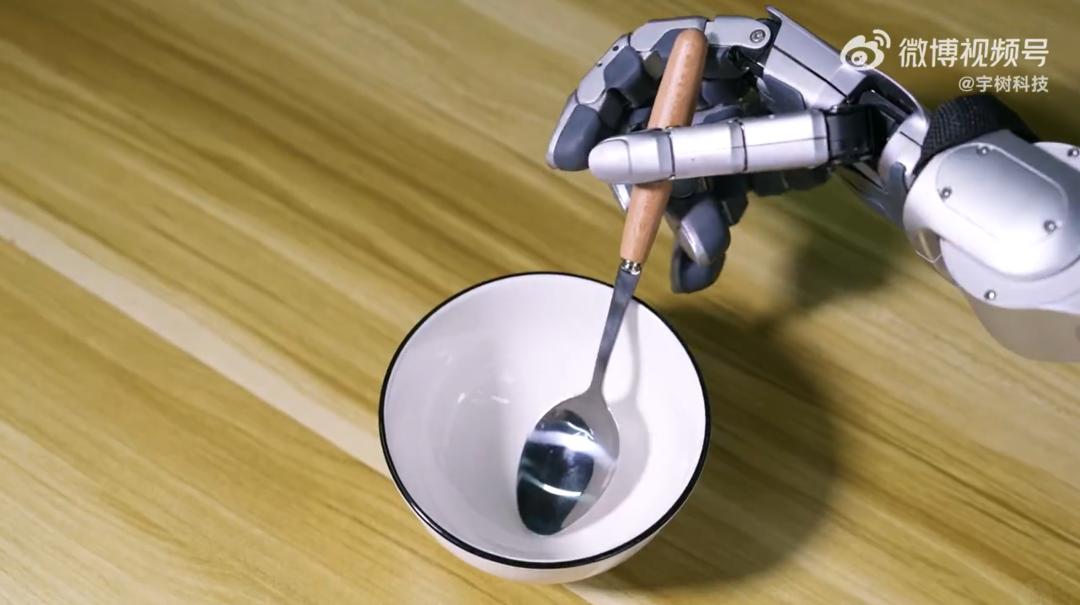
Source: Unitree Robotics
In previous public reports, DeepSeek's accumulation in hardware engineering, supply chain and real machine data collection is relatively limited, and it has not directly demonstrated the training results of physical interaction. Developing full robots independently is not impossible for it, but the cost of crossing this fixed cost threshold may far exceed the reasonable range of its current investment structure.
Therefore, DeepSeek's investment in Unitree and Winverse is to use flexible expenditures such as investment and procurement agreements to replace the fixed investment in production lines and data factories. Unitree provides bodies and real machine scenarios, Winverse provides interfaces for model acceleration, and DeepSeek only needs to output algorithms and computing power.
As for why it invested in Winverse, the reason is not complicated. During his time at Microsoft Research Asia, Hu Han co-authored papers such as SimMIM and Swin Transformer V2 with Xie Zhenda. Xie Zhenda later joined DeepSeek, is one of the authors of a series of core works such as DeepSeek-Coder, V2, V3 and R1, and is also the first author of the mHC paper.
At the same time, Winverse's positioning of focusing on underlying infrastructure and model acceleration just fills the interface that DeepSeek lacks most in the physical world. DeepSeek invested in a team whose technical judgment has been verified by its core researchers.
OpenAI's heavy asset investment is also driven by the cost structure, but in a different direction. Earlier, OpenAI also took the light asset route, invested in Figure, and signed an agreement to develop the next-generation AI model for Figure's humanoid robot. The cooperation was terminated in February 2025, Figure turned to independent R&D of Helix, and Adcock publicly stated that the reason was that "robot AI must be vertically integrated, and AI cannot be outsourced".
But the more fundamental lesson comes from data: if the body belongs to others, the model cannot obtain the perception and operation data generated by the robot in the real environment. The reason OpenAI disbanded its robotics team many years ago was precisely the lack of training data.
After Figure closed the door, OpenAI's position became very narrow. If it continues to be a supplier that only provides the "brain", the access right to data will always be in the hands of the body side; to obtain the ownership of physical data, it needs to do it by itself.
Therefore, to understand the strategic differences between the two companies, we must look at the threshold of the fixed cost of physical interaction. DeepSeek did not choose to bear the fixed cost of building bodies independently, and adopted relationship control; OpenAI was cut off from data access in relationship control, and chose to bear the fixed cost and turn to asset control.
The two companies are moving in opposite directions in specific implementation, but the constraints they face are from the same source: the extent to which each can bear the threshold of the fixed cost of physical interaction determines which position they stay at.
II. Who is Bearing the Cost of Physical Interaction?
Looking at the entire market, in the first half of 2026, the financing of China's embodied intelligence track was about 438 billion yuan, of which algorithm and control software companies at the brain layer absorbed 22.253 billion yuan, accounting for 50.8%; ontology full robot companies only accounted for 12.8%.
Although capital is flowing to the "brain", the fixed cost of physical interaction has not disappeared due to the flow of capital. Players with different capability structures have chosen their own positions in the face of the cost threshold.
According to who bears the fixed cost of physical interaction and to what extent, there are four types of positions in the market:
The first category: almost do not bear the fixed cost of physical interaction, and make shallow card positions for models and interfaces.
Alibaba released the Qwen-Robot series in June, including the VLA operation model, VLN movement model and world model, trying to make the model interface a general base for "hands, feet and brain".
Tencent launched the Tairos open platform, which is jointly built by the Futian Laboratory and Tencent Robotics X. It does not produce ontologies, focuses on the "brain", and has been connected to Unitree G1 for scenario implementation such as tour guide in Dunhuang. Leading ontology manufacturers such as Unitree, Agibot, Galaxy Robots and Dobot have all accessed it.
ByteDance entered the track by investing in Self-Agent Robotics, which is the only embodied intelligence company that has received strategic investments from ByteDance, Meituan, Alibaba and Xiaomi at the same time.
The common feature of this type of players is that they do not manufacture full robots, do not build heavy assets such as real machine data collection, and use model capabilities and cloud platforms to occupy the position of "what robots use to think". They are the farthest from the fixed cost of physical interaction, with the lightest investment, so their substitutability also depends on conditions, to a large extent, depending on whether ontology manufacturers continue to need external models.
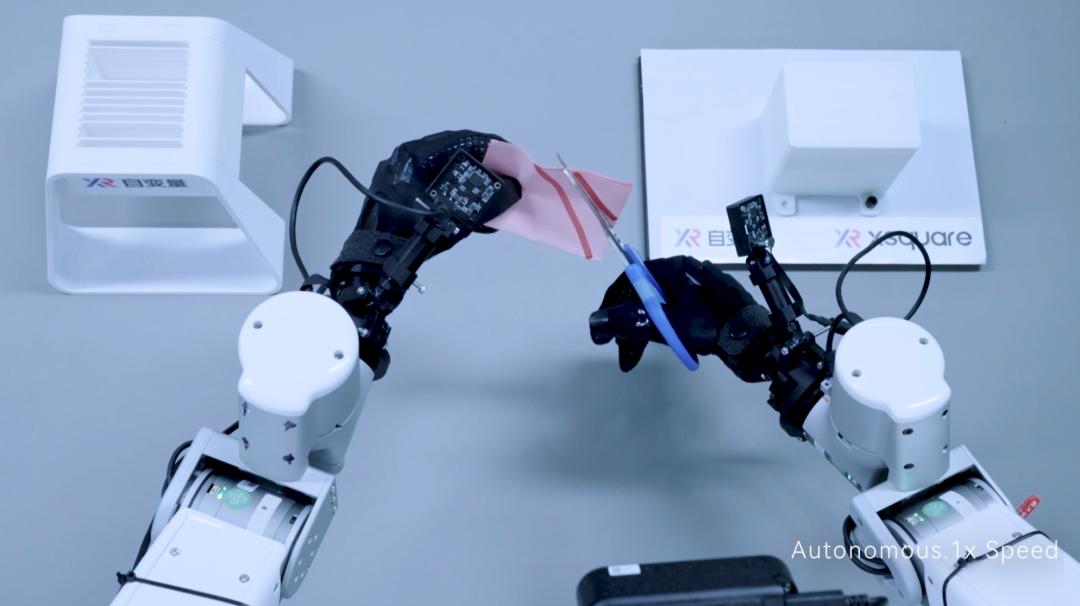
Source: Self-Agent Robotics
The second category: do not own a complete closed loop, but share part of the fixed cost with data and scenarios as the entry point.
JD does not manufacture ontologies nor general brains, and invests resources in data collection. According to public reports, the EgoLive dataset plans to collect 10 million hours of human real-scene video data in two years, while deploying more than 80 RoboBase industrial bases and robot maintenance networks. It has built 8 major maintenance centers in China, and plans to cover more than 100 countries with its services in 5 years.
Meituan has invested in at least 16 embodied intelligence enterprises in total, 10 of which have become unicorns. At the same time, it independently develops a distribution robot matrix, and uses real scenarios such as food delivery fulfillment and warehouse sorting to provide real machine verification conditions for invested enterprises.
The logic of this type of player is that the bottleneck of physical interaction eventually falls on data and scenarios, so they will occupy the nodes of data production and scenario delivery, and will not choose between the model layer and the ontology layer.
The third category: bear all the fixed costs of physical interaction, and accumulate barriers within the closed loop.
Companies with ontology mass production and delivery capabilities such as Unitree, Agibot and UBTECH belong to this category.
Unitree shipped 5,500 units in 2025, and its target shipment volume in 2026 is 10,000 to 20,000 units; Agibot has cumulatively rolled off more than 10,000 units in March 2026, and built the AGIBOT WORLD real scene dataset.
Their barriers are the production conditions of real machine data and the engineering accumulation of physical interaction, which are often things that general models cannot directly purchase with computing power.
The termination of Figure's cooperation with OpenAI and its turn to independent R&D of Helix essentially means choosing to internalize the fixed cost of physical interaction, in exchange for irreversibility after the closed-loop scale expands, and seeking high barriers.
The fourth category: do not own any closed loop, but control the underlying infrastructure that the closed loop must pass through.
NVIDIA's GR00T/Jetson system, Huawei's CloudRobo platform, as well as Alibaba Cloud and Tencent Cloud's layout in the computing power, simulation and training framework layers, belong to this category.
They do not directly bear the execution cost of physical interaction, but make as many physical closed loops as possible inseparable from their interfaces.
Large manufacturers are more inclined to make models, platforms and data in direct layout, and do not personally enter the field of robot ontology manufacturing. It is not because ontology is not important, but because the fixed cost of physical interaction is not their strong suit in the capability structure.
Their layout method itself is an acknowledgment of this cost threshold. Nowadays, a large amount of capital is pouring into the first category, which also reflects a certain expectation: once the interface is adopted by enough ontology manufacturers, the cost of replacement will become higher, and once the conversion cost rises, substitutability will no longer be a problem.
Of course, the premise is that the cost curve of physical interaction drops fast enough, so that the model interface becomes a more important competitive dimension.
III. Advantages, Pressures and Windows
When the cost curve of physical interaction changes, how long the respective advantages of the four types of positions can be maintained, and whether it can be transformed into an irreplaceable structural position before the window closes, the judgment standard does not lie in who is closer to the physical closed loop.
The current advantage of the first category of "shallow card position" comes from the fact that ontology manufacturers still need external model capabilities.
Alibaba's Qwen-Robot and Tencent's Tairos have been accessed by many leading ontology manufacturers, indicating that using external models for thinking is still a common choice at present, but this advantage is being weakened by an ongoing trend: leading ontology manufacturers are internalizing the "brain" capability.
Unitree has open-sourced UnifoLM-WLA-1.0, Agibot has successively released AGILE 2.0 and GE-Act 2.0, and both are writing model capabilities into their own technology stacks.
Whether the position of the first category can be maintained depends on the race between the speed at which leading manufacturers build their own brains and the speed at which external model capabilities progress.
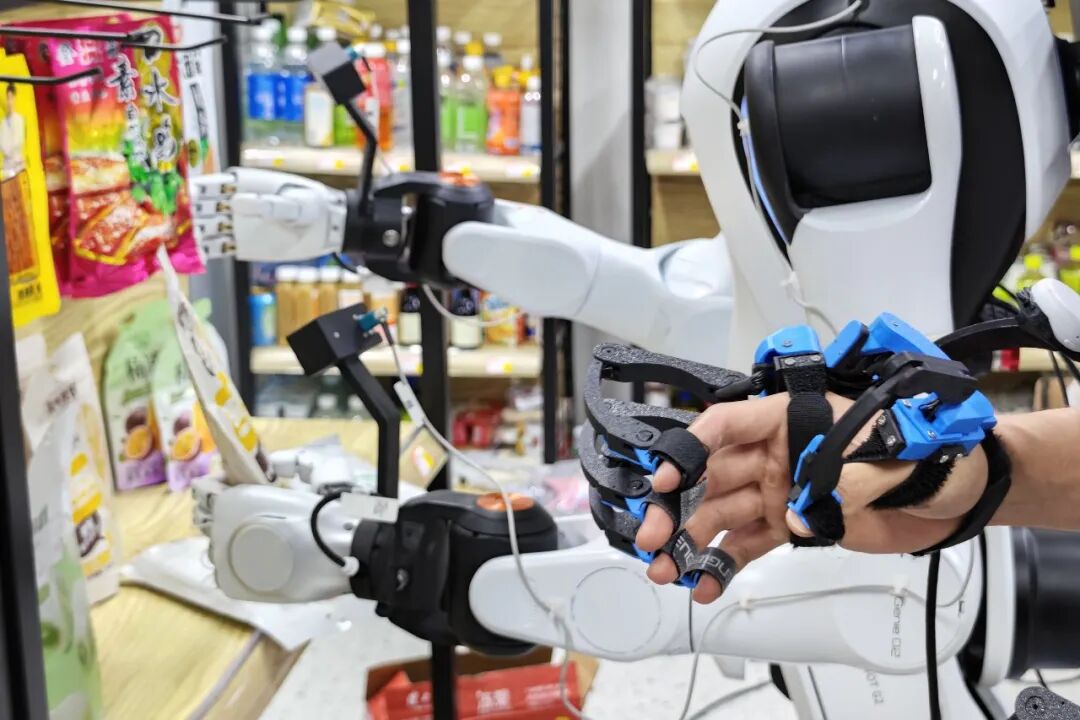
Source: Agibot
The current advantage of the second category of "data and scenario entry point" comes from the fact that real machine data is still irreplaceable.
JD's 10 million hours of human first-person perspective data, Meituan's distribution and warehouse scenarios, are indeed more difficult to bypass than the pure model layer.
But this advantage is being partially alleviated by the decline in hardware costs. The labeling cost of synthetic data has been reduced from more than ten yuan per frame to a few cents or even a few fen, the price of a single tactile sensor