From a single bottle of perfume to whole-home fragrance usage: What changes are taking place in fragrance consumption during the Double 11 shopping event?
The annual Double 11 shopping festival is coming again, and the perfume and fragrance track is poised for explosive growth. However, this round of consumption boom is no longer just a competition over scent profiles and big brand discounts.
Subtle shifts are taking place in the market: fragrance is becoming an emotional carrier for young people, and even spawning a consumption trend of "perfume metaphysics".
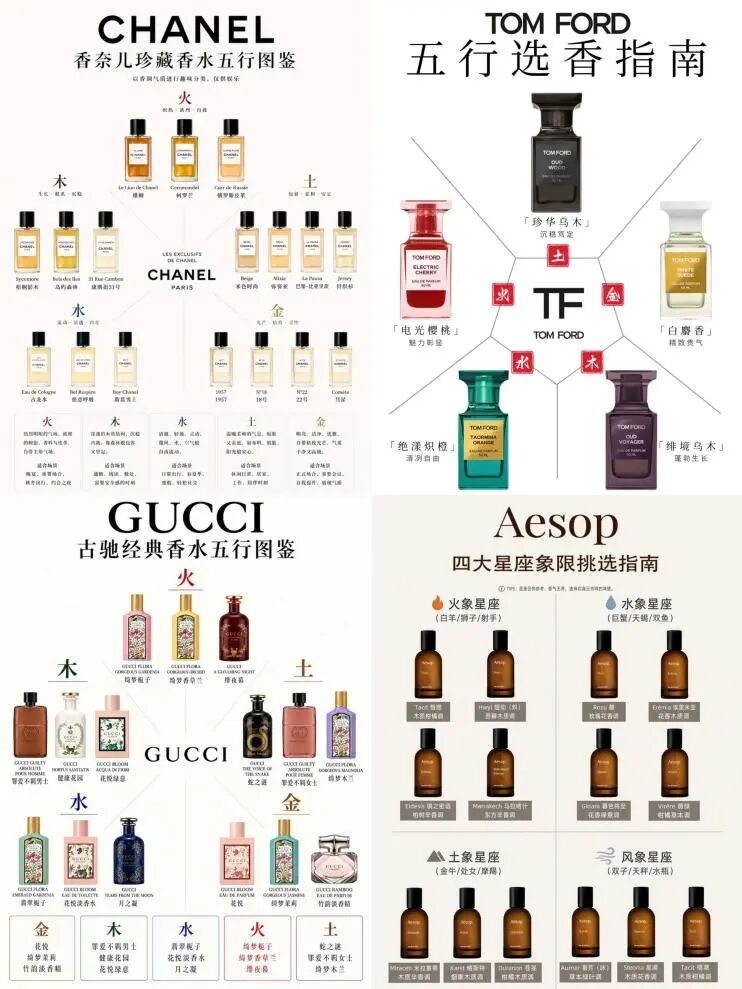
In the past year, young people's way of choosing perfumes has changed. They no longer judge products by understanding top, middle and base notes, but by checking the "five elements" and "zodiac signs". When searching for perfumes on social media, content creators will no longer describe what a bottle of perfume smells like to netizens, and the content has been replaced by the following descriptions:
"Fragrance is the antidote for your low ebb."
"Everyone has their own unique internal magnetic field, and smell is also a kind of magnetic field. Choosing the right perfume will make the fragrance resonate with your soul."
What kind of fragrance is suitable for people born with the Wood element, what smell should people born with the Fire element avoid, what is the lucky scent profile for Aquarius this month. What perfume can attract wealth, what perfume can boost career luck, and what fragrance can "improve your energy field". It sounds mysterious, but if you search for "perfume metaphysics" on Xiaohongshu, the number of related notes is enough for you to browse for a whole afternoon.
Brands are not idle either. Some perfume brands have catered to this consumer psychology at the marketing level, and their marketing terms have changed from "top note bergamot, middle note rose" to "this bottle is suitable for people with low energy recently" and "spray it, and you will have better luck with helpful people". Selling perfume has become selling emotions.
In September, Alibaba Mom's Operation Blue Book classified "ambient fragrance" into the trend track of "emotional ibuprofen", with an average growth rate of 258% and a month-on-month increase of 66% in popularity. Fragrance is no longer a segmented category on the beauty shelf, and it is becoming emotional infrastructure in the eyes of platforms.
Fragrance has been upgraded from a segmented category of beauty products to an emotional track. Its growth comes from the precipitation of daily consumption habits, and the role of Double 11 has changed from a stockpiling window to a node for the concentrated realization of daily fragrance demands.
So what changes have taken place in the fragrance track in the past year? How will these changes dominate the consumption trend of this year's Double 11?
From pleasing others to pleasing oneself, from fragrance type to scenario
Let's start with a real change.
In the past, when buying perfume, people would ask "what occasion is this bottle suitable for"; now when buying perfume, people ask "what mood is this bottle suitable for". The number of notes related to "sleep-aiding fragrance", "stress-relief fragrance" and "commuting fragrance" searched on Xiaohongshu has multiplied several times in the past year. While the search volume of "men-charming fragrance" and "dating fragrance" is decreasing.
In fact, these changes are traceable. Xiaohongshu's 2026 Omnichannel Growth Guide for Color Cosmetics and Fragrance Industry summarizes the core changes of the fragrance track in the past year as "from social equipment to emotional regulator". The survey in 2026 China Olfactory Ecology White Paper also draws a conclusion: staying alone at home, relaxing before bedtime, and decompressing in the car have become high-frequency scenarios for fragrance use.
Consumers no longer choose the scent profile first, but choose the scenario first: sleep aid, commuting, car use, gifting. The fragrance type has become a parameter, and the scenario is the entry point. What brands need to do is no longer to launch one SKU for one fragrance type, but to provide a set of solutions for one scenario.
The consumption motivation has changed, and the category logic has also changed accordingly.
In the first three quarters of this year, the total market size of perfumes and fragrance balms reached 8.74 billion yuan, a year-on-year increase of 10.10%, which is still the basic market. But the fastest growing are scenario-based segmented categories: the market size of scented candles is 957 million yuan, up 32% year on year; the market size of scented wax tablets is 185 million yuan, up 103% year on year.
To Summer is one of the earliest domestic fragrance brands to extend the same fragrance to multiple scenarios. Centered on the scent "Kunlun Snow Boiled", it has launched products including perfume, crystal aromatherapy, scented candles, reed diffusers, car aromatherapy, hand cream and body lotion, covering the fragrance experience from the bedroom to the bathroom and then to the car interior.
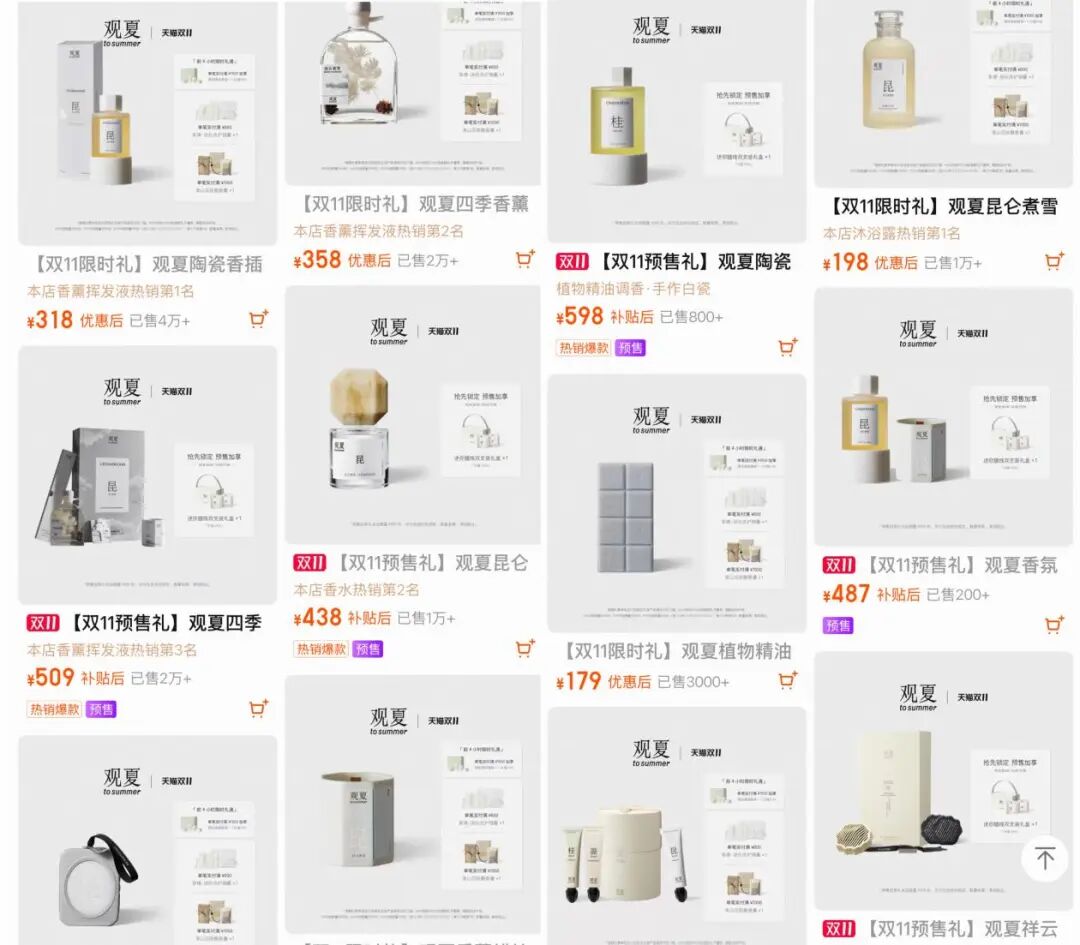
Documents extends its products from perfumes to scented candles, diffusers and hand creams around fragrances such as "Big Tree" and "No Cause". Some of its stores are also equipped with fragrance experience areas, allowing consumers to sit down and slowly experience different scents.
Then look at international brands. Jo Malone London's marketing focus this year has obviously shifted from perfume counters to home fragrances. The classic fragrance "English Pear & Freesia" has been made into room sprays, scented candles, diffusers, and even hand sanitizers. The same scent appears in every corner of the home. Diptyque started this earlier, and its "34 Collection" extends from perfumes to scented candles, body care products and household cleaning products, forming a complete olfactory closed loop.
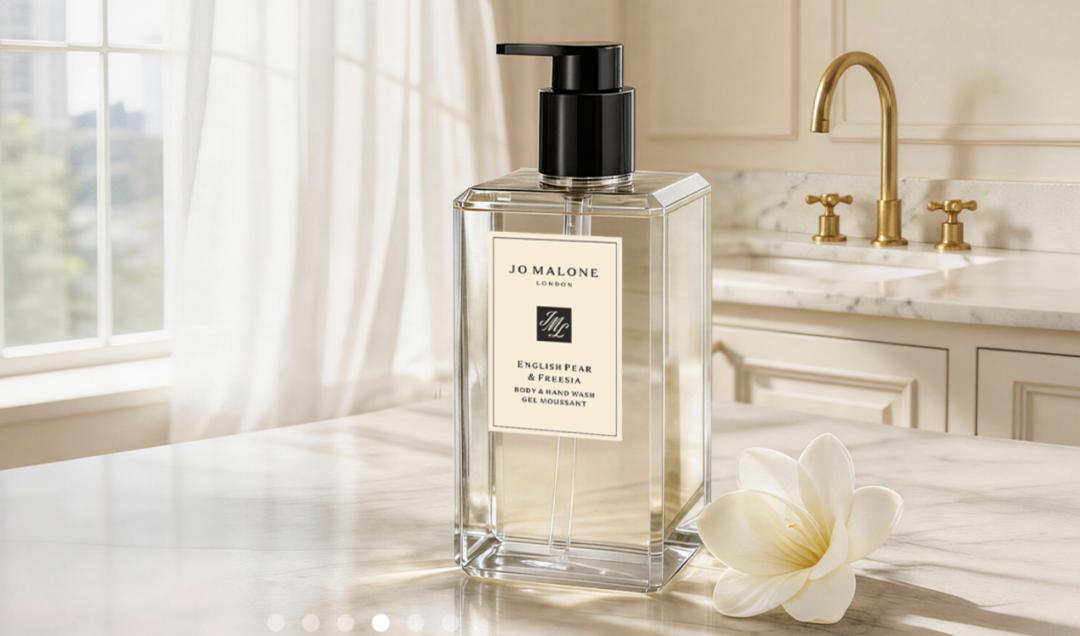
These brands are doing the same thing: splitting one fragrance type into countless scenario entry points. You don't need to remember whether it is a floral or woody fragrance, you only need to know that this scent is suitable for spraying before you go out in the morning, and that scent is suitable for lighting when you take a bath at night.
When it comes to Double 11, the form of this trend becomes clearer.
Tmall has listed "fragrance-scented laundry and care products" and "fragrance body care products" as preferred tracks for Double 11. What does this mean? The platform is actively telling you: this year's Double 11 fragrance consumption does not end after buying a bottle of perfume. What fragrance to use when taking a shower, what fragrance to use when washing clothes, what fragrance to put on the bed, and what fragrance to place in the car.
This can also be seen from the pre-sale data. Last year's Double 11, the pre-sale growth rate of scented candles, diffusers and car fragrances was significantly higher than that of perfumes themselves. And "scenario combination packs" are the fastest growing product form. Consumers no longer pick products one by one, but directly buy the "commuting + sleep aid" double pack or "car + home" gift box. This trend will only be more obvious this year.
In other words, Double 11 is changing from "stockpiling a bottle of good perfume" to "equipping a complete olfactory life solution". If brands still focus on promoting single large-size products on Double 11, they may have been unable to keep up with the rhythm. Whoever can translate "emotional regulation" into specific scenario combinations can seize this round of incremental growth.
Channels are shifting, domestic fragrance brands are raising prices
The transformation of scenario demands has also brought more imagination space for fragrance at the channel end.
In the past, fragrance was one of the most difficult categories to do live streaming. Consumers need to smell, test and compare, how to sell products through the screen? But under the scenario demand, anchors have more room to play.
In the past year, products of the fragrance category from industrial belts on Douyin have been sold for more than 100 million orders in total. The number of fragrance merchants who opened in-store live streaming increased by 115% year on year, the in-store live streaming sales increased by more than 86% year on year, and the number of live sessions increased by 140% year on year. The number of merchants whose live streaming sales exceeded 10 million yuan and 1 million yuan increased by 177% and 193% year on year respectively.
With the spread of content notes and live streaming conversion, the path from consumers' interest generation to transaction has been shortened. The competition of fragrance in this year's Double 11 is not about which platform has better policies or which platform sells more, but about who can shorten the steps from "wanting to smell" to placing an order.
Under the diversification of channels, domestic fragrance brands also have more confidence to raise prices.
Domestic brands such as Documents and To Summer have firmly occupied the price range of 500 to 1500 yuan. This price range used to be the territory of international brands. To Summer has received a minority equity investment from L'Oréal. In February this year, the month-on-year growth rate of its fragrance and spice category reached 211%; Documents has opened nearly 50 stores and entered SKP and Sephora. In the past, domestic fragrance brands were positioned as "smelling very similar to a certain big brand, but at half the price". Now domestic fragrance brands are also starting to build their own fragrance systems and tell their own brand stories.
But another line is more worthy of attention: fragrance daily chemical products.
Lavas does not make perfumes, but makes fragrance-scented laundry detergent, and applies its fragrance R&D capability to laundry detergent. In the first half of 2026, its sales reached 740 million yuan, a year-on-year increase of 66.87%. The fragrance-scented laundry detergent category alone has more than 30 fragrance types. The logic is very smart: it is impossible to compete head-on with foreign perfume counters in the short term; but by applying the capability of "understanding fragrance" to daily necessities such as laundry detergent, body lotion, shower gel and fragrance-scented laundry beads that are used every day, the market scale has expanded rapidly.
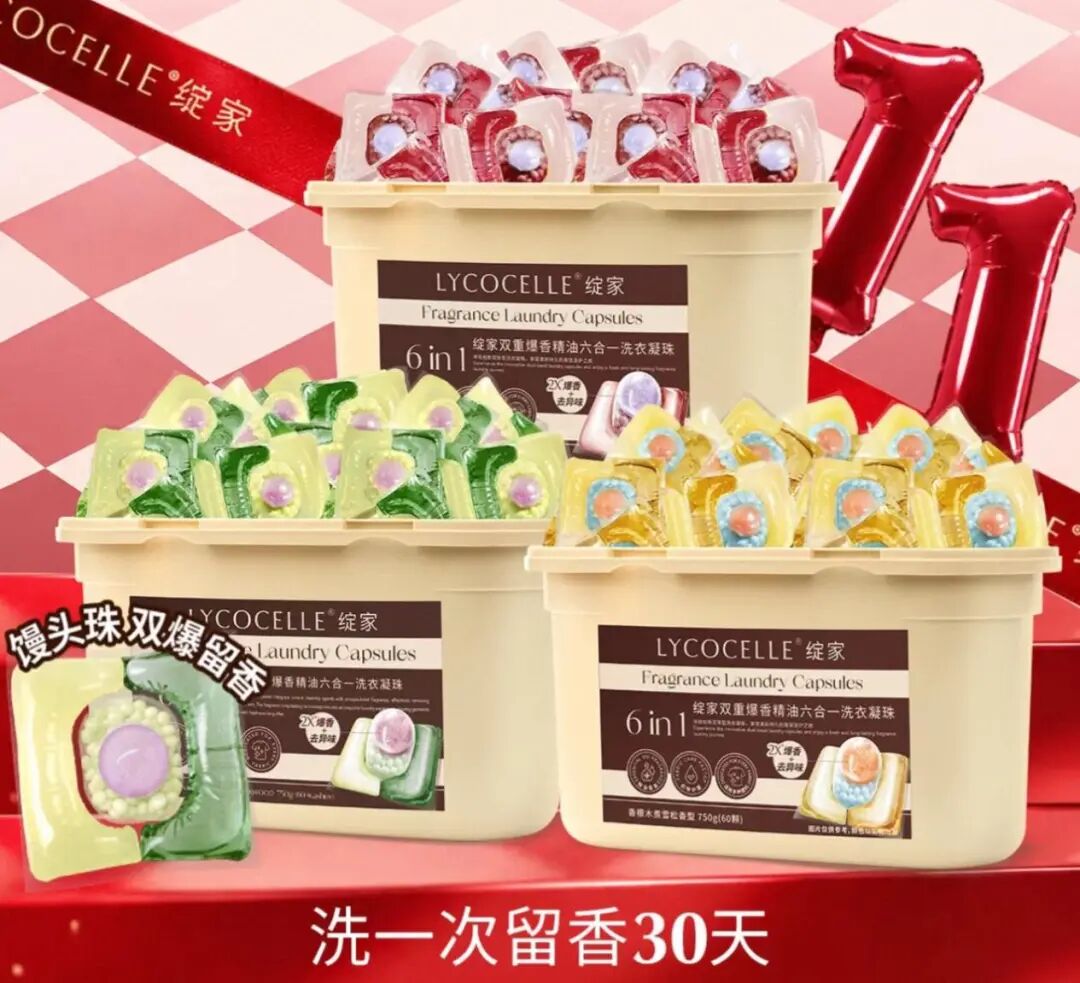
Tmall has listed "fragrance daily chemical products" as an independent track. The platform is telling brands with traffic support: I can see the scale effect of this track.
The highlight of domestic fragrance brands in this year's Double 11 is not whether they can beat foreign brands in perfume counters, but whether they can achieve large-scale development in the "fragrance +" layout.
AI starts to interfere with what fragrance you buy
The last change takes place at the most front end: search.
In the first half of this year, 250 million users of Qwen are using AI for shopping. The annual request volume of Taobao AI search has reached the order of 10 billion, and the number of 88VIP members has exceeded 64 million. All of this points to one thing: the first action of everyone in e-commerce is changing from "typing keywords" to "saying a sentence to AI".
Fragrance is exactly the category most suitable for AI search.
The reason is very simple: this is a typical consumption scenario where consumers "can't clearly describe what they want". Standing in front of the fragrance shelf, you can't tell what fragrance type you want at all, you can only say "I want something that smells relaxing", "it's a gift for a friend, not too sweet", "the feeling of sitting by the window on a rainy day".
In the past, it was the most difficult thing for brands to translate this kind of vague demand from consumers. Users did not know what to search, and brands did not know how to be searched. Keyword search requires you to translate the demand into a few words first, and then spend half an hour browsing the results.
AI eliminates this step. You directly describe your feelings, and the system helps you match the products. In the past, you needed to "browse 300 reviews to find a bottle of fragrance that suits you", but now you only need to have a few conversations with AI.
Alibaba Mom's Operation Blue Book also gives guidance and suggestions for merchants: The experience and labels of merchants have built a cognitive cocoon for themselves; the strength of AI is to deduce those "increments that have not been seen yet".
For consumers, when choosing fragrance in this year's Double 11, they will most likely ask AI first. They will not ask "which bottle is the best", but directly say "I want to relax when I get home from work, recommend some suitable products for me".
The further popularization of AI tools is also forcing merchants to make changes. If brands still use fragrance keywords to launch traffic delivery, they may not even get the chance to be recommended by AI.
It is certain that the change of consumer habits is an opportunity rather than a challenge for brands. This round of fragrance growth is not a short-term popularity, but a consumption boom brought by the superposition of multiple structural inflection points.
The competition in the fragrance track of this year's Double 11 does not compete for the selling points of fragrance types, but for the ability to understand the public's emotional needs, land life scenarios, and seize the emotional consumption dividend relying on content and AI tools.
This article is from WeChat official account "Node Beauty", written by Yang Lei, and authorized for release by 36Kr.