When the Agent "has an employee ID": Evolving from the "one person, one tool" model to the "one person, one team" pattern, how can organizations properly carry out division of labor and collaboration in the AI era?
Agents are starting to get their "employee IDs". On August 31, at the Moli Community of Zhangjiang Science Gate, the Node Management Platform for Agent Identity Code was officially launched, with 30 institutions participating in the node issuance. A growing number of agents will have identifiable and manageable digital identities.
However, as agents evolve from tools on personal computers to "digital colleagues" that can call across systems and participate in business processes, a more practical issue than technology has emerged: who assigns tasks to them, who reviews their deliverables, and who takes responsibility if something goes wrong? This question tests not only the capabilities of the agents, but also the organizational management capabilities.
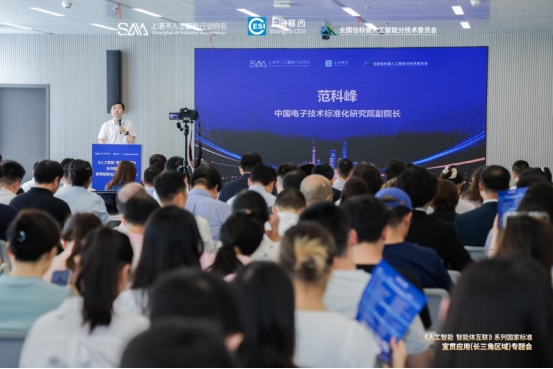
Figure 1 The identity code node management platform is officially launched at the Moli Community of Zhangjiang Science Gate
At the event site, the Shanghai Artificial Intelligence Industry Association, the China Electronics Standardization Institute and other institutions worked together to comprehensively promote the popularization and publicity of AIP agent interconnection applications, injecting new impetus into the digital transformation of the industry. The presenter compared the image of the agent identity code to a "digital ID card", breaking down the entire process operation from identity application, material verification to cross-subject interconnection and invocation one by one.
Having an identity code for an agent is equivalent to getting an "employee ID" within the organization. But the employee ID is just the starting point. In the past, the "one person, one tool" model relied on individual choices; now, a person may have a group of agents behind them — who assigns tasks, who conducts reviews, who takes responsibility? Organizations must redraw the division of labor landscape.
I. Identity First: Agents Are Officially Included in the Organization's "Roster"
Why prioritize identity? Agents are moving from "answering questions" to "getting things done". To enable AI to "handle tasks competently, conveniently and well", we must first clarify three points: identity (who I am), agency relationship (on whose behalf I act), and permission boundaries (what I can do), so that it can become a "smart steward" in the AI era. According to the national series of standards for agent interconnection, one identity code precisely corresponds to one agent.
A flurry of rules were rolled out this summer. On July 17, at the 2026 World Artificial Intelligence Conference held in Shanghai, the Cyberspace Administration of China and relevant parties jointly put forward the Global Cooperation Initiative for Mutual Trust, Interconnection and Interoperability of Agents, calling for increased R&D investment in "basic common technologies such as agent identity identification and collaborative mutual recognition". The simultaneously released International Action Plan for AI Ethical Governance proposes to build differentiated risk handling rules around factors such as "tool invocation permissions and autonomous decision-making capabilities", and clarify the "rights and responsibilities boundaries" of developers, deployers and users.
Domestic policies provide synchronous guidance. The Implementation Opinions on the Application Regulation and Innovative Development of Agents issued by three departments including the Cyberspace Administration of China proposes to explore the establishment of an agent registration platform to provide services such as "digital identity management, retrieval and discovery, and capability declaration". The platform launched in Zhangjiang is exactly following this path — ensuring that every agent has a clear name and verifiable records when "reporting for duty".
Shanghai is also accelerating the layout of "archiving". The 15th Five-Year Plan for the Construction of "Digital Shanghai" issued in August clearly states that "building a government agent cockpit to realize workspace and operation observation, and promote multi-level efficient collaboration among people, agents and systems" — agents should not only "have a name", but also be "visible and manageable".
The identity code solves the problem of "recognizing the agent", organizational authorization solves the problem of "managing the agent", and post division of labor solves the problem of "making good use of the agent". There is a complete set of organizational management systems between digital identity and digital employees.
II. Division of Labor Next: Human-Machine Partners, One Assistant for Each Post
After the agent's identity is established, the next step is to define responsibilities. From assisting a single post, undertaking a complete process, to enabling business personnel to directly schedule professional capabilities, agents are changing the organization and invocation mode of internal capabilities of enterprises. SAIC Fanyishanghang has launched more than 100 digital employees in total; after the production scheduling assistant outputs a simulation plan, it will be "submitted to the planner for review". Dr. Chen Ning, head of digital employee project R&D, emphasized: "The essence of digital employees is virtual collaborators that can undertake complete post responsibilities, focusing on a single post to realize a full-process closed loop." The division of labor line is further extended to business judgment. For example, SenseTime Raccoon allows business personnel to "only input a sentence in natural language" to complete data association, trend analysis and report generation. People are liberated from data retrieval and can focus their energy on decision-making and judgment. The clarity of division of labor does not depend on the number of assistants, but on whether each task has a clear attribution: which links are handed over to agents, and which links must be checked by people.
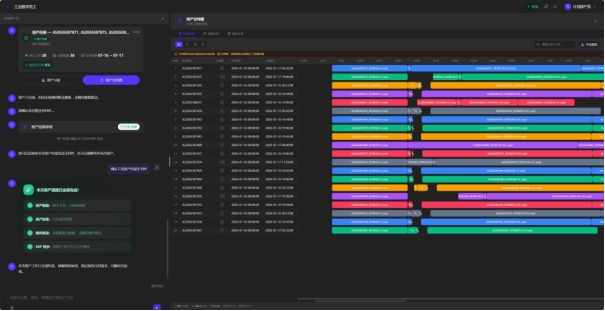
Figure 2 Fanyishanghang AI production scheduling assistant
III. Mixed Human-AI Team: How to Implement Task Assignment, Acceptance, Final Decision and Accountability?
Organizational forms are evolving synchronously. Employees can carry multiple agents to work collaboratively, personnel are dynamically combined around tasks, and disbanded and reorganized after the tasks are completed. The new responsibility of managers is to design the human-machine division of labor and take overall responsibility for the results.
In traditional hierarchical organizations, tasks are passed down layer by layer along departments and ranks; matrix organizations allow personnel to collaborate across departments, but are still constrained by relatively fixed reporting relationships. Organizational intelligence further shifts organizational units to tasks and roles: one employee can schedule multiple agents, different professionals are temporarily combined around projects, and resources are reconfigured after the tasks are completed. Organizational intelligence no longer only has a fixed superior-subordinate relationship, but also has a collaboration network that changes with tasks.
Task assignment must be led by business-savvy personnel. Guotai Haitong aims to rely on AI to drive organizational structure reform, business process innovation and business model upgrading. Its AI applications have covered 9 business fields, 260 sub-segments, and deployed more than 1000 business agents; more than 500 employees participated in the construction, of which more than 100 are front-line business personnel.
Acceptance must follow clear rules. The No.001 AI digital employee launched by People's Daily Online is assigned to the post of "Office Digital Collaboration Specialist", and the assessment system clearly takes "strictly abiding by the authorization red line, taking task completion rate, acceptance pass rate and operation compliance as the core indicators".
Final decision still rests with humans. The Implementation Opinions on the Application Regulation and Innovative Development of Agents clearly states that the reasonable boundaries and permissions of "user-only decision-making, authorized decision-making and agent autonomous decision-making" should be clarified to ensure that users enjoy "the right to know and the final decision-making power" over the autonomous decision-making of agents. Tasks can be delegated, but permissions must be graded; decisions can be authorized, but responsibilities cannot be left unassigned.
The key to accountability is to build a sound mechanism, select the right personnel and foster a good culture. It is easy to set a "review" button, but the difficulty lies in making responsibilities tangible, institutionalized and assigned to specific personnel. When a task is completed by multiple agents in relay, risks may also be transmitted along the invocation chain. One agent initiates the task, another agent invokes the system, the third agent performs the operation, once unauthorized access or error occurs, which link should be traced? This requires enterprises to not only establish identity authentication and permission control, but also retain task logs, operation records and manual approval nodes, so that every delegation has a source, every operation has a boundary, and every result has a responsible subject. Leading the mixed human-AI team well brings not only higher efficiency, but also greater management responsibilities.
From issuing identity codes for agents, to defining full responsibilities for digital employees, to reconstructing the management mechanism for human-machine collaboration, every step of AI entering organizations is spawning new demand for professional services. Consulting planning, process reengineering, system integration, operation management and security governance will jointly form the service chain for large-scale application of agents.
This also echoes the direction of the Special Action for Cultivating Artificial Intelligence Application Service Providers launched by the Ministry of Industry and Information Technology. From October 23 to 25, the 2026 Global Developers Pioneer Conference will be held at the Zhangjiang Science Hall in Shanghai. With more developers, application enterprises and professional service providers gathering here, Shanghai will also usher in a centralized exchange on how agents can truly integrate into organizations and generate productivity.
Issuing "employee IDs" to agents is just the first step of organizational transformation. The next step is to re-answer an old management question: how people divide labor, how things are collaborated on, and how responsibilities are implemented.