Shrinking its business layout and recalculating the accounts, China Merchants Shekou is "offloading the burden" of its elderly care business.
In August 2026, the China Senior Care Conference, backed by a group of authoritative departments and institutions including the China Forestry and Environment Promotion Association, China Academy of Building Research, China Senior Culture Exchange Promotion Association, and the Chinese Academy of Sciences, released the latest national top 100 senior care list. In the list, Hangzhou ranks sixth with a high score of 94.6739.
Compared with other key cities, Hangzhou does not have a high degree of aging. Calculated by the proportion of permanent residents aged 60 and above, it is 1.7 percentage points lower than the national average.
However, Hangzhou has always attracted much attention for two reasons: first, people in Zhejiang are wealthy and willing to spend money; second, the elderly in Hangzhou prefer to gather in places with a good environment. According to statistics, among the permanent residents in the West Lake Scenic Area, the proportion of people aged 60 and above is as high as 40.69%.
Therefore, Hangzhou is regarded by many enterprises as a place that represents the future trend of "the wealthy generation has grown old".
01
Hangzhou is also a testing ground for real estate enterprises to carry out elderly care services. While commercial malls in other cities are catering to young people, a shopping mall in Xixi, Hangzhou, directly raised the proportion of formats dedicated to serving the elderly to 35%.
Real estate developers have also poured huge sums of money into the elderly care real estate track. In 2017, when the national real estate market was at its most prosperous, one day in April, a commercial land of about 31 mu in Banshan Pastoral Block, Gongshu District, Hangzhou was transferred. After 42 rounds of bidding, China Merchants Shekou, holding the No. 80 bidding plate, finally defeated its competitors with a 70% premium rate.
During the transfer process, this plot adopted the method of setting a land price ceiling and bidding for the self-sustained area. Due to fierce competition, after China Merchants Shekou won the plot, its construction conditions became: 100% self-sustained, and an additional 2,500 square meters of elderly care supporting facilities must be built.
Later, China Merchants Shekou simply used all this land to build a high-end senior care community. It is located near Banshan National Forest Park, with 224 apartments for active seniors and 179 nursing beds.
China Merchants Shekou regards this project as a benchmark. In terms of hardware, "no effort is spared in investment, no matter in architectural style, landscape construction, design concept and senior-friendly life", even the gate of the project adopts the "three-entry" form that is only used in high-end residential buildings. In terms of software, China Merchants Shekou adopts the top-level French Colisee nursing system of the company. It has a decent name: China Merchants Guanyu Home · Hangzhou Banshan Senior Care Center.
It used to be the most impressive card for this central enterprise to tell the elderly care story to the public. But recently, this card is being re-evaluated.
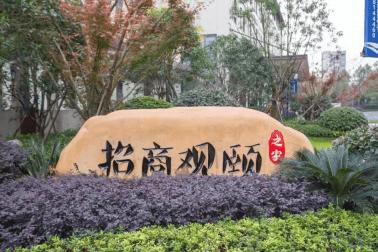
Source of image: Internet
On September 18, 2026, Hangzhou Banshan Senior Care Center was listed for transfer on the Tianjin Property Rights Exchange Platform. The property right certificate of the transaction target covers a construction area of 27,700 ㎡, and the price is negotiable.
According to sources from insiders in the elderly care industry, in fact, China Merchants Shekou has been quietly looking for a buyer for this project in the past two years. The reason is that the elderly care apartment section of the project has never been officially opened, and the whole project has never been fully operated smoothly.
However, just a few days ago, the transfer announcement of Hangzhou Banshan Senior Care Center was quietly withdrawn. The reason is unknown.
However, under China Merchants, there are signs that the senior care assets to be transferred are not limited to the Hangzhou Banshan Senior Care Center project. In September, Shenzhen China Merchants Xin'an Real Estate Co., Ltd., under China Merchants, also released a procurement announcement: procurement of "special legal services for the subsequent overall disposal of Guangzhou China Merchants Colisee Elderly Care Service Co., Ltd.", and the winning bidder was Guangdong Jinqiao Baixin Law Firm.
The procurement entity is within the China Merchants Shekou system. The phrase "subsequent overall disposal" indicates that Guangzhou's first high-end senior care center under China Merchants Colisee in China may be included in the disposal process.
Signs show that China Merchants is carrying out a major restructuring of its businesses.
02
The origin of China Merchants Shekou's connection with senior care can be traced back to around 2015.
In that year, China Merchants Shekou brought in Colisee from France - a professional medical and elderly care operator with more than 400 senior care institutions in Europe - to form a joint venture named China Merchants Colisee Elderly Care Service Co., Ltd., plunging into the high-end elderly care and nursing track.
Its first work was selected in Shekou. The predecessor of Shekou Senior Care Center was the China Merchants Training Base built in 1999. In 2018, China Merchants Shekou transformed this 4,738-square-meter base into a high-end nursing home, and handed it over to China Merchants Colisee for operation. It soon became a benchmark for high-end elderly care in Shenzhen, with the occupancy rate once reaching full capacity.
In January of the same year, China Merchants Shekou opened Panyu International Rehabilitation and Senior Care Center in Panyu, Guangzhou. This senior care center located in Jinshangu with a construction area of about 12,000 square meters has a total of 132 beds, 66 of which are used for special care for disabled and demented elders. It is the first high-end senior care center of China Merchants Colisee.
Since then, China Merchants Shekou has been expanding its elderly care business: In January 2021, Shenzhen Yantian China Merchants Guanyu Home took over the original nursing home of Yantian District Social Welfare Center in the mode of "public construction and private operation". By 2026, there are 397 elderly care beds here; In November 2021, Hangzhou Banshan Senior Care Center opened, which is the first Continuing Care Retirement Community (CCRC) with international quality in Hangzhou; In December 2021, relying on Shekou China Merchants Guanyu Home, China Merchants Shekou cooperated with Shenzhen Nanshan Civil Affairs Bureau and Zhaoshang Sub-district Office to launch the "four-level elderly care service network", extending from institutional elderly care to community and home-based elderly care.
So far, what China Merchants Shekou has accumulated is a series of medical and elderly care brands such as China Merchants Guanyu Home, China Merchants Colisee, China Merchants Libao, China Merchants Meilun Health, covering high-end CCRC (Continuing Care Retirement Community), nursing homes, community and home-based elderly care. Among them, there are 3 China Merchants Guanyu Homes under the heavy asset model: Panyu in Guangzhou, Shekou in Shenzhen, and Banshan in Hangzhou.
However, heavy-asset CCRC has a cruel business reality: the payback period is too long.
Senior care communities require large upfront investment - land acquisition, construction, decoration, and supporting medical facilities, which often cost hundreds of millions of yuan; after the investment, there is a long occupancy climbing period, while fixed costs (depreciation or rent, manpower, energy consumption, medical and elderly care configuration) remain high. According to the calculation of insiders in the elderly care field, the payback period of a self-sustained CCRC is generally 8 to 12 years, or even longer.
Since China Merchants increased its investment in heavy-asset high-end senior care communities, before the payback period was reached, the real estate industry entered a downward stage, and the accounts of heavy-asset elderly care became more and more unsatisfactory.
After 2023, the overall profit of China Merchants Shekou also began to decline. In 2023, the company's revenue was 175.008 billion yuan, and the net profit attributable to shareholders was 6.319 billion yuan; In 2024, the revenue was 178.948 billion yuan, and the net profit attributable to shareholders was 4.039 billion yuan; In 2025, the revenue was 154.728 billion yuan, and the net profit attributable to shareholders plummeted to 1.024 billion yuan, less than one sixth of that in 2023.
In the first half of 2026, China Merchants Shekou achieved a revenue of 54.784 billion yuan and a net profit attributable to shareholders of 528 million yuan, showing no sign of improvement. Divestment of heavy-asset projects to reduce the burden for the parent company has become the most reasonable choice.
03
While getting rid of the burden of heavy-asset elderly care business, China Merchants Shekou is also carrying out large-scale organizational restructuring at the group level simultaneously.
According to industry sources, after establishing five major urban agglomerations in the east, west, south, central and north in the first half of the year, China Merchants Shekou began to make adjustments within the urban agglomerations, launching the merger of city companies, abandoning the "one city, one independent entity" model, and the small city platforms with weak population, small supply volume, few projects and heavy stock burden are merged into the core city entity of the urban agglomeration.
Eastern Urban Agglomeration: Hefei Company merges Xuzhou Company; Southern Urban Agglomeration: Guangzhou Company merges Foshan Company, Shenzhen Company merges Dongguan Company; Northern Urban Agglomeration: Beijing Company merges Tianjin Company; Western Urban Agglomeration: Chengdu Company merges Yunnan Company.
Merger is not simply removing the brand and laying off staff, but essentially closing down low-level independent investment entities, and only retaining the core hub cities of the urban agglomeration as the main operating platforms. Only the core city companies retain the complete capabilities of investment, sales, inventory management and asset revitalization. The surrounding cities become regional business divisions and no longer have independent investment decision-making power.
At the 2026 work conference, China Merchants Shekou set the annual task as "reducing burden, improving quality and efficiency". China Merchants Shekou clearly stated that the future investment strategy is the "4+6" principle, focusing on investment in four first-tier cities and six key cities.
Before this round of city company merger, China Merchants Shekou had 24 city companies, more than twice the number of key investment cities in the future, which means that China Merchants will most likely continue to streamline the number of city companies. The number of city companies will eventually be reduced to 10-15.
The asset management line responsible for senior care projects and stock property revitalization also sorts out asset packages according to urban agglomerations. The senior care and commercial assets under Zhejiang Company have been re-evaluated.
Cash flow and asset return rate are becoming more and more important. After the regional headquarters are revoked, the intermediate buffer layer disappears, and all assets such as senior care will be measured under a unified standard, with a unified minimum IRR and unified holding standards to judge which can continue to be operated, which belong to inefficient heavy assets and are included in the disposal list. The decision-making weight of a single region or city on the project will be lower and lower. The value of Hangzhou Banshan Guanyu Home project has also been re-examined.
All actions are the result of recalculating accounts.
This article is from the WeChat official account "Future Habitat", author: Xiaowu Jiandawu, published with authorization from 36Kr.