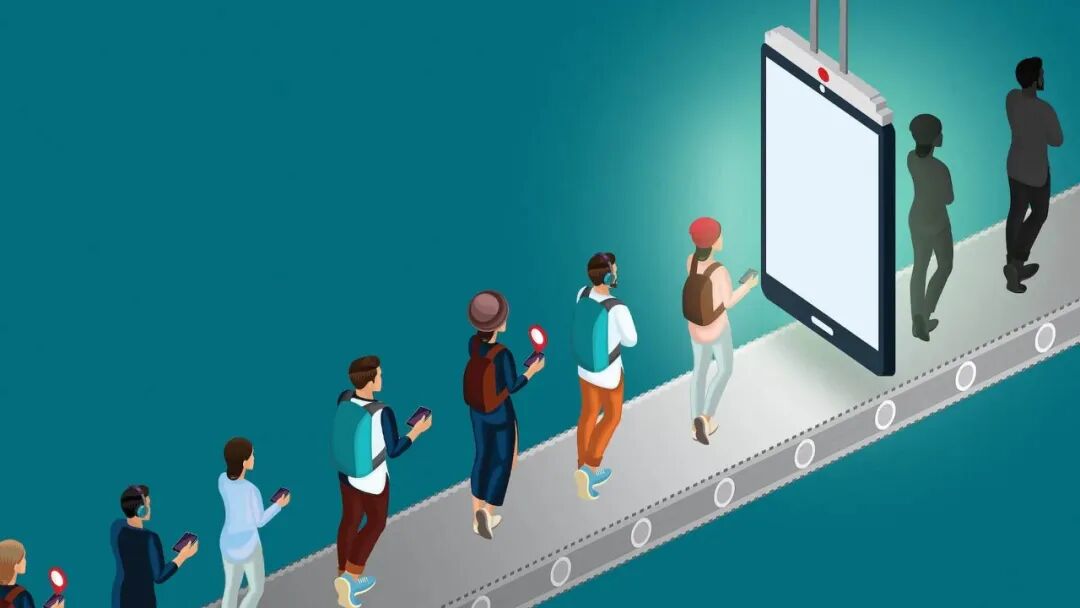
After spending 200,000 yuan over two years, are short-form dramas draining the wallets of the elderly?
"An elderly family member was charged 10,000 yuan for watching short dramas, how can we safeguard our rights?"
Watching short dramas has long been a beloved new pastime for the elderly, but unexpectedly, behind some paid short dramas, there are layers of hidden deduction traps:
Some elderly people who have been thrifty all their lives have spent 30,000 yuan on watching short dramas; others are so deeply addicted to the plots that thousands of yuan can be deducted from their accounts in just one month.
Scrolling through social platforms and news reports, relevant cases emerge in endlessly.
So many netizens have posted reminders: "If your parents love watching short dramas, you must check their mobile phones!"
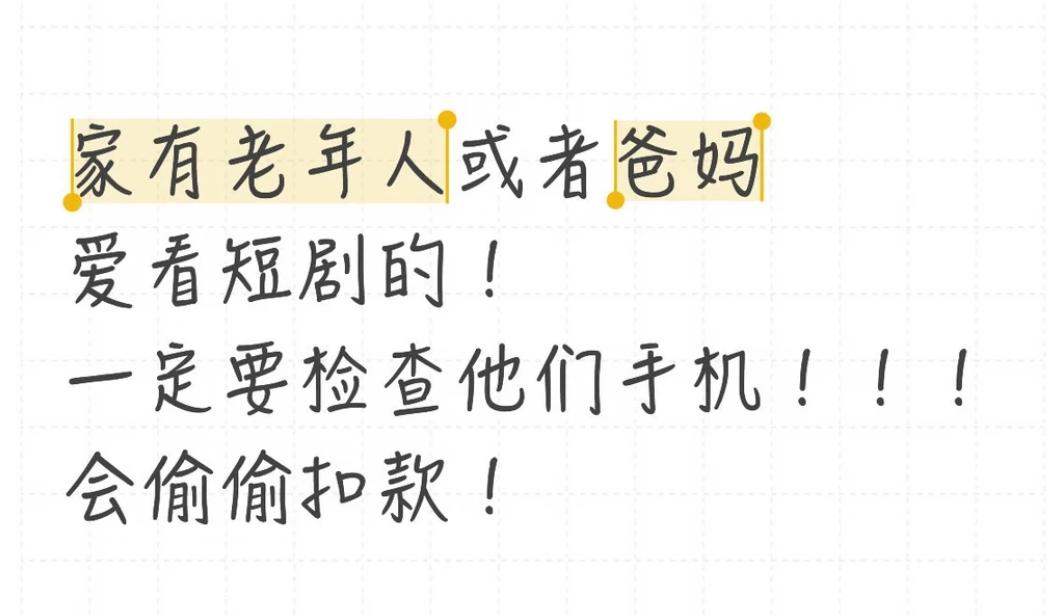
What is even more terrifying is that the elderly are completely unaware of these deductions from start to finish, and even have no idea how the money was spent.
Have paid short dramas become a "new type of health supplement" that harvests the elderly?
01
Paid short dramas are quietly deducting the retirement savings of parents
Rule of Law Daily once reported such an incident: An elderly man in Hunan was dragged step by step into a serial recharge trap by short drama advertisements.
He was first attracted by the words "Unlock all episodes for 9.9 yuan", thinking that he could finish the whole drama by spending a small sum of money. But after watching three or four episodes, the mini-program prompted that the balance was insufficient and asked him to continue to recharge. At first, he recharged virtual coins, and later upgraded to buy membership cards.
Most of the time, the plot always comes to an abrupt stop at the most crucial turning point, so the elderly keep paying to unlock new plots. In his eyes, a drama only costs dozens of yuan, and watching several dramas costs at most a few hundred yuan, which is not a large sum of money.
It was the daughter who first noticed something wrong.
When checking her father's mobile phone, the daughter found that the elderly had been pulled into 20 or 30 short drama groups, where people shared short drama links at any time. Perhaps because of the high frequency of recharges, the elderly was also listed as a VIP and joined several 1-to-1 exclusive groups.

Several customer service staff in the group served him alone, pushing various paid short dramas every day. One of the short dramas was only 1 minute per episode, but it required 800 virtual coins to unlock, which is equivalent to spending 8 yuan to watch for one minute.
When checking her father's WeChat bills, the deduction records inside shocked her even more.
Small expenditures of 39.9 yuan were densely packed, 16,000 yuan was deducted in only one year, and more than 30,000 yuan was spent in three years. After sorting out these scattered bills, it was also found that the elderly had accessed more than 120 short drama mini-programs.
Similar encounters have happened to many elderly people.
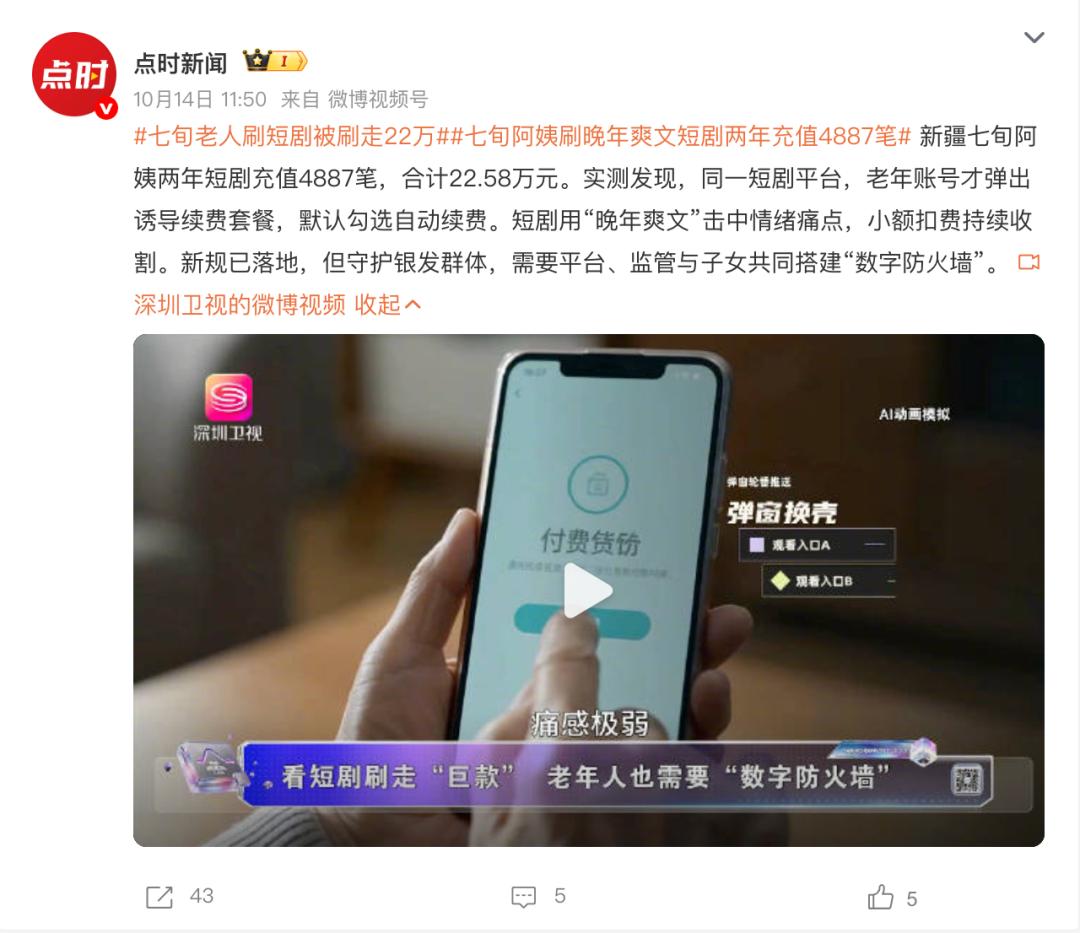
Some elderly people recharged 4887 times in different short drama mini-programs within two years, and spent 225,800 yuan unconsciously;
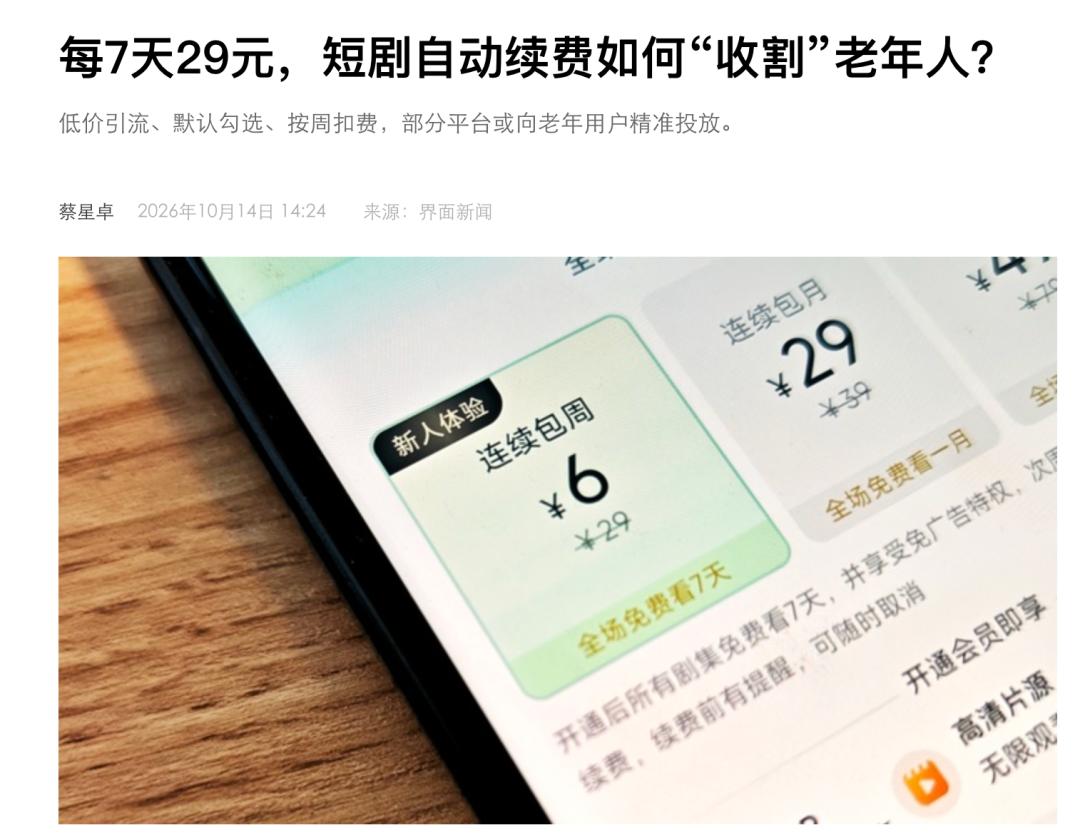
Some elderly people were only attracted by the advertisement of "6 yuan for watching dramas", but as a result, 29 yuan was automatically deducted from their accounts every week.
It is not difficult to find that all these cases have one thing in common: the elderly have no idea that their money has been deducted, let alone remember the specific platform of the deduction, until the younger generation in the family checks their mobile phones and discovers these unclear accounts.
But even if they notice the problem, it is already too late to remedy the loss, and the subsequent rights protection is far more difficult than imagined.
The single deduction amount of short dramas is low and the orders are scattered, so it is not cost-effective to specifically safeguard rights for a few yuan or a few maos; in the face of huge cumulative losses, it is extremely time-consuming and laborious to pull out the bills and check the details one by one.
In addition, the involved mini-programs emerge in endlessly, and it is necessary to locate the operating platforms and companies behind them one by one to clarify the corresponding deductions of each company. These companies are scattered in different cities across the country, and their supervision belongs to multiple departments in different regions, making cross-regional coordination full of difficulties.
What is more tricky is that many mini-programs are discarded after use, and are frequently renamed and removed from shelves, so that when it comes to rights protection, the responsible party cannot be found at all.
Just like the daughter of the elderly man in Hunan, who filed a complaint to 12315 after a long time of trouble, only recovered a refund of three or four thousand yuan in the end.
Some friends may wonder, how on earth do these paid short dramas make people pay money unconsciously?
The answer lies in the whole mechanism from drainage to deduction.
"Watch all episodes for 9.9 yuan" is often just a bait. The money you recharge is usually only enough to exchange for a few virtual coins and watch two or three more episodes. Once RMB is converted into tokens, people's sensitivity to spending money will decrease accordingly.
We clicked into several short drama mini-programs, and the recharge rules are varied.
Watching dramas is not priced in RMB, but you have to recharge into "view points" or "K coins" first. You cannot directly see how much an episode costs. Some are marked with "66 view points for this episode", some are marked with "800 K coins for this episode". Coupled with various promotion routines of buy-one-get-one-free and coin-giving, even if you take out a calculator, you may not be able to figure out how many episodes you can watch with the money you recharged.
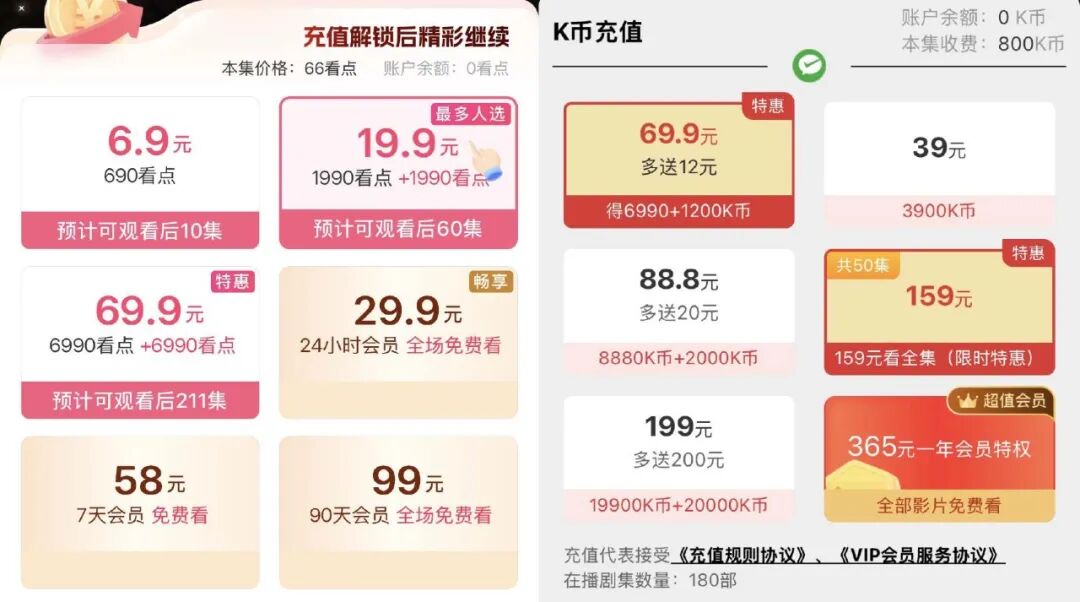
In contrast, the payment process is extremely smooth. As long as you click any recharge option, you will be instantly redirected to the payment interface.
In addition to being unable to calculate the accounts clearly, some platforms also play various tricks on deduction and drainage.
For example, the prompt font for automatic renewal is extremely small, and even the agreement is checked by default. The elderly can't understand these terms at all, and before they figure out what's going on, they have already authorized a series of subsequent consumption in advance.
Or it's a serial trap.
According to a report by Beijing Business Today, after a user recharged in a mini-program, the originally free-updated plot suddenly stopped broadcasting, and the page began to recommend new dramas instead. To continue watching the previous drama, the user has to jump to another mini-program under the same company to recharge again. Some companies even registered hundreds of mini-programs under their names, making people pay money level by level.
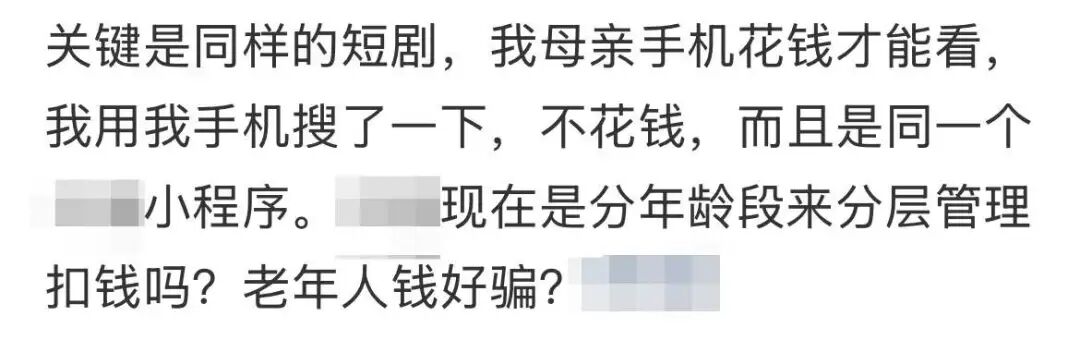
Some netizens even complained that some platforms will "treat people differently": the same short drama will not prompt for payment when viewed by a young person's account, but will require payment when viewed by an elderly person's account.
In order to prevent their parents from falling into these traps, netizens have come up with various methods: empty the balance in their WeChat and Alipay, turn off password-free payment and face recognition, and only open a family card with a quota of 100 or 200 yuan for their parents...
However, can relying solely on children to plug the loopholes really solve the problem?
02
The "wallet killer" in mobile phones is more than just paid short dramas
If you think that clearing the short drama mini-programs in your mobile phone can keep your parents away from traps, you are underestimating the Internet.
Looking at the current Internet environment, pop-up inducements and hidden deductions have long been ubiquitous.
Last month, Mr. Zeng from Xiangxi, Hunan captured a sad scene: an old grandma was waiting for the bus, and game advertisements kept popping up on her mobile phone. The old lady was helpless, she could only turn off the screen and restart it again and again, but still could not get rid of the pop-up page.
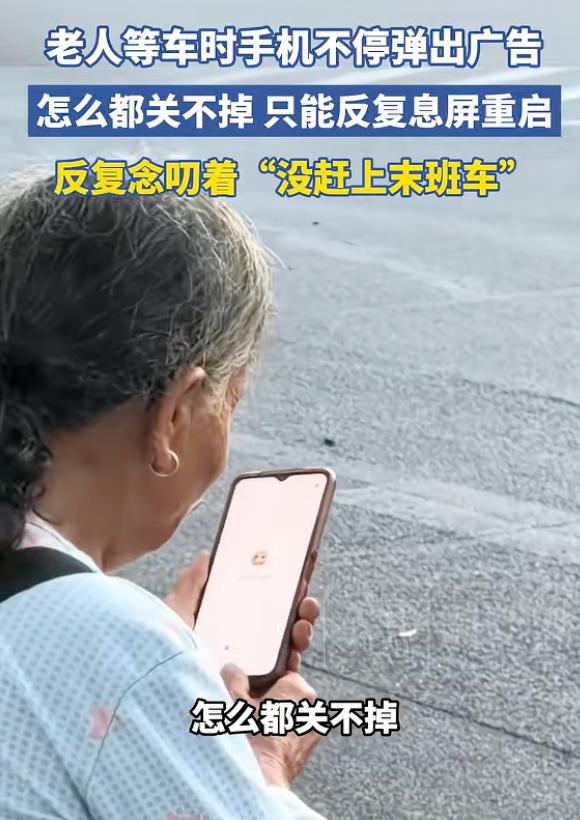
In the end, she could only ask Mr. Zeng next to her for help. Even Mr. Zeng, who is much younger, spent four or five times searching and pressing before finally closing the advertisement. At this time, the last bus had already left. The grandma kept murmuring that she missed the bus, full of helplessness and grievance.
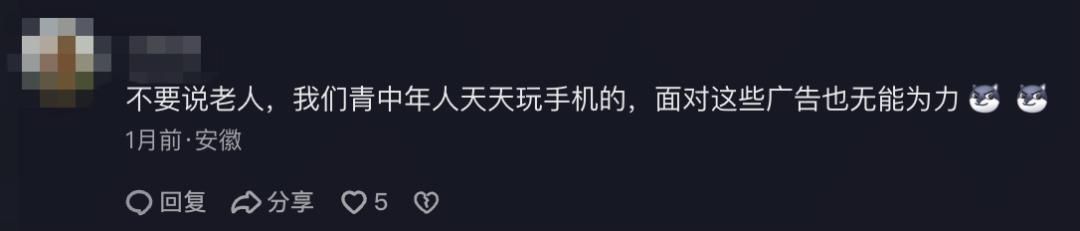
Many netizens in the comment area sighed: "Let alone the elderly, even us young and middle-aged people who play with mobile phones every day are powerless in the face of these advertisements".
There is also an old man in Anhui who wanted to shoot the fish lantern performance at the Huangshan Scenic Area. But after opening the camera, advertisement pop-ups appeared one after another. Clicking the close button would trigger new advertisements, and within half a minute, the pop-ups jumped nearly twenty times.
The old man was in a flurry, trying repeatedly, but he could never get rid of the layers of advertisement interference, and could not open the camera normally to shoot. After all the hustle and bustle, the old man never managed to open the camera, and could only watch the performance miss helplessly.

Although it did not cause direct economic loss, it wasted time, affected the mood, and brought a high sense of frustration. In fact, many of these pop-up advertisements hide the risk of deduction.
Many pop-ups themselves are carefully designed payment traps. Every accidental touch may turn into a deduction.
An elderly man in Wenzhou, Zhejiang, accidentally operated when closing a pop-up advertisement, and unknowingly enabled automatic renewal, with a cumulative loss of more than 4,800 yuan.
Everyone knows that the elderly like to save money and love to receive red envelopes. Therefore, many platforms with the elderly as the main users specially hang the entrances of "get welfare" and "earn money by watching videos" in the most prominent position on the interface, attracting the elderly to stay on the platform for a long time to brush advertisements and complete tasks repeatedly.
In the long task chain, inducement content with deduction or jump functions such as short drama memberships and shopping software is pushed along the way.
After a whole set of processes, the platform has not only made enough traffic, but also shared the money, only the elderly are kept in the dark.
Have you ever heard of the advertisement of "earn money by walking"? This kind of advertisement is very popular among the elderly, claiming that "you can make money by walking" and "exchange steps for cash".
In fact, the withdrawal threshold behind it is ridiculously high, and the exchange rules are also extremely vague. The mechanism is no different from those welfare traps mentioned earlier.
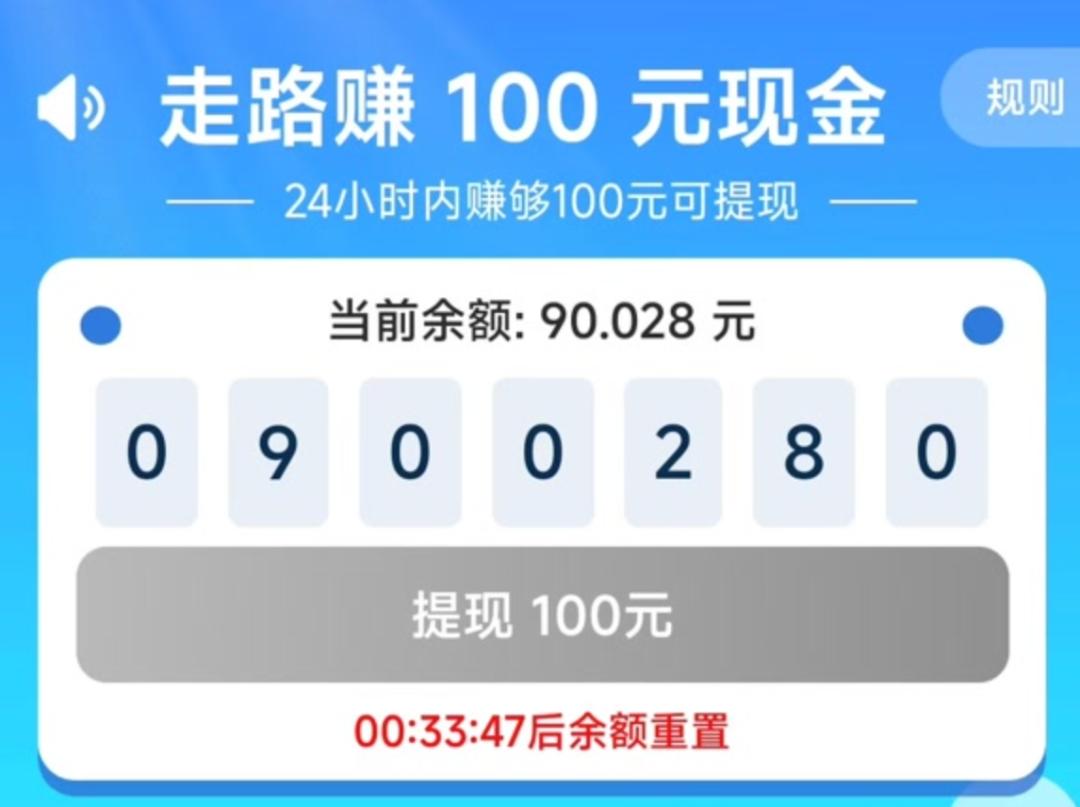
Some elderly people clicked on this kind of advertisement, and WeChat payment popped up on their mobile phones. They thought that entering the password was to receive the daily walking reward, but it turned out to be a deduction of 199 yuan.
In this way, every accidental touch and every credulity of the elderly has turned into a targeted harvest.
03
The Internet is developing faster and faster, don't leave the elderly behind
Looking back over the years, we have to admit that the Internet has developed so fast.
At present, the most expensive resource that is most coveted by capital is no longer the traditional physical assets, but people's attention.
Major platforms and commercial capital spare no effort to rack their brains to turn every click and every stay of users into traffic and real money.