Autonomous driving is around the corner, but BYD, Huawei and XPeng have gone their separate ways.
After years of hype around autonomous driving, where exactly are we now?
If you asked this question three years ago, the answer would almost certainly be a distant promise. But if you ask it today, that promise is finally getting a delivery date — 2028 might well be the latest answer.
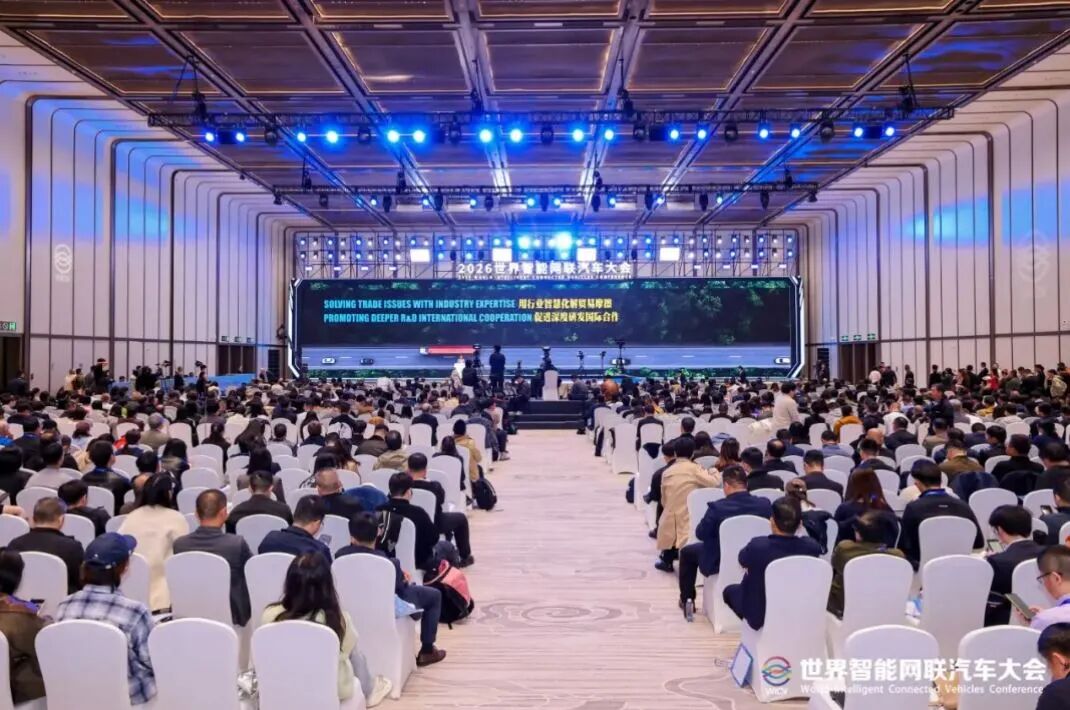
At the 2026 World Intelligent Connected Vehicles Conference, He Xiaopeng announced that L4 autonomous driving will be available in the second half of 2028, Yang Dongsheng stated that L3 autonomous driving in restricted scenarios will land in 2028, Li Bin noted that "mass deployment will be realized as soon as national regulations permit", while Jin Yuzhi did not name a specific year, but cited a string of safety driving mileage data. For the same 2028, the three timelines do not align.
But misaligned timelines do not mean the industry is standing still. True autonomous driving is indeed just around the corner. What differs is how the three companies understand "the path to get there".
The schedule is bustling, but deeper rifts lie in technical routes: Huawei and BYD intend to step on the L3 rung, while XPeng wants to leap over it. Looking further ahead, Yu Kai hands over a measuring stick: 100 kilometers of driving between takeovers counts as usable, 1000 to 10000 kilometers counts as user-friendly, and only 100,000 kilometers counts as truly reliable for daily use.
From combined assisted driving to full autonomous driving, hands-off, eyes-off and mind-off are three progressive rungs, each of which requires trade-offs between liability rules and takeover mileage. The inflection point is real, but after crossing it, some players will stand firm on the rung, while others will hang in mid-air.
01
Three misaligned timelines and one inflection point
First, the conclusion: 2028 is not a year of empty promises, it is the first time the industry has tied the concept of "mass production and deployment" to a specific calendar year.
He Xiaopeng's 2028 is for L4 autonomous driving.
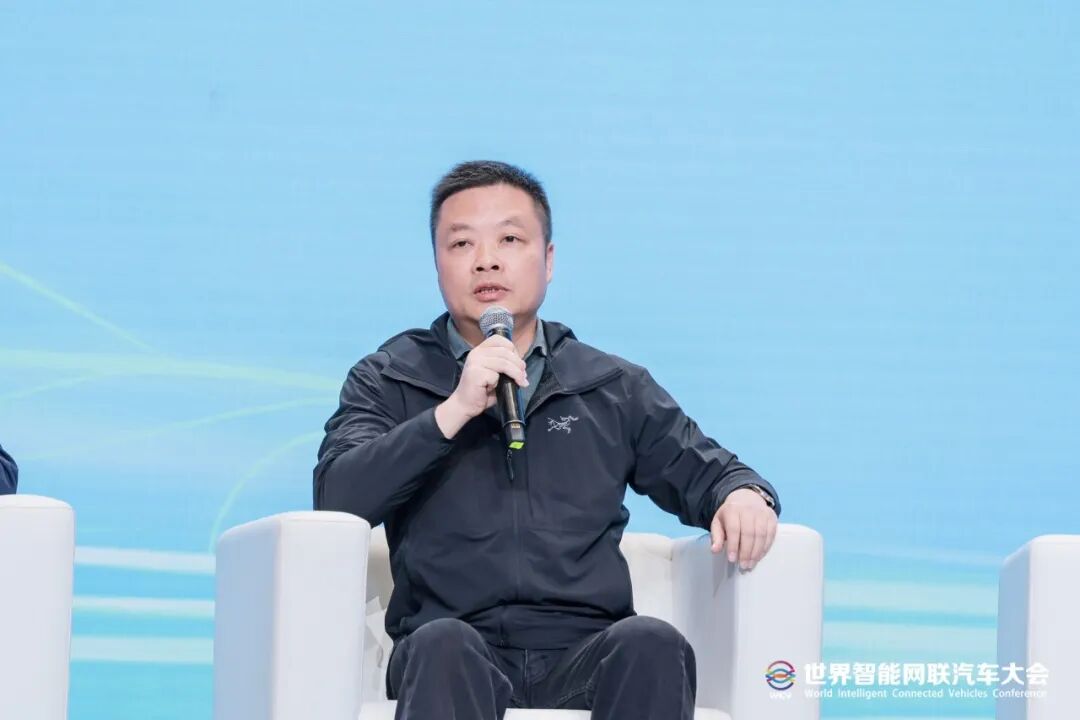
He said that L4 technology will be deployed in the second half of 2028, and from the policy perspective, between 2028 and 2032, different countries, regions and scenarios will see deployment at different paces, with Robotaxi likely to roll out faster.
His reasoning is straightforward: L3 only shifts liability to the system, without improving safety or optimizing user experience, "L3 is nothing more than an enhanced version of L2". He tried Audi's L3 function activated on a few highways in Europe, which only ran for a few minutes after a full day of driving, with a very poor experience. So he crossed L3 off his timeline and bet directly on L4.
Yang Dongsheng's 2028 is for L3 autonomous driving in restricted scenarios.
He said that L3 in restricted scenarios is expected to be mass produced and deployed in 2028, and high-level autonomous driving for unrestricted scenarios will take another 1 to 2 years of iteration. The word "restricted" is not a compromise, but an engineering prerequisite: only when the scenario is restricted can the ODD (Operational Design Domain) be clearly defined; only when ODD is clearly defined can liability be clearly demarcated.
He also noted that BYD's large scale means the company can never push an untested function to millions of users before it is fully validated.
Li Bin's inflection point is not explicitly stated in his remarks.
He separated technology and compliance: technically, L2 to L5 share the same technical foundation and the industry is converging on the path of "world model + closed-loop reinforcement learning"; in terms of regulation, the national mandatory L3 regulation will come into effect on July 1 next year, but deployment depends not only on technology, but also on regulatory rules, liability system and operational response mechanisms.
"The specific launch time depends on when the government gives approval". In other words: the technology is already mature, but the compliance timeline is not in the hands of automakers.
Jin Yuzhi did not name a specific year, but cited data instead.
In the assisted driving mode, the safety driving mileage before a severe collision accident reaches 10.356 million kilometers, 5.75 times the average figure of Chinese human drivers; assisted driving already accounts for 60% of total driving mileage.
His judgment is that the competition in the second half of the autonomous driving industry is shifting from technical capability competition to safety and credibility competition. Safety requires not only technological innovation, but also objective verification, and the industry should promote the openness and transparency of safety data.
Yu Kai poured a bucket of cold water: "When asked if we have entered the second half of the competition, I think the revolution has only just begun, and the challenges are enormous. Every phase of leap forward is like crossing countless mountains and rivers."
Cao Xudong, on the other hand, expressed optimism: 2026 is the dividing line between the first and second half of the industry. The "Smart Driving Moore's Law" defined internally by Momenta has increased 10 times every two years previously, and achieved a 100-fold improvement in the past four years. In the second half, the growth will accelerate to 10 times per year, and 2027 to 2028 will likely see a key inflection point for L3 and L4.
The cold water has its logic, and the optimism also has solid grounds.
But when you put all these pieces of information together, one conclusion emerges: 2028 is not a reckless bet from a single company, but the first time the technology curve, regulatory timeline and cost structure converge in the same interval.
He Xiaopeng dares to set L4 for 2028 because the technology has converged to a level that is worth betting on; Yang Dongsheng dares to schedule L3 in restricted scenarios for 2028 because the liability boundary can be clearly calculated; Li Bin dares to say "deployment will be realized as soon as the government approves" because the regulatory framework is truly moving forward.
The three timelines do not align, but the disagreement is not about "whether autonomous driving will come", but about "how it will come". True autonomous driving is around the corner, and all these industry leaders actually share this consensus.
02
Huawei and BYD vs XPeng
The biggest divergence in this round of senior executives' discussion does not lie in the timeline, but in whether L3 itself is worth existing as a separate rung in the development path.
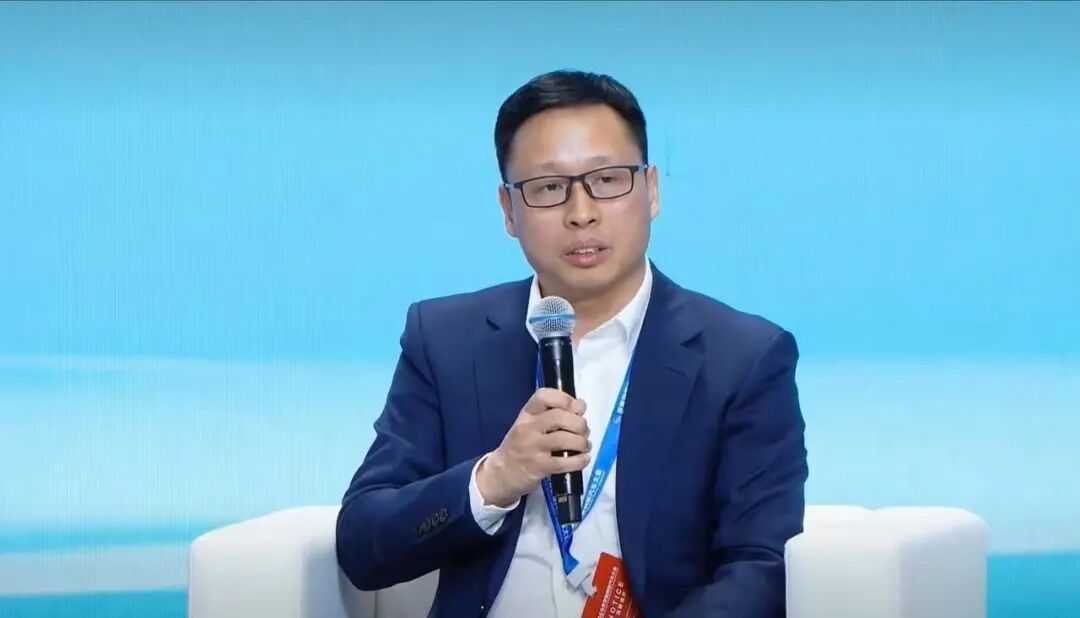
Jin Yuzhi clearly explained the nature of L3: in the L2 stage, the driver is the liable party in case of accidents. Once the vehicle reaches L3 and higher levels, the system will take the liability.
"This is also the biggest difference when the global autonomous driving industry enters the 'second half'". Based on this judgment, Huawei's stance is to build the underlying supporting infrastructure. Huawei's Intelligent Automotive Solution team repeatedly refers to itself as "electronic screw" supplier, saying it will not build cars and will not compete with automakers. It is laying out safety components and experience components to ensure that the liability shift in L3 scenarios can be traced via data and supported by clear standards.
From "safe driving" to "convenient driving", from the "10-minute Qiankun Intelligent Driving Life Circle" to the cooperation with CATL and E-Car Power on the smart battery swapping ecosystem, every move is breaking down the broad concept of "autonomous driving" into deliverable components.
Huawei will not announce when L3 will arrive on behalf of others, but it is building the full set of trust infrastructure required for L3 operation first.
Yang Dongsheng's stance is to step on the rung and make it solid. L3 is L3 for "restricted scenarios", and the industry needs to make this rung fully solid before moving on to unrestricted high-level autonomous driving.
He compared combined assisted driving and autonomous driving to "advanced automatic transmission vehicles": comfort is important, but safety is also a core mission. Automakers need to achieve full-stack controllability and take full liability for their products, leading users to go through the three phases of "usable — dare to use — use every day".
He Xiaopeng does not recognize the value of this L3 rung. His logic is: L3 shifts liability, but does not improve safety, nor does it optimize user experience.
He explained earlier that L3 has capabilities close to L2, and the driver is still the main liable party; only L4 will have a new, different liable party. Adding a separate L3 level between L2 and L4 poses huge challenges for hardware, software, laws and regulations.
In fact, Auto Community recalls that around 2015, companies including Ford have already discussed whether to skip the L3 level.
XPeng's choice is to allocate resources to L4 and Robotaxi, skipping the intermediate state that "shifts liability but does not improve user experience".
This is no longer a debate about speed. Huawei and BYD are building a road with rungs, each of which corresponds to a set of liability rules, validation standards and liability guarantee mechanisms. XPeng believes the intermediate L3 rung should not exist. Instead of climbing up and then climbing down, it is better to jump directly from the flat ground of L2 to higher levels.
Jin Yuzhi says the liable party of L3 shifts to the system, Yang Dongsheng says L3 needs restricted scenarios and full liability guarantee, He Xiaopeng says L3 shifts liability but does not improve safety — the three are actually talking about three different sides of the same thing: L3 is not a technical problem, but a liability problem. Whether you recognize this liability boundary determines whether you take the gradual path or the leap-forward path.
However, from the perspective of Auto Community, Yu Kai from Horizon Robotics has handed a cold measuring stick to the leap-forward path — 100,000 kilometers.
03
Only 100,000 kilometers counts as truly reliable for daily use?
This time, Yu Kai put forward three rungs of division.
The MPCI (Miles Per Critical Intervention) of leading urban NOA (Navigation on Autopilot) solutions in the industry has just crossed 100 kilometers. 1000 to 10000 kilometers counts as "user-friendly", and only 100,000 kilometers counts as "truly reliable for daily use". He hopes the industry can achieve this leap in 4 to 5 years.
Cao Xudong offered another measurement standard: 10-fold improvement per year, and the order-of-magnitude gap will be narrowed in the process of engineering iteration. One says the leap is as hard as crossing thousands of rivers and mountains, the other says 10-fold improvement can be achieved every year.
Who is right? It depends on whether the next 10-fold improvement comes from a methodological revolution, rather than a natural extension along the existing technical curve. The difference between the gradual path and the leap-forward path will not be seen in press conferences, but in the curve of takeover mileage.
Looking back further, Yu Kai once proposed a more down-to-earth classification at the Xuanyuan Forum: "hands-off driving" in 2028, L4 level "eyes-off driving" in 2030, and "mind-off driving" in 2035. Hands-off means you can take your hands off the steering wheel, eyes-off means you can take your eyes off the road, mind-off means you can even fall asleep while the car is running. These three phases are closer to what users can perceive than any L-level labels.
Using this measuring stick, it becomes clear where the bottleneck of L3 lies.
According to Yu Kai's classification, L3 roughly falls in the hands-off, eyes-off but not mind-off interval — the system takes over driving, but does not take over the ultimate liability for safety. What He Xiaopeng means by saying L3 "only shifts liability to the system" is exactly this state: you can take your eyes off the road, but you cannot take your mind off the driving task.
Products in this state have limited experience improvement, but the engineering cost is very high. The fact that Audi's L3 can only be activated for a few minutes a day is no accident, it is jointly determined by the ODD and liability structure of L3.
What L4 needs to cross is the mind-off rung.
He Xiaopeng set L4 for the second half of 2028, but he also admitted that it is "very difficult" to achieve a 10-fold annual improvement in 10,000-kilometer and 100,000-kilometer level safety takeover mileage. Scenarios such as snow-covered roads, swamps and grasslands require full integration of chassis motion control and autonomous driving technology, "this challenge cannot be overcome in one or two years".
Yu Kai's measuring stick is more specific: from 100 kilometers to 100,000 kilometers, there are three orders of magnitude of difference. The method that supports the leap from 100 to 1000 kilometers cannot necessarily directly support the next order-of-magnitude leap. Every 10-fold improvement requires a change of methodology, rather than a natural extension along the existing technical curve.
Existing data also reminds us not to be overly optimistic about the progress speed.
Jin Yuzhi said that the safety driving mileage before severe collision accidents in assisted driving mode reaches 10.356 million kilometers, 5.75 times the average of Chinese human drivers. Li Bin cited insurance company data saying that combined assisted driving can be 8 times safer than human driving, with severe accidents reduced by about 30%; another statistic shows that the safety loss from accidents has decreased by 38.4%.
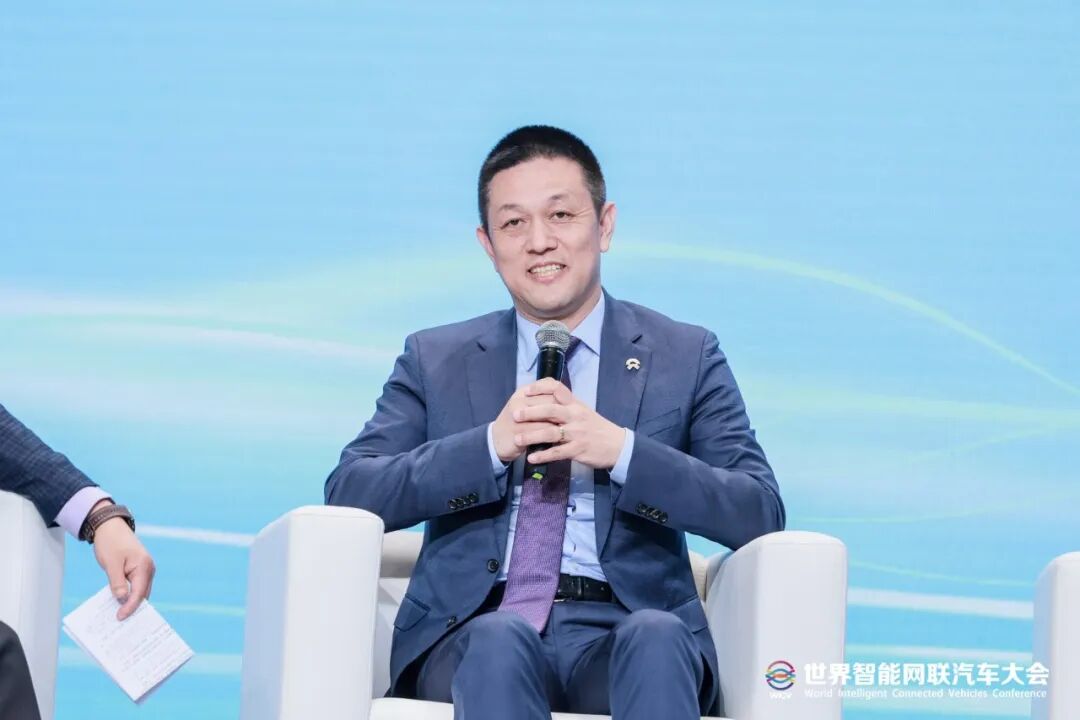
But Li Bin added one point: the manufacturer taking liability does not mean zero accidents.
This sentence should be posted on the background board of every L3 and L4 press conference. Hands-off can be achieved via functional development, eyes-off can be achieved via redundant configuration, but mind-off relies on a complete liability system, operation system and sufficient engineering patience to handle long-tail scenarios. The first two levels can be announced at press conferences, but the third level can only be achieved by accumulating takeover mileage kilometer by kilometer.
Yang Dongsheng's "usable — dare to use — use every day" is the user-facing description of the same logic. "Usable" means the function is available, "dare to use" means users have sufficient trust, "use every day" means the product has formed strong user stickiness. Yu Kai's "usable — user-friendly — truly reliable for daily use" is the engineering description.
These two sets of statements essentially describe the same thing: the leap from combined assisted driving to full autonomous driving cannot be achieved via a single OTA update. It requires crossing three major barriers: trust, liability and cost.
In 2028, hands-off autonomous driving will most likely be widely deployed. For eyes-off, Yang Dongsheng says it can be realized in restricted scenarios, He Xiaopeng says the technology will be mature in the second half of the year, and Li Bin says it can be deployed as soon as the government approves.