The Chinese motorcycles that have suddenly exploded in popularity have gone through 20 years of arduous struggle.
Motorcycle sales are surprisingly on the rise. Statistics show that in the first half of this year, domestic fuel motorcycle sales hit 2.6496 million units, marking a 2.09% year-on-year growth.
When adding the continuously booming motorcycle export data, the total fuel motorcycle sales of the whole industry from January to June 2026 reached 10.1724 million units, representing a 12.44% year-on-year increase.
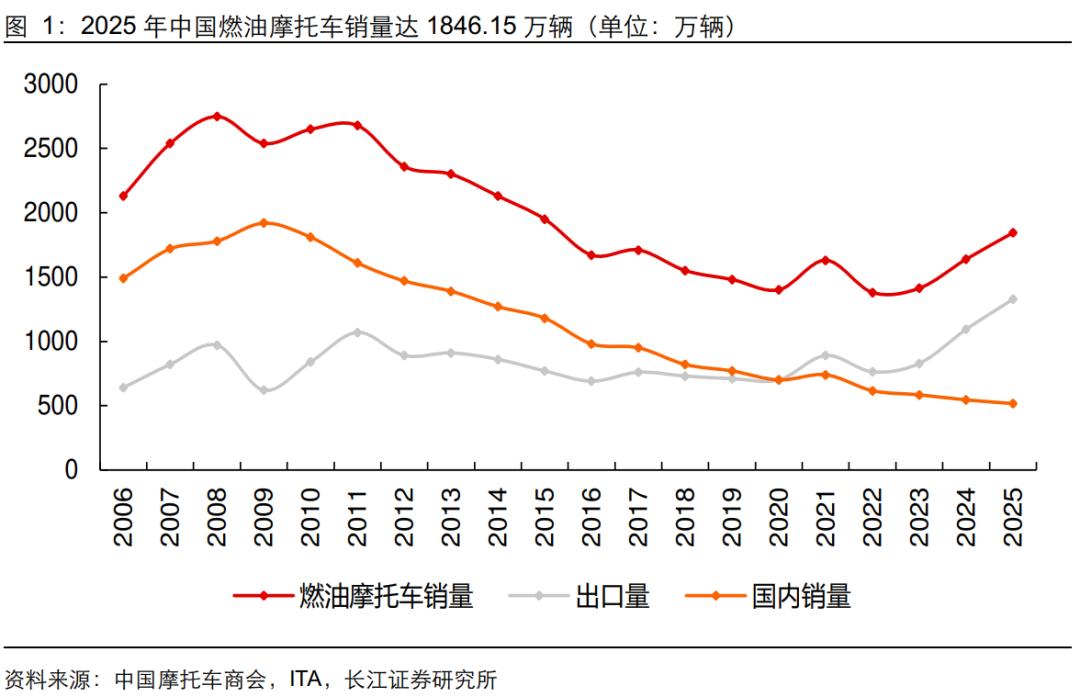
Affected by factors such as motorcycle ban policies and category competition, China's motorcycle sales have been declining all the way from 27.5 million units in 2008. Since then, the market's focus has shifted to new energy vehicles and two-wheeled electric vehicles, relegating fuel motorcycles to the corner of the sunset industry.
However, after 20 years of trials and exploration, China's motorcycle industry has found new growth points in the global market, all-terrain vehicles and other fields, ushering in the second industrial peak.
At the current stage, leading brands in China's motorcycle market are using large-displacement models to adapt to the core upgrading of the market, and competing for the higher-value European and American markets.
The rising popularity path of Zhang Xue Motorcycles starting from the FIM Superbike World Championship is becoming a footnote to this massive global industrial expansion.
Chinese Motorcycles, More Than Just Zhang Xue Motorcycles
China's motorcycle industry has not received such attention as it does this year for a very long time.
On March 28, the Portuguese round of the FIM Superbike World Championship WSBK kicked off in Portimão. In the first race, rider Valentin Debise drove the Zhang Xue Motorcycles 820RR-RS and won the championship with an overwhelming advantage of nearly 4 seconds ahead of the second-place finisher.
This marks the first time a Chinese motorcycle brand has won a WSBK main race championship, breaking the decades-long monopoly of European, American and Japanese brands such as Yamaha and Ducati.
In the second race on March 29, although Debise made a mistake at Turn 13 in the final three laps and fell to third place, he later overtook two Yamaha R9s through straight-line acceleration, strongly regained the leading position, and finally claimed both titles of this round.
When the news came back to China, everyone was asking the same question: Who is Zhang Xue Motorcycles?
Zhang Xue Motorcycles was founded in 2024. Its founder Zhang Xue was previously the co-founder of Kove Motorcycles, and even earlier, he was a rider born in a humble background who bravely pursued his dreams and never gave up.
As the final round of WSBK in Spain ended on October 18, Debise won the runner-up in the annual rider ranking with 6 race championships; Zhang Xue Motorcycles ranked third in the annual overall standings, second only to Yamaha and Ducati, surpassing established manufacturers such as Triumph, Honda and Kawasaki in its debut campaign.
As Zhang Xue's story became known to the public, Zhang Xue Motorcycles instantly became the most important IP in China's motorcycle industry. The entire Chinese motorcycle industry has gradually become the focus of public attention.
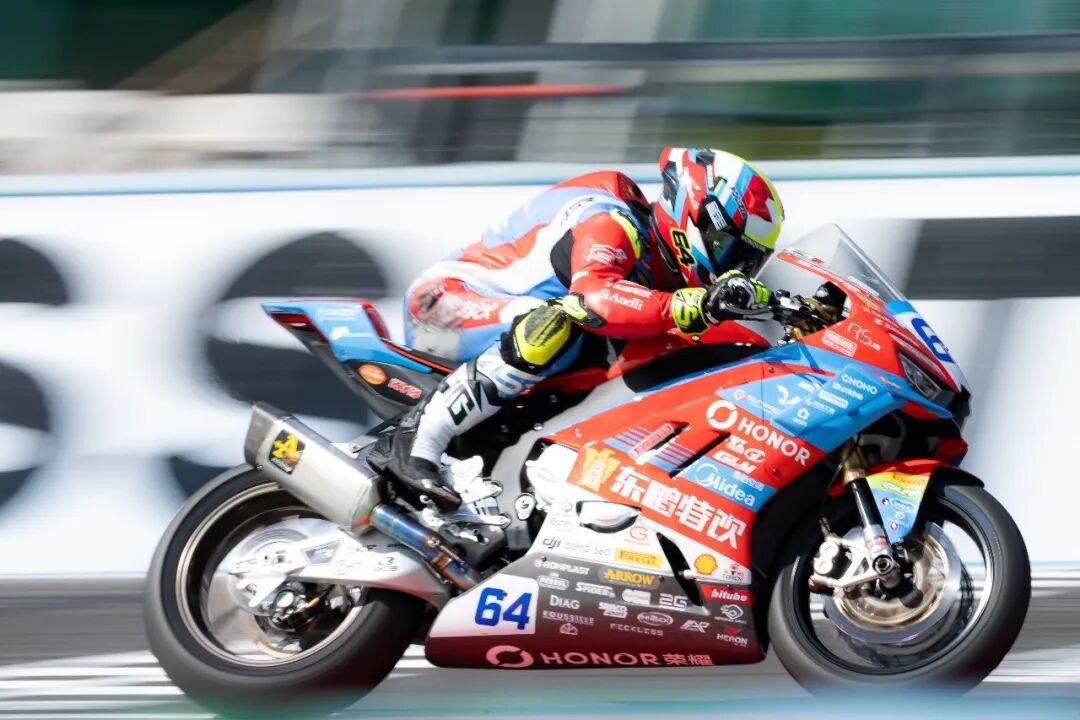
In fact, far more than Zhang Xue Motorcycles represent China to compete in the global motorcycle arena across the country's motorcycle industry map.
As large-displacement and sportbike models have become important growth points in the motorcycle market, motorcycles emphasizing high performance will take global competitions as the key to enhancing brand power.
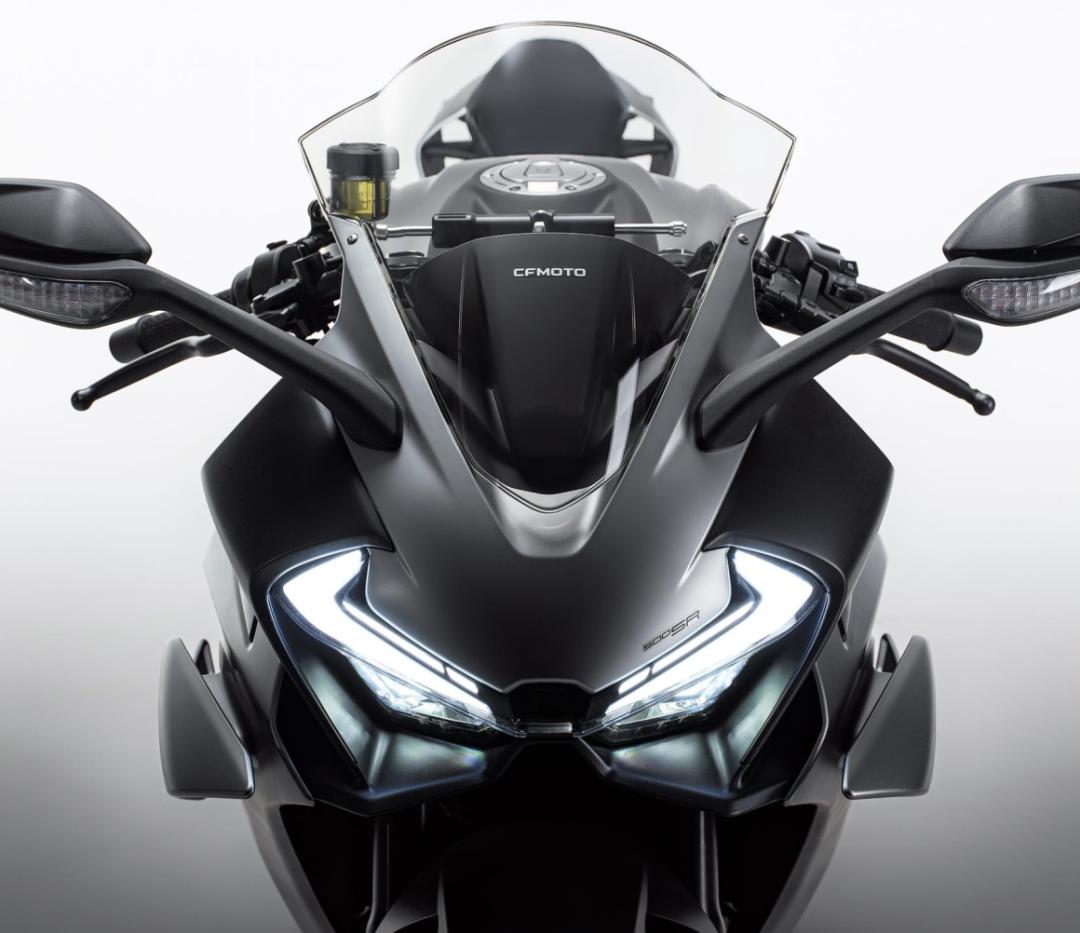
In 2022, CFMOTO became the first Chinese motorcycle manufacturer to enter the MotoGP Moto3 class, entering the arena earlier than Zhang Xue Motorcycles and opening a new chapter for Chinese brands to compete in the world's top motorcycle events.
Racing bikes for WSBK must be modified based on mass-produced motorcycles. The ultimate goal of the event is to drive motorcycle sales, which is equivalent to road races in automobile competitions; while racing bikes for MotoGP need to be developed from scratch, equivalent to Formula cars in automobile competitions, representing the ceiling of motorcycle industrial technology.
In 2024, CFMOTO achieved a historic breakthrough in the Moto3 class, sweeping the annual rider, team and manufacturer championships.
In 2025, it won 6 championships in Moto3 and Moto2, stood on the podium 20 times, and won the "Annual Best Rookie" of both classes, refreshing the best historical record of Chinese manufacturers in MotoGP.
In the first half of 2026, CFMOTO competed in both the Moto3 and Moto2 classes, accumulating 8 championships and 17 podium finishes, and firmly occupied the top of both the rider and team standings in Moto3.
In terms of single-round technical strength and competition results, CFMOTO actually performs even better. It just lacks an IP like Zhang Xue, so it missed the domestic traffic dividend.
Around the competitions, CFMOTO is also leveraging its technical and product advantages to build echelons, such as cultivating local young riders. When foreign riders drive CFMOTO racing bikes and Zhang Xue Motorcycles to gallop on the track, it still makes people feel a little regretful. With time going by, CFMOTO's development path may cultivate its own top motorcycle riders. Chinese people driving Chinese motorcycles will show the all-round strength of China.
50 Years of Turbulence in the Industry
For a moment like this year, China's motorcycle industry has waited for nearly 20 years.
In 1979, Chongqing Jialing Machinery Factory launched Jialing CJ50, the first mass-produced civilian motorcycle in China, which became the starting point of China's motorcycle industry. Chongqing has thus become one of the birthplaces of China's motorcycle industry.
Later, with economic development, industrial progress and consumption upgrading, China's motorcycle sales kept climbing, and its output surpassed Japan to rank first in the world in 1993. Motorcycle enterprises sprang up like mushrooms, forming industrial clusters in Chongqing, Guangdong, Zhejiang and other regions.
In the peak year of 2008, China's annual motorcycle sales reached 27.5 million units. A large number of first-tier brands such as Haojue of Da Changjiang, Loncin, Lifan, Jianshe Motorcycle, Jialing and Zongshen competed on the same stage, making the market extremely lively.
However, the development of some industries needs to take into account both market development and the progress of the times.
The motorcycle ban policy launched in Beijing in 1985 was gradually implemented in major cities after entering the new century, and 185 cities had motorcycle restriction policies at the peak. The core market shrank, and motorcycle sales immediately dropped, falling to 15.58 million units by 2018.
The market impact cleared out some small and medium-sized manufacturers, while leading brands showed their own magic powers to start new business exploration, including deeply cultivating the sinking market, exploring overseas markets, laying out all-terrain vehicles, and transforming to two-wheeled electric vehicles or even new energy vehicles.
In short, new markets and new businesses allowed China's motorcycle industry to retain its spark, and finally waited for its revival 20 years later.
If 2008 was the sales peak of China's motorcycle industry, the current stage is ushering in the value peak.
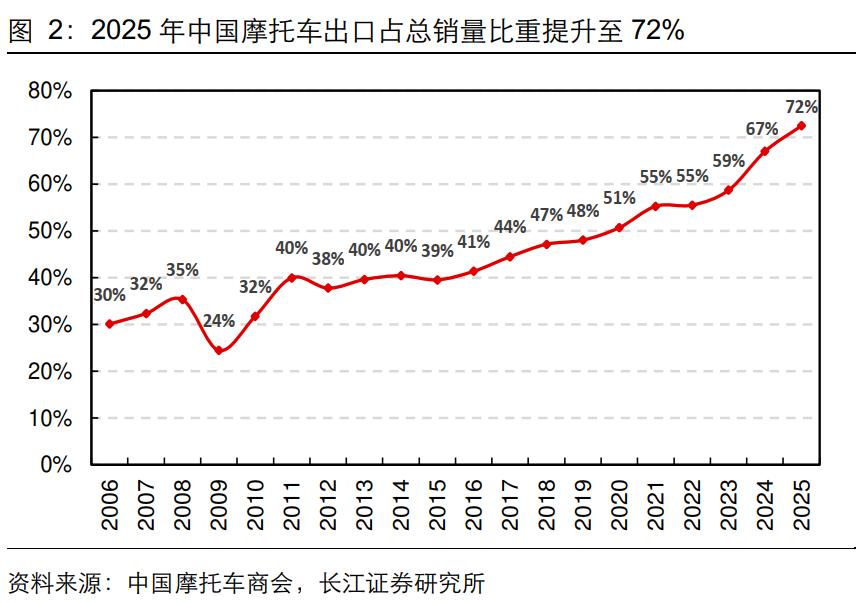
The motorcycle industry began to recover structurally in 2019; by 2025, the total sales of fuel motorcycles rebounded to 18.46 million units, with exports reaching 13.37 million units, and the export proportion rose all the way to 72%. In the first half of this year, the whole industry completed the production and sales of 10.1402 million and 10.1724 million fuel motorcycles respectively, up 12.41% and 12.44% year on year, and the export proportion continued to rise to 74%.
In addition to the success in overseas markets, the popularity of large-displacement leisure and entertainment models has also allowed China's motorcycle industry to seize opportunities.
Around 2008, 125cc motorcycles were the absolute main force among motorcycles produced in China; by 2025, the sales of motorcycles above 250cc reached nearly 1 million units. High growth and high-end attributes have raised the industrial value of motorcycles.
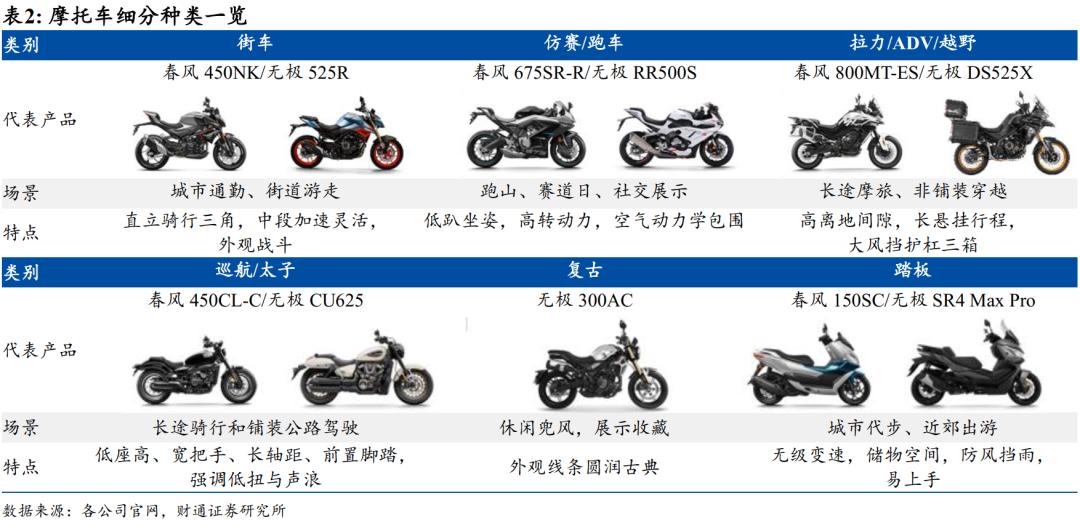
Therefore, with the continuous growth of overseas markets in recent years, the effect of halting the decline in the domestic market, and the value upgrading guided by large-displacement motorcycles, China's motorcycle industry has re-entered the dividend period.
In 2025, Chinese motorcycle manufacturers achieved operating revenue of 159.03 billion yuan, up 10.73% year on year; and realized total profit of 12.297 billion yuan, up 34.11% year on year.
Most leading companies have achieved steady growth in operating revenue and net profit. Among them, CFMOTO, which ranks high and has pure business, accidentally entered the global TOP2 in the all-terrain vehicle sector, and its motorcycle business is also at the leading position with rapid growth.
In 2025, CFMOTO's fuel motorcycle business revenue reached 6.471 billion yuan, up 7.18% year on year. From January to June this year, the total sales volume was 196,400 units, up 30.62% year on year; the operating revenue was 4 billion yuan, up 19.55% year on year.
China's motorcycle industry did not suddenly get better, but after 20 years of hard work and perseverance, it finally ushered in the moment of seeing the light at the end of the tunnel.
Taking New Paths, Facing Tough Battles
China's motorcycle industry has gone through the darkest period of the local market, but there is still a certain distance from the real value realization.
In 2025, global motorcycle sales reached 65.2 million units, up 4.7% year on year, hitting a record high; the market size was about 153.4 billion US dollars. Industry data shows that global motorcycle sales are steadily increasing. The average annual compound growth rate of industry revenue from 2026 to 2030 is expected to be 2.84%, and the market size will be close to 180 billion US dollars in 2030.
In this trillion-level market, the secondary markets such as Latin America, Africa, Southeast Asia, the Middle East and Central Asia are still where Chinese motorcycle manufacturers have advantages; the most valuable European and American markets are still dominated by global leading manufacturers such as Honda, Yamaha, Ducati and BMW.
After 50 years of market development and continuous exchanges, Chinese motorcycle manufacturers are no longer backward in technology and products. The long-term two-way technical and channel cooperation between CFMOTO and KTM, and Loncin General Purpose Manufacturing engines for BMW for more than 20 years are very illustrative of this point.
The gap is mainly reflected in product localization, channel localization and brand awareness.
In recent years, Chinese motorcycle manufacturers have taken large-displacement and sportbike models as the main direction, in order to compete for the higher-value European and American markets. CFMOTO has its SR series, Loncin has its RR series, and Qiangjiang also has its own racing series.
This year, CFMOTO acquired Kalex, the core supplier of Moto2, and applied top racing technology to mass-produced models, which is also a curve overtaking under the guidance of this strategy.
At the same time, Zhang Xue Motorcycles participating in WSBK and CFMOTO going to MotoGP are both using competition results to boost product sales, drive motorcycle brand potential upward, and form a positive cycle.
In addition, the competitive strategies that Chinese brands are best at, such as full configuration, differentiated competition, extreme cost performance, and the "encircling cities from the countryside" strategy, are also being applied to the global motorcycle market.
Originally, we talked about the substitution of local brands in the Chinese market. In fact, in the motorcycle market, the rise of Chinese brands in the global market is in full swing.
In this massive campaign, if Zhang Xue Motorcycles' goal is Yamaha and Ducati, then CFMOTO's goal should be Honda.
More importantly, the by-product of this outward expansion is likely to trigger the revival of local motorcycle consumption in China.
The global growth of the motorcycle market in recent years comes largely from the upgrading of consumer demand, shifting from original practicality to recreational attributes. Motorcycles are also evolving from tools to toys, and have become fashion items admired by young people because of the thrill of speed.
This trend is gradually driving the warming and upgrading of the domestic motorcycle market with the help of hot events such as the popularity of Zhang Xue Motorcycles and the implementation of motorcycle licensing policies in Chongqing.
From 2020 to 2025, the sales of domestic medium and large-displacement motorcycles increased from 149,000 units to 419,000 units, while the sales of imported models dropped from 88,000 units to 34,000 units. In the first half of 2026, domestic fuel motorcycle sales reached 2.6496 million units, up 2.09% year on year, and a considerable part of this increment came from large-displacement models.
There is not only the expansion in the global market,