Jensen Huang delivered the computing power cluster within 14 days. Matched with the DeepSeek open-source engine, you can immediately start earning profits at the rate of 38 US dollars per graphics card per hour.
Alright, alright, now we're in for a surprise: Jensen Huang has picked up the gauntlet thrown by Liang Wenfeng.
Yesterday, DeepSeek open-sourced its inference framework, demonstrating how to use a computing power cluster to achieve a revenue of 38 US dollars per single GPU per hour.
Today, NVIDIA has directly turned computing power clusters into prefabricated solutions, taking only 14 days from breaking ground on a new data center to starting token production.
Calculated under this model, for a 10,000-GPU cluster, after going online in 14 days, under the ideal state of full load and full customer occupancy, the hourly revenue can reach 380,000 US dollars (of course, the premise is that such a large number of stable orders can be obtained).
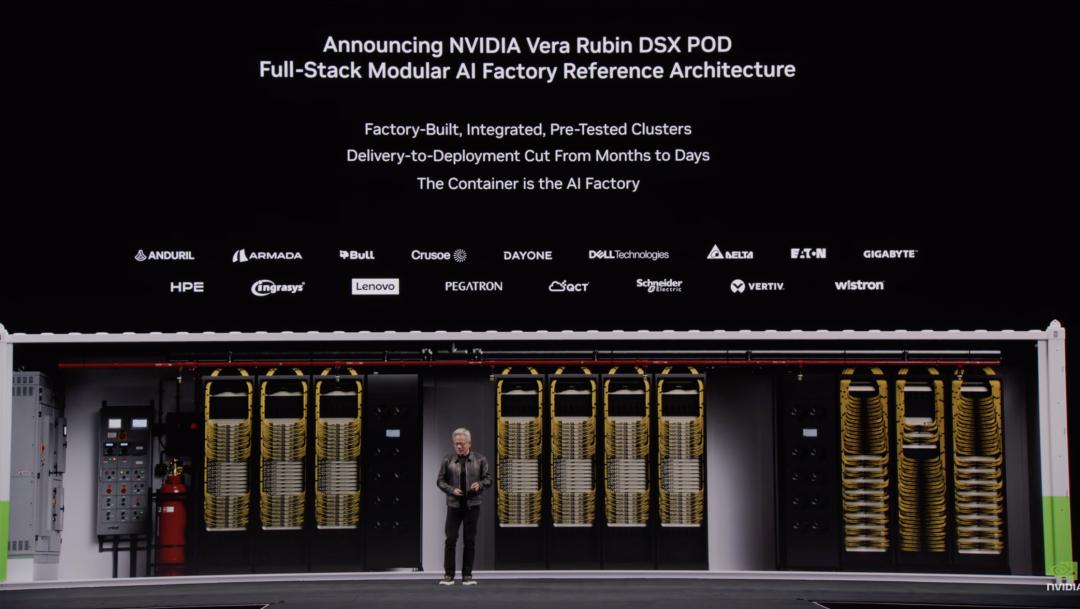
This time, NVIDIA is no longer satisfied with only selling chips and cabinets, but has directly packed the entire "Vera Rubin AI Factory" into modular containers.
In the past, building a supercomputing center required lengthy civil construction, on-site wiring and debugging.
Jensen Huang dropped a tough statement on the spot, completely rewriting the economics of data centers:
An AI factory creates value only when it starts producing tokens, not when the construction work is completed.
Almost inadvertently, Jensen Huang led the industry to skip the stage of "the more you buy, the more you save" and jump straight to "the more you buy, the more you earn".
It gives people an illusion that the golden age of AI Infra is coming.
Pack the AI factory into a container, deliver full-performance computing power in 14 days
How to let customers make money from AI as quickly as possible? The answer is to shorten the "Time to First Token".
The newly released DSX POD hardware product line is fully developed around this core logic.
Traditional AI data center construction requires extremely cumbersome on-site installation of computing nodes, network wiring, rack-level power supply and liquid cooling pipeline laying. Once there are parts delays or on-site construction errors, the process often takes more than half a year.
Now, NVIDIA directly makes the full set of infrastructure including the latest Vera Rubin system into a mass-producible "container" design.
Computing, network, wiring, power supply and liquid cooling systems are all completed in the manufacturing factories of partners, including integration, cross-rack wiring, pipeline connection and function verification.
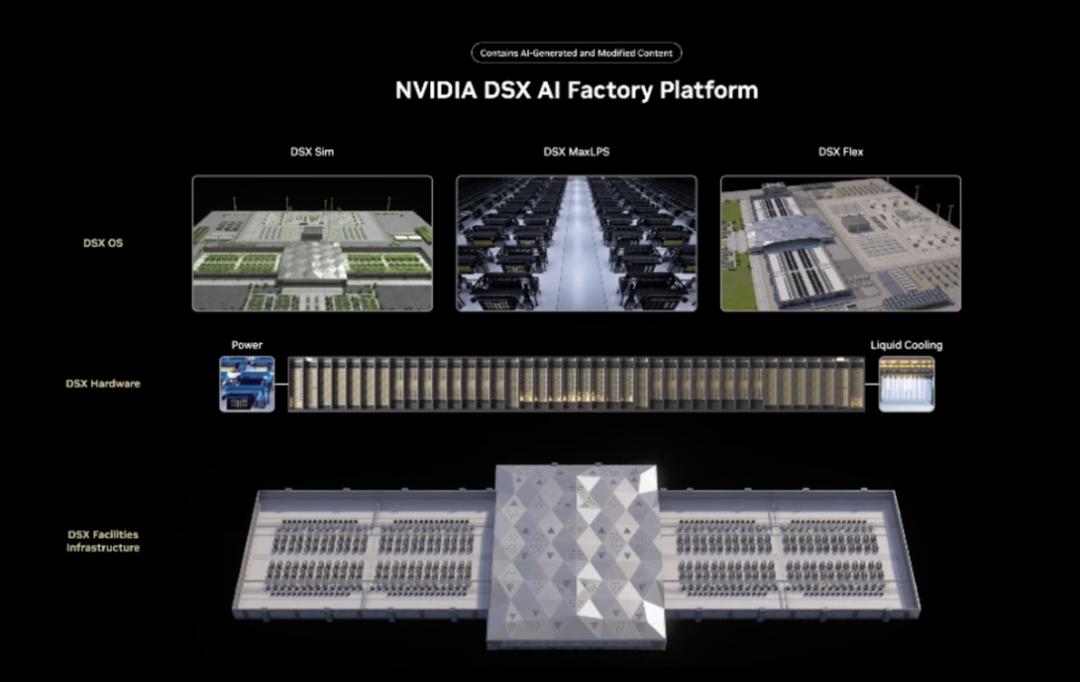
The first step, package the latest NVIDIA Vera Rubin computing system together with high-speed network, rack-level power supply and liquid cooling heat dissipation systems.
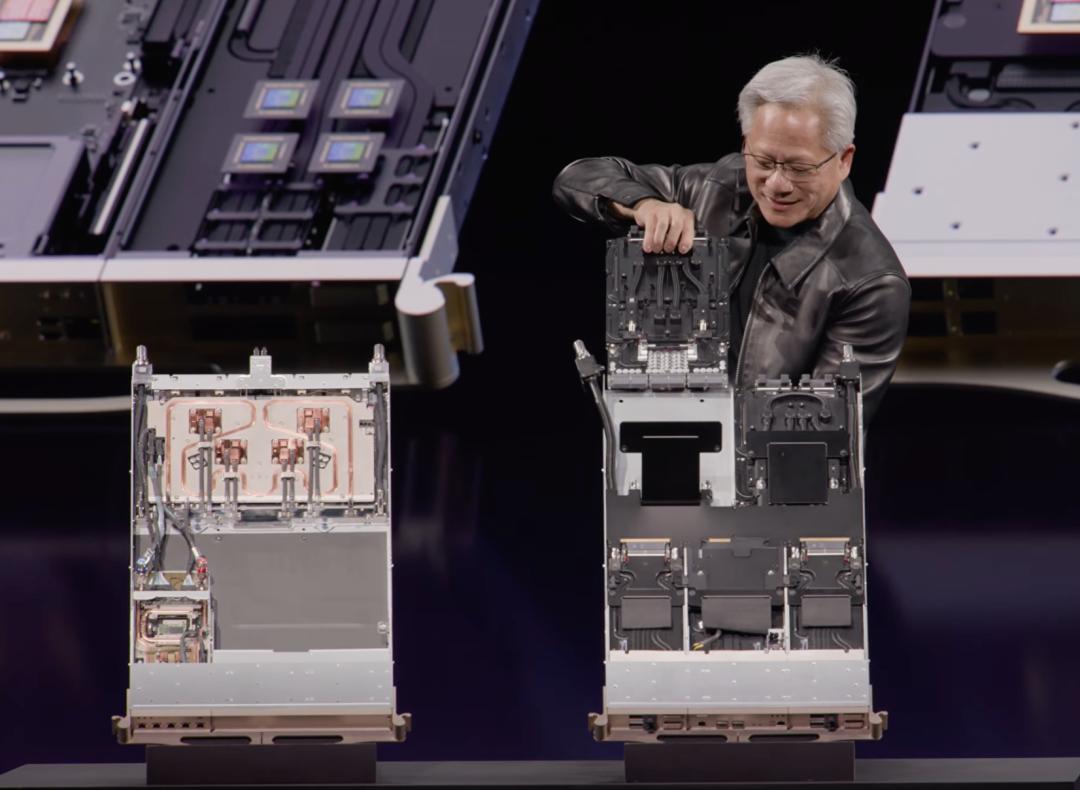
The original Grace Blackwell solution took 2 hours to assemble a single node, with complicated wiring and only 80% liquid cooling coverage.
After switching to Vera Rubin, which adopts a cable-free architecture and 100% full liquid cooling, the assembly of a single node is shortened to only 5 minutes, while reliability and performance are both improved.
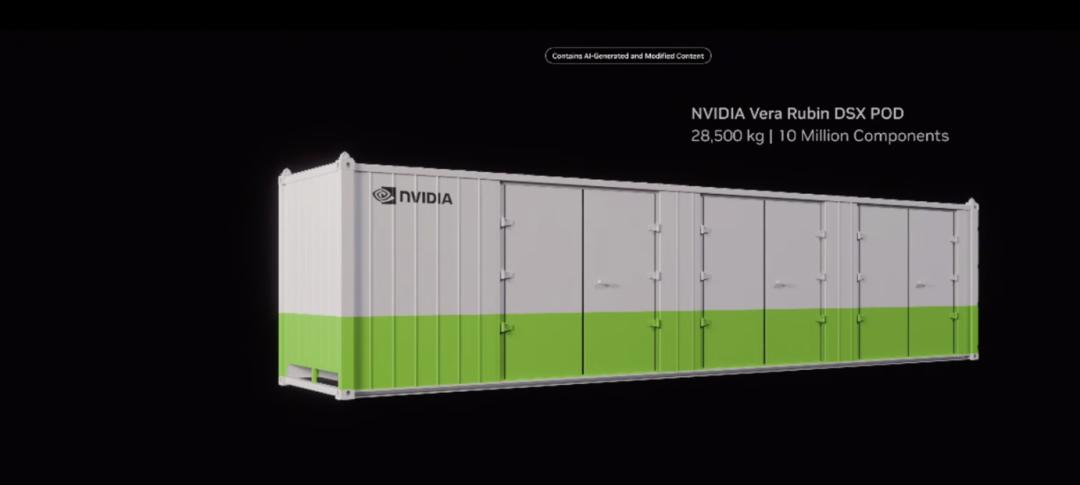
The second step, fully integrate them into specially customized Modular Containers before leaving the factory.
Even the cross-cabinet wiring between racks, power connections, liquid cooling pipeline laying, and even the function verification of the full system...
All of them are completed in advance in the manufacturing factory!
At the same time, the site preparation work at the customer's location can be carried out in full parallel, and the two sides do not delay each other.
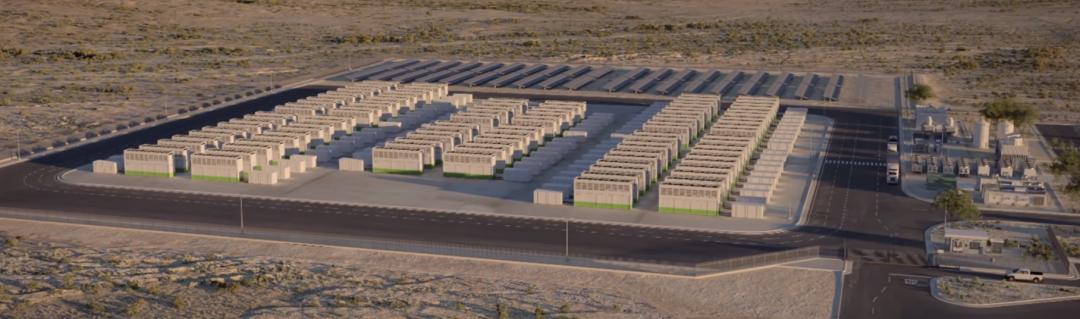
When the container carrying a fully verified "full-performance Vera Rubin computing power factory" arrives at the prepared site, just open the box and connect to the pre-reserved power, cooling and network infrastructure on site, and it can be powered on instantly.
The final improvement effect is crushing level —
The on-site deployment cycle is shortened from the traditional 6 months to a minimum of 14 days.
NVIDIA takes Time to First Token as the measurement standard of this delivery efficiency.
One day earlier to launch large model training and production-level inference, operators can deliver computing power to customers one day earlier, and start to generate revenue from tokens one day earlier.
Make full use of every megawatt of power, inference throughput surges by 49%
Not only is the delivery time compressed to 2 weeks at the limit, Jensen Huang also thoughtfully supports matching solutions to alleviate the problems of water and power shortage.
Behind the above DSX POD hardware product line is NVIDIA's full-stack AI factory reference architecture NVIDIA DSX platform.
It collaboratively designs computing, network, storage, software, power supply and heat dissipation as a "single system".
The first is the extreme utilization of power and computing power.
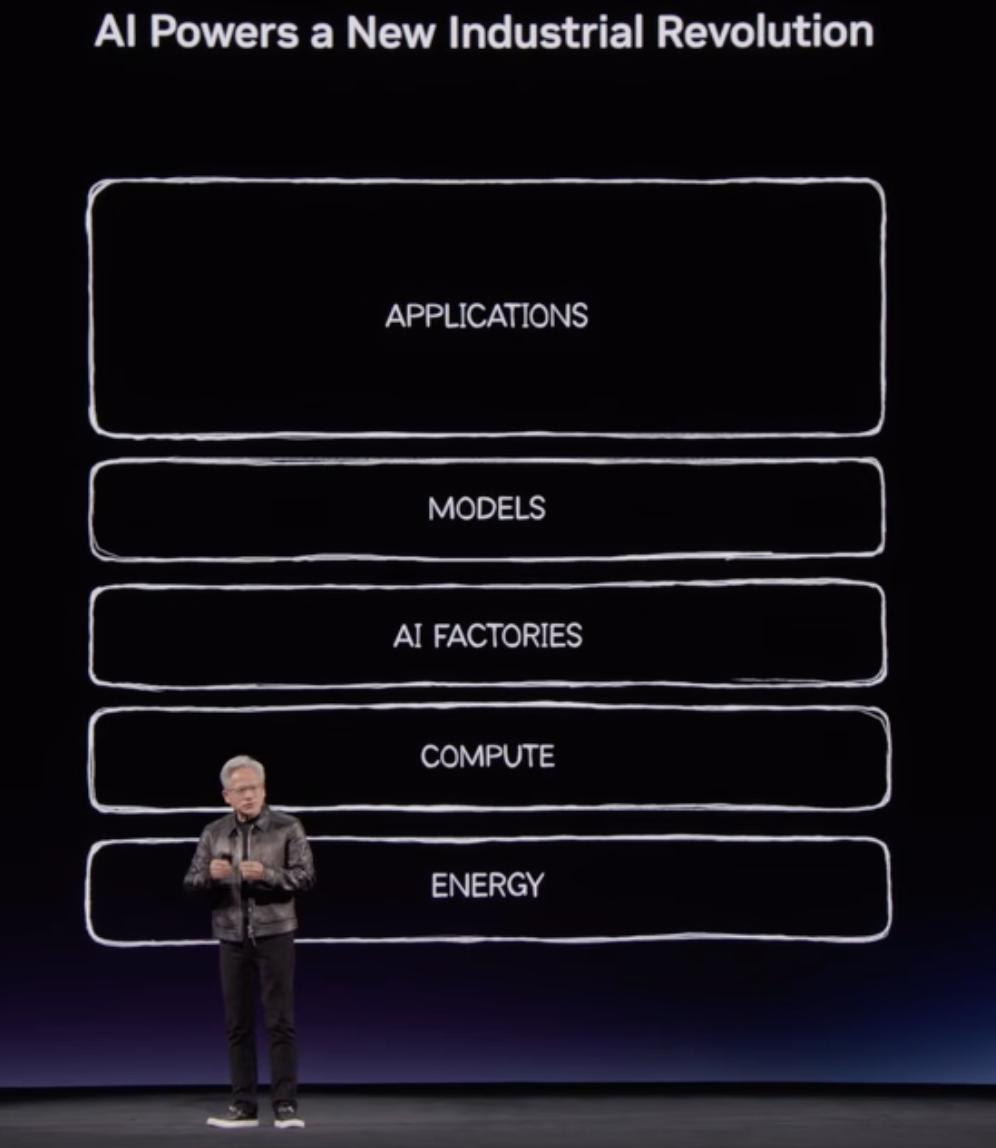
To build a data center, "how much power you have" determines "how many GPUs you can deploy".
In order to break the power bottleneck, NVIDIA launched two powerful software tools: DSX MaxLPS and DSX Flex.
Let's talk about the first one first.
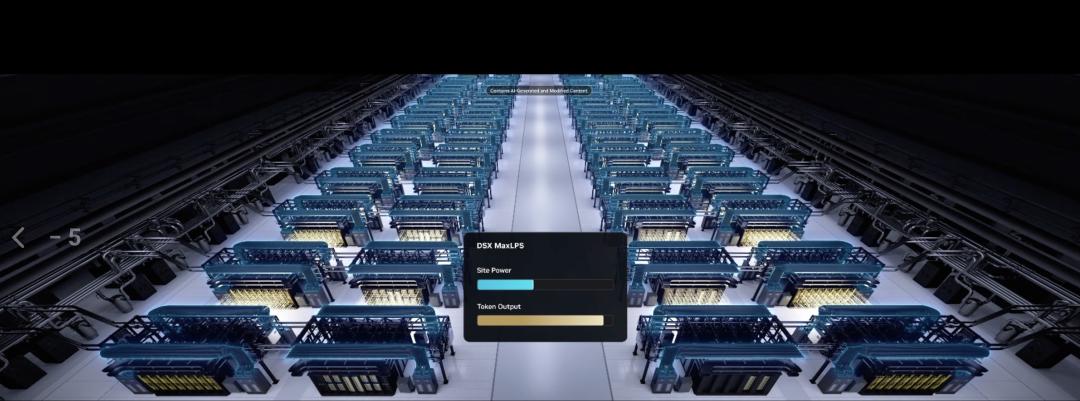
DSX MaxLPS is responsible for dynamic power distribution within the established power budget of the AI factory. It can produce exactly the same number of tokens, and directly save up to 30% of power.
Conversely, if the power budget remains fixed, the saved power can be converted into additional computing power on the spot.
The measured data is extremely impressive:
In the proof of concept of cloud vendor Lambda based on the NVIDIA HGX B200 system, under a fixed power budget, the cluster token throughput is directly increased by 24%, and the accommodable GPU computing capacity is increased by 19%.
In the actual measurement of European cloud vendor Nscale's Iceland AI factory, across 4 NVIDIA GB300 NVL72 cabinets, under the same 264kW power supply budget, the inference throughput even surged by 49%, and the managed GPU computing capacity directly increased by 37%.
Spending the same electricity bill, you can get nearly half more inference computing power.
The second of the two powerful software tools — DSX Flex — goes a step further, turning the AI factory that used to be a "power hog" into a "flexible regulator" for the power grid.
It can adjust the computing power consumption in real time according to the grid load, electricity price fluctuations, and even the on-site photovoltaic and energy storage conditions, helping the AI factory get the grid connection approval faster.
In the joint test between the UK National Grid, Nebius, Emerald AI and NVIDIA, in the face of simulated grid emergencies, the Blackwell Ultra GPU cluster instantly reduced the cluster power consumption by 40% without interrupting critical businesses.
The second is heat dissipation innovation.
Traditional data centers use cooling towers to evaporate water for cooling, with astonishing water consumption.
The Vera Rubin infrastructure supports 100% full liquid cooling with a coolant temperature as high as 45°C.
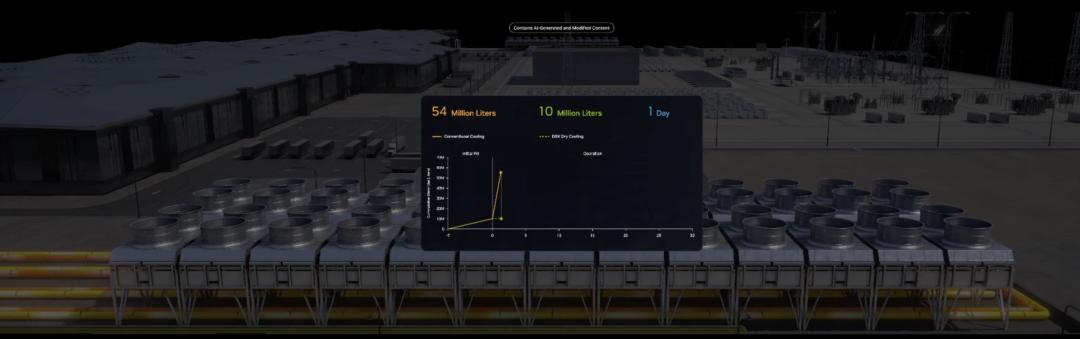
The DSX reference design directly combines closed-loop liquid cooling with outdoor dry coolers (similar to giant automotive heat sinks). The coolant circulates in the closed pipeline to absorb heat, and then the dry cooler discharges the heat directly into the air. No water is evaporated throughout the whole process, reducing the facility cooling water consumption to nearly zero (a 100% reduction).
In a 2GW scale AI factory, compared with traditional cooling towers, DSX can save 54 million liters of water per day.
This is equivalent to the daily water consumption of 180,000 households.
Build on the "cloud" on Hugging Face, open source OS fully automatically managed
In order to push the factory construction efficiency to the extreme, NVIDIA even moved the "infrastructure simulator" to the open source community.
The newly launched physical device digital model library NVIDIA SimReady Central officially lands on Hugging Face today.
It directly packages the verified 3D digital assets of power supply and heat dissipation equipment from partners such as Vertiv.
With the DSX Sim simulation tool, engineers can build a digital twin of the AI factory without doing any construction work on the physical site.
From this, we can also see why NVIDIA wants to acquire Hugging Face.
Power supply and heat dissipation conditions, as well as acoustic noise that Siemens is testing, can all be simulated and verified in advance.
After the hardware is deployed, the software takes over seamlessly.
NVIDIA announced the expansion of the open source DSX OS infrastructure management software suite, and released three developer preview components at one go:
- NVIDIA Config Manager
Fully automatically handle the complex network configuration of the AI factory
- NVIDIA Rack Management Service
Provide unified rack-level management for power supply, asset inventory, firmware and switches
- NVIDIA Cluster Readiness Engine
Before the official production tasks arrive, automatically run distributed loads to verify the GPU cluster, identify faults in advance and accurately isolate them to specific nodes
Cooperating with the underlying controller and operating environment, from virtual design, container factory delivery to automatic stress testing and launch, NVIDIA has completely turned supercomputer manufacturing into a fully automated assembly line.
Showcase the strongest "infrastructure partner ecosystem" on the planet
Since we want to mass-produce "container AI factories", the support of the global industrial chain is naturally indispensable.
Jensen Huang once again showed off the "strongest infrastructure partner ecosystem" spanning computing, energy and industrial software on site.
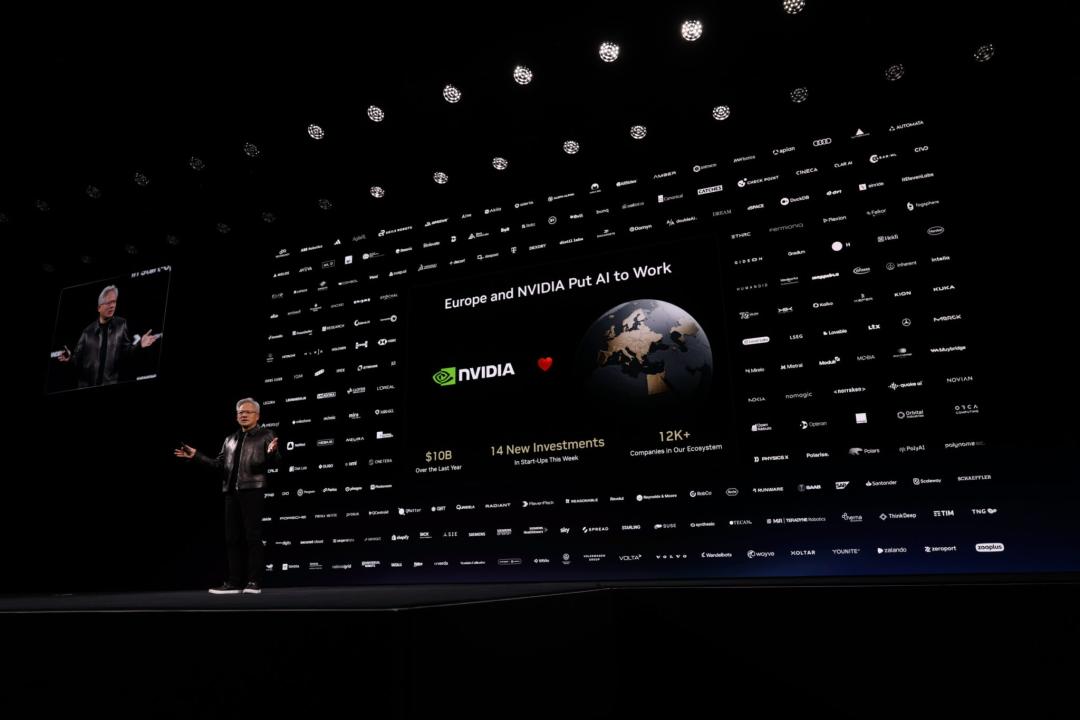
The lineup of partners responsible for manufacturing the DSX POD containers and promoting them globally is extremely luxurious:
Dell, HPE, Lenovo, Foxconn (Cloud Technology), GIGABYTE, Pegatron, Quanta (QCT), Wistron, as well as giants including Anduril, Armada, Bull, Crusoe, DayOne, Delta Electronics, Eaton are all on the list.
It is expected that in early 2027, these prefabricated modular AI factories will be officially delivered worldwide.
In the global cloud ecosystem, AI cloud vendors such as CoreWeave, Google Cloud, Lambda, Nebius, Nscale, Crusoe, G42, and IREN have fully embraced the DSX software stack.
Even the upstream industrial and energy giants have all entered the market:
Schneider Electric and AVEVA are working on the full-lifecycle digital twin of Vera Rubin; Dassault Systèmes and Vertiv are jointly simulating the OneCore infrastructure; ABB is developing SimReady digital assets based on DSX Sim, and promoting the R&D of 800V DC high-voltage architecture through the newly launched Infinitus DC product portfolio; Hitachi Energy, Siemens Energy and GE Vernova are directly participating in the work, helping NVIDIA achieve deep collaboration from power grid planning to energy storage systems.
One More Thing
Let's go back to the GTC conference in 2024.
At that time, Jensen Huang stood on the stage, pointing to the brand new Blackwell cabinet and said: "NVIDIA's AI supercomputer is the factory of the AI industrial revolution."
At that time, many people thought that "AI factory" was just a commercial packaging concept, which regarded data as raw materials and tokens as finished products.
Only two and a half years later, Jensen Huang has turned this metaphor into a literal physical reality.
He not only defined the chip (Vera Rubin) and the cabinet (NVL72), but even included containers (DSX POD), cooling water pipes, grid scheduling, and even the industrial design drawings of Siemens and Schneider under the "NVIDIA standard".
