The first "plagiarism" case in the AI hyper-creation sector: *Trust Tracker* vs *Blood Oath*. After the dispute, who will adjudicate the originality boundary of manhua dramas?
AI ultra-creative content is shifting from a blue ocean to a red ocean, and the change in track crowding has led to a significant rise in the risk of plot plagiarism and full-scale copying.
Thus, the first "traffic accident" occurred.
On October 14, AI ultra-creator Magic Xiaomi posted on Douyin, accusing the work *Blood Oath* of plagiarizing her comic drama work *Trust Tracker*. The two sides agreed that two days later, they would each present evidence on Douyin to prove their innocence.

(Screenshot of the latest episode of *Trust Tracker*)
This controversy is completely different from all the "plagiarism" news in the past few years: the two sides facing off are not the traditional "original author vs. adapter", but AI ultra-creators.
Both claim to have created original scripts; their production tools are various AI models and agents; their visual output does not rely on live shooting, but comes from random generation drawing. For this brand-new production organization method, whether it can be recognized as original and enjoy copyright protection, and whether one can take legal action as an original creator to discuss infringement, there are no clear rules in both judicial and moral dimensions.
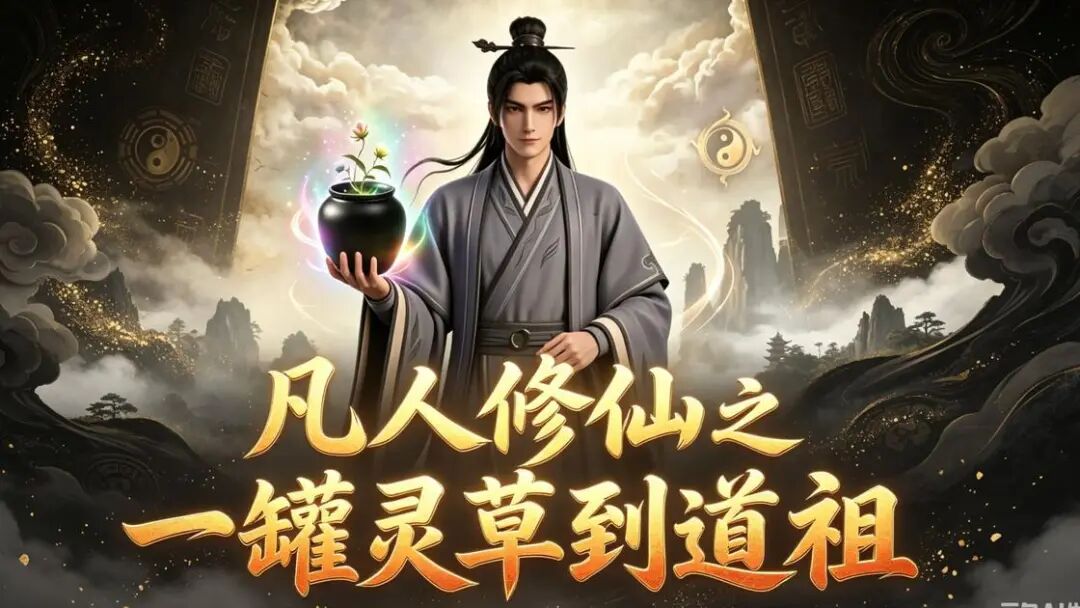
However, the development of productivity will not stop and wait for the judiciary to catch up, and the same dilemma is far from an isolated case in the industry: *A Record of a Mortal's Journey to Immortality* has been frequently "stalked" by the AI comic drama *A Mortal's Cultivation: A Pot of Spiritual Herbs to the Dao Ancestor*. The original IP of the current hit *The Legend of Ten Thousand Demons Record* is accused of copying the core setting as a whole from the web novel *Immortal from Slaying Demons and Eliminating Evils*, leading to constant controversies.
In early October 2026, the Tianjin Heping District People's Court just concluded the first case of "adaptation of text works into AI comic dramas", which provided some infringement support for the industry. In this case, the defendant, as the user of artificial intelligence, used others' complete text works for secondary generation without authorization, which constitutes an adaptation act in the sense of copyright law and falls into the copyright protection scope of the original work. This means that the act of importing original novels into AI for secondary rewriting will be classified as copyright infringement in the future.
But the red line drawn by this precedent does not exactly apply to the current dispute between these two ultra-creators, since both sides claim their works are original.
Productivity has moved ahead, while the judiciary lags behind. This is probably the truly noteworthy point of this "first case".
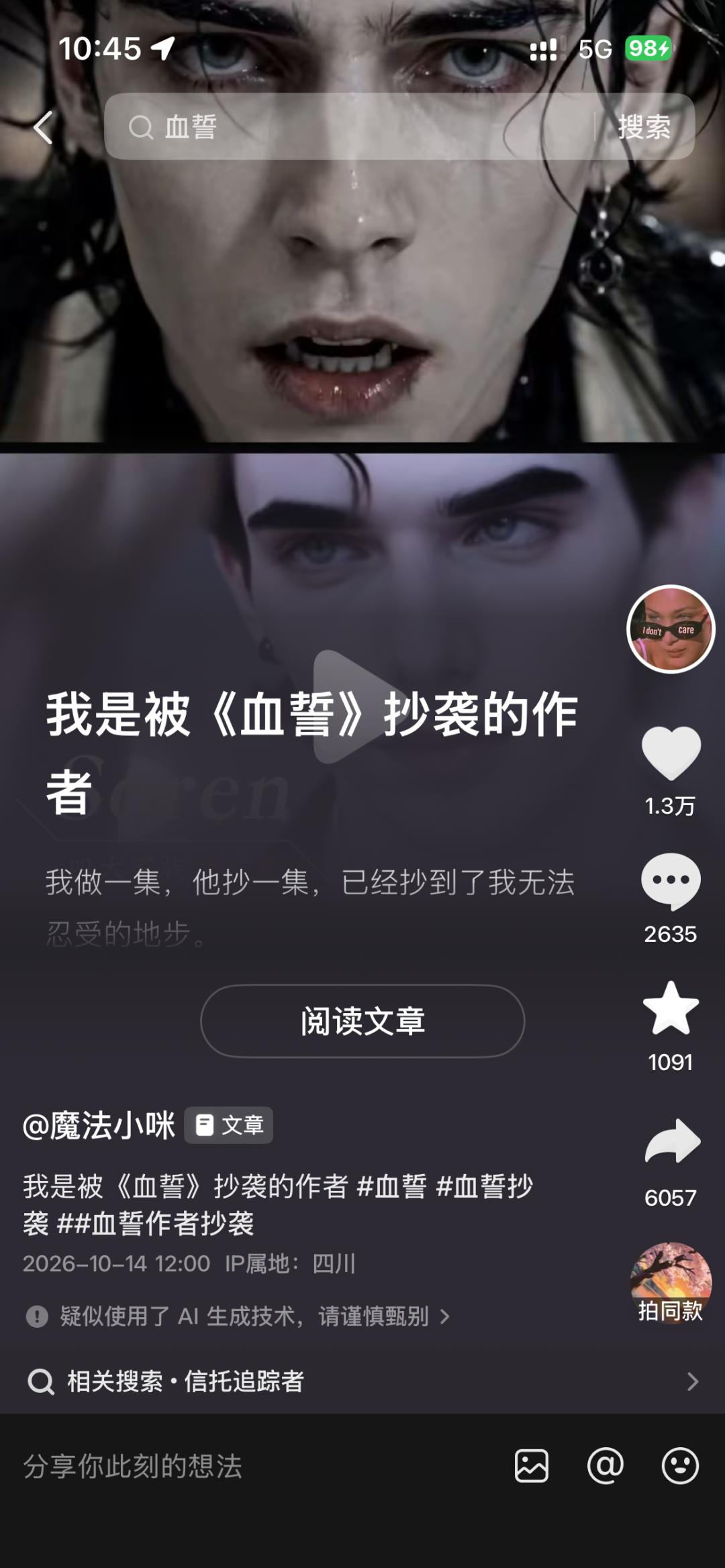
*Trust Tracker* VS *Blood Oath*: Thirteen Groups of Similarity Accusations and Rebuttals
On October 16, the second round of "peak showdown" officially began.
In the 7000-word long article published by Magic Xiaomi (the "accuser"), she listed 13 groups of comparisons in detail. She believes that her original comic drama *Trust Tracker* was "plagiarized for plots month by month" by the comic drama *Blood Oath* produced by Angel during its serialization, including but not limited to: the male lead's image (black hair, slicked-back hairstyle, black earrings, peacock green pupils), the scene in the McLaren, the value setting of assassinating powerful people and bullies, the way of confessing identity, the suspense structure of the British male villain "only scares people + the real murderer is the Hunter Organization", the anchor plot of the snow cabin, as well as the crazy vampire, the long sword of "swordsman in suit", the silver chain burn on Qixi Festival, the Flower God Festival and the London Flower Tide Festival, the nun's shape, the cross left earring and so on.
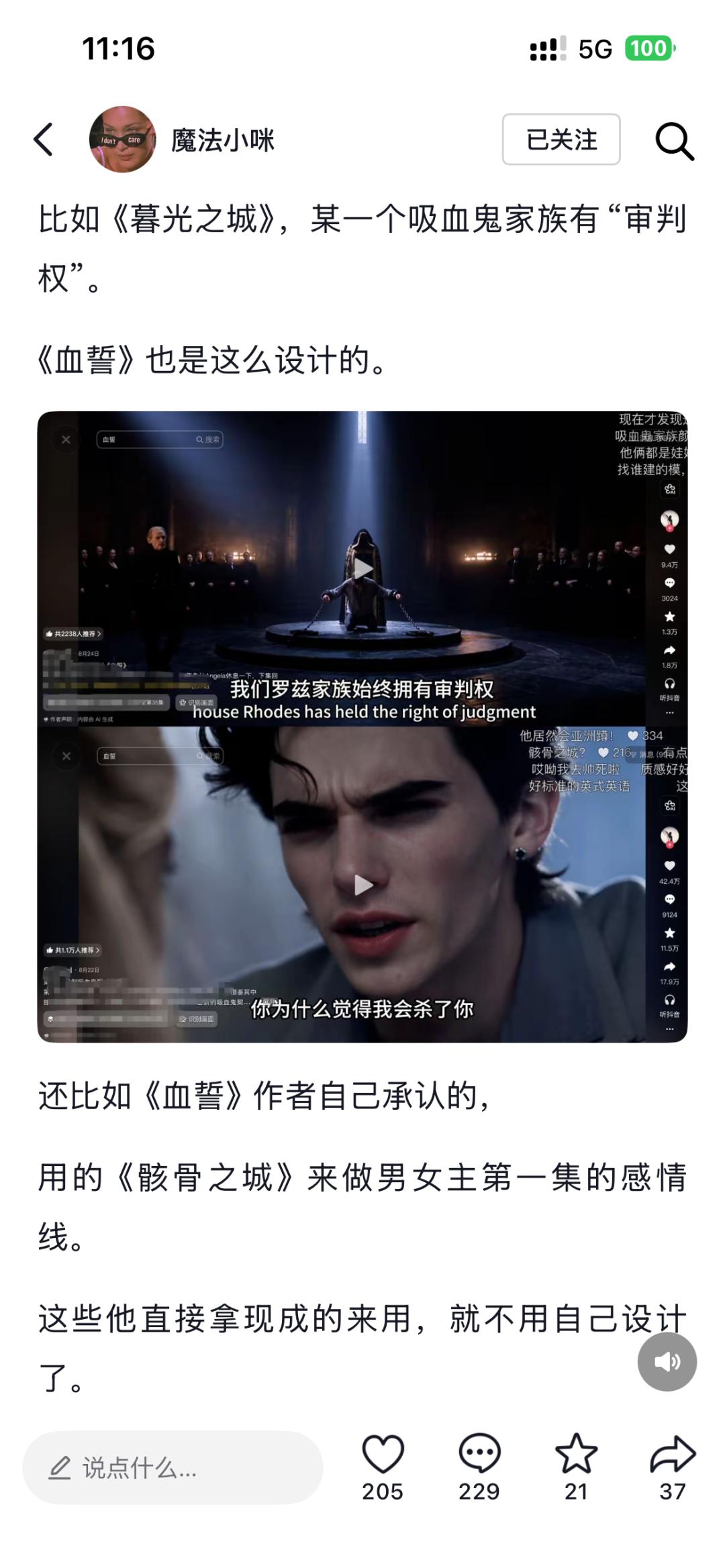
"I feel very painful, because I think the degree of similarity 'has gone far beyond the scope of coincidence'. This incident has affected my creative mood," Magic Xiaomi said.
Angel (the "defendant") responded equally tough. On October 16, she publicly released 28 images and texts at one go, refuting the above accusations one by one: "I have never seen the blogger's work before the dispute happened"; the accuser "only intercepts scattered pictures and isolated plots to identify plagiarism, which is completely unreasonable"; the so-called "call for supervision" is pre-set guidance; if the same standard is applied, "we can use your work to compare with classic American TV series and rule you guilty of plagiarism". Later, she added that every character in the play has their own stance, the plot is cut due to duration, and production is limited by cost, so "there is no need to plagiarize anyone".
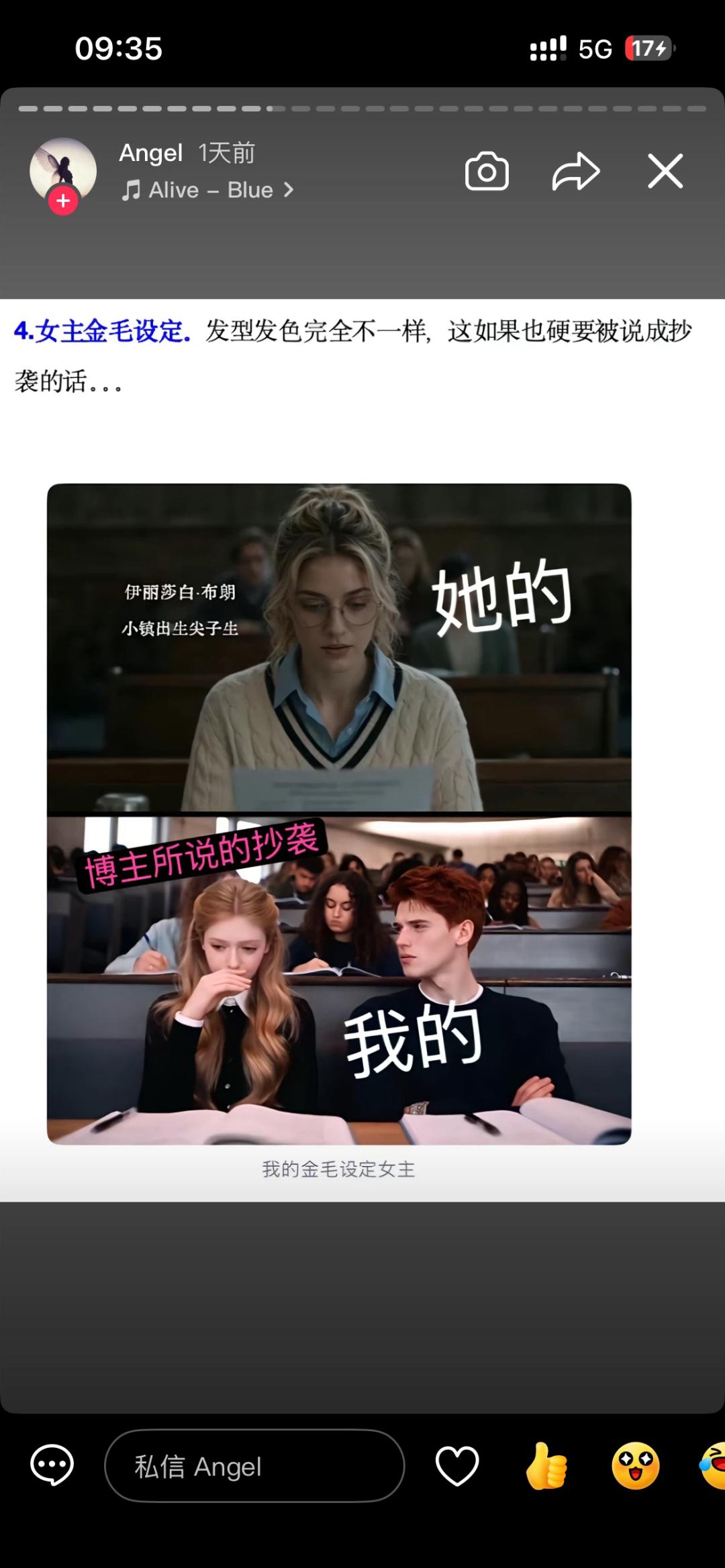
The following are the core points of the debate between the two sides:
A legal counsel from a large tech company said that among the dozens of arguments from both sides, there is only one key judicial element, that is access. The Tianjin case in October was also judged based on "substantial similarity" plus the confirmed act of importing the original novel into AI.
According to Article 12 of the Opinions on Lawfully Trying Cases Involving Artificial Intelligence Disputes: "If an artificial intelligence user knows or should know of the existence of a prior work, uses artificial intelligence to generate a work that is substantially similar to the prior work without reasonable justification, and the right holder of the prior work requests the user to bear tort liability, the people's court shall give its support."
Whether Angel (the "defendant") watched Magic Xiaomi's (the "accuser's") work between June and August, and whether there is the act of importing its content into AI for reverse creation?
According to the evidence chains presented by both sides, the accuser stated that the defendant once "admitted to having seen" her work; the defendant firmly claimed that she "has never seen it". The two sides hold their own arguments, but neither has conclusive hard evidence.
This is the biggest suspense of the whole incident, and it directly determines the direction of all subsequent legal judgments.

(Screenshot of the latest episode of *Blood Oath*)
Industry Spectrum: From Plot Plagiarism to Framework Copying to Pixel-level Copying, Three Levels of "Reference"
Pull the camera away from the individual case, and you will find that "reference" presents a three-level spectrum in the AI comic drama industry, and this case is only the lightest level.
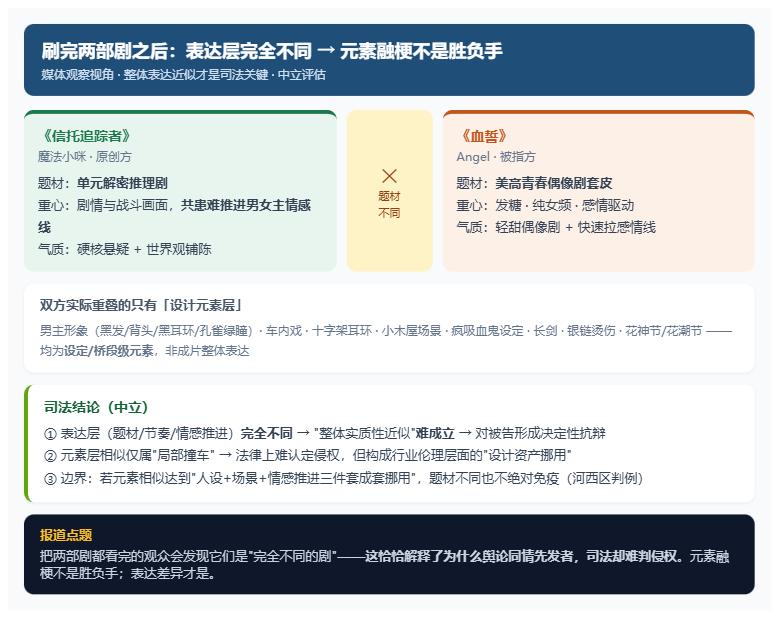
L1 Plot Plagiarism Level. This case is representative. The focus of the debate between the two sides lies in the element layer such as character setting, props, anchor plots, and the themes are completely different, which belongs to the plot plagiarism dispute.
Magic Xiaomi's *Trust Tracker* is a series of unit episodes with a complete worldview and storyline. The male and female leads complete emotional sublimation in the process of fighting together by solving different cases. The overall structure is similar to *Kindaichi Case Files* + *Twilight*.
While Angel's *Blood Oath* is more of a typical female-oriented sweet pet drama, with no large plot line, prioritizing emotions, basically a reskinned version of "Overbearing President Falls in Love with Me", full of sweet moments and updated at a high frequency on a daily basis, so it has a broader mass base.
L2 Framework Copying Level, a typical example is the dispute between *The Legend of Ten Thousand Demons Record* and *Immortal from Slaying Demons and Eliminating Evils*.
At present, the AI comic drama *The Legend of Ten Thousand Demons Record* has been updated to the 13th season, with a total of over 6 billion views, and has been locked as an annual hit case of Redguo in advance. The original work of *The Legend of Ten Thousand Demons Record* is *That Demon is Lord Jiang!* from Fanqie Novel, whose plot framework is highly similar to the popular web novel *Immortal from Slaying Demons and Eliminating Evils* under China Literature. For example, the worldview of demons in chaos, the point allocation system of slaying demons to gain cultivation / lifespan, the setting of Demon Suppression Division, the opening scene of being on the verge of death and killing to survive, and the design of combat power system, all are highly similar, nothing more than changing the gender of the protagonist.
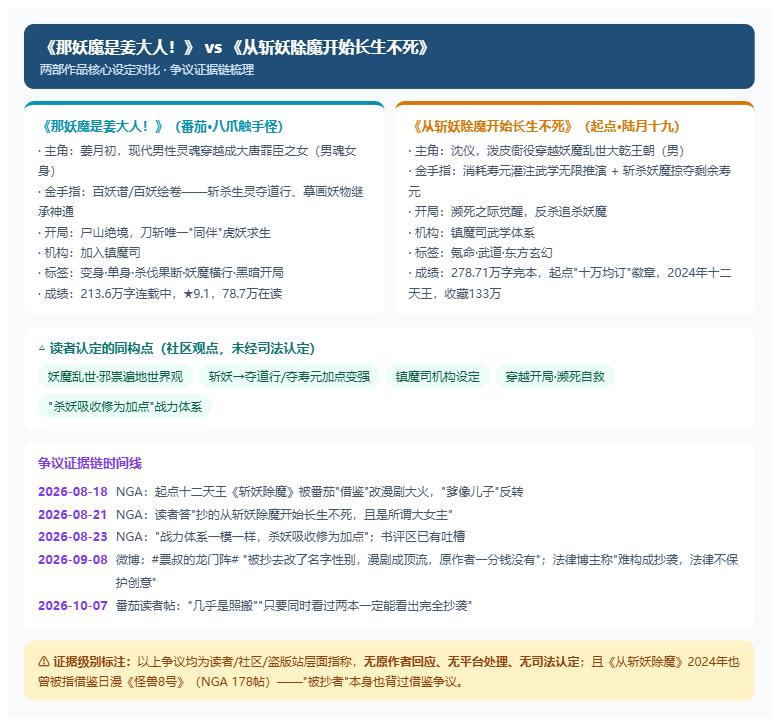
However, since the original work of *Immortal from Slaying Demons and Eliminating Evils* was also exposed to have highly referenced the Japanese manga *Kaiju No. 8*, and the author, platform and judiciary have not made any statement, the controversy still stays in the discussion circle of book fans.
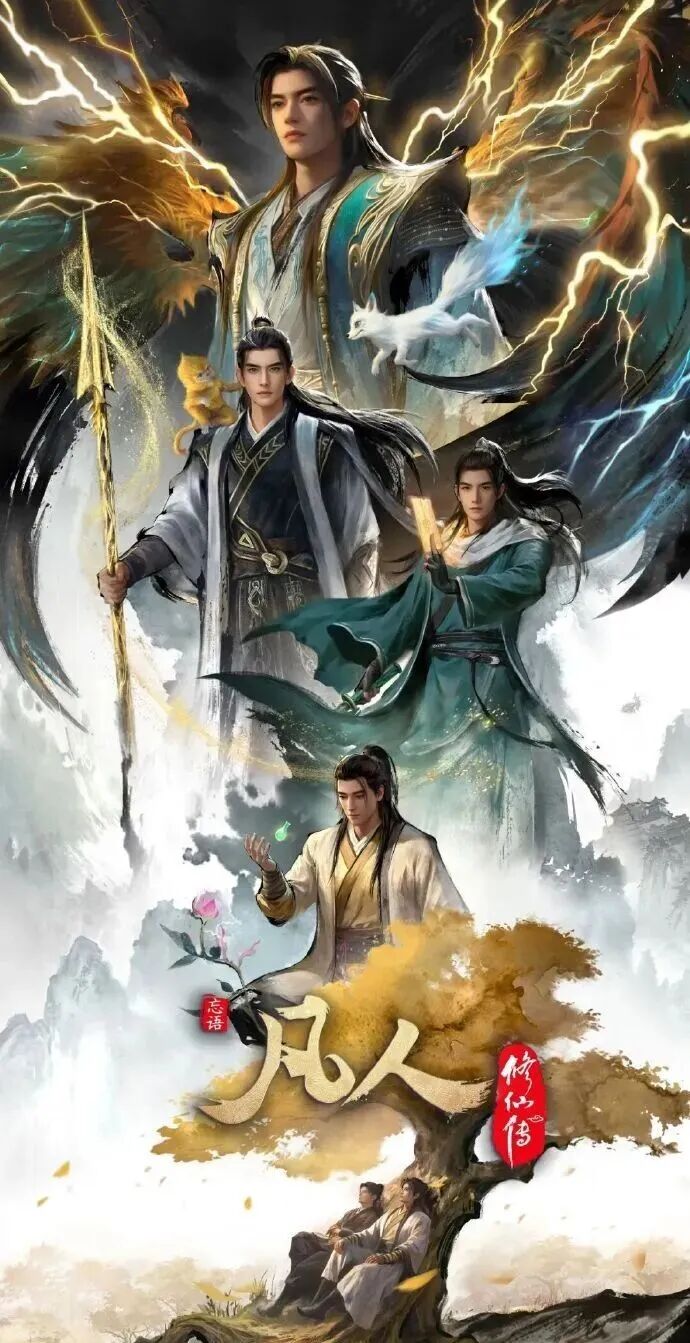
L3 Pixel-level Copying, such as the case of *A Mortal's Cultivation: A Pot of Spiritual Herbs to the Dao Ancestor* riding on the popularity of *A Record of a Mortal's Journey to Immortality*, is almost unscrupulous.
In April this year, at the "AI Comic Drama and Micro-drama Copyright Protection Seminar" held in the New Media Building of People's Daily, *A Record of a Mortal's Journey to Immortality* was named as "frequently maliciously stalked".
Not only is it highly similar in the story framework and expression, for example, the title directly uses "Mortal's Cultivation", but the male lead is named Shu Han instead of Han Li; its original work *From a Pot of Spiritual Herbs to the Dao Ancestor of Immortal Realm* from Fanqie Novel also belongs to the mortal flow novel, the protagonist is also a young man from a mountain village with a useless spiritual root, who relies on a mysterious pot to replicate spiritual herbs to counterattack — which is highly identical to Han Li's "four spiritual roots + small bottle to ripen spiritual herbs", belonging to pixel-level copying, just like the pirated novels signed "Jin Yong Zhu" in the old days.
This drama has been updated to the 20th season, with a total of more than 1000 episodes.
The three cases form a complete spectrum: from plot plagiarism, to framework isomorphism, and then to pixel-level copying. The problems of the industry are escalating from light to heavy, but the legal recognition is always blank.
Industry and Judicial Dilemma: Identification Cost Exceeds Output Value
With such frequent AI copyright disputes, is there really no way out?
The answer is no.
At the beginning of the development of web novel and comic industries, there were also content explosion and copyright disputes. The solution at that time was to establish an anti-plagiarism committee system within the platform, that is, to adopt the method of author and reader reporting, and independent editors reviewing and judging, to restrict plagiarism.
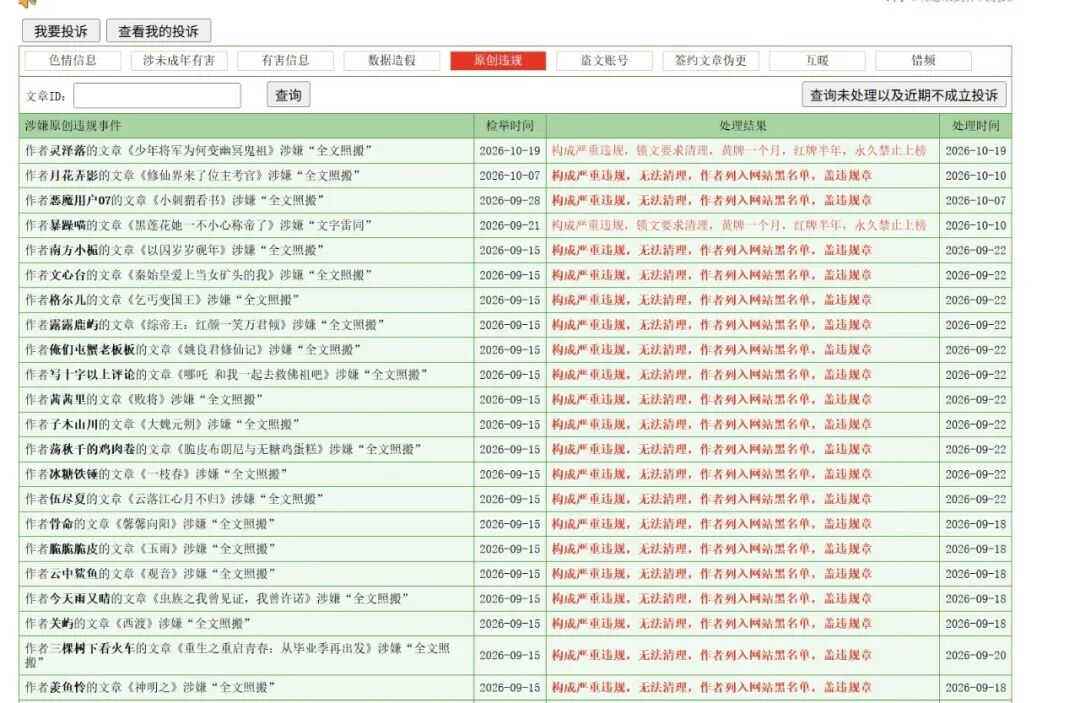
(The original work violation report processing interface of Jinjiang Literature City, you can see that the daily data volume is not large, and manpower cannot support the trial work in the AI era at all)
However, the system built on manual labor was quickly overwhelmed by the large-scale AI production.
On the judicial side, this problem is more obvious. At present, the cost of an ordinary non-high-quality comic drama has been compressed to ten thousand yuan level. If you go through judicial procedures, the total cost including litigation fee, lawyer fee, third-party identification fee, and the trial cycle of more than half a year, the comprehensive cost is far higher than the output value of the infringing work. If this drama is not a huge hit, it is not even worth suing at all.
This is also the reason why referencing is so prevalent in current comic drama production.
In the final analysis, the trial tools have not kept up.
It is worth noting that platforms have begun to set rules for AI comic dramas: since August 17, 2026, Fanqie Novel has implemented new regulations, requiring AI comic dramas to obtain official authorization from the