XPeng "Flies" into Europe
Tesla can fly, but hasn't Xpeng been able to fly for a long time?
Actually, the ability to fly is not that appealing. If all Tesla could do was fly, it would still be widely criticized; but even if it could not fly, that would not stop it from selling well. These two aspects complement each other. Under the current market pattern, an enterprise must be both capable of "flying high" and down-to-earth.
In recent days, Xpeng has made a very important progress. Xpeng announced that it will represent the International Organization of Motor Vehicle Manufacturers to undertake the work of co-secretary of the newly established Autonomous Driving Scenario Information Exchange Working Group under the United Nations vehicle regulatory system. Against the backdrop that China and the European Union have just completed a new round of automotive trade consultations, this incident carries a special implication: Chinese automakers are bringing their own technical experience into international industrial collaboration.
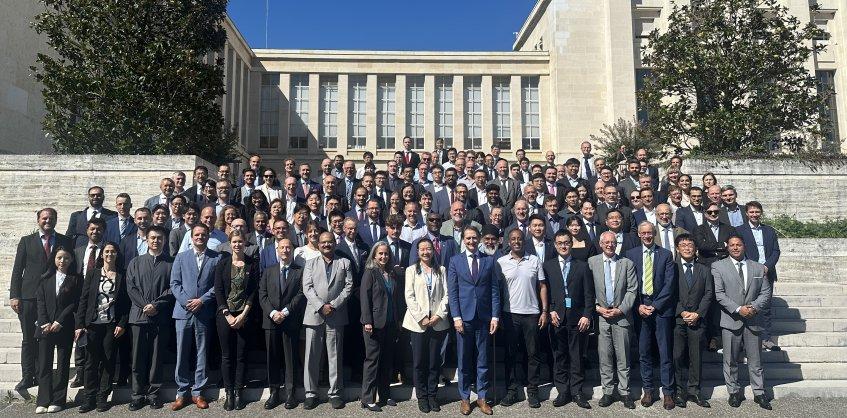
Group photo of participants at the GRVA plenary meeting in Geneva
He Xiaopeng also just introduced new technical cooperation business in Paris. Cooperation on complete vehicle platforms is negotiable, and intelligent driving, chips and batteries can also be negotiated separately, with partners covering global automotive enterprises. Following Volkswagen, he hopes more peers will become Xpeng's customers.
The same company can find automakers willing to purchase its R&D capabilities overseas, but back in China, it still has to make great efforts to boost vehicle sales. The product, pricing and sales issues that Wang Fengying has to handle have not become any simpler just because Xpeng's technical reputation has spread far and wide.
China's automotive market is creating this kind of contrast. Peers are bringing intelligent functions to more and more affordable models, and multinational automakers, in order to keep up with this pace, have begun to procure R&D capabilities from Chinese enterprises. Xpeng has found new revenue streams from this, while still bearing the pressure of this competition.
Xpeng is turning peers into its customers
The relationship between the European and Chinese automotive industries can hardly be summarized by competition alone.
According to the consultation results disclosed by the Ministry of Commerce in October, China and the EU will continue to address issues such as trade in hybrid electric vehicles and price undertakings for pure electric vehicles, and list new energy, artificial intelligence and two-way investment as cooperation directions. Negotiations around market share are still ongoing, and enterprises are also calculating the benefits that cooperation can bring.
The Scenario Information Exchange Working Group, for which Xpeng undertakes the co-secretary work this time, is co-chaired by China and France. The work focuses on the exchange of experience in different road environments, traffic behaviors and autonomous driving operations. Xpeng, together with SAE International, supports the operation of the working group, and needs to assist all parties to gather relevant experience for discussion.
This kind of work is not as lively as a new car launch event, but it is directly related to the overseas expansion of intelligent driving. Systems trained on Chinese roads need to operate under another set of traffic rules, the engineering team has to be familiar with local testing methods, and regulatory agencies also need to understand the performance of the system in specific scenarios.
Chinese automakers have been participating in this work together. At the same session of the UN Working Party on Automated/Connected Vehicles meeting, the delegation of the International Organization of Motor Vehicle Manufacturers also included technical experts from Chery, NIO and BYD. Xpeng got a more specific organizational role in this work.
At the same time, Xpeng has launched its NGP on the streets of Paris. Only Xpeng and Tesla participated in the official intelligent driving experience project of the Paris Motor Show, allowing audiences to experience the functions on real roads. Tesla's FSD has been approved for public use in the Netherlands, while Xpeng has set the target of promoting NGP to overseas customers in 2027. It is pushing forward the progress of testing, certification and product delivery.
For Xpeng, getting involved in these links in advance is to prepare for subsequent business.
The case of Volkswagen has already demonstrated the reasons why foreign automakers choose Xpeng. The first jointly developed model of the two sides is targeted at the Chinese market, and Volkswagen needs to launch intelligent electric vehicles that meet the needs of Chinese consumers faster. In March this year, the jointly developed Yu-Zhong 08 entered mass production in Hefei, with a development cycle of 24 months.
The division of labor in the cooperation is also very clear. Volkswagen China Technology Company participates in the development, and is responsible for product design definition, technical verification, quality standards and driving calibration. Xpeng provides capabilities in platforms and intelligentization, while Volkswagen continues to control its own brand and complete vehicle requirements.
What Volkswagen bought is the time to catch up with the market. For Xpeng, the R&D investment that used to be recovered mainly through its own vehicle sales now has other payers.
The scope of cooperation between the two sides is also expanding. In 2025, the jointly developed electrical and electronic architecture will be further extended to Volkswagen's fuel vehicle and plug-in hybrid platforms in China. When the technology is applied to more models, Xpeng's available revenue will have the opportunity to exceed the number of vehicles it can sell on its own.
In Europe, local manufacturing has brought another form of cooperation. The Magna plant in Graz, Austria, has produced G6, G9 and P7+, and the G9L also completed its first trial production in October. Xpeng has obtained local manufacturing capabilities, Magna has obtained production orders, and both sides can benefit from Xpeng's increased vehicle sales in Europe.
With these practices, He Xiaopeng's launch of XPENG AI ENGINEERING in Paris has a clearer business foundation. Customers can cooperate in the development of complete vehicle platforms, or purchase modules such as intelligent driving, chips and batteries, and even tools used in R&D, production and after-sales service.
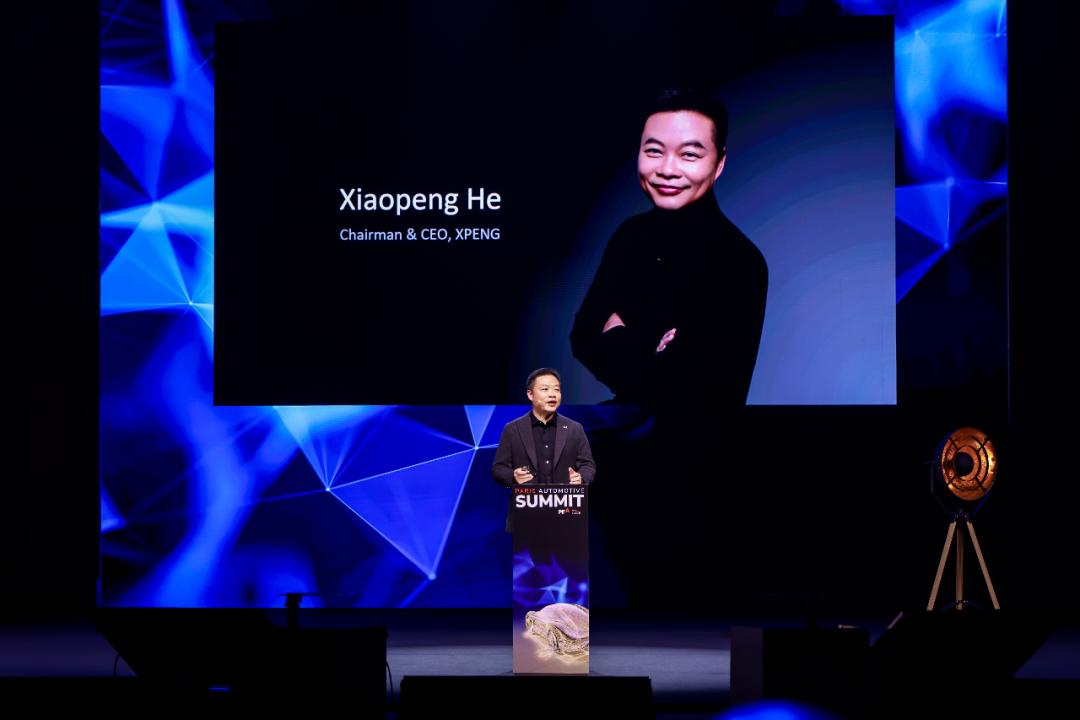
He Xiaopeng introduces the intelligent vehicle technology cooperation business at the Paris Automotive Summit
Xpeng hopes more automakers will be willing to pay for ready-made engineering capabilities. If they develop from scratch on their own, they need to invest in R&D teams, and also bear the development time and trial and error costs. Xpeng hopes to obtain returns on the R&D work it has already completed by applying it to more products.
This is also the practical significance of its participation in international technical collaboration. To be used in different markets, the technology must adapt to local regulations and road environments; communication with regulatory agencies and industrial partners will sooner or later become part of product development. And now, Xpeng's autonomous driving technology is also very likely to become a part of its technology sales.
What Wang Fengying is facing is internalized competition
While He Xiaopeng is looking for more technical customers overseas, Xpeng's own vehicles still need to compete for orders in the domestic market. Data from the China Passenger Car Association shows that Xpeng exported about 10,100 vehicles in September, doubling year on year; its domestic retail sales reached about 30,600 vehicles, down about 16.3% year on year, a decline close to that of the overall new energy retail market in the same month. In the same month, Leapmotor's domestic retail sales reached about 78,200 vehicles, still maintaining growth.
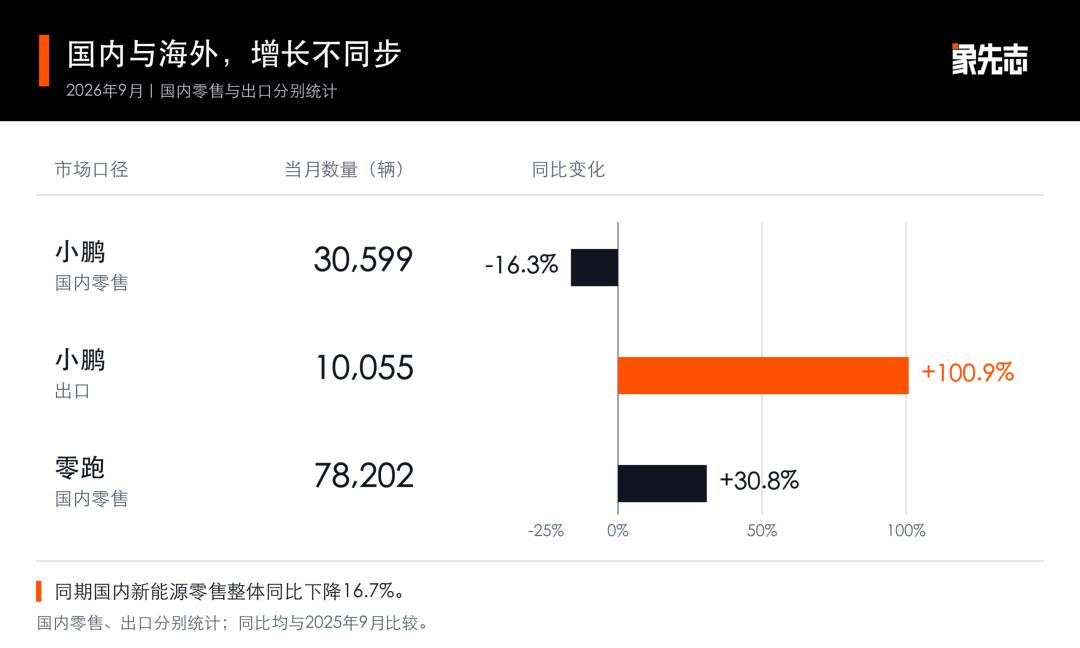
Xpeng's domestic retail and export show different trends
The product and pricing decisions that Wang Fengying is involved in still face quite a lot of problems. Consumers buy the whole vehicle, so Xpeng's intelligent driving advantages, together with price, interior space and energy replenishment experience, need to become reasons for purchase.
In February 2025, BYD launched its "God's Eye C" system, which was first applied to 21 models with prices ranging from the 70,000-yuan level to the 200,000-yuan level. Assisted driving has begun to enter more affordable vehicles, and consumers have more product choices, which changes what Xpeng needs to explain: where exactly its experience is better, and how much this difference is worth.
Technology continues to advance, but the scarcity of configurations itself is declining.
According to reports, as early as before the launch of the G6 in 2023, Wang Fengying led the product planning and sales team to discuss configurations and pricing for six or seven rounds. She advocated retaining the advantages of configurations and software while lowering the price, and finally the starting price was set at 209,900 yuan.
Even the car name was changed. It was originally called G7, but at that time the starting price of P7 was 249,900 yuan. An SUV with a lower starting price but a larger number in its name would easily make the product sequence confusing. Wang Fengying promoted renaming it to G6, so that the price, name and positioning matched each other.
These things do not seem as dazzling as developing chips, but they determine how consumers understand a car. The money already invested in R&D, what products the technology is installed in, and at what price it is sold, will affect how much of this investment can be recovered in the end.
After the launch of the G9L this year, He Xiaopeng also mentioned a detail: Wang Fengying and Wu Anfei were more insistent than him on the installation of the new generation intelligent driving system. According to his recollection, the discussion also involved appearance, four-wheel drive configuration and pricing.
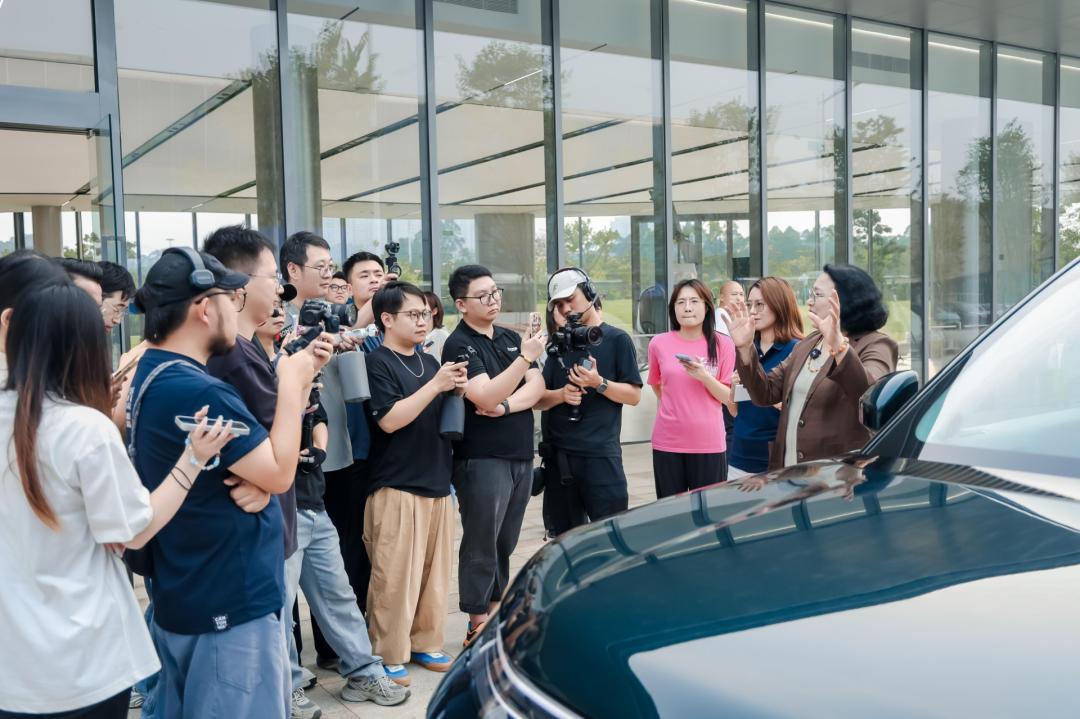
In September 2026, Wang Fengying exchanges with the media at the first delivery site of Xpeng G9L
From G6 to G9L, Wang Fengying has been defining which capabilities to retain and how to combine them into products. She needs to lower the purchase threshold, and also make Xpeng's technical advantages obvious enough. When it is necessary to insist on installing the new system, she will also stick to her position.
He Xiaopeng looks for technical customers overseas, while Wang Fengying integrates R&D achievements into consumers' purchase choices, and the work of the two is connected here.
Xpeng has recovered from the adjustment. Its global delivery volume in 2025 was about 429,400 units, a year-on-year increase of about 126%. However, its growth has fluctuated this year. According to the summary of quarterly announcements, the delivery volume in the first three quarters was about 284,400 units, down about 9.2% year on year; the third quarter returned to a year-on-year growth of about 2%.
Overseas orders are increasing, and new products in the domestic market are also providing support. The GX delivered 7,224 units in September, exceeding 7,000 units for three consecutive months, and Xpeng is opening up new product space.
These changes give it the opportunity to continue growing, but also make Wang Fengying's next task very clear: to maintain sustained sales of multiple models. Technology can be reused on different models, but consumers' judgment on each model needs to be formed anew. After the popularity of new product launch fades, whether the price is appropriate and whether stores can continue to get orders will affect the scale of the company.
But technology business cannot avoid sales volume
Technical cooperation has already brought considerable rich returns to Xpeng.
In the second quarter of this year, revenue from "services and others" was about 2.7 billion yuan, with a gross profit margin of 75.1%. This business includes technology R&D services, as well as sales of components and accessories. Calculated according to the financial report data, it contributed nearly half of the company's gross profit.
In the same period, the gross profit margin of Xpeng Motors dropped from 14.3% in the same period of the previous year to 12.1%, and the company attributed the decline to model replacement; R&D expenses were about 2.914 billion yuan, a year-on-year increase of 32.1%. The automotive business is still in the adjustment period, and R&D investment continues to increase.

Services and others contributed nearly half of Xpeng's gross profit in the second quarter
He Xiaopeng continues to expand technical customers for very practical operational reasons. The development of new models and AI R&D both cost money, and the more customers that adopt Xpeng's capabilities, the more opportunities to obtain revenue.
However, this business is also linked to vehicle sales.
Xpeng's 2025 annual report disclosed that part of the technical service revenue is recognized according to development milestones, and contracts with sales volume charging terms recognize corresponding licensing revenue when the partner makes sales. Development projects bring phased revenue, and subsequent sales of models will affect another part of the return.
Reuters reported on October 20, citing data from automotive consulting agency ThinkerCar, that from the launch of Yu-Zhong 08 in April to August, its average monthly sales volume was 267 units. Volkswagen purchased faster R&D capabilities, but after the new car entered the market, it still encountered problems with products, pricing and channels.
The report pointed out that Yu-Zhong 08 is mainly sold through the newly built sales network of Volkswagen Anhui, and has not fully utilized Volkswagen's original huge dealer system; Chinese models in the same price range are continuing to compete in terms of configuration and energy replenishment. Volkswagen emphasized in its response that the cooperation with Xpeng has brought a new electrical and electronic architecture and improved development efficiency.
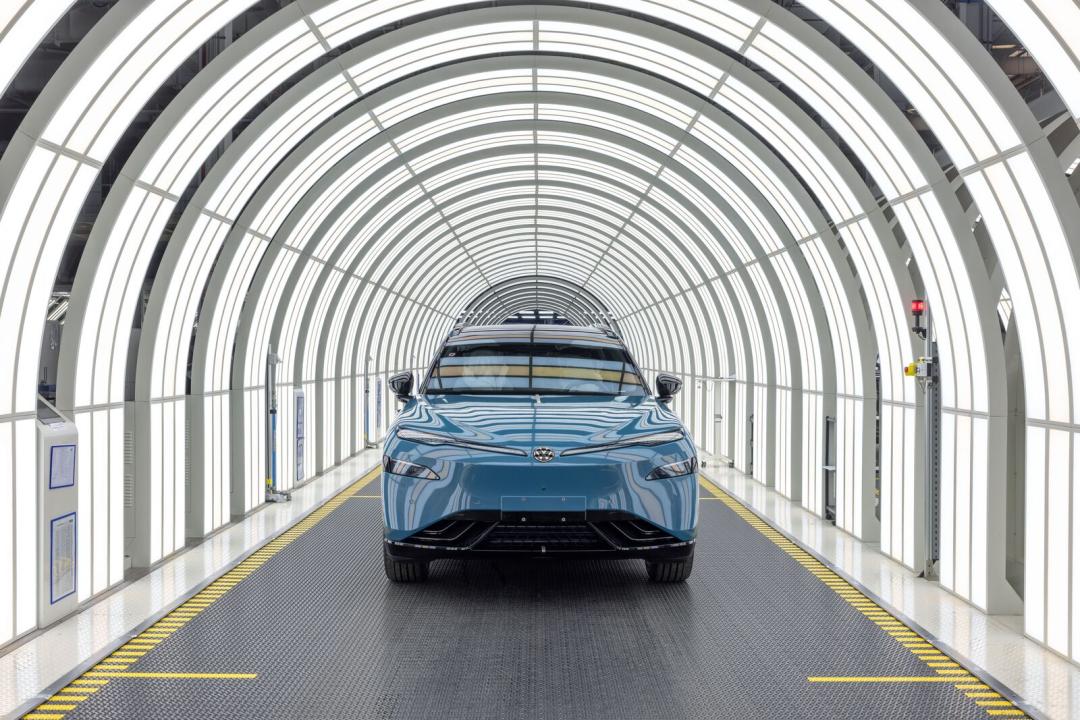
In March 2026, Yu-Zhong 08 entered mass production at the Volkswagen Anhui Hefei factory
The sales volume of Yu-Zhong 08 tests the commercial attractiveness of the cooperative model. To expand technology output, Xpeng not only needs to deliver R&D projects, but also let partners see the value of continuous procurement and additional projects. R&D capabilities can be sold separately, but the long-term growth of revenue still needs to be found in the automotive market.
The next round of complete vehicle competition will also test automakers' control over battery costs.
BYD has long been deeply involved in cell manufacturing, and Leapmotor also established a cell production line through a joint venture this year. In September, Leapmotor disclosed that the production line has been put into operation, and it will also retain external procurement to cope with changes in demand. Peers are striving for greater initiative in cost and supply. The larger the production scale, the more likely the upstream investment will dilute the unit cost.
This will