Tencent's internal "AI search formula" has been made public.
Enter a very common problem in the AI era into the search box — check Tencent's recent stock price, products and personnel changes. Here are Google's non-AI search results:
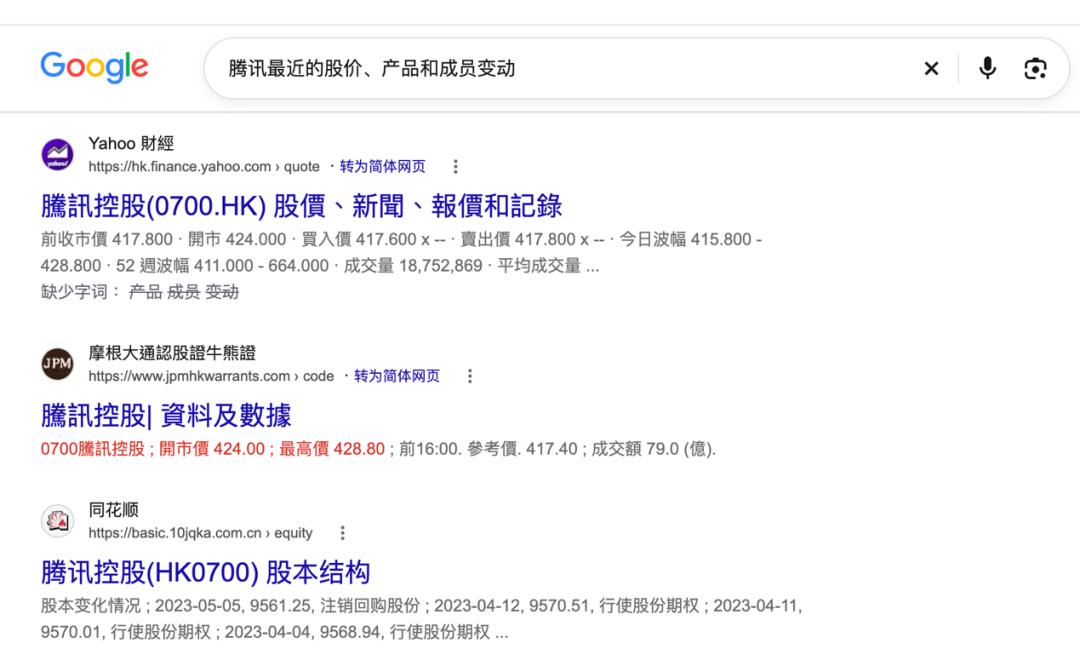
▲ Google search results
In Google's traditional search, users get a series of web page links; while in Yuanbao Search, the results presented for the same query are completely different.
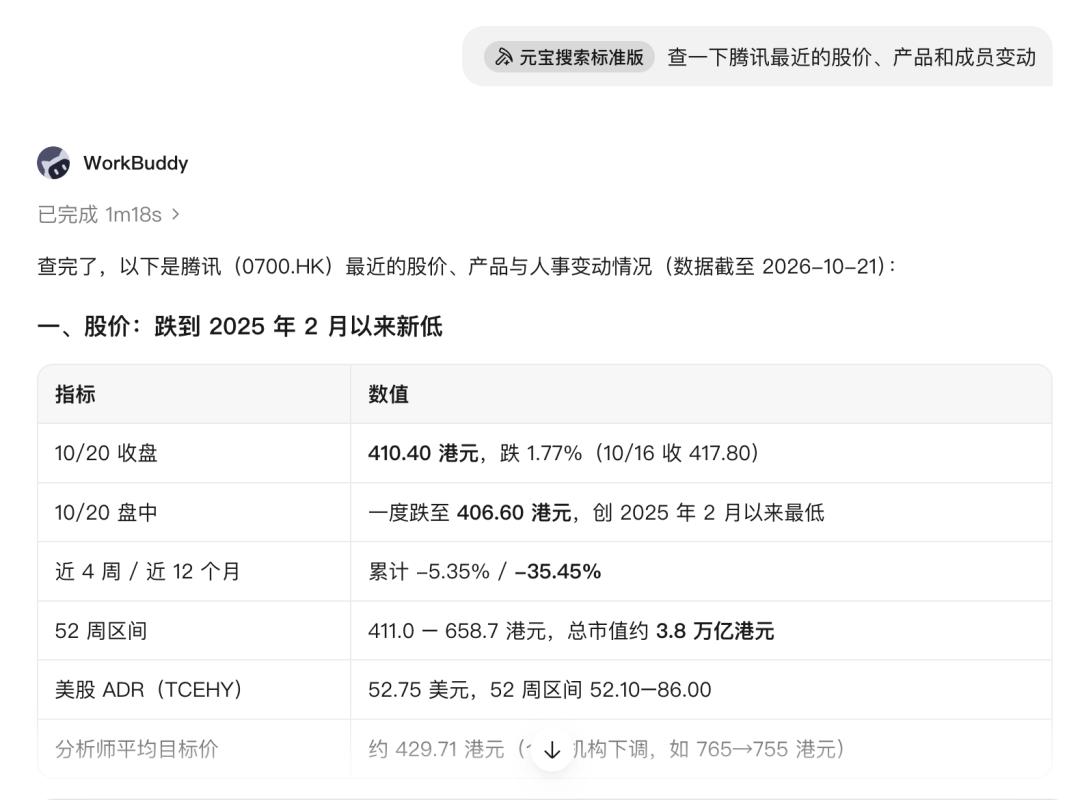
▲ WorkBuddy integrated with Yuanbao Search
The difference between the two sets of search results exactly reflects the ongoing changes that the search industry is experiencing.
In the past, search engines returned web page links, and users needed to filter, compare and organize information by themselves. In the AI era, search has begun to integrate multi-party data and generate answers directly.
Higher requirements for search in the AI era exactly correspond to two major pain points in the implementation of large models — hallucinations and knowledge lag. That is, no matter how powerful the model is, it may produce hallucinations or give outdated information due to untimely knowledge update.
When Agents that can call tools and perform tasks become the focus, errors or outdated information in the retrieval process may be passed down along with subsequent tool calls, affecting the judgment and execution of the entire task.
Therefore, search not only needs to cover comprehensive content and update in time, but also be as accurate as possible, and organize information into results that Agents can use directly.
For this fundamental problem, RAG (Retrieval-Augmented Generation) is one of the important technical paths to alleviate knowledge lag and improve the reliability of responses.
However, if developers and enterprises want to build their own RAG, they need to establish and maintain multiple links such as source collection, data cleaning and index construction for a long time, which also means high costs. The value of ready-made search APIs is to reduce the access and operation and maintenance thresholds.
On October 20, Tencent upgraded Yuanbao Search and provided API services to individual developers and enterprises through Tencent Cloud.
In the past year, Yuanbao Search has been continuously optimized, integrating public resources across the entire network and high-quality Tencent content, building a trillion-level index scale, and has been tested by Tencent's internal applications such as WorkBuddy and ima.
The significance of this upgrade is not only the release of a search capability, but also that Tencent opens up the search infrastructure polished by internal businesses and verified on a large scale to the entire industry, making it a general service that external developers can call directly.
This also allows the engineering experience and technical capabilities accumulated by Tencent in its own AI applications to be further transformed into the infrastructure of the AI industry.
01.
Actual test of WorkBuddy and ima
How good is the search capability that both are using?
For developers, there are two options to add search capability to Agents: building a retrieval link by yourself can control the search logic more flexibly, but it also requires continuous investment in R&D, source maintenance and operation and maintenance; accessing ready-made search services can reduce this part of engineering investment, and search quality and service stability are more dependent on the service provider.
After this upgrade, Yuanbao Search provides three access methods: Skill, MCP and API, and launches a time-limited free quota: 2000 calls per month. In October and November, you can enjoy up to 6000 calls per month through the invitation code. Developers can access and test first, and then decide whether to use it in actual business.

▲ Free quota of Yuanbao Search
Zhi Dong Xi conducted an actual test on Yuanbao Search through API. The access process is not complicated: first, get the API Key in Tencent Cloud, then open the terminal and enter a curl command to initiate a search request:
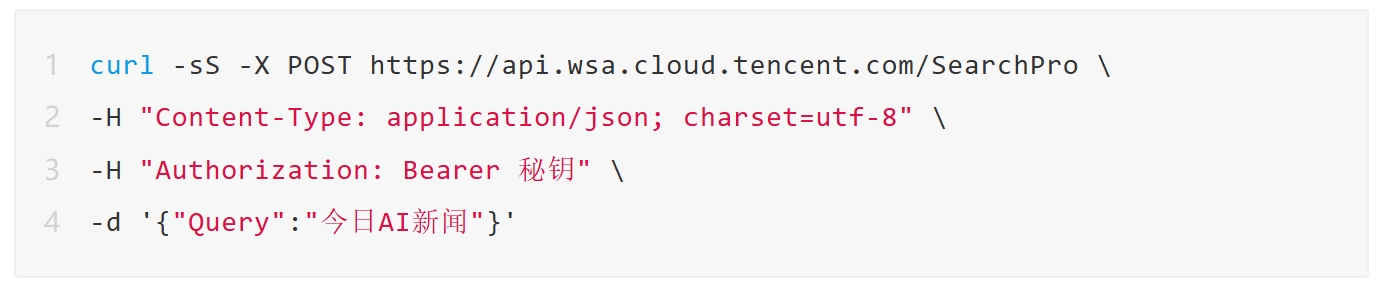
Replace the "secret key" in the code with the actually obtained API Key, execute it to submit the query to Yuanbao Search, and view the returned results in the terminal.
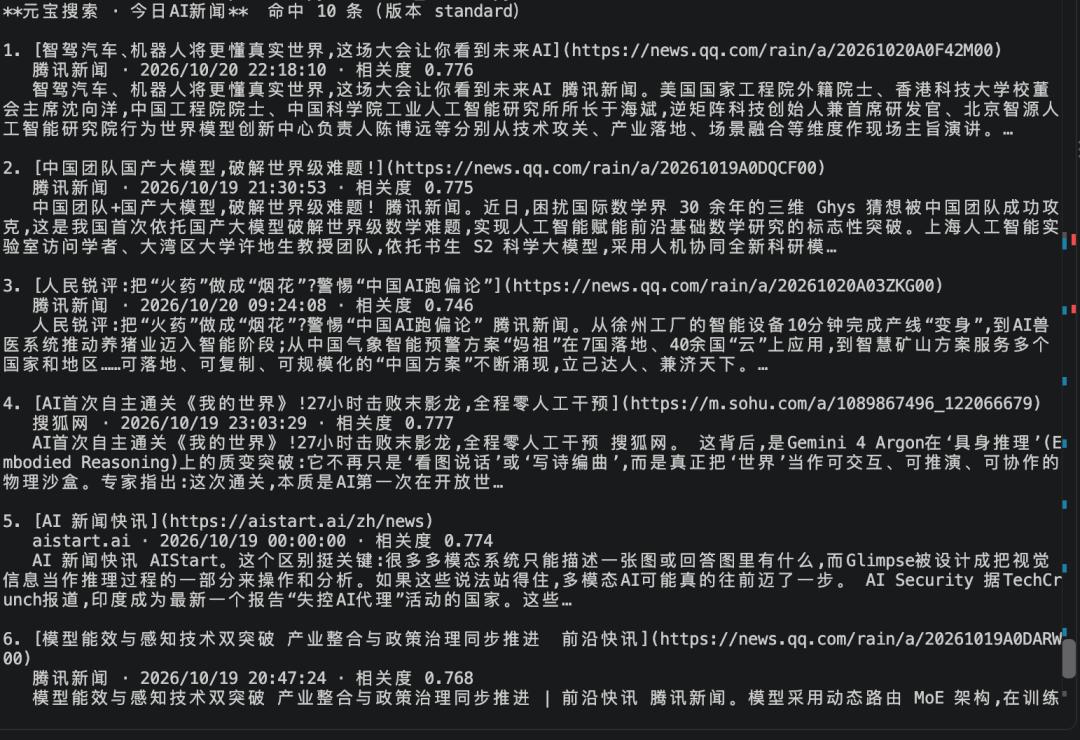
▲ Original return result of the terminal
After completing the API call, we encapsulated the interface as a Skill and accessed it to DeepSeek Harness, so that the Agent can call the search independently according to the task requirements. In this way, the search capability changes from a manual request to a part that can be called at any time in the Agent workflow.
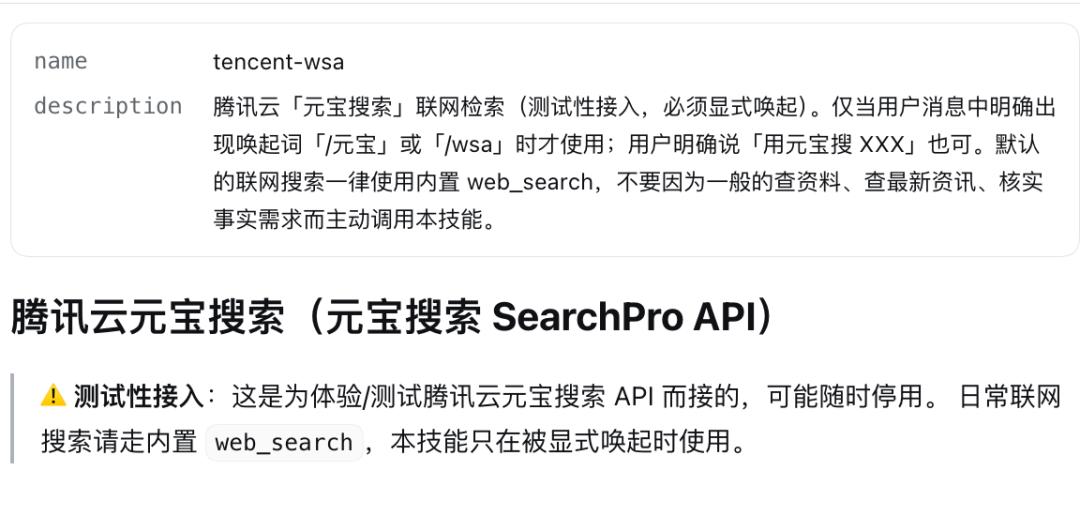
▲ Skill file for Yuanbao Search to access DeepSeek Harness
After the access is completed, we tested the basic news retrieval. For example, enter a prompt to use Yuanbao Search to check today's social news. You can see that Yuanbao returned the results in only 17 seconds.
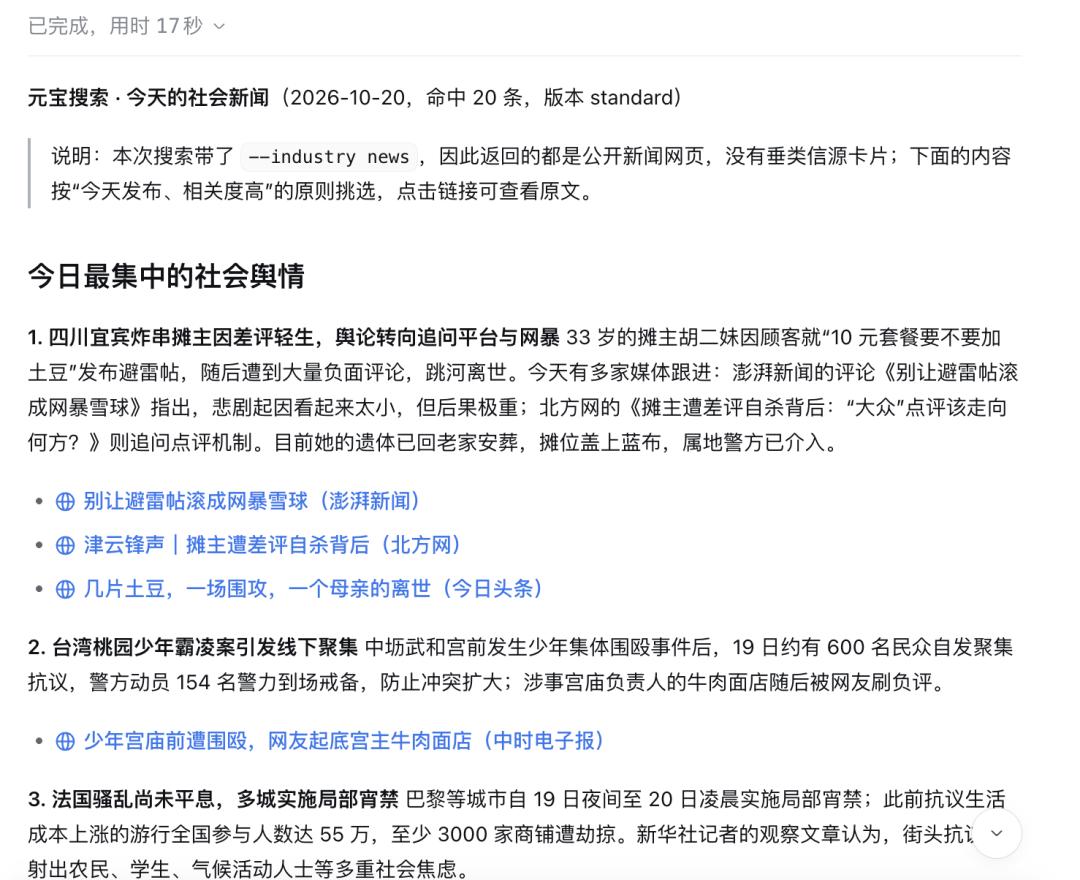
The core of ordinary web search results is titles, abstracts and links. Next, the Agent can read the relevant content in combination with the web crawling tool to further complete information sorting.
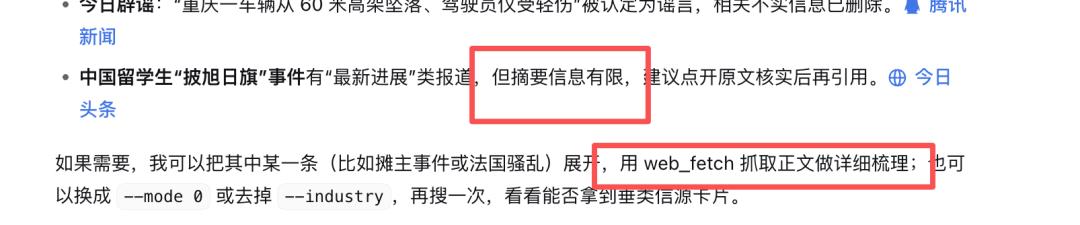
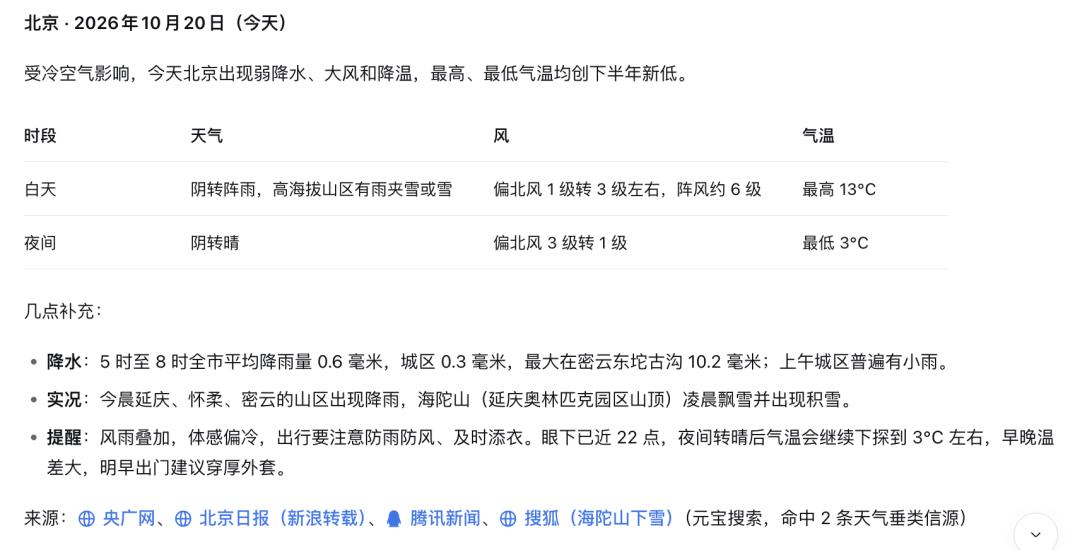
Yuanbao Search returns not only web results with titles, abstracts and links as the core, but also a type of vertical source, which provides structured data for scenarios such as weather, stock price and gold price.
For example, query "today's weather in Beijing" will return a structured VR card that can reflect the information clearly.
We also tried to search Tencent's stock price, which also hit the vertical source. The return results of Yuanbao Search include a stock price card, and the data comes from Tencent Stock Selection.
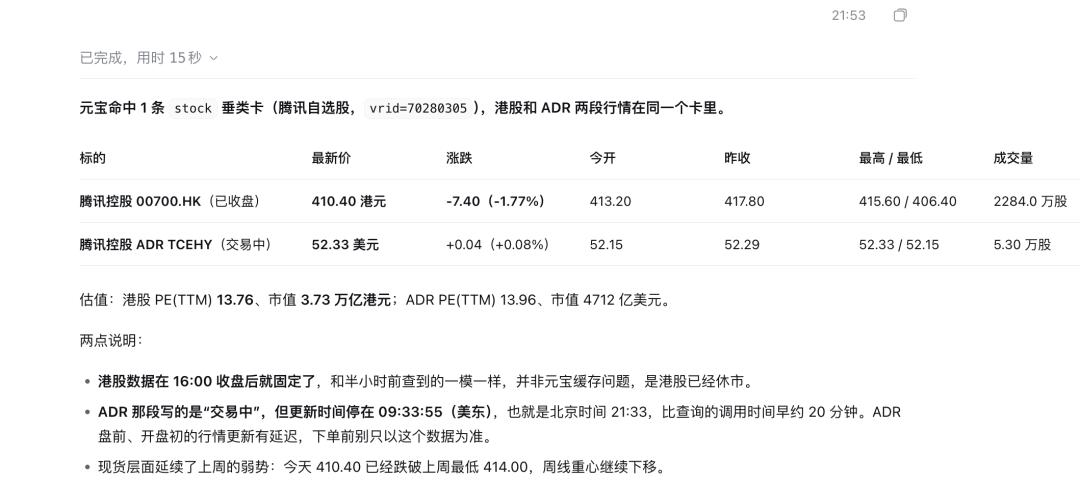
This means that for tasks with clear data structures, Agents do not always need to open web pages, crawl the text, and then extract the required fields, but can directly process the data returned by the search interface.
For Agents that need to continuously call tools, organize information and perform subsequent operations, one less crawling and parsing can greatly improve efficiency.
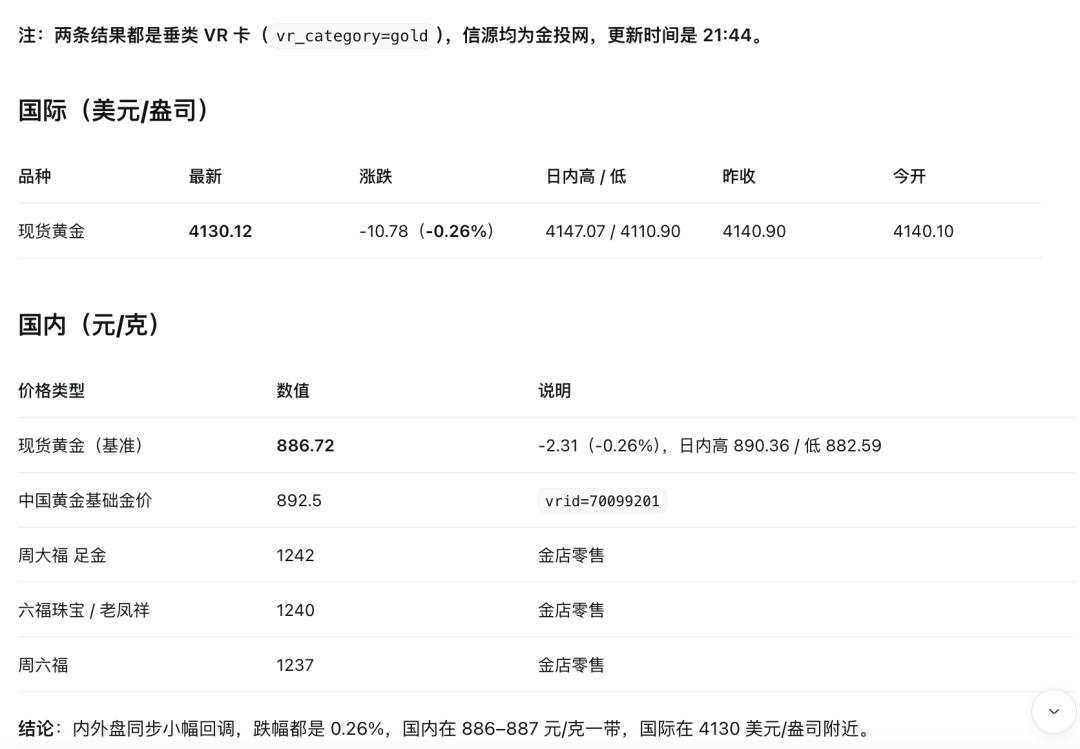
Subsequently, we selected tasks such as policy query, academic research and developer resource sorting, and combined with the crawling tool in DeepSeek Harness to further test the performance of Yuanbao Search in actual scenarios.
First, we tested policy information retrieval, and entered "use Yuanbao Search to query this year's artificial intelligence related policy information". About 42 seconds later, the Agent sorted out a list of policy information, made a table according to time, document name, issuing subject and key content, and further summarized several policy main lines.
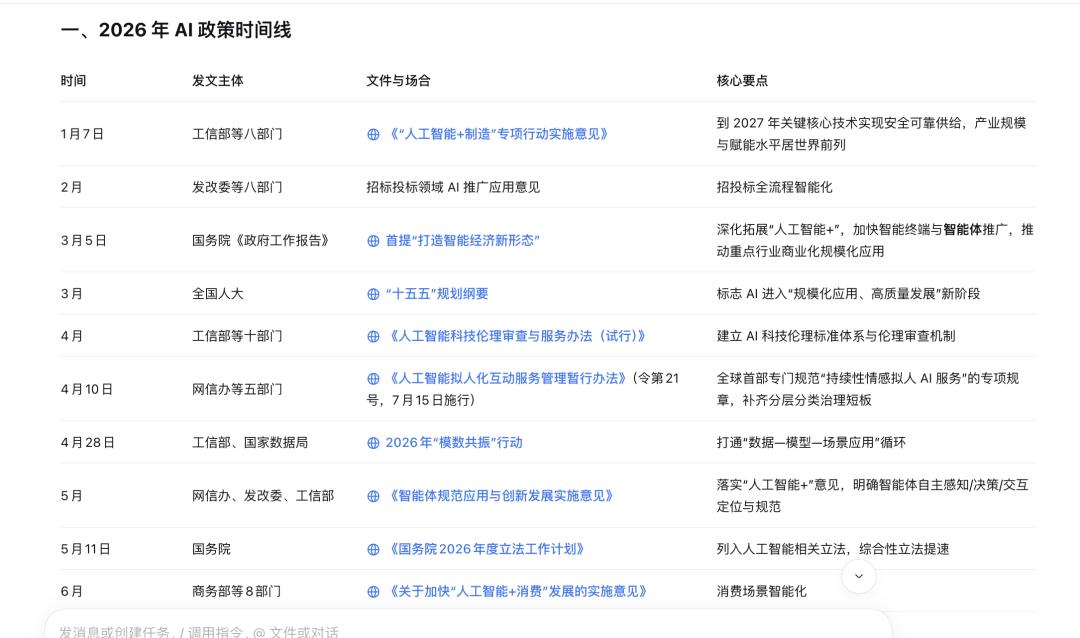
From the results, the information mainly comes from the official websites of authoritative institutions such as the Ministry of Industry and Information Technology and the Ministry of Commerce, which is not only convenient for quickly understanding policy trends, but also provides a clear entrance for subsequent finding of the original text and checking specific clauses.
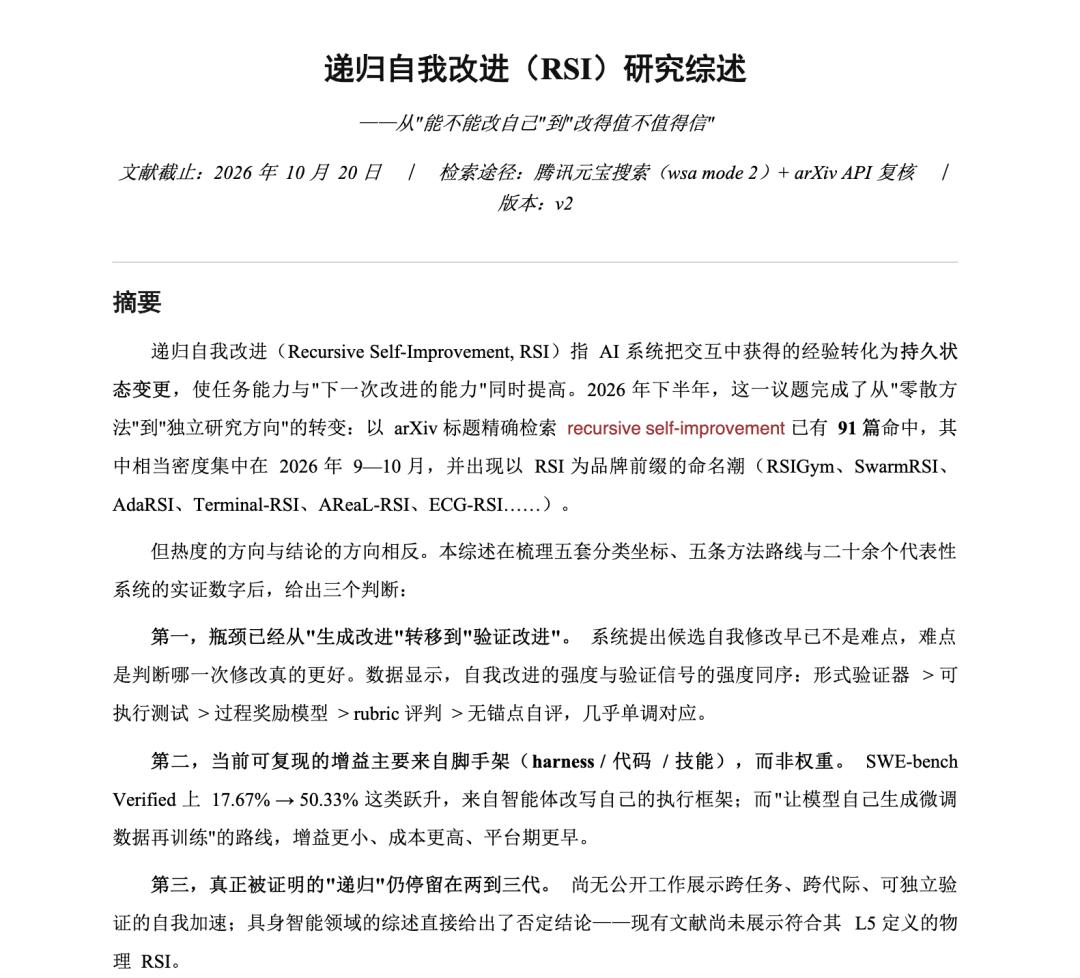
Academic research is another scenario suitable for the cooperation between search and Agent. Taking the recently concerned Recursive Self-Improvement (RSI) as the theme, we called Yuanbao Search to find relevant papers in the past six months and sort out the research progress. About 2 and a half minutes later, the system returned the relevant materials.
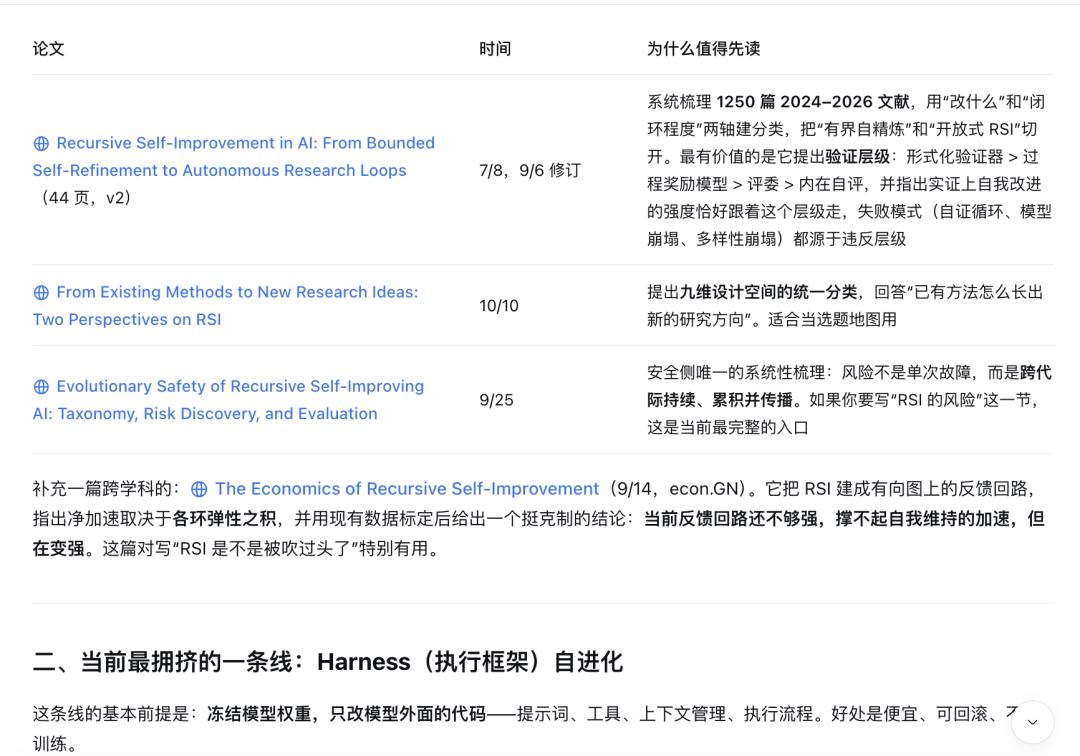
On this basis, we further combined the arXiv API to obtain paper information and cross-check the literature to generate an RSI review. The cooperation of the two enables the Agent to continue to convert the search results into more systematic research materials.
Developer resource sorting can also reflect the capability of Yuanbao Search. We let DeepSeek Harness call Yuanbao Search to find Python introductory learning resources. It finally sorted out 67 contents, which gradually expanded from environment configuration, basic grammar to practice and project practice, distinguished official documents from community tutorials, and formed a learning list with clear structure.
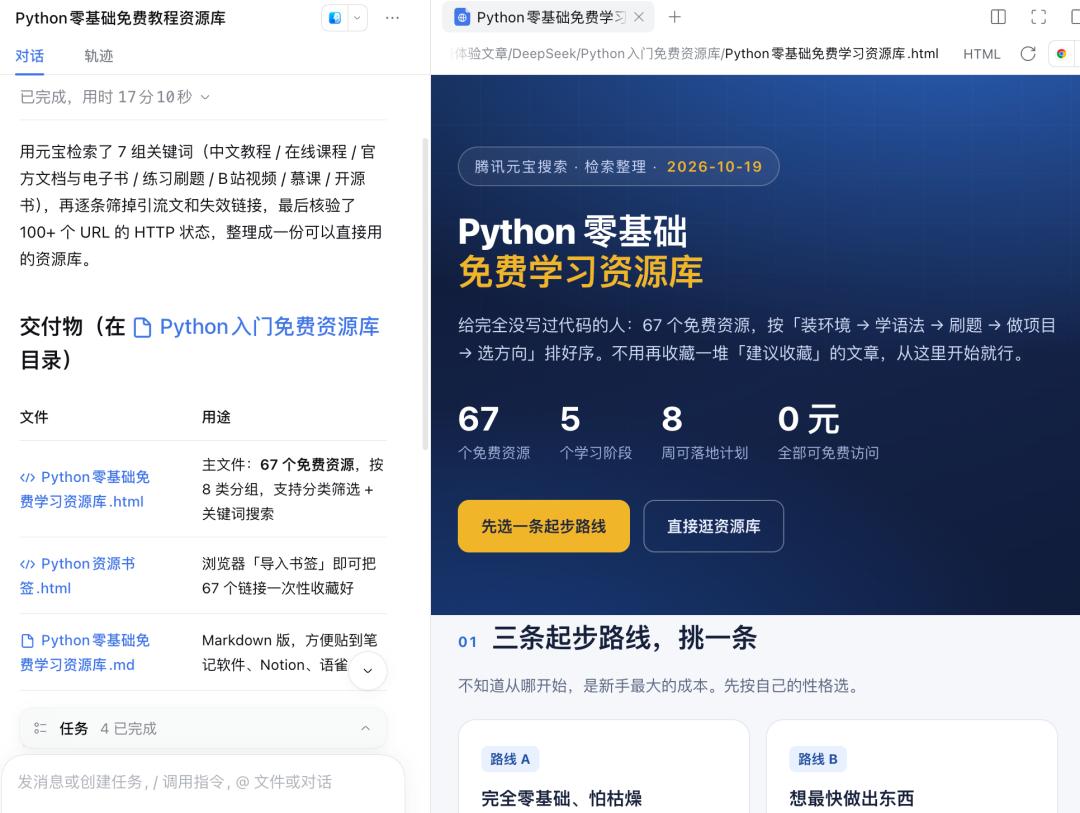
The value of this kind of task is not only to find web pages. For developers, search services provide information entrances, and Agents are responsible for organizing information into results that are closer to actual needs.
Finally, we further increased the complexity of the task, and let DeepSeek Harness call Yuanbao Search to sort out Tencent's recent product trends, personnel changes, official technical information and key business data, and generate a list of materials with source links.
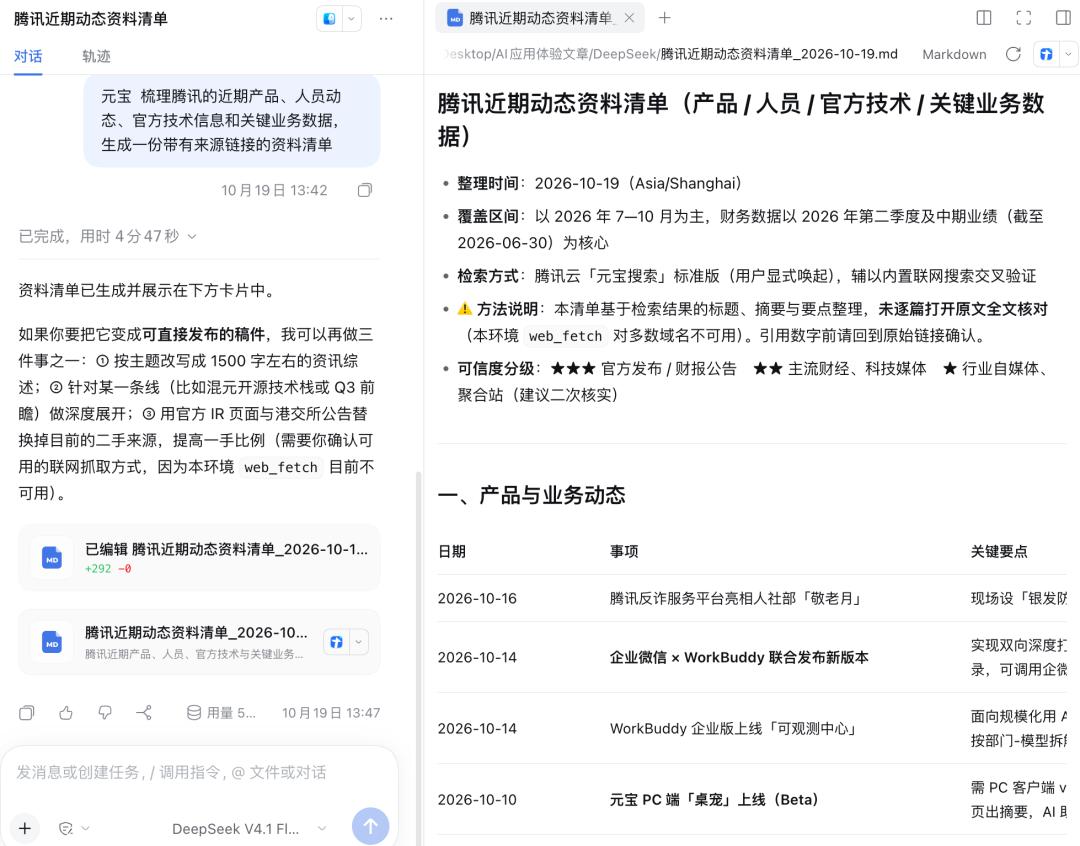
The final output is nearly 300 lines, divided into four parts, including date, event summary and source link. Some financial information is also refined to indicators such as quarterly revenue and capital expenditure. The system also graded some sources and gave prompts for information that lacks official confirmation.
From single news retrieval, policy information aggregation, academic data sorting, to enterprise special research, these sets of tests present a relatively clear path:
Yuanbao Search is responsible for helping Agents discover and obtain external information, and then Agents <