Transsion Investment has invested in Today AI, exploring the integration of personal AI assistants and smart terminals.

Recently, Transsion Holdings participated in the Series A financing of Today AI, a personal AI assistant company, and the two sides will explore cooperation opportunities for integrating personal AI assistants with smart terminals. According to Today AI's disclosure, it has raised a total of more than 200 million U.S. dollars in financing, with participants including IDG Capital, Tencent, 5Y Capital, Ant Group, HSG, Transsion Holdings, Tongge Venture Capital and SJTU Hanyuan Assets.
With the capabilities of large models becoming increasingly widespread, the focus of competition in the AI industry is shifting to the ability to continuously understand user intentions and help users complete complex tasks.
Today AI is one of the earliest entrepreneurial teams in China to explore the direction of personal AI assistants, committed to building a personalized proactive AI system that provides everyone with a more understanding, more proactive AI assistant. Today launched its overseas public beta in September, and the domestic version was launched on September 24. After obtaining user authorization, it can connect to information such as emails and calendars, understand the user's schedule, preferences and goals, and promote related tasks after user confirmation. Users can view, modify or delete the content remembered by Today at any time.
For Transsion, this investment continues its exploration in the direction of AI assistants and smart terminals. Today AI's R&D in personal memory, proactive interaction and task execution aligns with Transsion's direction of providing AI services for emerging markets combined with user usage scenarios. The two sides plan to combine their respective accumulations in software, terminals and localization to explore the applications of personal AI assistants on mobile phones and other smart devices.
From function superposition to proactive services, the competition focus of AI phones is changing
Over the past two years, AI phones have successively launched functions such as large model access, image generation and text processing. With the gradual popularization of related technologies, AI phones need to further understand users, retain context between different applications and devices, and complete tasks according to user intentions.
Transsion has already carried out many practices in this direction. In recent years, Transsion's mobile phone brands such as TECNO and Infinix have continuously integrated AI into all links of the system, using agents to improve user experience. At present, TECNO AI and Infinix AI have been widely used in its products, covering scenarios such as AI writing, AI translation and transcription, oral practice, schoolwork tutoring, image enhancement, and health management, and are gradually exploring proactive service capabilities.
In terms of system-level agents, EllaClaw Beta launched by TECNO has realized the linkage between 7 core system applications including SMS, notes, calendar, clock, multimedia and contacts on CAMON 50 Ultra 5G. After users put forward demands in natural language, the agent can schedule system resources across applications to complete tasks such as traffic management, energy efficiency optimization, storage space allocation, as well as taxi-hailing, shopping, and travel arrangement, while retaining users' control over agent operations through a permission mechanism.

These explorations are changing the way users use mobile phones. Users are expected to express their needs in natural language, and the AI agent will call different system functions and services, reducing the operation of opening applications one by one and looking for functions.
This investment in Today AI is an important measure for Transsion to continuously promote its AI strategy, and accumulates experience for the capability improvement of Transsion's AI assistant and the subsequent development of smart hardware products.
Emerging markets may be one of the largest incremental markets for personal AI
On the other side of the rapid evolution of AI technology, the application demands in different markets around the world are accelerating differentiation.
From the global trend of AI tool usage, emerging markets are showing non-negligible growth potential. Markets such as Africa, Southeast Asia, South Asia, and the Middle East have a huge young population and rapidly growing digital demands. According to DataReportal, in the ranking of monthly usage rate of global AI tools, emerging market countries such as Kenya, the United Arab Emirates, and Indonesia are all at the top, and the demand of young users for learning, working, content creation and information query through AI is growing rapidly.
At the same time, the local digital ecosystems in emerging markets are often more scattered, with content, payment, travel, shopping and life services distributed on different platforms. This fragmentation instead provides opportunities for Agents — users do not need to understand every service entry, but can let AI become a unified interface connecting different services.
However, compared with mature markets, AI applications in emerging markets still face multiple practical challenges. The languages and accents in emerging markets are complex, mixed-language expressions are common, and there are differences in network conditions and device performance. To make AI truly enter the daily life of these users, model capabilities still need to go through end-side lightweighting, local language adaptation and scenario-based reconstruction.
Transsion's years of localized R&D is precisely carried out around these specific issues, including speech and semantic recognition of small languages, regional adaptation and post-training of models, as well as end-side capabilities adapted to weak networks and different device performances, and deeply integrate AI capabilities into high-frequency scenarios such as socializing, travel, health, and education, so that the technology changes from "usable" to "truly perceptible".
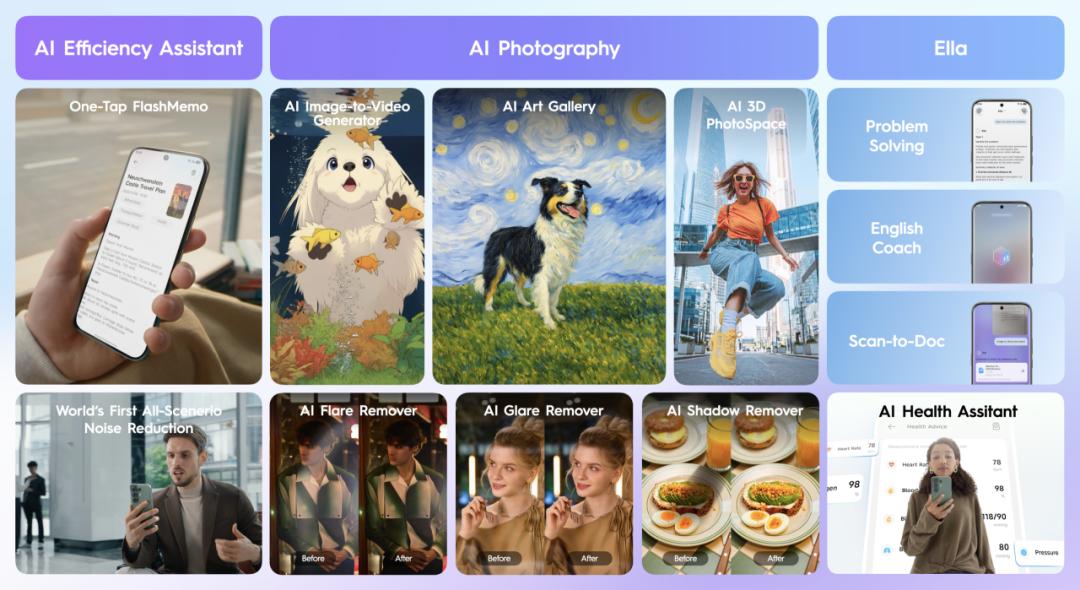
Taking language as an example, Transsion has deployed multilingual machine translation capabilities around scenarios such as call translation, social dialogue translation, and conference simultaneous interpretation. It is not only optimized for English and French with local African accents, but also covers regional languages such as Swahili and Hausa, and gradually expands to markets such as Southeast Asia, South Asia, and the Middle East. At present, its offline translation supports about 100 languages, which can be extended to 140 languages under the networked state, and covers accents from more than 160 countries and regions.
In the education scenario, Transsion combines multi-modal AI capabilities with local needs to launch functions such as photo-to-problem-solving to help students understand questions and problem-solving ideas; in the communication scenario, for noisy streets, outdoors and multi-person communication environments, it improves the voice experience through a localized noise database and AI noise reduction algorithm; in the image field, it optimizes AI generation and image processing capabilities around different skin tones, languages and cultural aesthetics.
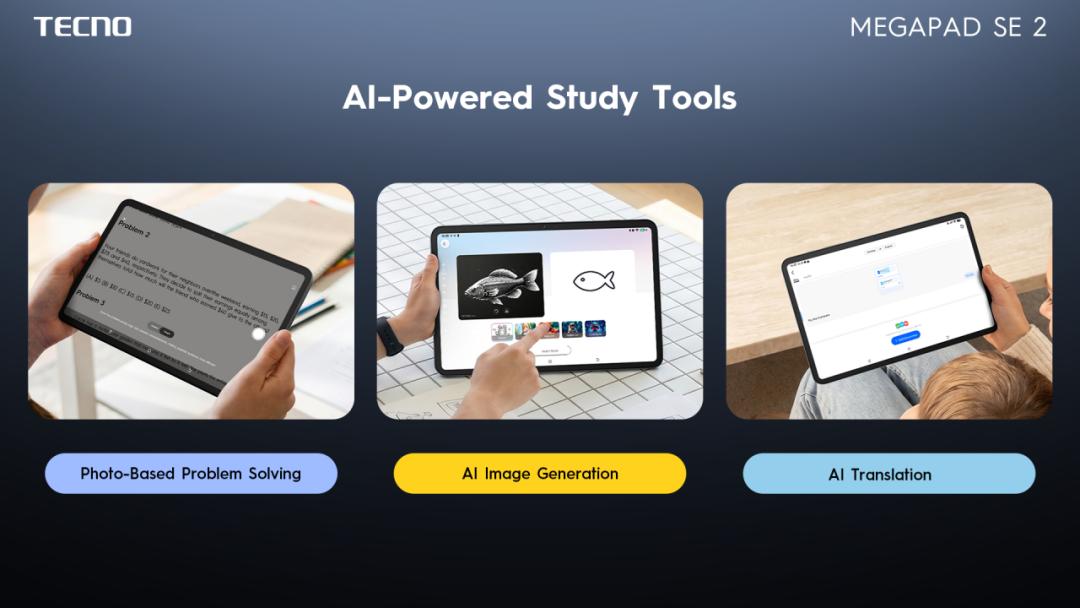
At the same time, Transsion continues to promote the sinking of AI capabilities to mid- and low-end devices. Through model compression, algorithm lightweighting and end-side deployment, it reduces the dependence on network and hardware performance, so that more users can use AI services at a lower threshold. This also aligns with the vision of universal intelligence proposed by Today AI: to enable more people to afford and use AI well, and obtain intelligent services that meet their own needs even if they are not familiar with technology. The two sides share a common direction in promoting the popularization of AI and lowering the threshold for use.
At present, Transsion has gradually formed a product ecosystem with smartphones as the core, covering laptops, tablets, smart glasses, smart wearable devices and mobile Internet services. As the capabilities of personal AI assistants continue to mature, AI is expected to become a unified interaction method connecting different terminals and services, which also provides space for Transsion and Today AI to explore broader cooperation. Transsion's future competition will gradually extend from a single hardware product to the comprehensive experience of intelligent services and multi-terminal ecosystem.
The value of this path will be reflected in the continuous improvement of users' daily experience: let AI understand different languages and accents, run stably under different network and device conditions, and help users complete daily affairs. As these capabilities are gradually improved, Transsion is also expected to further evolve from a smart terminal provider to an AI service entry for users in emerging markets.