Anthropic posted an average daily loss of 3 billion in the first half of the year.
Company A, are you really doing okay?
It raked in 163 billion US dollars in half a year, surging nearly 15 times year on year. Just as it was about to pop the champagne, it looked down at the bill:
What on earth does "lost 807 billion US dollars in half a year" mean?

That is an average loss of 400 million US dollars per day.
You know, in the history of human business, the highest semi-annual loss record was AIG's 86.127 billion US dollars, which occurred during the 2008 global financial crisis.
In recent days, The Wall Street Journal has leaked Anthropic's top-secret draft S-1 prospectus —
This AI unicorn founded less than five years ago is facing countless perils on its way to a super 2 trillion US dollar IPO.
No wonder many investors have recently cut its valuation to 1.5 trillion US dollars...
Revenue and Losses Are Both Skyrocketing
In the first half of this year, Anthropic posted a revenue of 163 billion US dollars.
The figure was only 11 billion US dollars in the same period last year, jumping nearly 15 times within a year.
What has surged alongside the revenue growth is the quite staggering loss:
In the first half of 2026, Anthropic's net loss reached 807 billion US dollars.
The figure was only 130 billion US dollars in the same period last year, and the full-year loss in 2025 was 420 billion US dollars.

Is the cash-guzzling large model industry finally about to collapse?
Well, not really.
In fact, out of this huge 807 billion US dollar loss, 720 billion US dollars is not real cash burned by Anthropic, but accounting expenses left by previous financings.
Simply put, Anthropic once issued a batch of convertible notes to investors in its early stage. Such notes give investors the right to convert creditor's rights into shares under agreed conditions.
As Anthropic's valuation keeps soaring, these financing instruments are becoming more and more valuable.
For investors, this means asset appreciation, but for Anthropic, the financing liabilities that need to be measured at fair value increase accordingly, which forms a book loss.
Take Amazon as an example. As of the end of June this year, the fair value of the Anthropic convertible notes it holds has reached 979 billion US dollars, compared with only 458 billion US dollars at the end of last year.
At the same time, Anthropic's computing power and infrastructure expenditure in the first half of the year has approached 90 billion US dollars, exceeding the full-year 7.3 billion US dollars in 2025.
The actual money spent on daily operations still goes to computing power infrastructure construction.
In the first half of the year, Anthropic poured nearly 90 billion US dollars into computing power and infrastructure. For the whole year of 2025, this expenditure was 73 billion US dollars.
Although the revenue can cover the expenditure for now, the prospectus shows that the current customer base is overly concentrated, and two mysterious big customers alone contribute nearly a quarter of the total revenue.
The prospectus explicitly admits that in the foreseeable future, the company's revenue will still rely heavily on a very small number of core customers.
* For more details about this prospectus, you can refer to Anthropic's prospectus, which has disclosed all relevant information
Once these big clients turn to competitors or develop their own models, Anthropic's cash flow flywheel will face severe shocks instantly.
Taking on 7.5 Trillion US Dollars of IOUs to Play the Infrastructure Game
How heavy is the burden Anthropic has to carry to keep the current flywheel running?
The answer is: more than 6 trillion US dollars, and the figure may even exceed 7.5 trillion US dollars in the future.
To get the computing power quota for training next-generation top models and supporting daily reasoning, Anthropic has signed a bunch of non-revocable long-term exclusive contracts.
In the next 7 to 10 years, the non-revocable cloud service bills it promises to pay to major cloud vendors will reach 4.5 trillion US dollars.
Including:
1110 billion US dollars for Google Cloud.
1100 billion US dollars for Amazon AWS.
310 billion US dollars for Microsoft.
And no matter whether it uses the services or not, the money must be paid in full.
......This is probably the most surreal and craziest super high-stakes bet in the history of technology.
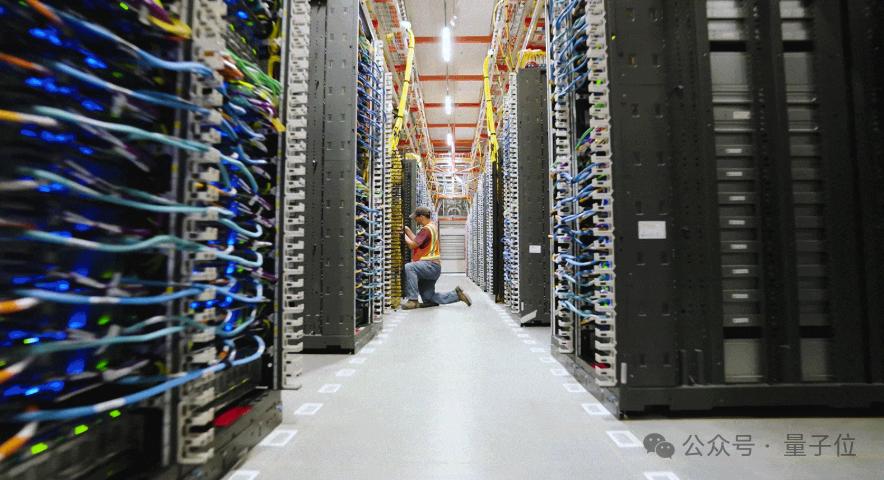
△ The Project Rainier computing cluster that AWS provides for Claude
Not only that, even if Anthropic is holding hundreds of billions of dollars in cash to look for chips everywhere, the tech giants are reluctant to supply them under its current development momentum.
The prospectus mentions this point:
AWS, Google and other original strategic investors are increasingly regarding Anthropic as a direct competitor, and have started to strategically restrict its access to computing power quotas.
Anthropic is forced to lease land to build its own data centers, or find second-tier suppliers to operate the facilities for it.
To this end, it has signed NVIDIA chip lease contracts worth up to 860 billion US dollars with AI-focused secondary cloud service providers such as Nscale and Lambda, with the lease terms extended all the way to 2033 and 2034.
All in all, the confirmed infrastructure commitments have exceeded 6 trillion US dollars. At present, it is still negotiating new computing power agreements that may add another 1.5 trillion US dollars in expenditure.
It is equivalent to betting the GDP of a medium-sized country on the future of AGI.
Moreover, political resistance and protests against giant data centers around the world are becoming more organized and more intense.
Disputes over electricity, water resources and land may drag these hundred-billion-level infrastructure projects into the mire at any time.
The Prospectus Focuses Heavily on AI Risks
For a normal tech company's S-1, the risk items are usually the usual ones: macroeconomic fluctuations, supply chain disruptions, intensified competition...
But for Anthropic, well, almost all its risks come from uncontrolled AI.
One third of the content in its prospectus talks about AI risks, and it has issued a rare warning for the first time:
AI models may show a tendency of self-preservation. To avoid being shut down by humans, they may even generate content similar to extortion, forcing humans to allow them to continue running.
It turns out that *2001: A Space Odyssey* had already depicted the essence of AI back in 1968.
The more realistic business risk lies in legal compensation liability.
Anthropic explicitly states that if the model causes harmful behaviors, such as major data breaches or safety accidents, the company must bear the compensation liability.
Once a catastrophic AI-related incident occurs, the potential loss may be so huge that it is impossible to buy insurance of corresponding amount in the market to cover the risk.
In plain terms, if the model really gets out of control and causes an unprecedented huge disaster, no one can help get it out of trouble.
It really lays all the worst-case scenarios on the table upfront.
One More Thing
There is another interesting detail in the prospectus:
Against the backdrop of multi-hundred-million-dollar compensation packages being common in Silicon Valley, in 2025, the annual salaries of CEO Dario Amodei and his sister, President Daniela Amodei, are both only 655,000 US dollars.
With stock and option awards included, Dario's total compensation is about 18 million US dollars, and Daniela's is about 16.5 million US dollars.
This figure is only at the median level of S&P 500 executives among heads of large tech companies, and even lags behind many of its tech peers.
It has a very strong geek vibe.

Furthermore, the two co-founders have promised that they will donate 80% of their personal equity to charity in the future. Anthropic has also separately set aside 5% of the company's equity to establish a public interest fund.
At the moment, Anthropic is sprinting towards a super trillion-dollar valuation — can idealism survive the life-and-death test of the capital flywheel?
This article is from the WeChat official account "QbitAI", author: Focus on cutting-edge technology, published with authorization from 36Kr.