Does the closed social function of the "Xiaotiancai" smartwatch force parents to place orders in a disguised form?
When choosing a kids' smartwatch for their children, most parents have very simple initial expectations.
It just needs to support positioning and calls, so that they can reach their kids anytime on the way to and from school, and that's enough.
No one could have imagined that this tool, which was originally designed to ensure safety, would one day become a ticket of admission to children's social circles.
On October 20, the topic #Xtc Closed Social Ecosystem Forces Parents to Make Purchases# topped the trending search list, and the campus social logic hidden behind the smartwatches was suddenly brought to the public eye.

Source: Weibo
Why can a kids' smartwatch, positioned as a safe communication device, bind the social connections of an entire class?
01 How is the "Social Wall" Built?
This social wall that stretches across campuses has long been built in primary schools.
A mother shared on a social platform that her daughter used to wear a Xiaomi smartwatch. After the watch broke, she originally planned to buy another Huawei or Xiaomi device, but her daughter insisted on switching to Xtc (Xiaotiancai).
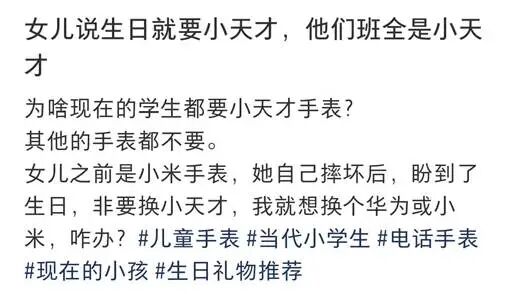
Source: Xiaohongshu
The reason that drives children to insist on choosing Xtc is that it is the only smartwatch that grants access to their peer social circle.
The influence of Xtc smartwatches has long spread across primary school campuses with the high penetration rate of its products.
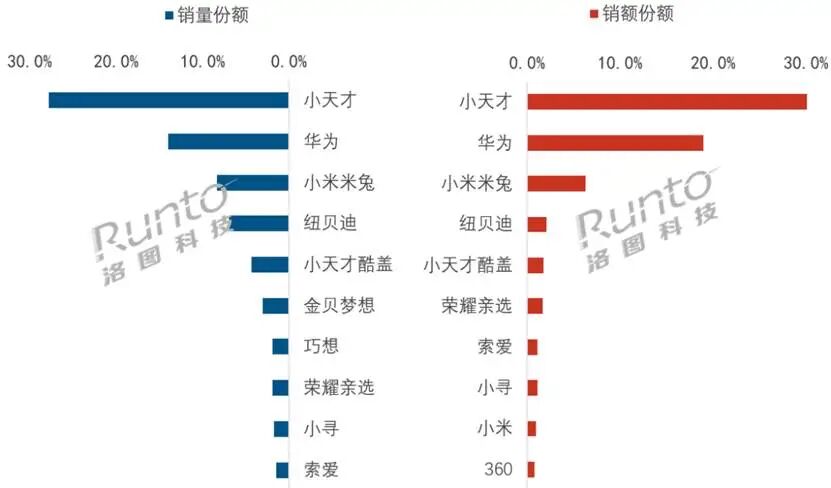
Figure: Brand sales share of China's online smart kids' watch market in August 2026, Source: Runto Technology
In terms of market share, according to data from Runto Technology, Xtc recorded a 27.8% sales volume share and 52.6% sales revenue share in the online market in August 2026, firmly ranking first on both lists, with an extremely high penetration rate among primary school students.
The foundation of this social wall is hidden in the underlying product design logic of Xtc.
Xtc's social ecosystem is closed from the very bottom. It does not access general social software such as WeChat and QQ, but has built a dedicated exclusive app called "MicroChat".
Only children who also wear Xtc smartwatches can send friend requests by tapping their watches face to face, and then enter the exclusive MicroChat app space.
Smartwatches of other brands can only store phone numbers at most to realize basic calling functions, and can never access the complete exclusive social space including MicroChat, friend homepage and personal avatar customization.
However, Xtc's official customer service told the *Corporate Research Institute* under Phoenix Finance that the core reason why the product does not access general social software such as WeChat and QQ is to protect minors' online safety.
The customer service further explained that opening access to general social platforms will bring uncontrollable risks such as strangers adding friends randomly, the spread of harmful information and online fraud; in the self-developed MicroChat system of the brand, all friend adding requests need to be reviewed and approved by parents through the parent app, and harmful words involving pornography and violence will be automatically blocked by the system. The product is positioned as a safe and controllable smart kids' watch, rather than a mini mobile phone.
But in reality, once more than half of the children in a class use Xtc watches, the remaining parents will face a dilemma when choosing new watches.
The admission ticket to this campus social circle is not affordable for everyone.

Figure: Price of Xtc Z-series products, Source: Xtc Official Website
The models sold on Xtc's official website cover the price range from 398 yuan to 2699 yuan. Among them, the Z-series, which carries the core social functions and contributes the majority of sales, is priced between 999 yuan and 2699 yuan. The 2699-yuan Z12 Youth Edition is already priced as high as many mid-range Android smartphones.
A horizontal comparison with competing products makes the price gap more intuitive. For example, the official price of Xtc Z6Pro is 999 yuan, while a competing product of another brand with similar hardware specifications is priced at about 600 yuan, which is already equipped with dual cameras, floor positioning and supports kids' WeChat.
According to data from Runto Technology, the overall average price of China's online smart kids' watch market in August 2026 is only 526.9 yuan. According to statistics from April, Xtc's product structure has long been fully upgraded: the sales proportion of models priced above 500 yuan has risen from 83% at the beginning of the year to 92%, and the unit price of its main models is more than twice the industry average.
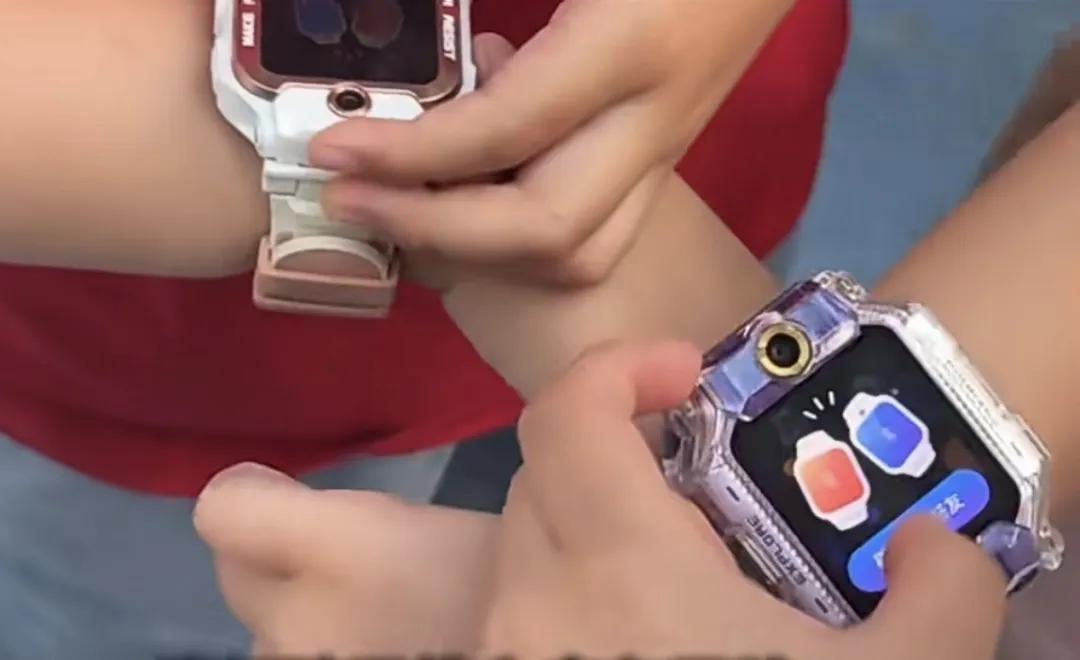
Figure: Tapping Xtc watches to add friends, Source: Screenshot from social media
Therefore, if parents follow the trend to buy Xtc watches, the price will be much higher than that of kids' watches of other brands; if they don't buy it, their children will find it difficult to participate in the online peer interactions during breaks.
From children's perspective, peer recognition weighs heavily in the primary school stage.
Whether they can add friends by tapping watches has gradually become a standard for children to judge whether they can integrate into the group.
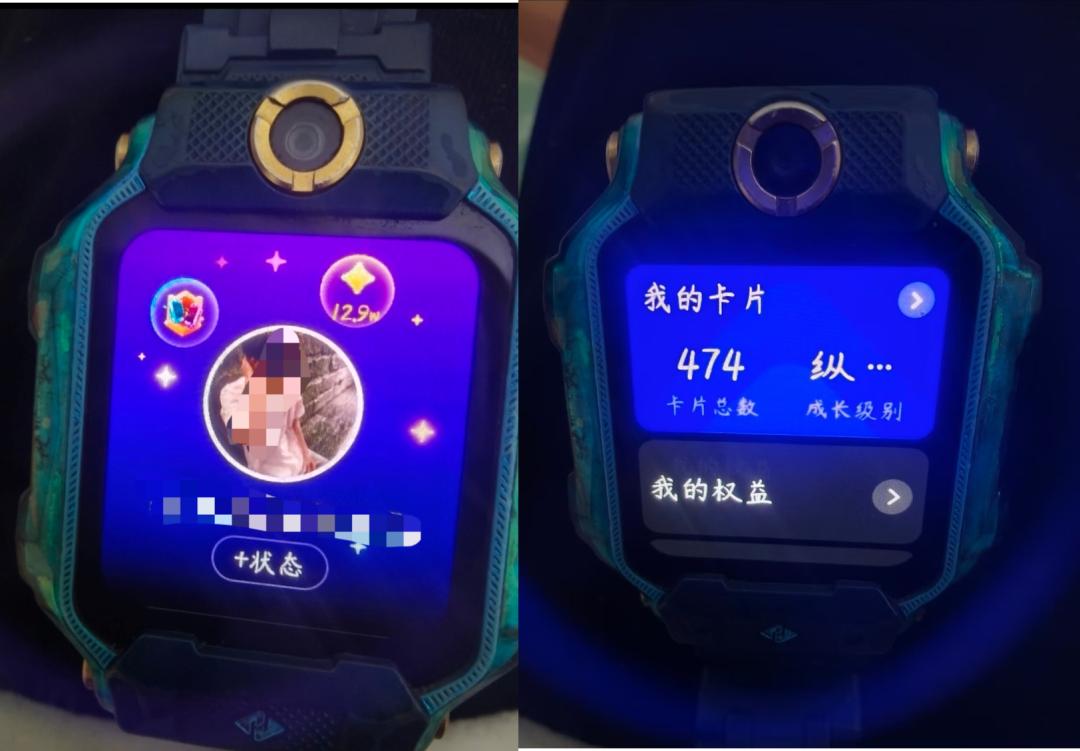
Figure: Personalized information page of Xtc watch, Source: Screenshot from social media
The number of friends, homepage interactions and virtual avatar customization are all placed in full view, and these display items have become carriers for children to compete for popularity.
In the end, most new families who are choosing watches will follow the mainstream brand in the class to place orders, which further reinforces this closed social circle.
The above-mentioned real group pressure and market status have become the source of the claim that "Xtc forces parents to make purchases".
However, it is difficult to legally classify Xtc's business practices as "forcing transactions" or even monopolistic behavior.
Li Haiquan, a lawyer from Shanghai Shenyihe Law Firm, told the *Corporate Research Institute* under Phoenix Finance that it is difficult to define the practice as "using dominant position to damage consumers' right to choose" simply based on market share and non-interoperable software.
Article 22 of the Anti-Monopoly Law regulates the abuse of market dominant position, which requires defining the relevant market, identifying the dominant position first, and the restricted transactions or additional unreasonable conditions must be "without justifiable reasons".
Market share is only one of the factors to be considered, and factors such as control power, user dependency and market entry barriers also need to be taken into account. "Forcing purchases" is a market conduction effect rather than a direct mandatory transaction, which hardly falls into the scope specified in Article 9 of the Consumer Rights Protection Law. The safety reason may be recognized as justifiable, or may be criticized as blocking competition in the name of safety, which is still controversial.
Therefore, in most cases, the State Administration for Market Regulation needs to file a case and make an official determination on its own authority or after receiving reports; competing enterprises or consumers can file anti-monopoly civil lawsuits, but they need to prove the dominant position of the enterprise and the resulting damages, which features heavy burden of proof and long cycle.
02 Can the Social Wall Be Demolished Smoothly?
Previously, the social functions of Xtc kids' smartwatches have sparked many controversies.
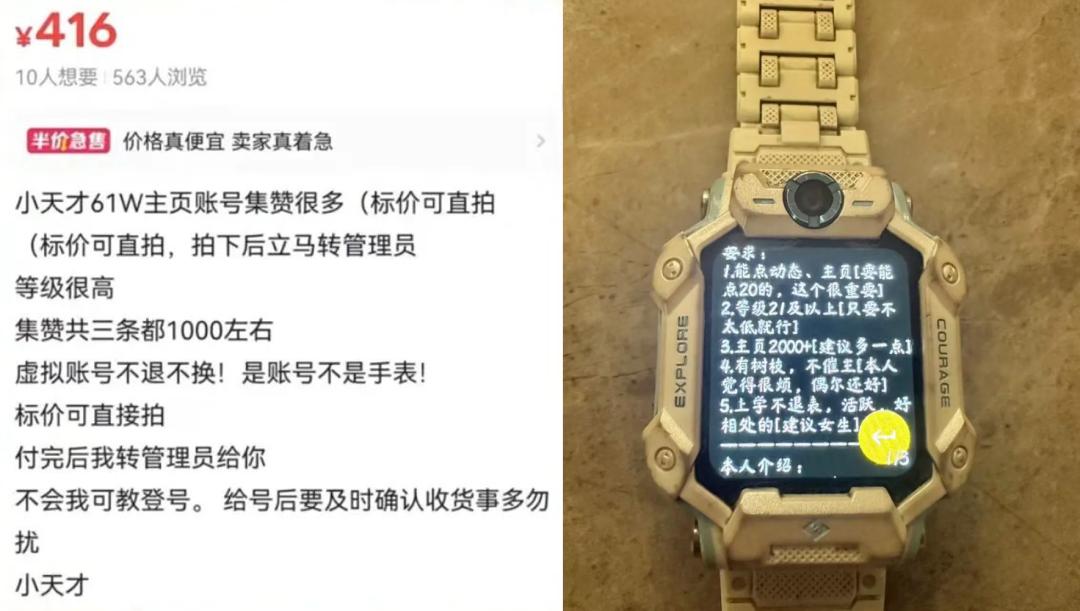
Figure: Introduction of high-liked accounts sold on second-hand platforms and Xtc users recruiting friends, Source: Screenshot from social media
In 2025, some media reported that some minors regard the number of friends and homepage likes on Xtc watches as a reflection of social popularity, and even phenomena such as paid like boosting, account trading and account agency operation have emerged. Some accounts are priced at hundreds or even thousands of yuan due to their high accumulated likes.
The communication tool that was originally designed to protect children's safety has become a social terminal carrying functions of making friends, self-display and comparison. Behind the continuous expansion of function boundaries, parents are also worried about problems such as consumption comparison, excessive use and minor online protection.
However, Xtc has completed product optimization and rectification in December 2025. At present, the brand has removed the "Sports Like" function from all series of models, and simultaneously removed the "Level" application, to reduce the social display attributes of its products.
At present, the absence of guardian supervision right is a headache for many parents.

Figure: Xtc parent app page, Source: Screenshot from social media
Many parents found that as legal guardians, they can turn on or off certain functions, but cannot view the content of their children's friend circle on the parent app.
Xtc customer service explained to the *Corporate Research Institute* under Phoenix Finance that "The content of the friend circle belongs to children's personal privacy. Following the principle of the Law on the Protection of Minors that protects minors' right to privacy, the content on the watch can only be viewed on the watch, and the parent app does not support viewing it."
However, this "privacy theory" is controversial at the legal level.
Li Haiquan told the *Corporate Research Institute* under Phoenix Finance that this explanation is relatively one-sided. The special chapter on online protection in the Law on the Protection of Minors and Article 31 of the Personal Information Protection Law both take "the consent of parents or other guardians" as the premise of processing personal information of minors under the age of 14, and the legislation itself has confirmed the guardians' right to know and right to consent; the right to privacy is against third parties, rather than legal guardians.
Using this as an excuse to completely block parents from viewing the content is essentially "keeping secrets from guardians", which goes against the original intention of the legislation. Of course, indiscriminately exposing chat content will involve the personal information of other children.
A more reasonable solution can be hierarchical authorization: parents can view the friend list and social behavior data, and the chat content is stored for future reference. The supervision intensity can be independently selected by parents according to their children's age, which not respects children's growing space, but does not deprive guardians of their supervision responsibility.
It is worth noting that in December 2025, the State Administration for Market Regulation and the Standardization Administration of China issued the mandatory national standard *Safety Technical Requirements for Kids' Smartwatches* (GB46859-2025), which will be officially implemented on January 1, 2027.
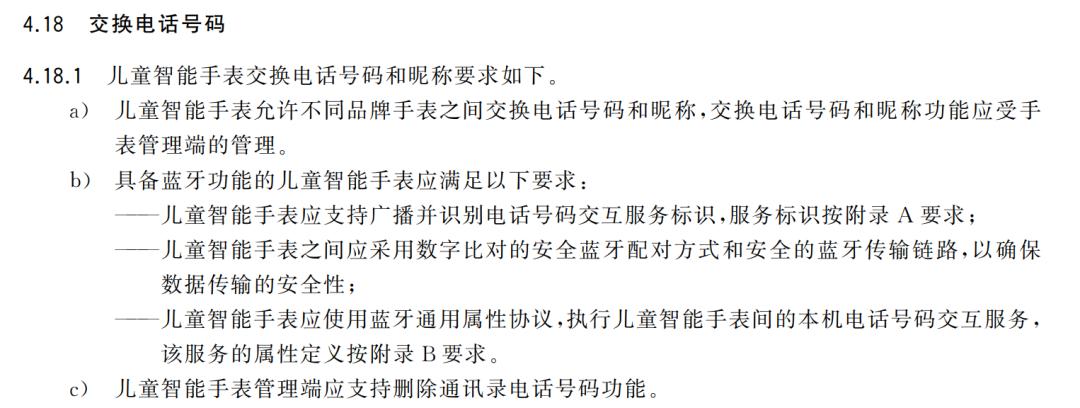
Figure: Mandatory national standard *Safety Technical Requirements for Kids' Smartwatches*, Source: National Standards Full Text Disclosure System
This new national standard sets a clear bottom line: kids' smartwatches shall allow the exchange of phone numbers and nicknames between watches of different brands, and relevant functions shall be managed by the watch management terminal.
This means that the interconnection of basic cross-brand contact information will change from an "optional choice for enterprises" to a "mandatory obligation".
The *Corporate Research Institute* under Phoenix Finance called Xtc customer service to inquire about the implementation of the new national standard. The customer service said that the brand is promoting the adaptation work in accordance with the national standard specifications. All the models currently in production will complete adjustment and optimization before January 1, 2027, and the discontinued old models will also actively adapt to the rules during the regulatory transition period.
But there is a practical problem: what the national standard demolishes is only the "wall of contact", not the "wall of social interaction".
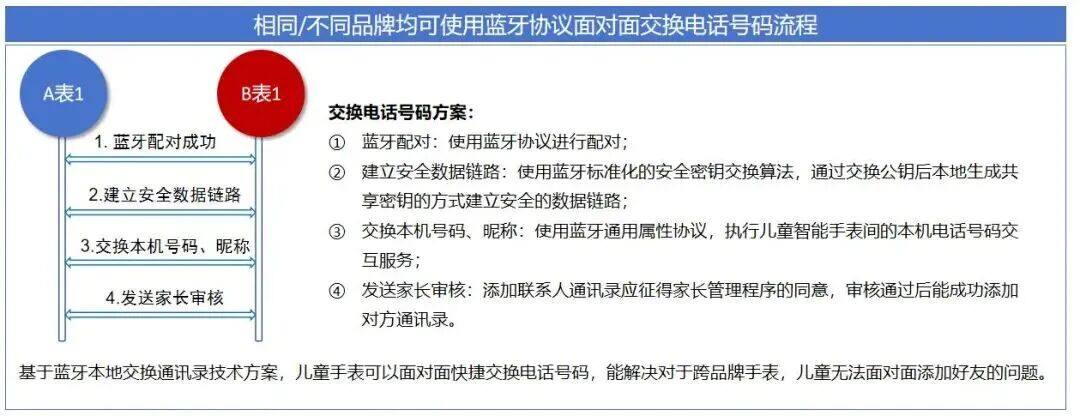
Figure: Flow chart of cross-brand Bluetooth number exchange, Source: China Electronics Standardization Institute
The national standard only mandates the interconnection of basic identity information such as phone numbers and nicknames, and does not require the interconnection of in-depth social functions such as friend circles, Micro