The mass production of Optimus is just around the corner, but Tesla has not yet crossed three critical thresholds in the robotics industry. Can it create another miracle?
After iterating through three versions, Tesla's humanoid robot Optimus is finally on the eve of mass production.
This Monday, Tesla submitted materials for its annual general meeting, confirming in written form for the first time that the third-generation humanoid robot Optimus is ready for large-scale mass production. However, Tesla has not yet announced the specific timeline for Optimus mass production.
As a leader in the new energy vehicle sector, Tesla's contributions to the industry can be described as groundbreaking. The Model S brought new energy vehicles to the luxury car stage for the first time, proving that pure electric vehicles are not toys with short range, low speed and small size. The Model 3 demonstrated the huge market potential of new energy vehicles and led the industry to a turning point.
The success of the Model S/3/Y has positioned Elon Musk and Tesla as global technology pioneers. That is why many people firmly believe that Optimus will transform the humanoid robot market just like Tesla's new energy vehicles, but can Tesla really become the industry leader again in the robotics field?
Three major hurdles in robotics that Tesla has not yet overcome
Huang Hongsheng, founder of Skyworth Group, has publicly stated on multiple occasions that none of the hundreds of robotics companies in the market have achieved profitability, and the grand scenes we see are all investors' expectations for the future.
Indeed, in recent years, robots seem to be expanding from stage performances to scenarios such as industry, retail and sorting, but at present, the three major hurdles facing robots — dexterous hands, supply chain and embodied brain — have not been fully conquered by any enterprise.
First of all, for dexterous hands, after the industry went through the "parameter competition" stage, current high-end dexterous hands generally have more than 20 degrees of freedom, but the high cost and durability issues are unacceptable for robotics enterprises.
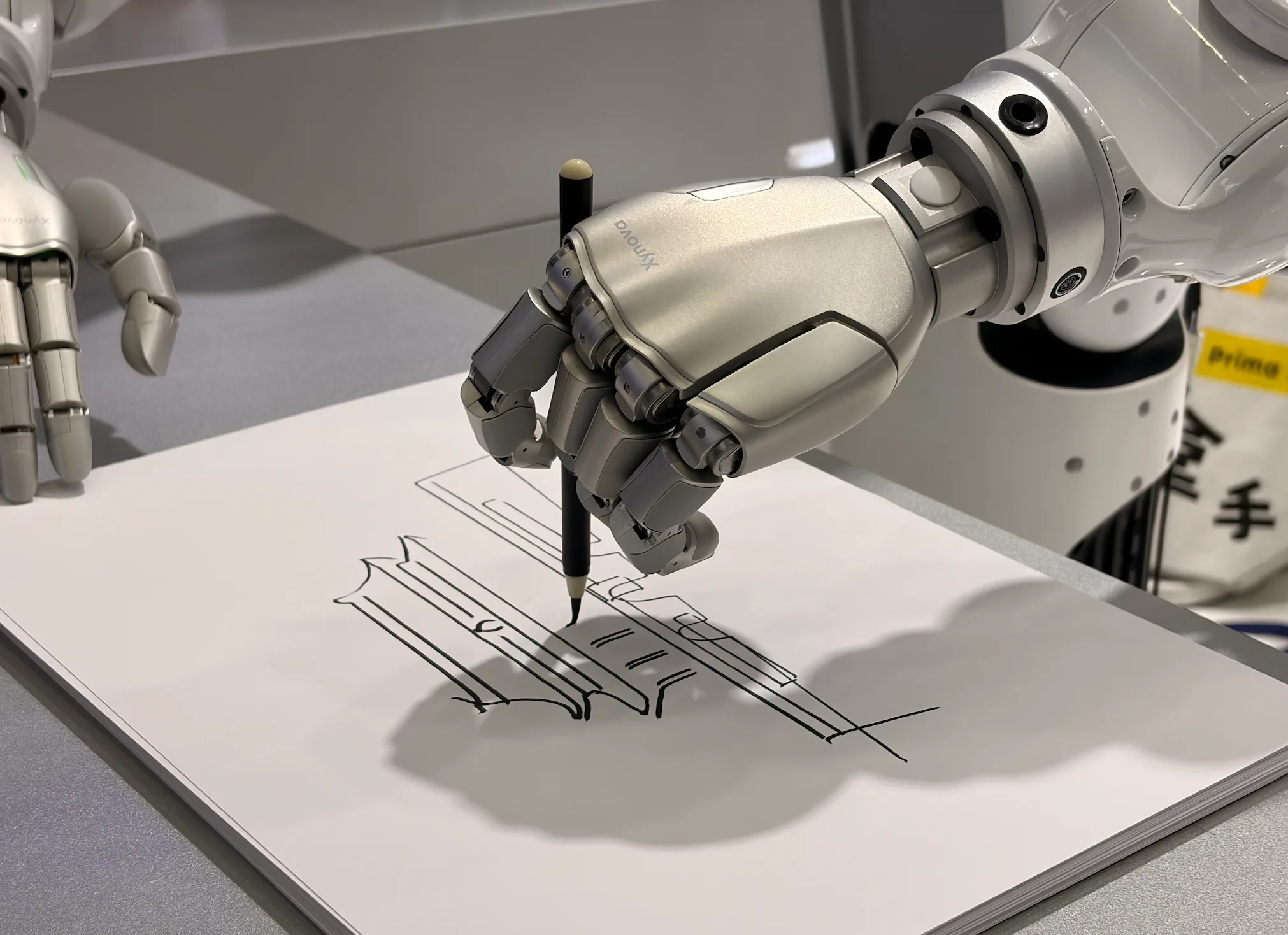
(Photo credit: Lei Technology)
Elon Musk once said that the sensors of dexterous hands are too close to the finger surface, which makes them extremely vulnerable to damage. They also need to adapt to the elastic deformation of fingers, so that the robot can perceive where the finger touches, how much pressure it is under, and adjust the grasping angle and force according to the actual situation.
Tesla has specially designed a tendon-driven 22-degree-of-freedom dexterous hand for the third-generation Optimus. However, Tesla has not yet simultaneously solved the problems of finger joint and tactile sensor service life, as well as replaceable electronic skin.
Although Tesla plans to produce Optimus at its factory in Fremont, California, it is well aware that relying solely on the US supply chain makes it difficult to mass-produce humanoid robots, not to mention controlling costs. Chinese supply chain enterprises remain a key factor for the mass production of Tesla's Optimus.
According to reports from The Paper, in September this year, Tesla launched factory audit work at enterprises including Tuopu Group, Sanhua Intelligent Controls, and Joyson Electronics, and some enterprises have received Optimus component orders.
Sanhua Intelligent Controls, which focuses on thermal management, will develop joints for Optimus; Joyson Electronics is responsible for domain control, and may provide components such as dexterous hands, AI head assemblies and electronic skin for Optimus; Tuopu Group, which previously provided components such as automotive chassis for Tesla's new energy vehicles, is responsible for the linear and rotary actuator assemblies and dexterous hand components.
The problem is that tariffs and China's restrictions on rare earth resources will affect the development progress and component cost of Optimus. Musk said bluntly at the meeting on October 10 that China's new rare earth regulations set back the Optimus project by 2-3 months last year.
Fortunately, Sanhua Intelligent Controls and Tuopu Group will produce components for Tesla through their factories located in Mexico, which can reduce transportation costs and tariffs to a certain extent.
In addition, the rise in memory prices has also affected robots. At the beginning of October, Musk announced on the X platform that due to cost and large-scale production issues, the memory of the AI5 platform has been reduced by half to 72GB, and the memory of the AI6 platform has been reduced by one third to 144GB, and this move will not affect the performance of Optimus.
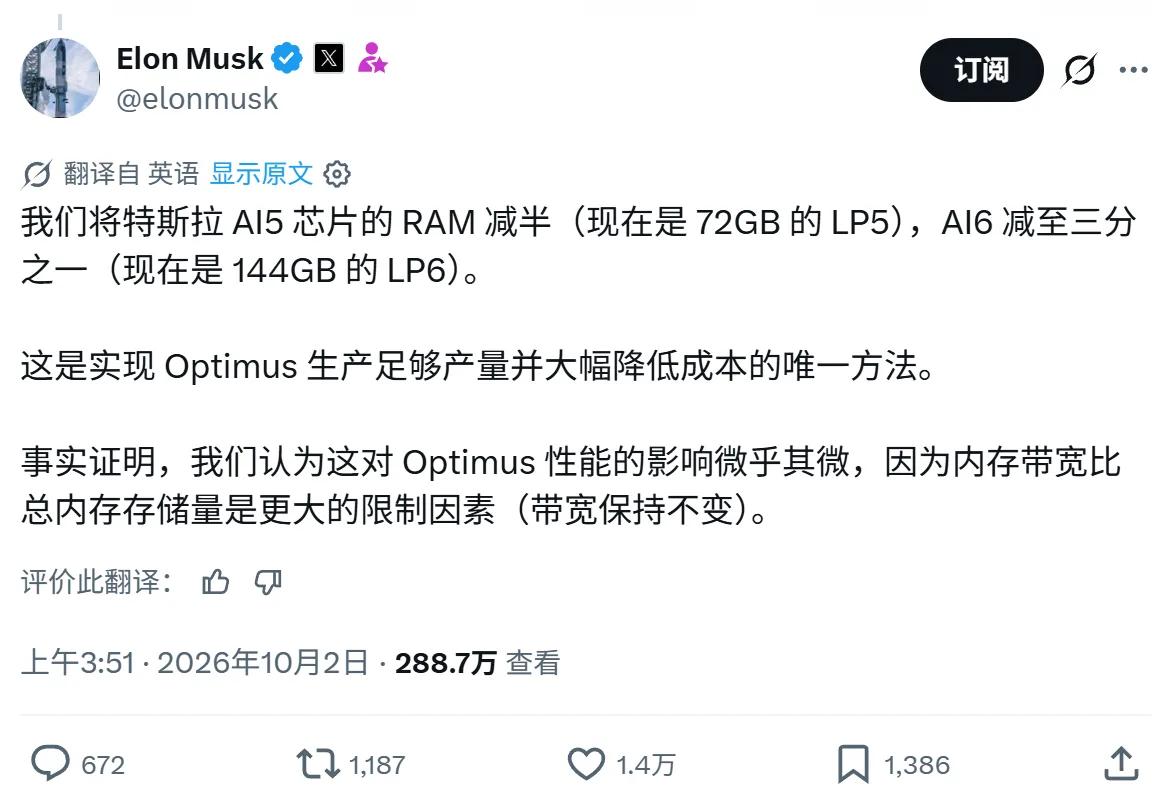
(Screenshot from X platform)
Compared with hardware, the lack of software capabilities may impose greater restrictions on robots. Fu Yuancheng, head of capital markets at Sino Future, said that the existing VLA model can only output about 10 motion control vectors at the same timestamp, and software capabilities restrict the upper limit of hardware, and many precise actions need to be realized through remote control.
Musk once made a strong statement that preset actions are not real capabilities, and robots must be able to handle situations they have never seen before. This sentence not only criticizes the industry, but also exposes Optimus's weakness. After the first batch of third-generation Optimus humanoid robots roll off the production line, they will first collect training data through Optimus Academy, and will be digested internally in Tesla's own factories in the initial stage before being launched to the market in the future.
Since the beginning of this year, Tesla has repeatedly stated that Optimus is about to achieve large-scale mass production, but no specific time has been announced until recently. The original target of producing 50,000 to 100,000 humanoid robots in 2026 now seems almost impossible to achieve.
Relying on the supply chain, many domestic robotics enterprises have achieved large-scale mass production, but no enterprise has yet been able to completely overcome the three major hurdles. The one who can first bring down the performance and price of dexterous hands and develop a mature embodied brain will become the Tesla in the robotics field.
Can Tesla's robots create another legend?
On October 18 US time, Musk posted on the X platform that the Optimus humanoid robot and the Cybercab autonomous driving vehicle will constitute the vast majority of Tesla's value, and Tesla has shifted its focus to humanoid robots.
In many fields such as new energy vehicles, aviation and brain-computer interfaces, Musk's remarks are extremely radical, and the same is true in the field of robotics. He once predicted that in the next 10 years, there will be at least 1 billion humanoid robots, the number of humanoid robots will reach 10 billion in the next 15 years, and there may be 100 billion in 20 years.
Lei Technology (ID: Leitech) does not agree with Musk's prediction. There is still a long way to go before humanoid robots are widely popularized on a large scale, and it is difficult for Tesla to reach the same height in the robotics field as it has achieved in the new energy vehicle industry.
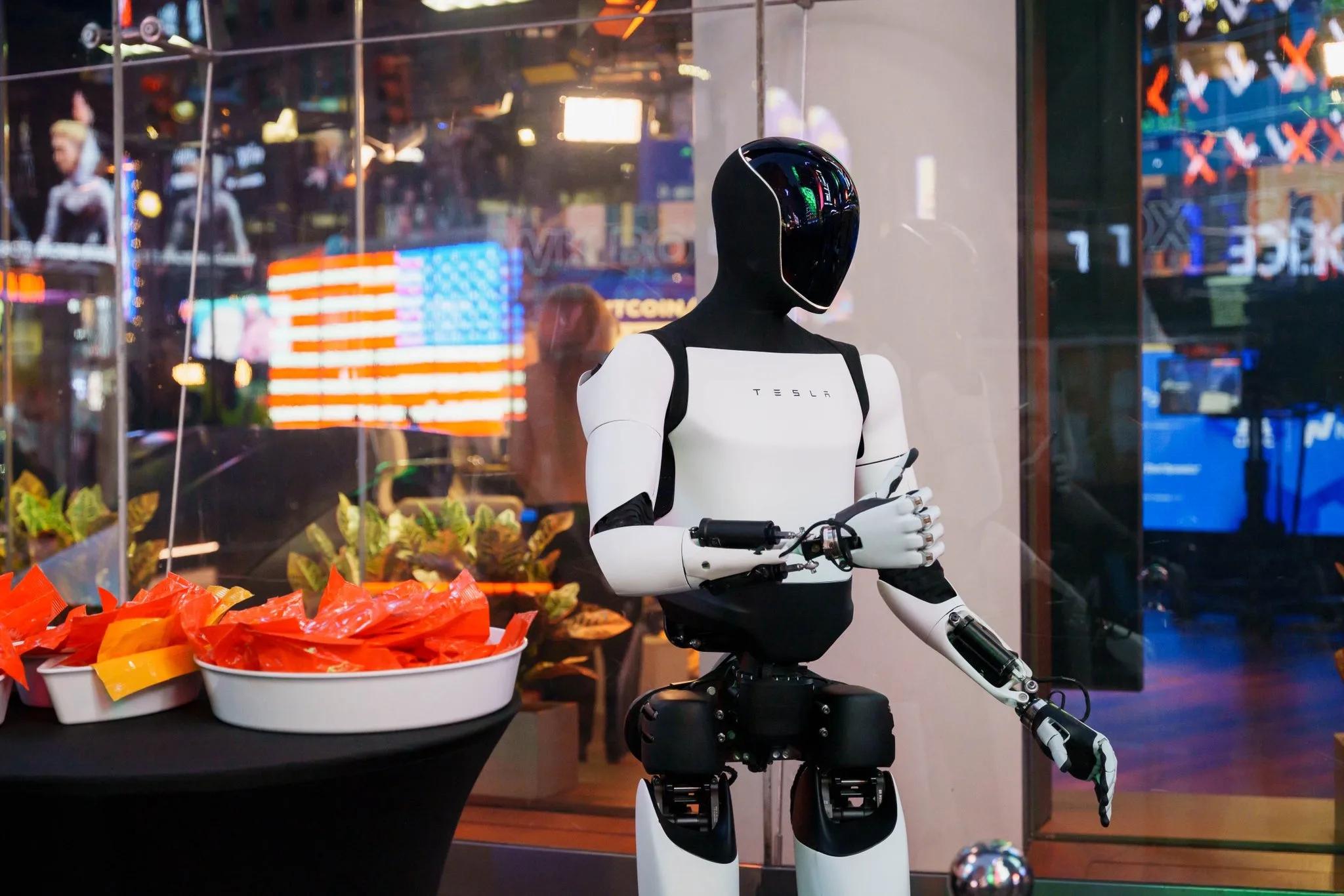
(Photo credit: Tesla)
The English version of the "Embodied Intelligence Development Report (2026)" jointly released by the Institute of Artificial Intelligence of the China Academy of Information and Communications Technology and multiple institutions points out that in the first half of 2026, the global shipment of humanoid robots exceeded 22,000 units, a year-on-year increase of nearly 300%, of which the intelligent manufacturing and warehousing logistics scenarios accounted for 13% and 5% respectively.
Although the vast majority of humanoid robots are mainly used for cultural and entertainment performances, science and education, it is obvious that the industry is deepening scenario-based applications.
At the Shanghai Industry Fair in October this year, the Unitree G1 demonstrated operations such as picking and placing parcels and tightening screws; the Ubtech Cruzr Y1 demonstrated how robots transport materials; Leju Robotics even moved the factory assembly line into the exhibition hall, using multiple Kuavo 5-W robots to show us how robots complete many tasks such as depalletizing, transportation, and loading.
In addition, operations such as the Q-One robot boxing match, Galaxy Universal Robot's pharmacy sorting, and Qianxun Intelligence's Moz robot making coffee also demonstrated the working capabilities of robots in different scenarios at this stage.
In contrast, the progress of Tesla's Optimus is much slower. By the time Optimus truly achieves large-scale mass production next year, domestic robots may have quickly entered the retail industry as expected by True Innovation.
The reason why the Model S and Model 3 were able to disrupt the new energy vehicle industry back then was that they took the lead. Even if the products could not be mass-produced on a large scale in the short term, their hardware level was far ahead of competing products of the same period. With the help of the Shanghai Gigafactory, Tesla's production problems were solved, and the Model 3 led Tesla to rise in an all-round way.
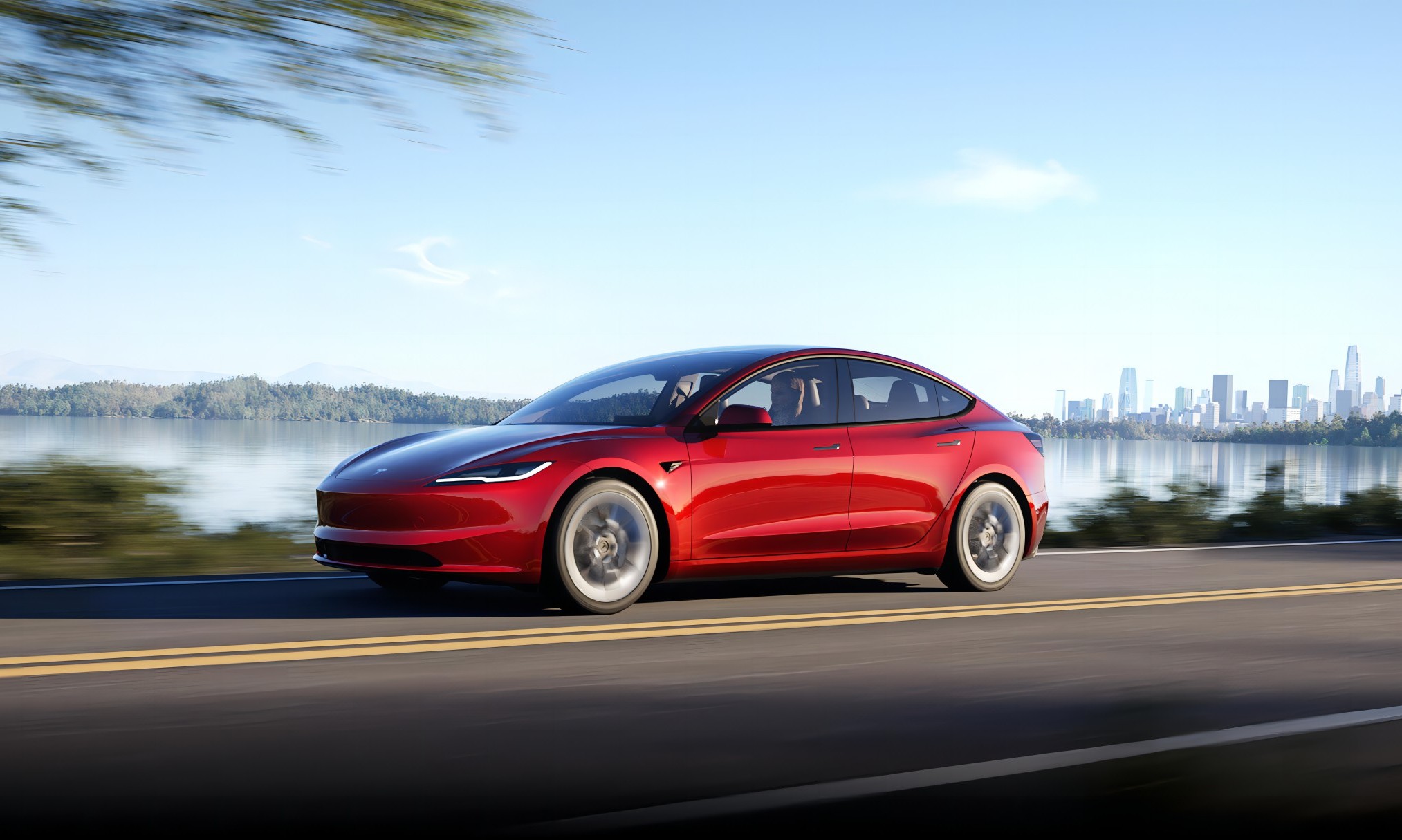
(Photo credit: Tesla)
No enterprise can be a leader in every field. Nokia was extremely brilliant in the feature phone era, but after entering the smartphone era, it lost to Apple and a large number of Android manufacturers; Kodak, the pioneer of popular photography, failed to adapt to the digital camera era and gradually declined.
Tesla started the research and development of humanoid robots around 2021, which is not too late, but due to the supply chain problems in the United States, the product research and development speed is slightly slow.
In comparison, Fourier Intelligence, which was born in 2023, was established later than the Optimus project, and the 15,000th general-purpose embodied robot has been mass-produced and rolled off the production line on June 28 this year. Multiple series of robots such as Expedition, Lingxi, and Elf have built a rich product line.
From the perspective of Lei Technology, the entire robotics industry has entered a stage of contention among a hundred schools of thought. The gap in hardware strength among leading enterprises is small, and the key is that the software is not yet sufficient to support robots to complete complex operations. Based on this situation, products similar to the Model S and Model 3 may not appear in the industry, and a scene of catching up, learning from each other and surpassing each other may emerge.
Elon Musk himself is the biggest backer of Optimus
Mass production difficulties have always been a problem plaguing Tesla. Before the Shanghai Gigafactory was put into operation, Tesla was on the verge of bankruptcy. The recently released second-generation Roadster sports car, whose prototype was released as early as 2017, is expected to start production in 2028, with a delay of more than 10 years. Although Optimus is ready for large-scale mass production, it is still unknown when it will be launched.
Lei Technology believes that the large-scale mass production of robots cannot be separated from the support of Chinese supply chain enterprises. Tesla should transform the Shanghai factory to produce humanoid robots directly in China to speed up production and layout. Now that many enterprises such as Unitree, Fourier Intelligence, and Ubtech have entered the mass production stage, Tesla needs to put humanoid robots into the market as soon as possible.
Fortunately, Optimus's biggest reliance is Elon Musk. The achievements of Tesla, SpaceX, Neuralink and other enterprises in many fields such as new energy vehicles, aerospace, and brain-computer interfaces have shaped Musk's personal image as a "technology leader". Countless fans at home and abroad believe in the technical strength of his enterprises and are willing to pay for it. Even if it loses its first-mover advantage, Tesla will not be affected as much as other enterprises.
Moving fast and moving early does not mean moving far. The robotics industry is still in the "audition stage", and the real big war has not yet begun. Although Optimus is slightly slower in progress, with the influence of Musk and Tesla, it is by no means difficult for it to enter the knockout rounds, semi-finals, and even the finals of the robotics industry.
This article is from the WeChat official account "Lei Technology", written by Lei Technology, and authorized for release by 36Kr.