Having poured a huge sum of 700 billion yuan, the most aggrieved coastal province is no longer willing to work for Guangdong.
Another "Chinese magic" that stuns foreigners has emerged.
Recently, a mysterious ritual that confuses local Chinese people has become popular among foreign tourists in China:
After getting on the high-speed rail, instead of looking at the scenery, they reach into their pocket and pull out a coin, then stand it upright on the window sill.
This trend of challenge was started by a British couple who traveled to China not long ago.
In the video, the two launched the "Coin Standing Challenge" on the high-speed train from Zhangjiajie to Chongqing. They placed the coin upright in front of the train window, and it did not fall for 40 consecutive minutes, with the video gaining nearly a million views.

Witnessing the stability and safety of China's high-speed rail, the comment section quickly turned into a European railway complaining session.
British netizens joked that the coins on their country's high-speed rail also never fall, because that railway line may never be finished.
Portuguese netizens said: If this were in Portugal, the coin would probably bounce to the ceiling and fall into the coffee of a passenger three rows away.

China, known as the "infrastructure maniac", has recently built another super project in Guangxi that has attracted global attention — the Pinglu Canal.
The Singaporean Business Times reported that after the Pinglu Canal in China is open to navigation, part of the cargo that originally transited through Singapore may be rerouted to Guangxi in the future.
PSA International, a Singaporean port operator, has already taken a stake in the Beibu Gulf-PSA International Container Terminal in Qinzhou, hoping to get a share of the cargo flow brought by the new canal.
A newly opened canal can even make global shipping giants sit up and take notice?
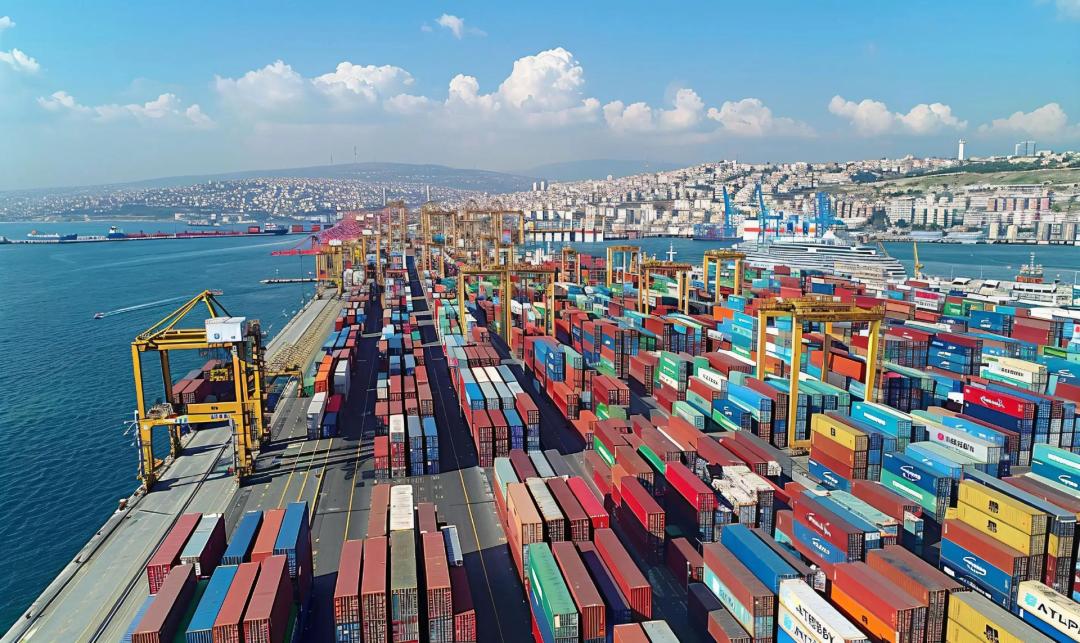
According to Xinhua News Agency, the Pinglu Canal was officially opened to navigation on September 16. On October 16, the canal just celebrated its first month of operation.
In just one month, the total cargo throughput has exceeded 950,000 tons, and the daily operation frequency of the ship lock has risen from 3 to 4 times in the initial stage to 7 to 8 times recently.
Moreover, during the National Day holiday, the Pinglu Canal even became a popular scenic spot that tourists rushed to check in, with passenger traffic exceeding 30,000 person-times.
How exactly did this 70-billion-yuan "super project" change the fate of Guangxi against all odds?
The most aggrieved coastal province that has worked for Guangdong for decades
"The coming-of-age ceremony for young people in Guangxi is a train ticket to work in Guangdong".
For a long time in the past, Guangxi was known as the "most aggrieved coastal province". Though it is called "Two Guang" together with Guangdong, it has worked for the latter for decades.
Most young people in Guangxi have heard a saying since childhood: "East, west, north and south, you get rich by going to Guangdong".
Official government data also shows that in 2025, there were 6.8 million rural laborers in Guangxi working across provinces, of which 6.3 million were concentrated in Guangdong. That means for every 10 Guangxi people working across provinces, 9 of them went to Guangdong.

It's not that people in Guangxi are naturally willing to leave their hometown, but the economic strength of the two regions is not in the same league at all.
In 2025, the GDP of Guangdong was about 14.58 trillion yuan, while that of Guangxi was about 2.97 trillion yuan, with the former being nearly 5 times the latter.
Relying on the geographical advantages of the Pearl River Delta, Guangdong has developed manufacturing and ports, and its foreign trade business is booming.
But Guangxi's geographical conditions are not bad either — it boasts more than 1,600 kilometers of continental coastline, with Beibu Gulf to its south, connecting Southeast Asia across the sea.
Why has it never been able to reap the dividends of maritime shipping like Guangdong?

The answer lies in the very awkward maritime shipping conditions of Guangxi.
The sea of Guangxi lies in the south, but Xijiang River, the important inland river shipping trunk line, flows eastward.
Therefore, in the past, if goods from cities like Nanning and Guigang wanted to go to sea along the traditional inland waterway, they usually had to follow the Xijiang River into Guangdong and then transfer at the ports in the Pearl River Delta.
It is not impossible if the goods have to go to sea from Guangxi.
In 2025, the container throughput of Beibu Gulf Port has exceeded 10 million TEUs. Goods can first be transported to ports such as Qinzhou by trucks and trains, then loaded onto ships to go to sea.
But for bulk cargo such as ores, steel and building materials, one more transfer or loading and unloading means extra transportation cost. Who would want to go through all that trouble when they can take the waterway directly?
What's more, Guangdong's advantages are not only reflected in its geographical location.
The Pearl River Delta region, which underpins half of Guangdong's economy, has highly developed foreign trade shipping, manufacturing factories with established industrial clusters, and a dense network of freight forwarders and international routes.
Direct import and export of foreign trade through Guangdong is not only lower in cost, but also more convenient.
Therefore, for a long time, compared with other coastal provinces, Guangxi lacked a "water elevator" that allows inland cargo to reach seaports at low cost. "Poverty" has become a label that it cannot get rid of.

And the Pinglu Canal was born exactly to change the fate of Guangxi against all odds.
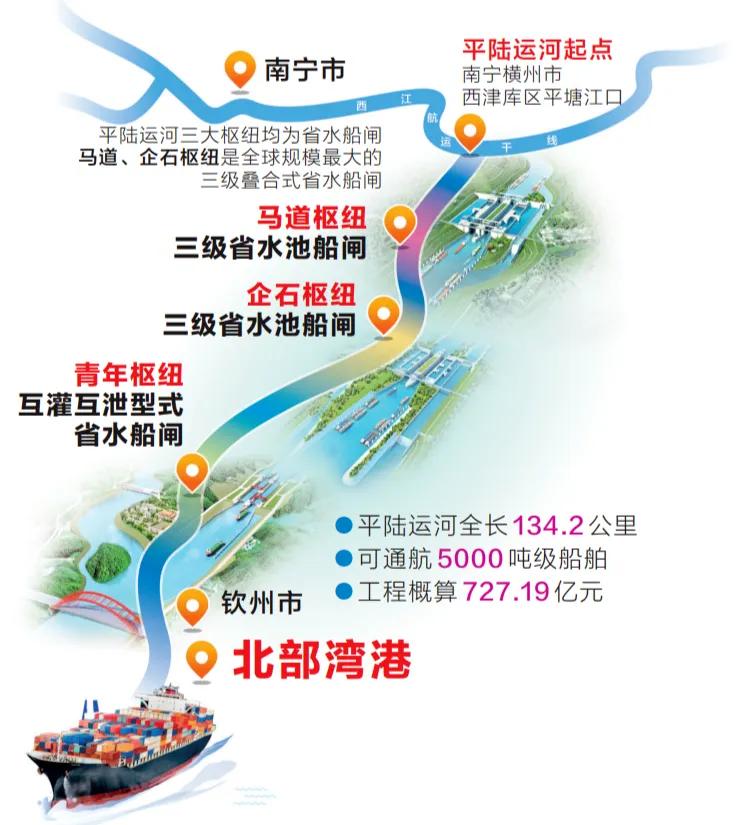
It connects the Xijiang River and the Beibu Gulf. Compared with the traditional route, the inland river voyage to the sea can be shortened by more than 560 kilometers.
For Guangxi, after the canal is opened, it gains more confidence in the field of foreign trade and logistics, and has the opportunity to retain future industrial opportunities at its doorstep.
The idea of this canal has existed for more than a hundred years. Why did it become a reality only today?
The most challenging "super project" finally makes Guangxi people hold their heads high
"Technically feasible, the idea is achievable, but it is not advisable to launch the project".
In 1968, the survey team of Guangxi Department of Transportation gave such a seemingly contradictory conclusion on the Pinglu Canal.
Engineers had long found that only a canal connecting the seaport could help Guangxi get rid of its identity as the "most aggrieved coastal province", but the economic conditions at that time did not allow it.
In that year, technician Ding Jianguo, together with 6 colleagues, carried survey instruments into the barren mountains of Guangxi, spent half a month on field surveys, and spent another two months on careful calculations.
The final conclusion was very awkward: at that time, the total freight volume of Guangxi was only about one tenth of the designed navigation capacity, and it was estimated that it would be difficult to reach the planned level even in 10 years.

In fact, the idea of digging a shorter outlet to the sea in Guangxi has existed for more than 100 years.
In 1919, Sun Yat-sen put forward in his "The International Development of China": Develop Qinzhou Port, so that the goods from the hinterland of Southwest China can go to sea from a closer port.
He even carefully calculated that if the goods from the area west of Qinzhou go to sea from Qinzhou, they can travel about 400 miles less than the traditional route, which became the historical background for the later construction of the Pinglu Canal.
However, it is by no means easy to build such a canal connecting rivers and the sea.
The biggest challenge among them is "cutting through mountains to open up passages".
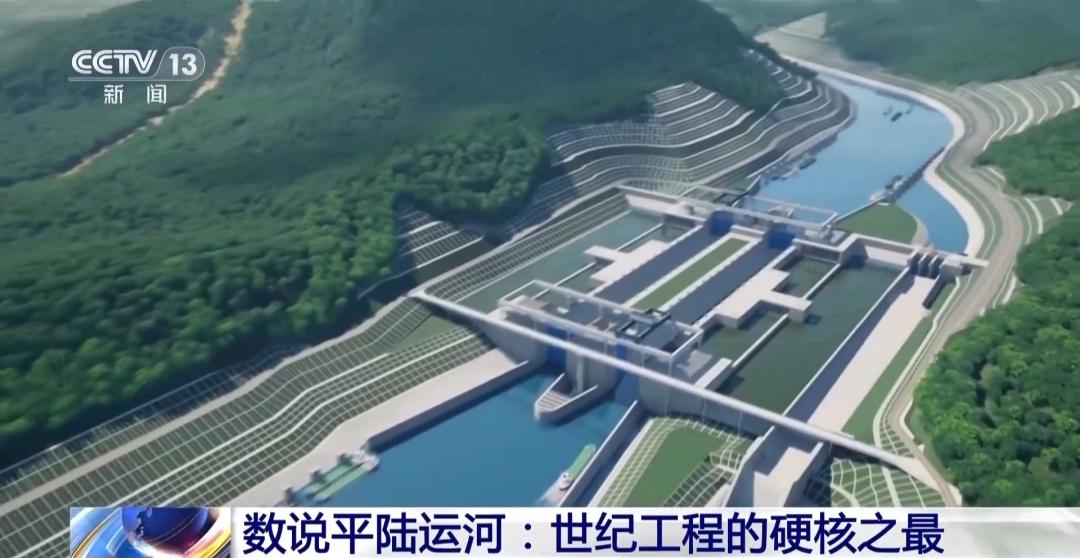
As we all know, Guangxi is known for the saying "eight mountains, one water, one tenth farmland". Although the Pinglu Canal can make use of the original river course, it still has to cut through mountains and rocks to open up the watershed between the Xijiang River and the Qinjiang River, with a total of about 315 million cubic meters of earth and rock to be excavated.
For the Madao Hub alone, a passage has to be cut between two mountains, with the maximum slope excavation height of about 188 meters, equivalent to a 60-story building.
In addition, the water level difference between the two ends of the Pinglu Canal is about 65 meters, a drop equivalent to more than 20 stories high. How to allow cargo ships to pass smoothly has become another problem that must be solved.
However, solutions always outnumber difficulties. The Chinese people have once again given full play to their "infrastructure maniac" spirit, turning the Pinglu Canal into the most hardcore super project.
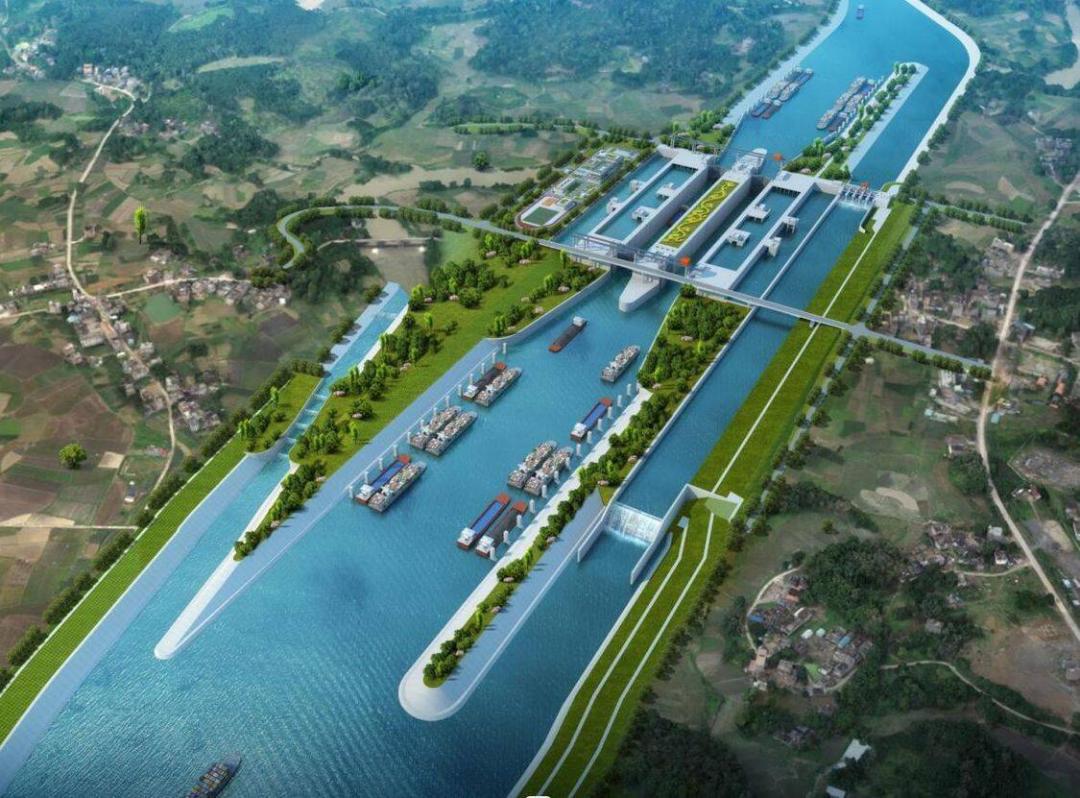
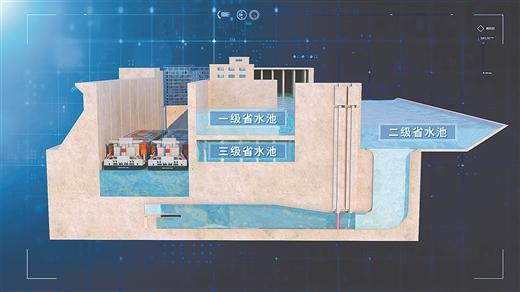
In order to reduce the water level drop of the canal, engineers built three cascade hubs: Madao, Qishi and Qingnian, allowing thousands-of-tonnage cargo ships to enter the lock chamber, and pass step by step as the water level rises and falls like taking a water elevator.
But a new problem arose: every time the ship lock opens and closes, it consumes a large amount of water resources.
Engineers specially designed layered water-saving pools to store part of the discharged water for reuse in the next lock passage, and the water saving rate of Madao and Qishi hubs both exceeds 60%.
Most notably, such a huge project not only considers how large ships of thousands of tons pass through, but also takes into account the ecological balance of animals along the route.
According to Xinhua News Agency, a 480-meter-long fish passage was specially built at the Qingnian Hub of the Pinglu Canal, equipped with underwater guide lights and intelligent identification equipment. Since it was put into use in 2025, multiple species of fish have been monitored successfully migrating upstream.
The excavated earth and rock were not wasted either, a considerable part of which was used to reclaim farmland, turning waste into treasure.

From the start of construction in 2022 to the opening to navigation in 2026, this canal that generations of people have been looking forward to has finally been dug through.
China, which is frantically building canals, has even greater ambitions
Shortly after the Pinglu Canal was opened, some people questioned: "Spending 70 billion yuan