Porsche is returning to fuel-powered vehicles, the 911 will never be fully electrified, and the luxury car camp is making a collective shift.
Porsche is returning to fuel vehicles. Yes, you read that right, it is not chasing electric vehicles. Why?
Let's first look at the performance figures: Porsche's return on sales dropped from 14.1% to 1.1% in just one year.
In FY2024, Porsche posted a 14.1% return on sales; that figure fell to 1.1% in FY2025. Its operating profit for the year stood at 413 million euros, plummeting 92.7% year on year; total annual revenue reached 36.27 billion euros, down 9.5% year on year. In just about a year, the profit-making machine turned into a contract manufacturer.
What is even more striking is the timeline. In March 2022, Porsche promised that electrified models would account for more than 50% of its global deliveries in 2025, and pure electric models would account for over 80% in 2030. The actual electrification share in 2025 was only 34.4%, 15.6 percentage points short of the target. The 80% target has been substantially abandoned, and large impairment provisions have been made for production line renovation.
On October 7, 2026, at the Weissach R&D Center, the mid-term strategy document "Sportwagenschmiede 35" clearly states: Return to fuel vehicles, adopt a three-line parallel layout, and the 911 will "never be fully electrified".
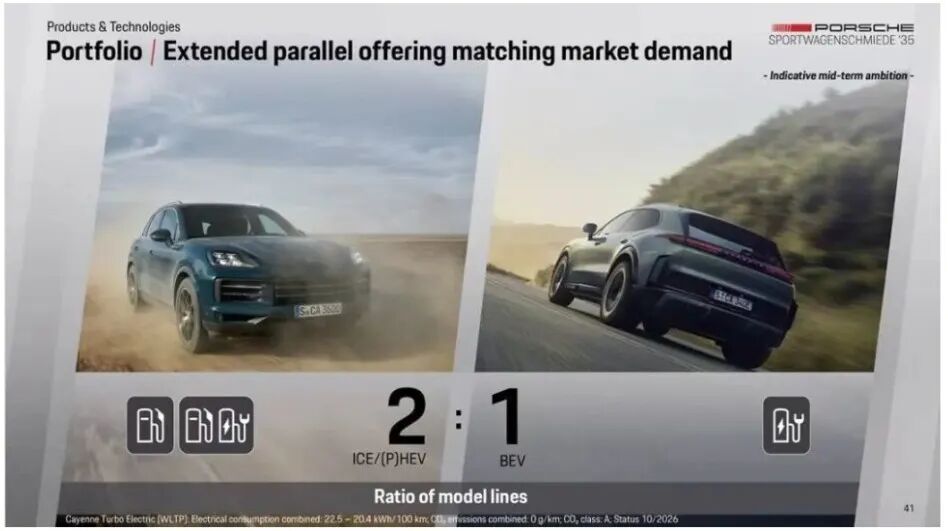
Source: Internet
What kind of experience does a company have to go through to tear up the promises it wrote down word for word five years ago?
The answer does not lie in ethics, but in the books of accounts.
How Porsche embarked on this retrogressive path
Let's turn back the clock. In 2022, the same executive team stood on the stage and made a more ambitious promise that pure electric models would account for 80% of sales by 2030.
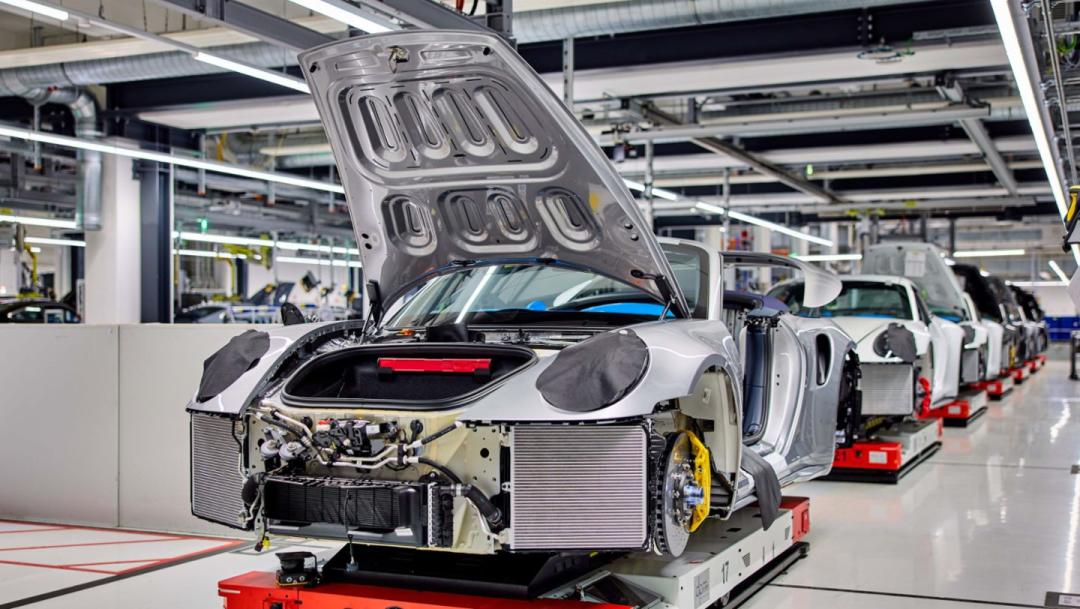
At that time, no one doubted that they were fully committed to the plan: the Taycan took the lead, the pure electric Macan was put into production, the pure electric 718 was scheduled for 2028, the production lines at the Zuffenhausen plant were renovated for electrification, and the in-house battery development project Cellforce was launched. The proportion of R&D expenditure rose all the way from 15% in 2021 to 37% in 2024.
Source: Internet
But the cost came faster than expected. The overall profit margin slipped from 18.3% to 14.5%. In 2025, global sales volume dropped by 10.1%, deliveries in China decreased by 26.3%, and the electrification ratio stagnated at 34.4%.
But the real bottleneck is not just that it cannot compete with Chinese players in the market, but also that Porsche has messed up two core business chains.
First, the in-house supply chain R&D ended in failure. In 2021, Porsche took control of the battery company Cellforce and planned to build a 20GWh cell production capacity on its own. However, the foundation of the European battery industrial chain is weak, and its own demand fell short of expectations, so the large production line was never completed. Porsche tried to sell it to Volkswagen's PowerCo, but the other party offered only 1 US dollar, the negotiation fell through, and finally it could only lay off staff and restructure. At the same time, Volkswagen Group's software platforms CARIAD and SSP continued to be delayed, and the SSP platform is not compatible with fuel power systems. Porsche's platform planning ended up with nothing: the electric platform cannot be delivered on schedule, and the fuel vehicle platform cannot be connected smoothly.
Source: Internet
Second, the product launch rhythm is broken. The fuel version of the Macan was discontinued due to the EU's cybersecurity regulations, but the pure electric Macan was not launched until 2024, leaving a gap in the product lineup. The electric replacement model of the 718 failed to satisfy engineers for a long time because "the mid-mounted battery solution cannot replicate the driving characteristics of mid-engine rear-wheel drive", leading to serious development delays. The pure electric Cayenne and the K1 flagship SUV were postponed one after another. The plan was to "directly switch fuel vehicles to pure electric", but the market took a different turn in the middle.
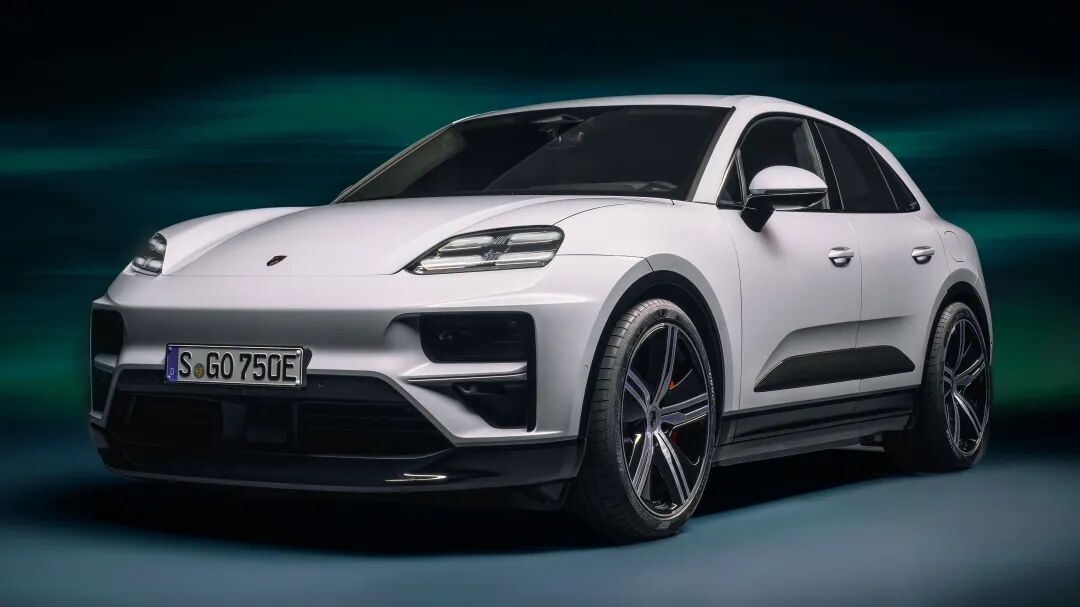
Pure electric Macan Source: Internet
At the annual general meeting on May 21, 2025, the CEO admitted that "the global electrification transformation process is slowing down", announced to review the battery strategy, add fuel and plug-in hybrid models back to the product lineup, and launch a cost reduction plan to lay off about 3,900 people by 2029, with a one-time cost of 1.3 billion euros included. It has substantially abandoned the 80% target for 2030, made impairment provisions to slow down the pure electric rhythm, and extended the service life of fuel vehicles.
Following this logic, what Porsche wants to return to is not 2019, but its former self that features "high unit price, low production volume and strong brand". Electrification was once regarded as another path leading to that goal, but halfway through the journey, it found that the cost was too high.
This is not a single company's turn, but a retreat of the entire luxury car camp
If only Porsche turned back, it would be called a business mistake. When the entire luxury car camp takes the same action at the same time, the nature of the matter changes completely.
Volvo was the first to loosen its stance. In September 2024, it withdrew its promise of "full electrification by 2030" and changed it to a flexible target that 90%–100% of sales would be "electric or plug-in hybrid". Changing from "full" to "90%–100%" seems to be just a small difference, but in essence, it has changed "must" to "try as much as possible".
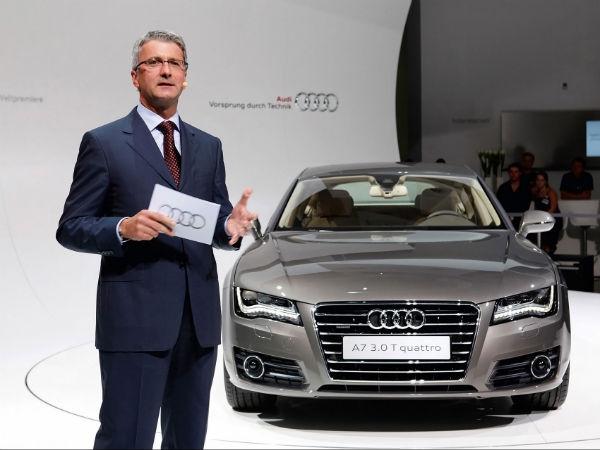
Audi went even further. In 2023, it announced that it would stop developing and selling internal combustion engines, and achieve full electrification by 2033. In June 2025, the new CEO Gernot Döllner overturned his predecessor's plan, withdrew the timetable, and clearly stated that "it will no longer set a timetable for phasing out fuel vehicles". From 2024 to 2026, it will launch a brand new matrix of internal combustion engine and plug-in hybrid models, and the main models must adopt the "fuel and pure electric dual-track" layout.
Source: Internet
Mercedes-Benz used the most tactful wording. The original plan of "full electrification by 2030" was adjusted to "new energy models (including hybrid models) will account for up to 50% by 2030". It admitted that "the previous prediction of the electrification rhythm was too optimistic", extended the life cycle of the A-class fuel vehicle to 2026, and returned to the "large V8" configuration on its top AMG models.
So how does the capital market view the luxury camp's "return to the fuel vehicle route"?
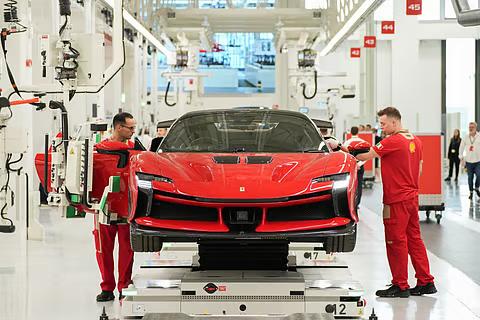
On October 9, 2023, Ferrari released its adjusted 2030 performance guidance: the net income target is about 9 billion euros, and the adjusted EBITDA is at least 3.6 billion euros, which is lower than Wall Street's expectations. On that day, US stocks closed down about 14.6% at around $409, and European stocks once fell more than 16% during the session, hitting the largest single-day drop since its listing.
Source: Internet
Many people's first reaction was that the market was punishing the "regression of electrification".
On the contrary. What the market is disappointed with is not the regression, but the insufficiently high growth slope. UBS pointed out that the 9 billion euros of revenue and 3.6 billion euros of EBITDA imply that the compound annual growth rate is far lower than the 10% growth trajectory set in 2022. Citi believes that the guidance is lower than its "low growth scenario" estimate, reflecting that the management has turned conservative.
What fell was the performance guidance, not the route.
There is a fact that many people have ignored: in the past five years, the premium that the capital market gave to the "electrification story" is being taken back by the discount of "profitability". When the interest rate environment shifts from zero interest rate to high interest rate, and the growth story can no longer be discounted infinitely, investors begin to reprice the cash flow generated by internal combustion engines.
Seven companies took the same action within two years. This is not a coincidence, but a consensus.
The formation of consensus never happens because everyone suddenly sees the light, but because everyone hits the same wall at the same time.
The Japanese media's comment is harsh but very precise: "Can Porsche, which has forgotten how to make the roar of engines, find its wonderful voice again and hold its own territory? There is not much time left."
When the right to define the market shifts, the first thing lost is not sales volume, but pricing power. Once pricing power is lost, it cannot be regained by laying off staff and cutting product lines.
Will new energy still be the future?
At this point, we have to answer the unavoidable question: since even Porsche is turning back, will new energy still be the future?
The answer depends on which market you are asking about. Using one answer to cover all markets is the biggest mistake that the market often made in the past five years.
The global direction has not changed, but the growth slope has changed.
In 2024, the global penetration rate of new energy vehicles is about 19.8%–20%, with sales volume of about 17.7 million units. Mainstream forecasts point out that the penetration rate will exceed 50% by 2030, with sales volume of about 55.6 million units, and the compound annual growth rate from 2024 to 2030 is about 21%.
A 21% compound annual growth rate is a high-speed growth in any industry, but it is no longer the doubling-style explosion seen in 2021. The key lies in the structure. The global penetration rate is only 20% because Europe and the United States are dragging their feet: in 2024, the penetration rate in Europe is about 17%, and that in the United States is only 9.7%. China's sales volume alone accounts for about 70% of the global total.
Source: Internet
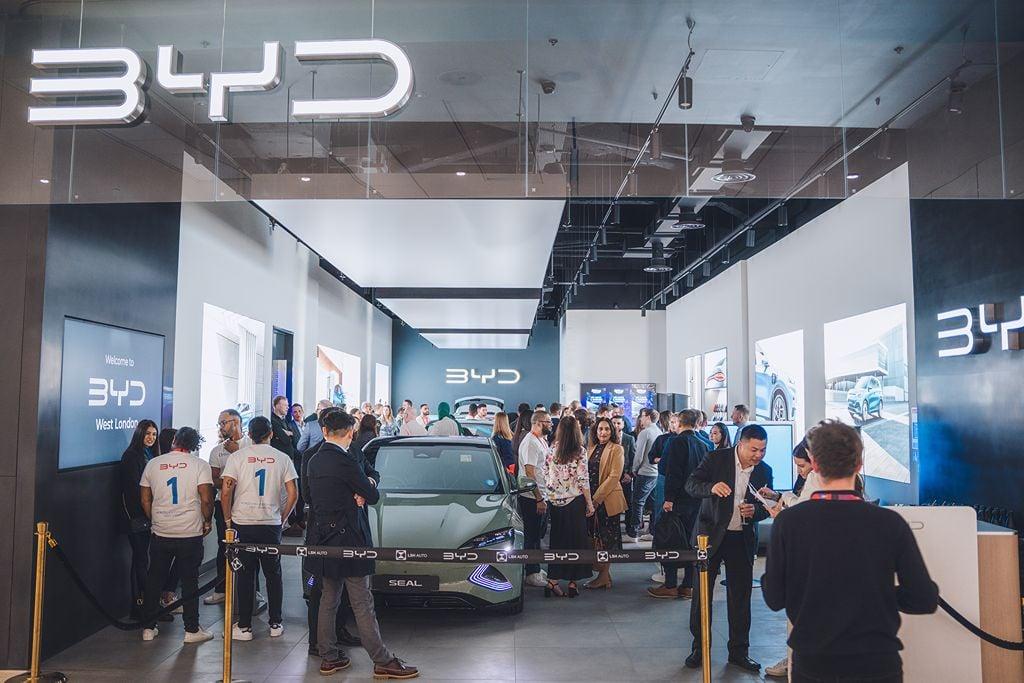
In October 2025, the penetration rate of new energy vehicles in China exceeded 50% for the first time. New energy has changed from an "alternative" to a "mainstream choice".
In the past, "whoever can make the products can make profits"; now, "whoever can make profits can survive". The industry is shifting from the "quantitative expansion" that pursues penetration rate and market share to the "qualitative growth" that focuses on efficiency, experience and sustainable operation. Price war, market clearing and mergers and acquisitions will be the main themes in the next three years.
Specifically, the acceptance of electrification varies greatly in different markets.
Electrification in the mass market is irreversible. In the 100,000–250,000 RMB price range, the use cost, intelligent experience and policy environment of electric vehicles have formed a positive cycle, and fuel vehicles in this range only have sentimental value. This trend will not reverse. According to the data of the first half of the year, the 100,000-250,000 RMB range accounts for about 69% of the new energy market share. In the 100,000-200,000 RMB range: sales volume reached 2.143 million units, accounting for 47.1%, which is the largest single price range. In the 200,000-300,000 RMB range: sales volume reached 1.014 million units, accounting for 22.3%, and it is the only mainstream price range that maintains positive growth in the same period.
For the mid-to-high-end market, plug-in hybrid is a long-term solution, not a transitional solution. When 73% of people put long-distance travel convenience in the first place, plug-in hybrid is the optimal solution, not a makeshift plan of "waiting until battery technology gets better".
Data from the China Passenger Car Association in the first quarter of 2026 shows that the retail volume of SUVs in the 250,000-350,000 RMB price range increased by 23.7% year on year, of which the combined share of plug-in hybrid and extended-range models has reached 41.3%, 17.5 percentage points higher than the same period in 2024. That means the overall