Volkswagen still has no intention of stopping after cutting 100,000 jobs.
Recently, German foreign media outlet Süddeutsche Zeitung exposed an internal document of the Volkswagen Group titled "Group Target Landscape".
The content of this document may seem rather harsh to Volkswagen Group employees. It shows that before 2030, the vast majority of the roughly 600,000 global employees will no longer receive salary increases, while variable pay, bonuses and other benefits will also be reduced simultaneously. The document also requires all brands, regions and factories to make "reasonable" contributions to the group's overall cost reduction target.
This is by no means the only adjustment move made by Volkswagen Group this year.
Several months ago, German magazine Manager Magazin cited the plan of CEO Oliver Blume, stating that Volkswagen plans to cut up to 100,000 jobs globally, a figure that is exactly twice the previous target of 50,000. At the same time, four local factories in Germany will be closed, and the investment budget for the next five years will be reduced by about 15% to a level slightly above 130 billion euros.
If we count earlier adjustments, Volkswagen has completed the shift from full-stack self-development to adopting supplier solutions on the intelligent driving track: it established a joint venture called Corechi with Horizon Robotics to introduce cooperation with local Chinese chips and large models, and the FAW-Volkswagen ID. AURA T6 became the 15 millionth vehicle equipped with Horizon Robotics Journey series chips.
From layoffs to factory closures, from investment cuts to cooperation model adjustments, Volkswagen, the long-established giant that once represented the European industrial system, has touched almost every dimension that cost reduction can reach within a year. Not to mention that Volkswagen employees feel surprised and panicked, even when examined in the century-long history of the automotive industry, this move is quite shocking and thought-provoking.
Obviously, as the wave of electrification and intelligence redefines the automotive industry, the old order once built on the dividends of fuel vehicles, high wages and lifetime employment culture is being reassessed. In essence, Volkswagen's contraction is the transformation cost that the old system has to pay when the entire industry switches from the internal combustion engine era to the new energy era, rather than the cost caused by the operational failure of a single enterprise.
Volkswagen's "Group Target Landscape" and the Collective Contraction of Automakers
Judging from the exposed content, the core content of "Group Target Landscape" can be summarized as another self-rescue effort of Volkswagen Group, and the main means of self-rescue lies in the "sacrifice" of employees.
First of all, salary growth for most of the global employees will be frozen before 2030. In the context of persistently high inflation in Europe, freezing pay rises is actually equivalent to a disguised pay cut.
Secondly, the company will cut employees' variable pay, bonuses and other benefits. According to current standards, the average annual salary of Volkswagen's local employees in Germany exceeds 70,000 euros. Coupled with high social security contributions and the lifetime employment system, its labor cost as a proportion of revenue has long been higher than that of other automakers. Oliver Blume also once admitted that the combined cost of the group's administration, back-office and infrastructure is about 20% higher than the average level of its peers.
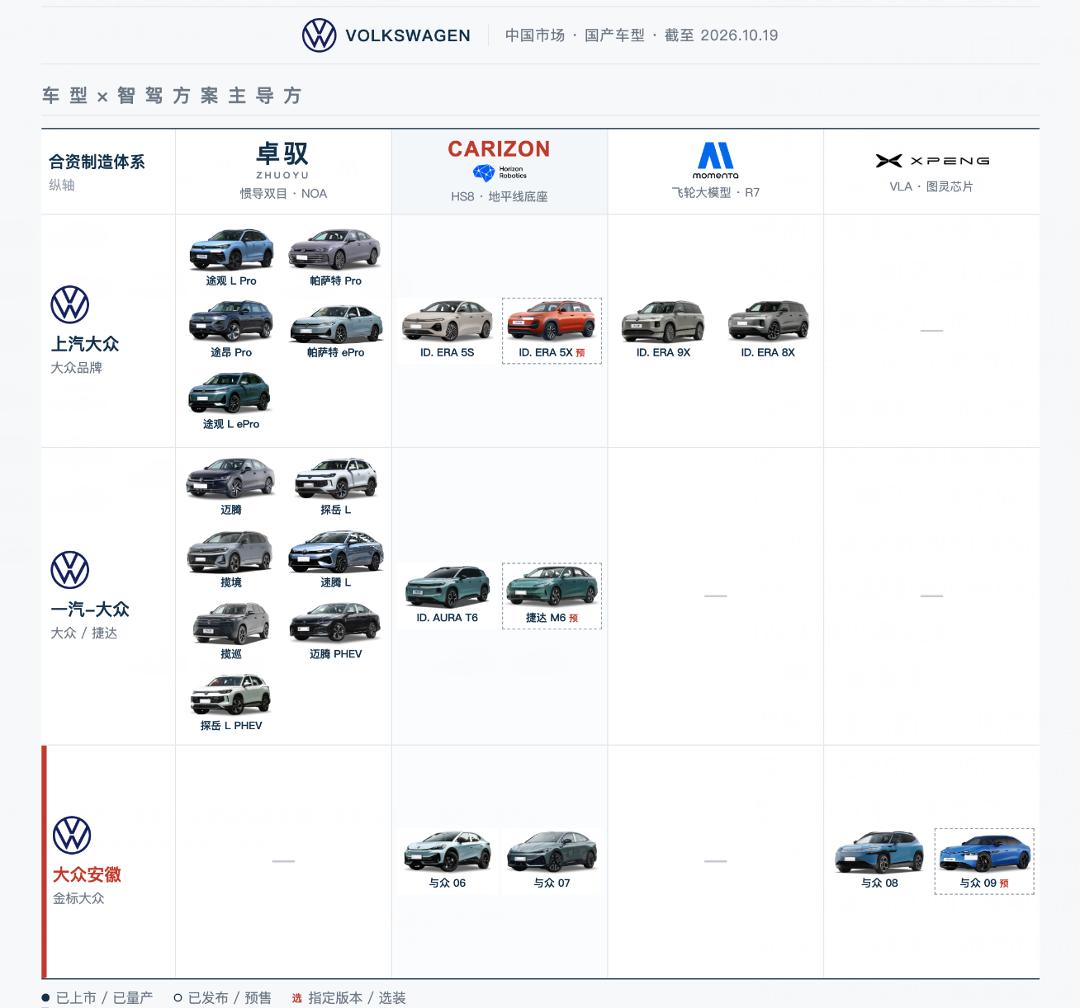
At the same time, "Group Target Landscape" states that all brands, regions and factories must make "reasonable" contributions to the cost reduction target, which means that the cuts will not stay in a single link, but will be transmitted layer by layer along the organizational system.
These three adjustment plans, together with the combined plan previously put forward by Oliver Blume of cutting 100,000 jobs, closing four factories in Germany, and reducing five-year investment by 15%, all point to a clear idea: eliminate excess production capacity, reduce labor costs through salary freeze, control long-term risks through investment contraction, and obtain short-term efficiency through supply chain restructuring.
In other words, Volkswagen is transforming itself from a heavy-asset company to an operating entity that relies more on external collaboration and an asset-light model in the next few years. The essence of this logic is the reality that has to be faced under the background of shrinking profits of traditional fuel vehicles and the fact that new energy businesses are far from generating scale profits.
It is worth noting that Volkswagen is not an isolated case. Similar contractions are taking place widely across the entire European automotive industry, showing a clear pattern: the older, higher labor cost and heavier historical burden the established automaker is, the greater the intensity of this round of adjustment.
Mercedes-Benz launched a voluntary severance program in April last year, with CEO Ola Källenius setting a target to encourage about 30,000 employees to leave voluntarily, but the final scale reached was far lower than expected. In September this year, its production chief Jörg Burzer stated that if the labor and management cannot reach a consensus on cost reduction, some local factories in Germany will be forced to close, and then more than 20,000 workers in Stuttgart took to the streets to protest.
The BMW Group announced at its Capital Market Day at the end of September that it will launch a voluntary separation program for employees in indirect positions in Germany, cut management positions by 20%, and promote organizational flattening to reduce headquarters costs. According to the sorting out by China National Radio, BMW plans to cut thousands of indirect positions in Germany by the end of 2027.
Stellantis Group has taken more aggressive actions. In February 2026, it announced a total of about 22.2 billion euros in business reset provisions (included in the financial statements for the second half of 2025), of which cash expenditure is about 6.5 billion euros, to be paid off over four years.
When these cases are put together, it is not simply about layoff compensation, but rather a concentrated clearing of the balance sheets of the entire European automotive business.
At the same time, the industry can also read a deeper industrial signal from this: the collective contraction of European automakers does not reflect accidental mistakes at the individual operational level, but rather the inevitability of the decline in the relative competitiveness of the European automotive industry in the global competition landscape.
The common feature of these automakers that have launched large-scale adjustments is that they have long relied on higher wages and better benefits, but these advantages are turning into burdens in the face of the new energy cost war. Excess production capacity, weak demand and high sunk costs of electrification investment have further reduced their room for maneuver.
This is a concentrated manifestation of the transformation pain of the long-established giants.
Under Performance Pressure, Advance or Fall Back
Of course, looking back at the deep motivation behind Volkswagen's series of adjustments, performance data is an unavoidable topic.
According to data released by Volkswagen Group, global deliveries in the first three quarters of 2026 reached 6.011 million units, down 9% year on year; deliveries in the third quarter alone were 1.885 million units, with the year-on-year decline expanding to 14.3%.
By market, its sales in Europe and South America increased by 1.7% and 4.3% respectively, but the decline in the Chinese market was significant. Deliveries in China in the first three quarters reached 1.379 million units, down 30.2% year on year, and 405,800 units in the third quarter alone, plummeting 38.5% year on year.
More severe than the decline in sales volume is the collapse of profits: the equity profits of Volkswagen's joint ventures in China have fallen from 2.621 billion euros in 2023 to 184 million euros in the first half of 2026, shrinking by more than 90% in two and a half years. The decline in profitability per vehicle in China is far greater than the decline in sales volume.
Outside the Chinese market, Volkswagen is also in a very difficult situation.
According to Caixin, Toyota's sales forecast for the 2026 fiscal year is 11.18 million units, while Volkswagen's annual group-wide deliveries have long stayed at the level of more than 9 million units. The gap between the two has remained stable at more than 2 million units for many years, and there has been no sign of narrowing for several consecutive years. This year, barring accidents, this pattern will still be difficult to shake.
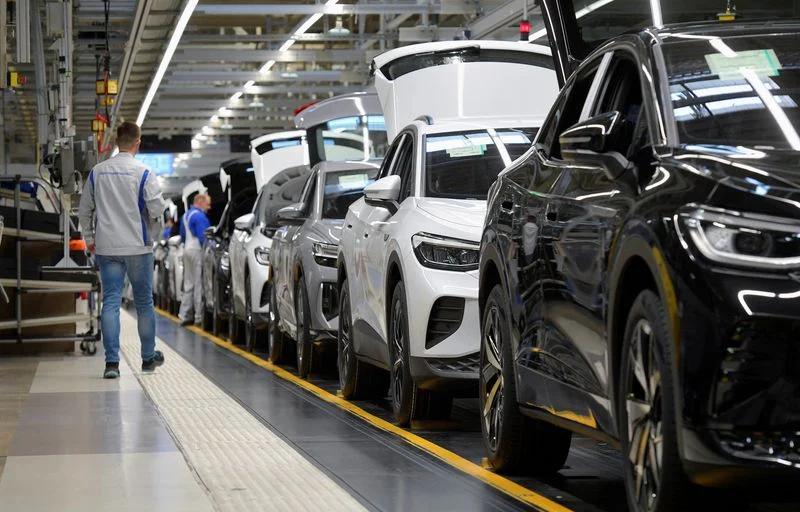
It is the continuous decline in performance that has pushed Volkswagen's self-rescue measures to escalate. From the initial process optimization and hiring freeze, to the doubling of layoff scale from 50,000 to 100,000, and then to factory closures, investment reduction and supply chain adjustment, each step is an escalation after the previous step failed to fill the market gap.
At this year's Paris Motor Show, Volkswagen Passenger Cars' head Thomas Schäfer clearly stated that after reconstructing the development process with Chinese partners in the past two years, material and engineering costs have dropped significantly. Models developed "in China for China" already have cost competitiveness, and the company will explore exporting these models to emerging markets such as Australia and the Middle East.
Volkswagen's situation is a microcosm of the deep restructuring of the global automotive industry landscape.
Statistics from Mobility Global show that in the first half of 2026, the global sales share of pure gasoline vehicles fell below 50% for the first time since the large-scale popularization of automobiles in the 1920s. Data from the China Passenger Car Association shows that in September this year, the retail share of fuel vehicles in China fell below one third for the first time, and the penetration rate of new energy rose to a historic high of 67%.
The significance of this historic inflection point does not mean that fuel vehicles will disappear immediately, but their right to speak in the new car market has been systematically weakened, and the market foundation that supports the high-profit and high-welfare model of traditional giants is narrowing irreversibly.
From a more macro perspective, both the changes and non-changes of established automakers seem extremely difficult: radical transformation may dismantle the systems, channels and trust accumulated over decades; conservative wait-and-see may lead to continuous blood loss in the new energy and intelligent cost war. From this perspective, we can also see the shadows of Volkswagen and Toyota.
This article is from the WeChat Official Account "Auto Community" (ID: iAUTO2010), written by Li Sijia, authorized for release by 36Kr.