With millions of peripheral product sales and La Mer's entry into the market, the value of AI dramas is shifting from the drama series to the characters.
Entering the second half of the year, the commercial value of AI dramas is being reassessed. This category appears more and more frequently in brand placement lists, and discussions about whether it can become a long-term marketing asset are also on the rise.
La Mer is a typical case. In the AI drama Shock! My Arch-Enemy and I Have a Child Season 2, the male lead Qi You becomes the "promotion ambassador" of La Mer. The brand is fully integrated into the character's life, and a one-click jump purchase anchor is embedded in the drama. Outside the drama, Qi You appears in the La Mer live stream. Lines such as "What to give on the first date that won't go wrong" and "Should I give a gift box or perfume for my wife's birthday" make the character relationship in the drama the narrative core of product sales.
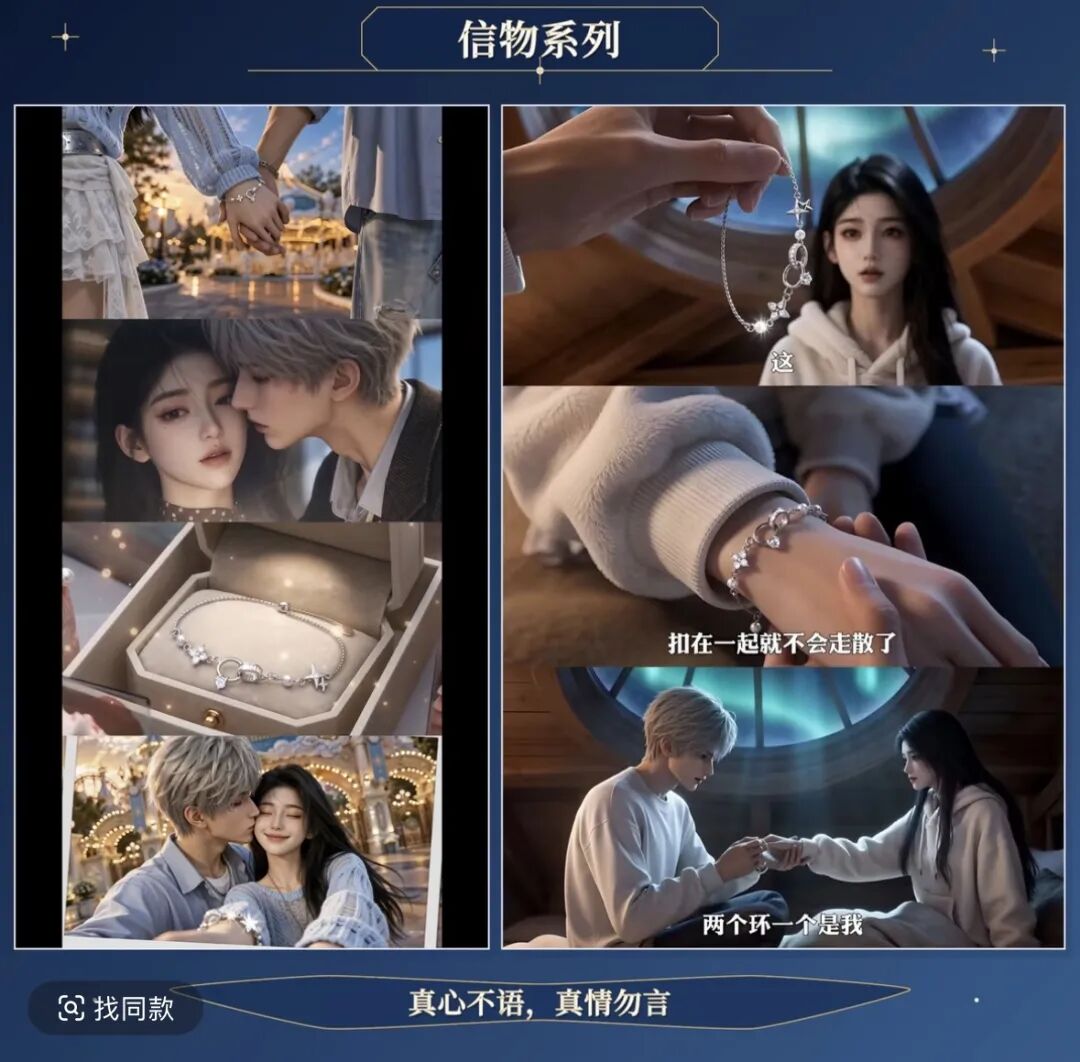
In addition to brands accelerating their entry into the market, AI short dramas and comic dramas have also started to explore IP derivatives. In October, the official peripheral character cards and character-style bracelets of Give You Deep Affection for the Rest of My Life were launched. Among them, the limited-edition cards were sold at 49.9 yuan, with a total of 12,000 boxes sold, and sales revenue reached nearly 600,000 yuan.
According to DataEye, the domestic AI drama and comic drama market size exceeded 220 billion yuan in the first five months of 2026, and institutions expect the full-year figure to exceed 400 billion yuan. However, the other side of the boom is not optimistic. In the first half of the year, more than 220,000 new AI dramas and comic dramas were added on Douyin alone, of which only 1055 had over 100 million views. With the industry's 50 million views as the break-even line, only 1.3% of new dramas meet the standard. According to this caliber, more than 98% of projects cannot recover costs within half a year after launch.
On one hand, there are real capital inflows from brands and paying audiences, and on the other hand, most production teams are facing losses. There is no point in continuing to debate whether this category is "hot" or not. What is really worth analyzing is in what name the capital enters the market, which link it settles in, and what stage this "assetization" commercial story that has been talked about for more than half a year has reached.
What La Mer buys is not exposure slots
But a reusable character relationship
To understand why brands shift their budgets to AI dramas, we must first look at the long-standing unsolved commercial problems in traditional content placement.
It is increasingly easy for brands to appear in a work, but increasingly difficult to be remembered by consumers. A TVC, a line of endorsement, a close-up of a prop, only stay in front of the audience for a few seconds; after the content is broadcast, the connection between the brand and the audience dissipates. Every round of marketing starts from scratch, with repeated planning, production and placement. After the budget is spent, it is difficult to leave assets belonging to the brand itself. This is the "one-time use" dilemma that has been repeatedly mentioned in brand content marketing.
The cooperation between La Mer and Qi You is precisely aimed at solving this dilemma. Instead of only buying a single in-drama exposure, the brand reuses the same character relationship in both in-drama and out-of-drama scenarios.
The first layer takes place in the drama: the product is embedded in the key nodes of the development of the relationship between the male and female leads. The audience first gets to know the product through the character story, then follows the interest in the plot to enter the purchase path of the same style, and a one-click jump anchor to e-commerce is directly embedded in the drama. The difference between this and hard advertising is that marketing language is translated into character relationships and emotional nodes. Brand information is not content inserted outside the plot, but a part that promotes the development of the story.
The second layer, which can better illustrate the logic, takes place outside the drama. Qi You steps out of the plot and appears in the La Mer live stream, interacts with the audience with the character setting in the drama, takes the character relationship from "rivals to lovers" as the main narrative line, ties the emotional growth of the character to the selling points of the product, and naturally integrates the introduction of gift boxes. It even uses the gameplay of "the male lead gives gifts for you" to repackage the gift-giving consumption scenario as character interaction, and uses the gameplay similar to "post-plot service" to weaken the bluntness of live-streaming sales.
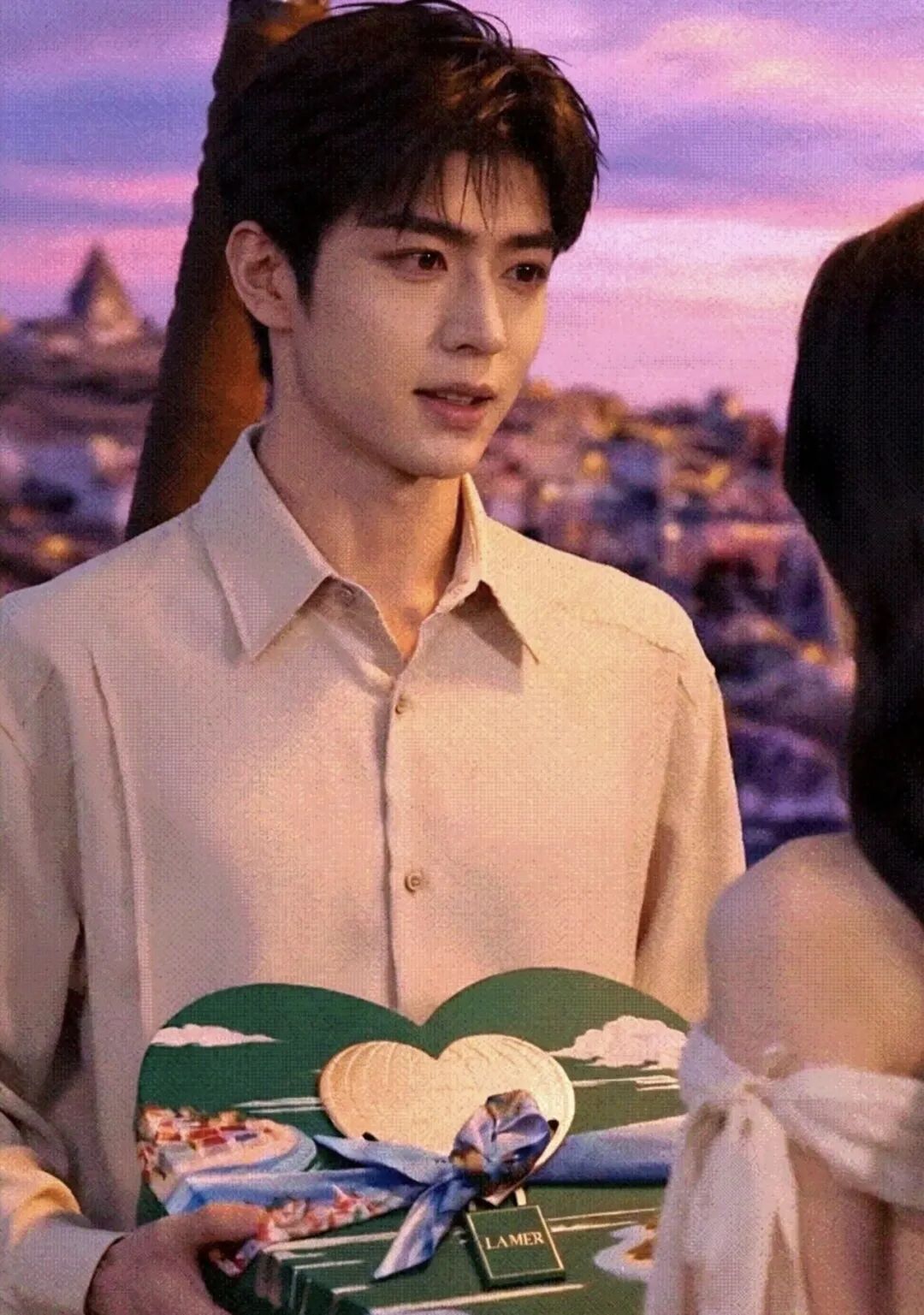
It is worth noting that the brand did not shoot a new advertisement for the live stream. It called on the accumulated character recognition and fan relationships from the drama, and met the needs of both drama fans and consumers through plot co-creation.
The choice of La Mer is of vane significance, because it represents a type of advertiser with high unit price and heavy brand assets, who are usually extremely picky about media forms. What it values is not the novelty of AI images, but that a virtual character can be "borrowed" by itself to work as a live-streaming sales host, build goodwill in the plot first, and then complete the transaction in the live stream. The character relationship becomes the bridge connecting audience recognition and order placement.
The actions of other brands can be regarded as different aspects of this main line. If Wine cooperates with the national-style comic drama There Lives a Mountain Spirit to customize an extra episode. According to the brand, the whole process from planning to launch was completed within one month, and the GMV of the co-branded new product exceeded 2 million yuan in two weeks. It adopts the short-cycle, fast-launch co-branding strategy, and the transmission of brand value is associated with the work style and character setting.
Hongqi Automobile produces the self-made AI short drama The Great Ming Craftsman Partner. In addition to 76 million views, it has precipitated two reusable high-precision digital humans for subsequent marketing, taking the route of brand self-owned assets.
These cases vary in size, but their commercial logic is consistent with that of La Mer. In the field of AI dramas, what brands purchase has shifted from view counts and placement slots to a long-term reusable plot relationship and a character that can be continuously operated.
Characters step out of the dramas
and begin to become operable "digital entertainers"
The brand side solves the problem of how demands can be re-met. The more substantial new thing on the supply side is that the character itself has changed from a one-time figure in the drama to a digital asset that can be independently operated and traded with a quoted price.
In the past, the core asset of the short drama industry was the project itself. The life cycle of project approval, traffic investment, launch and revenue collection was concentrated in one to three months. After the drama ended, most of the works could not leave much long-tail assets except scattered secondary creation materials. AI characters break this cycle. A drama is more like a debut, not the whole stage.
The female lead "Fang Taozi" in The Laid-off Girl is the most discussed case. This realistic short drama with a total of more than 300 million views in two seasons opened an independent account for the protagonist shortly after launch. The team set her age, constellation, MBTI and daily content, and accumulated more than 500,000 fans.
According to the public quotation from Juliang Xingtu, the commercial order quotation for videos longer than 60 seconds of the character reaches 258,000 yuan, and the value per fan exceeds most real-life influencers with millions of fans. In addition, the male lead in the drama also opened an account synchronously and operates on a regular basis, building a complete fan community. This set of gameplay almost translates the agency and commercial order logic of real entertainers to virtual characters.
Characters opening accounts and receiving commercial orders like entertainers is the first line. The second line is that characters bring fans into brand scenarios and live streams. The male lead Duan Yan in Give You Deep Affection for the Rest of My Life with nearly 5 billion views across the network is called the "No.1 AI Boyfriend" by fans. The related topics have more than 1.4 billion views, and the CP combination account has more than 550,000 fans. This year on Chinese Valentine's Day, Duan Yan participated in e-commerce platform promotion and marketing as the identity of "ideal AI intimate friend for Chinese Valentine's Day gifts".
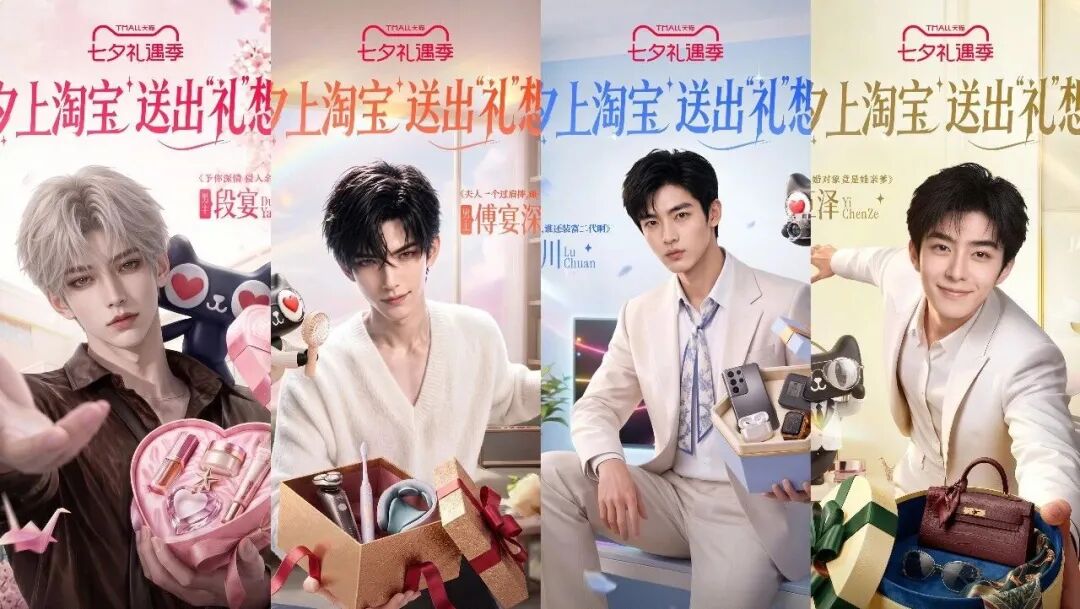
Attempts on the live streaming side are more intensive. The e-commerce premiere of Gu Linchuan, the male lead in On the Wedding Day, He Came to Pick Me Up by Helicopter, had more than 64,000 viewers. The group portrait e-commerce live stream of Lu Chuan, the male lead in Everyone is Reborn, Who Still Pretends to Be a Rich Second Generation, attracted more than 100,000 viewers. It is worth noting that judging from these figures alone, the operation path has been proved feasible, but compared with the live streams of real celebrities, there is still a gap of several orders of magnitude. AI character live streaming is still in the verification stage, not the mature stage.
The trial of official derivatives provides another perspective for observation. In October 2026, Buming Culture, the producer of Give You Deep Affection for the Rest of My Life, launched character card blind boxes and character-style bracelets. Among them, the limited-edition cards were sold at 49.9 yuan, with a total of 12,000 boxes sold, and sales revenue reached nearly 600,000 yuan. Recently, there are many "card exchange posts" and "second-hand item selling posts" for the physical cards of Give You Deep Affection for the Rest of My Life on Xiaohongshu.
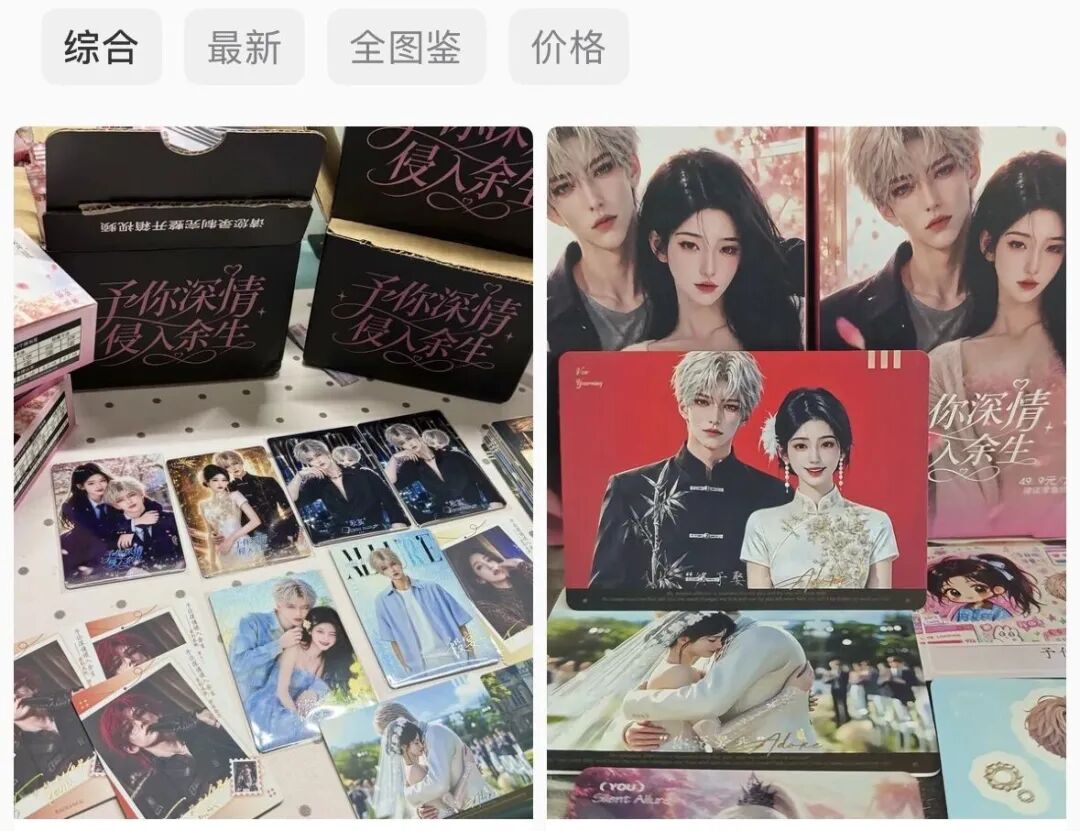
Source: Xiaohongshu
Cultural tourism spillover is another line. The ancient-style AI drama Green Plum by the Inkstone is based on Yan Zhenqing's Eulogy to My Nephew and the historical figure Yan Jiming. After being broadcast, it triggered spontaneous discussions on social platforms about "learning history by watching dramas". Xi'an Beilin Museum, Shijiazhuang Cultural Tourism and other institutions have successively co-created secondary works with it. This opens up a value direction for characters that does not rely on product sales, carrying public cultural memories and undertaking cultural tourism cooperation. This type of asset cannot be measured by short-term ROI.
Putting several lines together, the commercial logic of AI characters becomes clear. Dramas build recognition, independent accounts precipitate relationships, and commercial orders, live streams, cultural tourism and other businesses are responsible for converting relationships into revenue. Nowadays, top teams have generally included the character asset library in the project approval plan. The focus of industry competition is shifting from projects to characters, from whose dramas become popular fast and invest heavily in traffic, to who can retain characters longer and operate them more deeply.
Third parties take the lead in seizing the million-yuan business
The official response lags behind
However, retaining characters for a long time and operating them deeply sounds easy, but when it comes to implementation, the first threshold lies in the capacity to undertake the business.
Give You Deep Affection for the Rest of My Life is a ready example. After the character became popular, the first party that made money was not the drama producer. Around July, a pink four-leaf clover bracelet marked as "same style as Duan Yan" was sold more than 10,000 pieces at a unit price of 129 yuan, with sales revenue exceeding one million yuan. But this bracelet was not authorized by the producer from beginning to end. It was not until October that the producer began to launch official derivatives. Although the sales volume was relatively considerable, the producer's transformation was undoubtedly a step late.
It has long been proved that fans are willing to pay for virtual characters, but in the field of AI dramas, the parties that respond the fastest and collect money first are unauthorized third parties. Most drama producers have not put derivative development on the agenda, and have not built a mature IP derivative product line.
Compared with the already well-running "goods economy" in animation and comics, which includes the whole chain of authorized development, series of derivatives and co-branding distribution, the derivative development of AI characters is still in a very basic stage. The demand is real, but the system to undertake it has not kept up. This is the most prominent structural gap at present.
The gap in revenue structure is also obvious. Fang Taozi's 258,000-yuan 60-second commercial order, Duan Yan's Chinese Valentine's Day advertisement on Tmall, and Gu Linchuan's live stream are mostly one-time transactions when broken down. Compared with real new entertainers, whose commercial revenue is usually composed of long-term endorsements, brand cooperation, commercial performances and fan payment, one business can bring a series of subsequent repurchases; while what AI characters get at present is mainly the front-end advertising revenue.
A high-priced commercial order only proves the single-transaction conversion ability, it cannot prove that there will still be brands coming to cooperate with this character next year, nor can it prove that it can stably support a team. The industry has not formed comparable benchmarks like real entertainers in terms of how to set quotations and how to convert the number of fans and conversion rates, and brands make judgments more based on impressions from individual cases.
To make the official operation system able to meet the wild demand, the foundation is ownership. Duan Yan's Chinese Valentine's Day advertisement was sued by voice actor Wu Lei on the grounds of similar voice, and the character image was also accused of overlapping with the character in otome games; Fang Taozi's contact lens commercial order was taken off the shelves due to the risk of false publicity because the virtual character described the wearing experience.
These are not problems of content quality, but when the character is used as a tradable asset, the rules about who owns the image and voice, and who is responsible for problems have not been clarified. As long as the ownership is not clear, official derivatives dare not be produced in large quantities, and brands dare not sign long-term contracts. Digital entertainer files, copyright registration and revenue sharing mechanisms are being built. Only when these foundations are solid, the single trial cooperation can be converted into long-term contracts.
It is undeniable that AI short dramas and comic dramas have completed a real efficiency revolution, with the cost reduced by nearly 90% and the cycle shortened from months to weeks. But the efficiency revolution does not mean commercial maturity. What really determines how far this category can go is not how many dramas are produced in a year, but whether the value can be migrated from "one-time project traffic" to "reusable character and relationship assets".