The little blue light steps out of the "confinement room"
The year 2026 is drawing to a close, and the efficiency of official efforts to clear up long-standing industrial ills is also accelerating.
On October 20, the Ministry of Industry and Information Technology (MIIT) publicly solicited opinions on five mandatory national standards. In this fourth revised draft of GB 4785, the small blue light for autonomous driving, which was once rumored to be completely banned, has not only been officially legitimized, but also defined as a key identifier for autonomous driving.
Precisely because the blue light being on means the vehicle is in autonomous driving mode, the new regulation draws a clear red line: only vehicles equipped with Level 3 and higher autonomous driving systems can optionally install ADS marker lights on the front, rear and sides. These lights will automatically turn on and stay steadily lit when the function is activated, and automatically turn off when the system exits. Manual switching is not allowed throughout the whole process.
Given that the standard is scheduled to be implemented from New Year's Day next year, and the Level 3 licensing has not yet been opened, for a period of time in the future, new vehicles will not be eligible for this blue light even if they are equipped with relatively advanced driving assistance systems. Old vehicles that cannot be upgraded to Level 3 will most likely have the blue light function turned off via OTA.
The same draft for comments also tightens regulations on another aspect. Except for the luminous logo function, no text is allowed to be displayed on exterior vehicle lights. The luminous patterns after being lit must not form human faces, animal faces or other anthropomorphic graphics. Gesture control of vehicle lights and voice-controlled light-off are prohibited. Turn signals must not be mixed with brake lights or rear fog lights, and the same rule applies to reversing lights. When the variable intensity signal light is adjusted, the brightness must be synchronized as a whole, and part of the light sources cannot be switched on or off independently.
In other words, the emerging exterior vehicle light social screens, together with light language text projection and expression lights, have all been included in the restricted list.
Let's go back four years. In 2022, Li Auto L9 was the first to be mass-produced with this configuration, followed by AITO, XPeng and NIO one after another. The configuration expanded from 450,000-yuan flagship SUVs down to 100,000-yuan family sedans, and became an unspoken standard feature for intelligent driving models. But its legal basis has never existed. The current GB 4785 stipulates that the external lights of civilian vehicles can only be white, red, yellow and amber, blue is reserved for special vehicles, and the categories of vehicle lights are a closed list, with no status indicator lights for autonomous driving included.
The policy gap and the rapid expansion of car companies have coexisted for three years. The small blue light is not the only configuration that has been named this year. Hidden door handles, screen-controlled gear shifting, zero-gravity seats and light language projection are all involved in this wave of regulation. Most of these configurations will be phased out under the new national standard, though their exit paths may vary.
01
Some problems are caught up by accidents
Others are caught up by cost bills
First of all, it should be made clear that the small blue light was blocked this year not based on accident reviews, but on risk prediction.
So far, there has not been a single publicly confirmed casualty accident caused by the small blue light. The reason given by the China Automotive Standardization Research Institute for restricting the small blue light is glare and light pollution: when the light is on, surrounding drivers may get suggestive hints, which makes the vehicle more likely to be cut in or followed at close distance, thus inducing accidents.
It is the hidden door handle that has really been caught up by accidents, and it is the only configuration that has a real casualty list —
In April 2024, a large and medium-sized new energy SUV in Yuncheng, Shanxi crashed into a maintenance vehicle and caught fire, killing three people including a young child. The door handle did not pop up in the on-site video;
In March 2025, on the Deshang Expressway in Tongling, Anhui, a new energy sedan exploded after a collision, killing three female college students in the car;
In October 2025, on Tianfu Avenue in Chengdu, a new energy sedan rear-ended another vehicle and caught fire. More than ten passers-by tried to rescue the people inside with fire extinguishers and wrenches. Someone put his arm through the window to try to open the door but got no response. The firefighters failed to pry the door open and finally had to cut it open with a cutter, only to find the driver on the driver's seat had no vital signs.
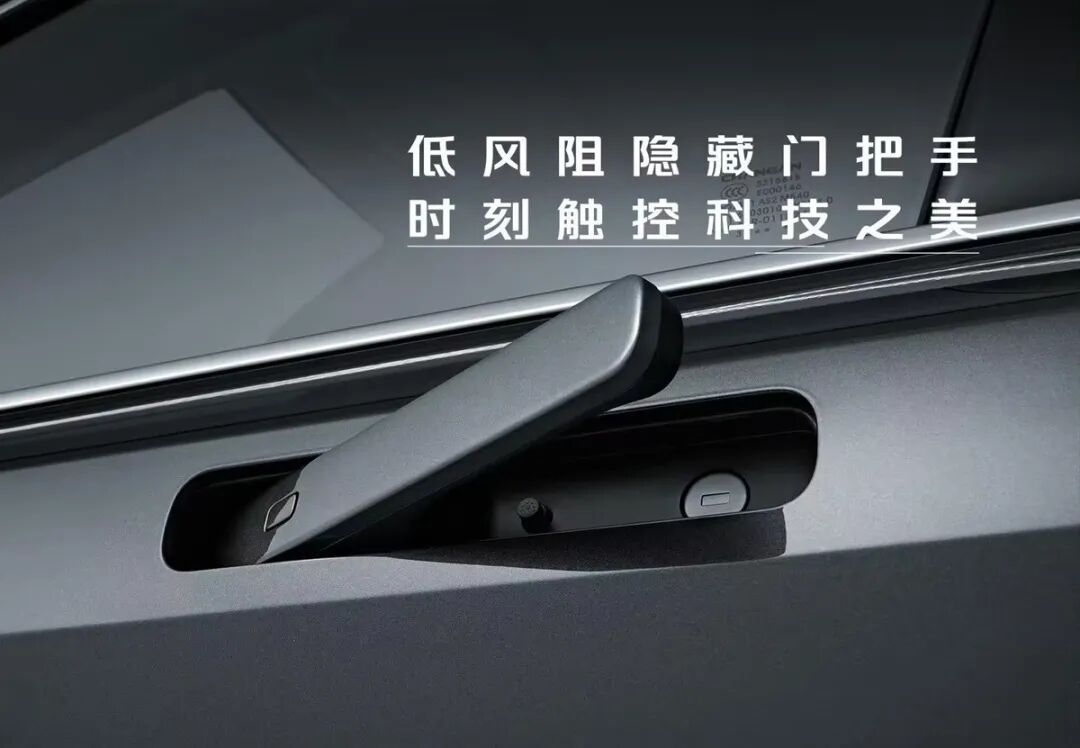
Figure | Combined with the advertising rhetoric of the company in the picture, the sense of irony is overwhelming
Although there is no evidence showing that the hidden door handle directly caused the deaths of the people in the above accidents, the fact that the door cannot be opened due to being locked when a serious accident occurs is the most serious problem.
Especially in the accident on Deshang Expressway in Tongling, Anhui last March, although the relevant vehicle adopted a semi-hidden door handle design, its built-in unlocking mechanism was not mechanical, and it had to be powered by the low-voltage battery to maintain its function. Forensic identification later confirmed that the power failure of the low-voltage system after the collision caused the electric release of the outer handle to fail, and there was only 9 seconds from the impact to the power failure.
Although most automakers claim that hidden doors will be forced to pop up after detecting a collision, the C-IASI side impact test results show that the pop-up success rate of electronic door handles is only 67%, while that of traditional mechanical handles is 98%. The essence of making the people in the car take an extra 31% of risk is the demand of new energy vehicle companies to further optimize wind resistance and reduce energy consumption in the design stage. However, the consequences caused by the original demand of manufacturers are ultimately borne by users.
On January 28, 2026, the mandatory national standard "Safety Technical Requirements for Automobile Door Handles" GB 48001—2026 was approved and released, requiring each door to be equipped with inner and outer handles that can be mechanically released. Seven months later, on August 21, the State Administration for Market Regulation posted recall announcements of nine car companies in one day, totaling 4.276 million vehicles, setting the record for the largest single-batch recall for a single problem in China, of which one foreign brand accounted for nearly 2.97 million vehicles. The reason was that the emergency mechanical handle in the car was close to the interior trim color, which might affect escape and rescue when the low-voltage system failed due to collision.
Compared with the series of incidents caused by door handles, other problems are more complex but not large in overall scale, and usually only become annoying when you encounter them in person. The most typical example is the integrated die-casting process, which is springing up everywhere and shows a trend of popularization.
Since 2022, domestic car companies have started to follow up the chassis die-casting process, and quickly expanded to super-large die-casting lines with 10,000-ton clamping force. Replacing the original dozens or even more than 100 chassis parts from welding process with one-piece forming die-casting process can indeed greatly reduce the working hours and costs of automakers, but it also brings subsequent maintenance problems. With the popularization of this process, various lawsuits and disputes caused by accidental collision with die-casting parts that make the repair cost exceed the residual value of the car have never stopped in China since 2022.
Similar problems also exist in the battery pack. Earlier this year, a car owner was forced to replace the entire power battery pack worth 130,000 yuan just because a buckle was accidentally damaged, as the buckle was integrated with the battery box.
Putting narrative ahead of engineering is another symptom. Especially after China's automobile industry fell into the current crazy involution state, many brands tried to break through with functional innovation. However, almost none of them ended well. For example, for the on-board refrigerator that has now become a standard feature, a survey found that its actual utilization rate is only 5%. There is also the short-lived on-board shower function: just think, a 10-liter water tank, apart from further occupying the already insufficient trunk space, who can it wash? Pets, cats or dogs?
02
How are "quickly-made vehicles" produced?
All kinds of "gimmicks" can pass all the checks from concept to product definition and finally be installed on mass-produced vehicles, not by votes from users. Behind this is a whole set of repeatedly accelerated development processes and a series of verification links that are continuously pushed backward.
At the press conference held by the State Council Information Office on October 20, Wang Weiming, chief engineer of MIIT, made it clear that we will firmly say no to quickly-made vehicles. There is no official definition for quickly-made vehicles, but in the industry it refers to products that are launched into the market after compressing the R&D cycle and deleting necessary test and verification links in order to seize the market window period.
The change in the vehicle development cycle can best illustrate this problem. In the era of traditional fuel vehicles, the complete R&D and verification cycle of a brand new model is generally more than 36 months, and 48 months is not considered long. But now, many brands have compressed it to 18 months or even shorter. A 2025 study by McKinsey shows that China's emerging new energy vehicle companies only need an average of about 24 months to launch a new car, far lower than the normal 40 to 50 months in the previous era.
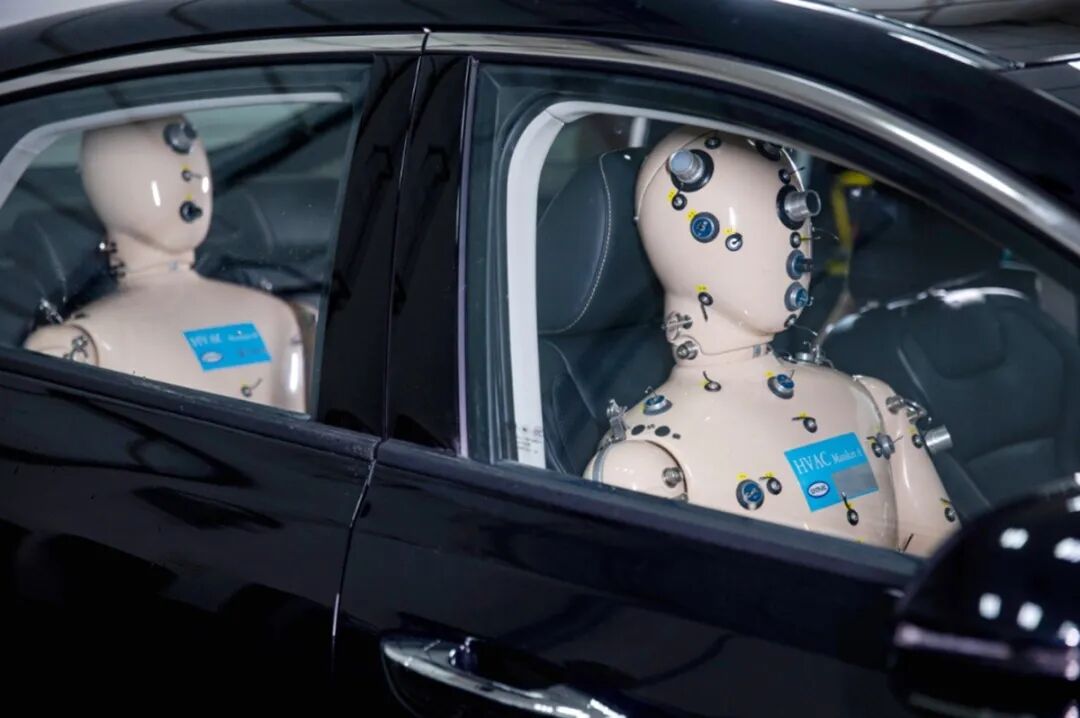
Figure | To emphasize again: simulation can never replace real vehicle testing!
The acceleration of new car R&D is partly due to positive reasons such as the introduction of AI assistance, as well as platform reuse, modular components and concurrent engineering, all of which are reasonable ways to improve efficiency. But the other part is achieved through the crazy 996 "involution" inside enterprises, and even some "smart aleck" behaviors such as reducing test processes for quick success or replacing real vehicle road tests with simulation.
One of its direct results is that various functions are rashly installed on vehicles without reasonable verification. For example, some power batteries should have completed 4000 cycles of full verification, but some enterprises directly cut the verification amount by half to speed up product launch, and use simulation to replace real vehicle measurement. This is extremely harmful. After all, we live in a physical world and must follow basic laws. Therefore, after the number of prototype vehicles, component tests and road verifications are compressed, the risks do not disappear, but are only transferred to users.
As for another consequence, there is now a surge of new cars on the market, but the number of car owners cannot keep up. According to the statistics of the new car declaration catalogue of MIIT, 238 new cars were updated in the catalogue in the first half of 2026 alone, which is equivalent to about 1.3 new cars being launched every day.
The tightening of supervision actually started two months earlier.
In August this year, four departments including MIIT jointly issued a notice to carry out a one-year special action nationwide to improve the production consistency and quality of road motor vehicle products, focusing on rectifying four problems in production consistency, reliability, durability and new technology test verification, and strictly investigating behaviors such as submitting one version for testing while producing another version in mass production, replacing real vehicle verification with simulation test, and installing new technologies on vehicles without full evaluation. The inspection targets cover vehicle enterprises, parts suppliers and inspection and testing institutions. Enterprises are required to submit self-inspection and rectification reports before the end of December 2026.
The draft for comments released by the four departments on October 10 blocked this loophole from the access end.
The notice added 51 technical parameters such as steering wheel type and whether the vehicle is equipped with fully hidden door handles, requiring enterprises to fill in the information and incorporate it into access and production consistency management. For more than 20 innovative designs such as special-shaped steering wheels and virtual control parts, 4 general requirements and 21 specific requirements are put forward. The electric suction door must have an anti-pinch function and can be opened manually when power is off. It is prohibited to use zero-gravity seats, rotating seats, seats that can be laid down into beds and lifting cabins when the vehicle is running. Folding displays and flexible displays are not allowed.
For functions related to driving safety such as defrosting and demisting, headlights, wipers and vehicle doors, non-drivers are not allowed to directly control them via voice while the vehicle is running. The reliability test verification shall not be less than 30,000 kilometers, the environmental adaptability test verification period shall not be less than 1 year and include two winters and one summer test. The cycle life and durability of power batteries must be actually measured, and the verification reports from suppliers shall not be directly accepted. 22 recommended standards and industry standards have been upgraded to mandatory requirements.
The time node is also clear: starting from January 1, 2027, newly declared products involving innovative designs shall add the filling of technical parameters, and products that have obtained the announcement shall supplement the submission before July 1, 2027. Products that have not been tested and verified as required, with insufficient tests or providing false materials will not be approved for announcement.
The China Association of Automobile Manufacturers subsequently issued a document in support, and issued an initiative to the whole industry to abandon the irrational innovation mode that emphasizes form over safety, put safety assessment in the whole process of product innovation, make up for the shortcomings of R&D and verification, and put an end to pseudo-innovation.
03
What does real innovation look like
And the lessons learned in recent years
To distinguish the authenticity of innovation and whether a function is valuable, there is no need for complicated verification, nor do you need to rely on the rhetoric of the brand. In reality, two rules are enough.
First of all, does the application of this function or technology reduce the total risk and total cost of the system, or only redistribute the risk and cost among car companies, users and third parties?
Secondly, does it have measurable, verifiable and reproducible physical indicators, or can it only be supported by adjectives at press conferences?
After screening with these two rules, let's look at the first one first. Integrated die-casting is a typical case of cost transfer: the working hours and costs saved on the manufacturing side are real, and the extra bills on the maintenance side are also real. The total amount has not decreased, but only changed pockets. Real innovation that reduces total cost does not work like this. The 800V high-voltage platform and megawatt-level energy replenishment solve the problem of energy replenishment time, the high-efficiency heat pump solves the problem of winter range attenuation, and the axial flux motor optimizes the cost structure in terms of self-weight and consumables. All of these are reducing a real cost item instead of pushing it to others.
The key to the second rule lies in the word "reproducible", which has a specific meaning: a capability can be repeatedly achieved by a third party under the same conditions, instead of only being valid in the manufacturer's own site and own rhetoric. The performance of AEB in difficult scenarios such as two-wheelers crossing diagonally, night cone changing lanes, and pedestrians standing behind stationary vehicles on rainy nights can get the same result no matter who tests it, which is reproducible.
The best example to illustrate the value of the second rule is "Safety Requirements for Intelligent Connected Vehicles - Combined Driving Assistance Systems" released in June this year and implemented on New Year's Day 2027. This is China's first mandatory national standard for Level 2 combined driving assistance. Its essence is to rewrite a number of originally unclear capabilities into verifiable, judgeable and accountable clauses. During the activation of the system, hand-off detection and line-of-sight-off detection must be carried out continuously. Alarms shall be triggered when the driver's hands or sight leave the control, and the system shall be disabled for at least 30 minutes after multiple triggers.
The pilot system shall complete a cumulative effective road test of no less than 72 hours, and systems that can be activated at night shall supplement the night test. Scenarios such as construction zones, cartons, pedal-type two-wheeled motorcycles and overturned vehicles are extracted from domestic traffic accident statistics, not imagined out of thin air. Vehicle-end data recording is also written as a