Vehicles that suffer spontaneous combustion are eligible for a free brand-new replacement; Li Auto has unveiled its self-developed three core electric technologies, conquering three major technical challenges.
Li Auto has released a complete electric technology system, with its self-developed battery rolling out two lifetime guarantee policies.
CheDongxi October 20 News: At the recently concluded Li Auto Power Day electric technology launch event, Li Auto officially unveiled the electric technology system named "Lianshan", which collectively announced the latest technical achievements of its self-developed battery, electric drive system and ultra-fast charging network.
Among them, Li Auto also launched two heavyweight lifetime guarantee policies for its self-developed batteries.
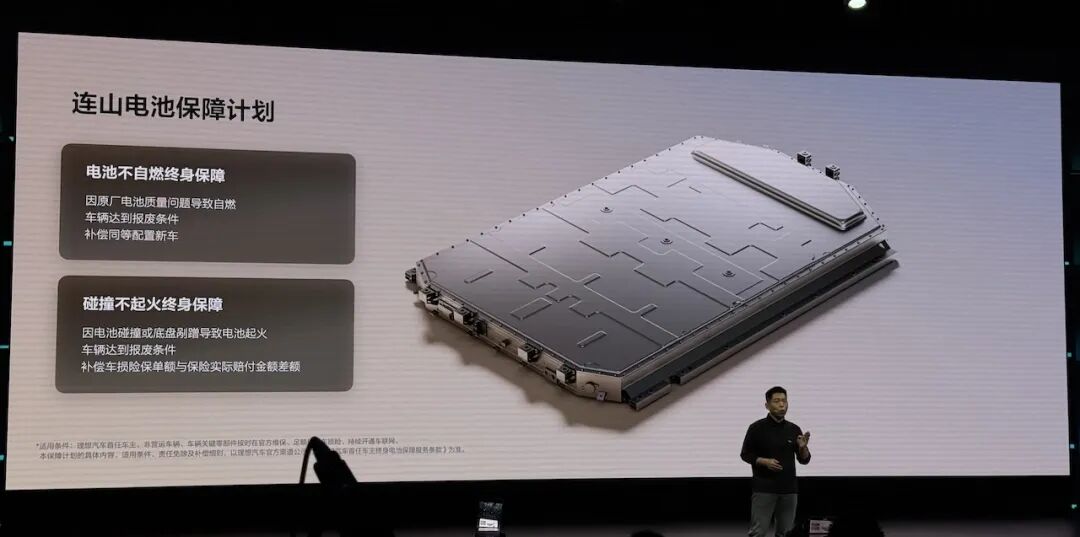
▲ Li Auto self-developed battery guarantee policy
If spontaneous combustion occurs due to inherent quality issues of the self-developed battery and the vehicle reaches the scrap standard, Li Auto will compensate a new vehicle with the same configuration.
If the self-developed battery catches fire due to battery collision or chassis scratch and the vehicle reaches the scrap standard, Li Auto will cover the difference between the insurance amount specified in the vehicle damage insurance policy and the actual compensation paid by the insurer.
In terms of technology, Li Auto announced multiple achievements of its self-developed 5C battery, including the control of the state of charge estimation error of LFP battery within 3%, over 40% improvement of peak power release capacity in winter, and the performance that the entire battery pack will not catch fire within 24 hours after thermal failure of a single cell at 50℃ ambient temperature.
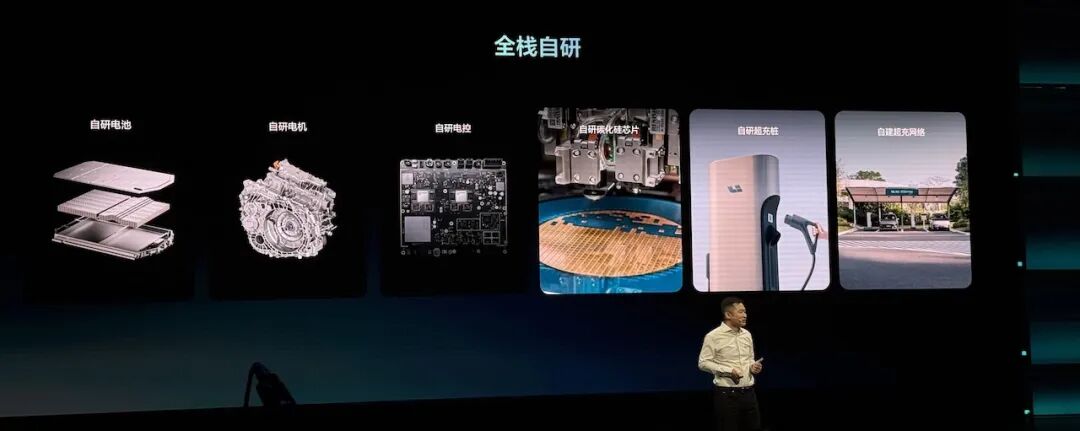
▲ Full-stack self-developed technical achievements of Li Auto
In terms of electric drive, Li Auto has carried out in-depth self-development covering motor materials, silicon carbide power chips and manufacturing processes, and announced multiple technologies that improve driving range and reliability.
In terms of ultra-fast charging network, as of October 20, Li Auto has built 4,200 ultra-fast charging stations with more than 23,000 ultra-fast charging piles, and plans to double the number of 5C ultra-fast charging guns to 8,300 before the 2027 Spring Festival.
In addition, Li Auto also demonstrated a full-parking-space fully automatic ultra-fast charging station, enabling an energy replenishment experience where users do not need to get off the vehicle or manually plug and unplug the charging gun.
Ma Donghui, President and Chief Engineer of Li Auto, said that Li Auto adheres to self-development in order to connect underlying data, vehicle systems and technical standards, so that core technologies such as batteries, electric drives and charging networks can work in synergy.
01.
Self-developed 5C battery overcomes three core challenges
Maximum pure electric driving range reaches 780km
At this launch event, Liu Zhimin, Senior Director of Power Battery of Li Auto, first introduced the technical achievements of the self-developed 5C ultra-fast charging battery.
In 2020, when Li Auto was planning its pure electric models, through analyzing users' long-distance travel data, it found that more than half of the users spent about 10 minutes resting at highway service areas, and 95% of users drove no more than 280km between two rests.
Therefore, Li Auto put forward the goal of 10 minutes of charging for 500km of driving range, and developed the first mass-produced 5C ultra-fast charging battery in 2024, which was equipped on Li Auto MEGA.
After that, Li Auto continued to promote the independent R&D of cells and battery packs. In 2025, Li Auto i6 was equipped with self-developed OEM-manufactured batteries. In 2026, the all-new Li Auto L8, new-generation Li Auto L6 and Li Auto i8 will be further equipped with self-developed self-manufactured batteries.
The Lianshan battery released this time focuses on solving three core contradictions of 5C ultra-fast charging: fast charging vs long driving range, fast charging vs high safety, fast charging vs long service life.
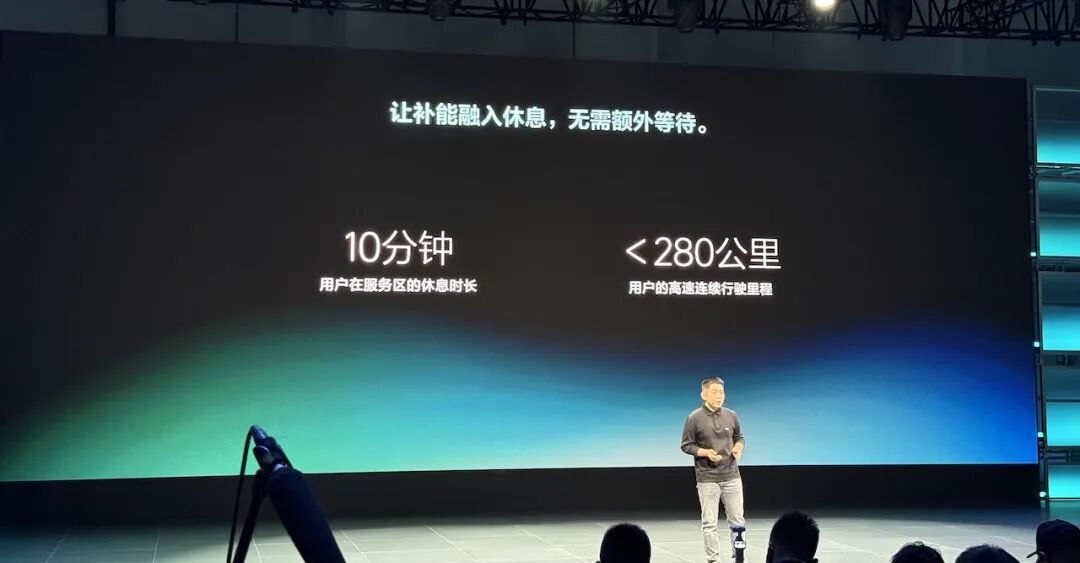
▲ User energy replenishment survey
The first is the contradiction between charging speed and driving range.
To improve charging speed, it is necessary to widen the transmission channel for lithium ions, but the increased channels will occupy energy storage space and reduce the energy density of the battery.
In response to this, Li Auto has developed a gradient porosity electrode technology, which designs the negative electrode into a "loose outside and tight inside" structure, allowing lithium ions to enter quickly while retaining sufficient energy storage space.
In terms of positive electrode, Li Auto has developed a high-compaction positive electrode technology for LFP batteries, which increases the loading of active materials through compounding of micro and nano particles.
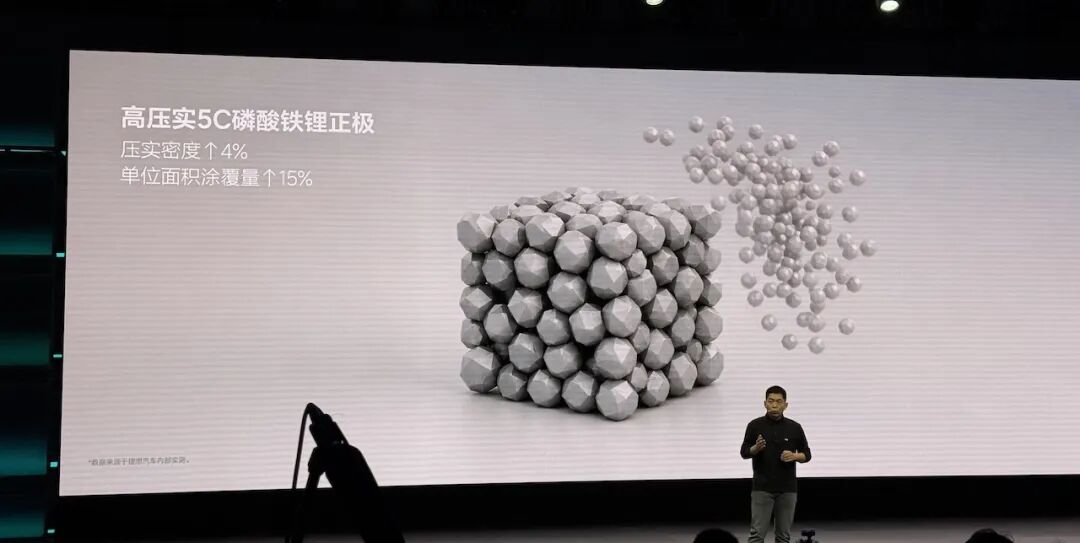
▲ Positive electrode of Li Auto self-developed battery
According to the data released by Li Auto, compared with ordinary 2C cells, its 5C NMC cell maintains comparable energy density while increasing the charging rate, and the energy density of the 5C LFP cell is increased by 2.6%.
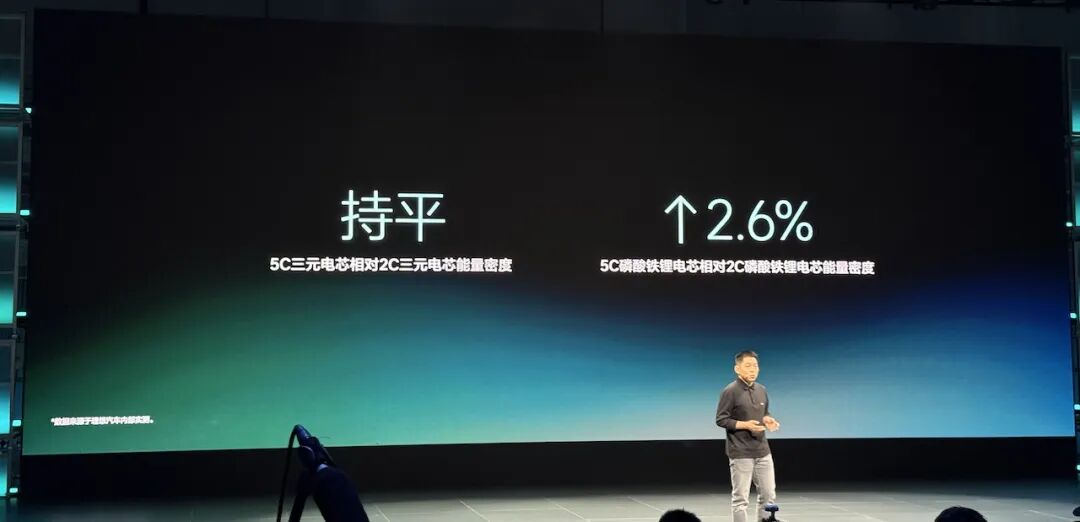
▲ Energy density improvement of Li Auto self-developed battery
At the same time, the structure of the battery pack has also been optimized. By canceling the internal long longitudinal beam and adopting a "day"-shaped frame, Li Auto has added 3.2kWh of energy storage space; by combining the cooling pipeline and the expansion beam, it saves 25mm in length and adds another 1.6kWh of energy.
In addition, redesigning the BDU power distribution unit and optimizing the upper cover structure of the battery pack have added 0.8kWh and 2.6kWh of layout space respectively.
Finally, the pure electric driving range of the all-new Li Auto L8 reaches 430km, and the two-wheel drive version of the upcoming 2026 Li Auto i6 has a driving range of 780km, which is about 8% higher than the 2025 model.
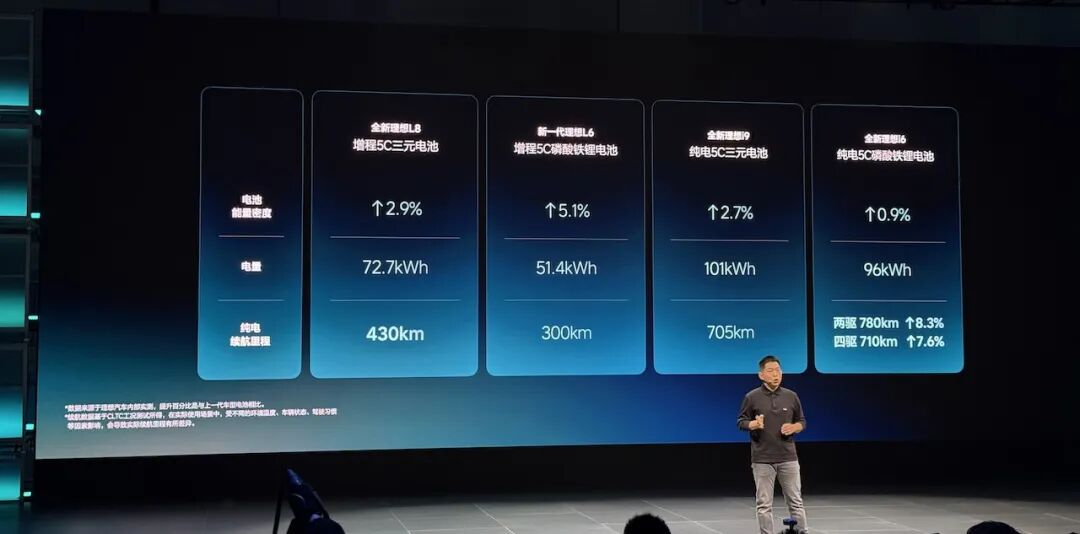
▲ Overview of driving range improvement of Li Auto self-developed battery
In addition to increasing energy density, Li Auto also introduced two algorithms to improve the user experience of LFP batteries.
The first one is the ATR Adaptive Trajectory Reconstruction Algorithm, which mainly solves the problem of inaccurate estimation of remaining battery power.
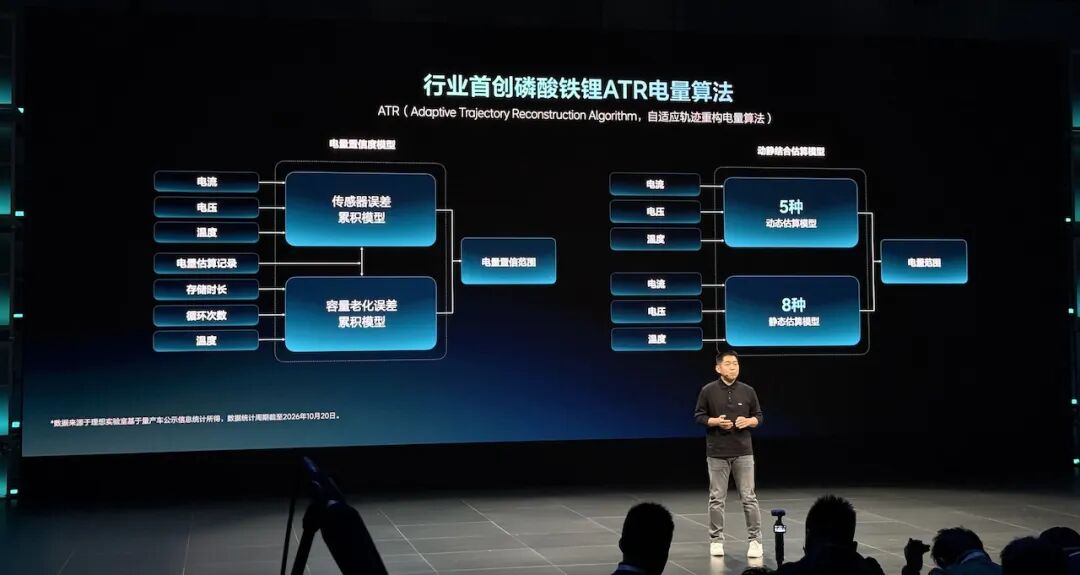
▲ ATR algorithm self-developed by Li Auto
Since the voltage of LFP battery changes slightly in the 30% to 90% state of charge range, it is difficult for traditional methods to accurately estimate the remaining power, and users usually need to perform regular full-charge calibration.
Through the ATR algorithm combined with historical charge-discharge data and dynamic voltage changes, Li Auto continuously corrects the state of charge estimation results.
At present, this algorithm has been running for a total of 4 billion kilometers on the user side, which can control the state of charge estimation error within 3%, and users no longer need to perform special full-charge calibration every week.
The second one is the APC Adaptive Power Control Algorithm, which mainly solves the problem of reduced power performance in winter.
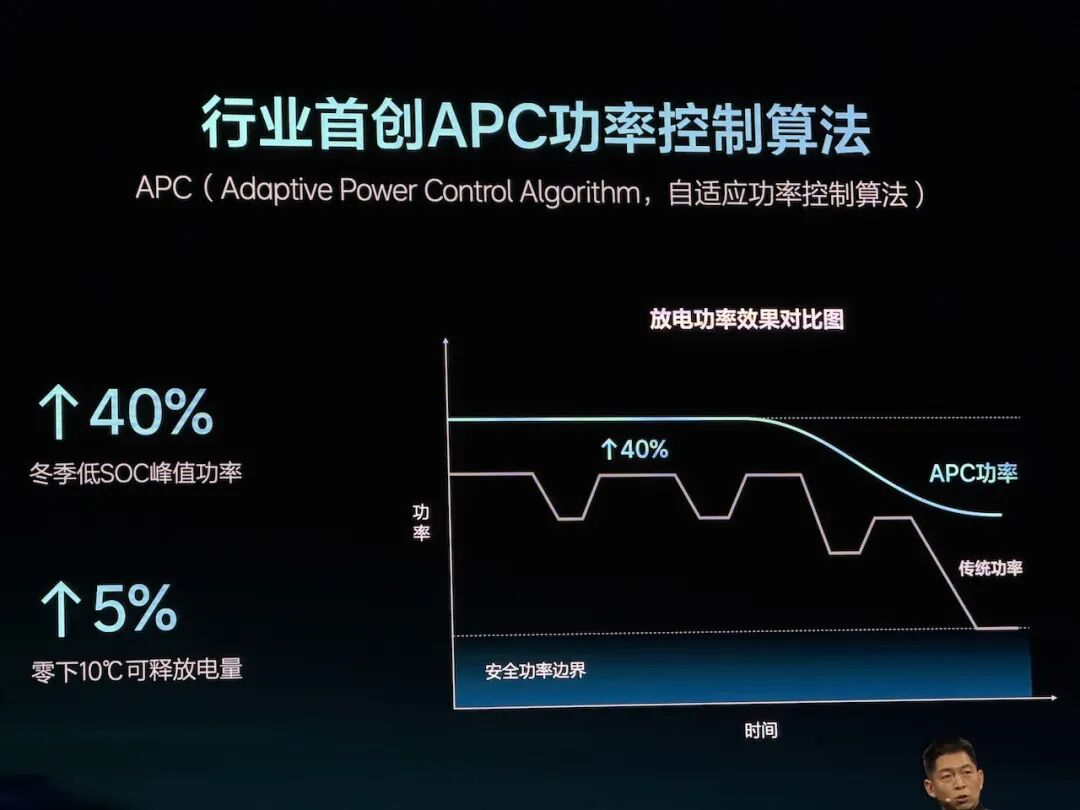
▲ APC algorithm self-developed by Li Auto
Through millivolt-level voltage prediction and 10 times per second dynamic regulation, Li Auto can judge the battery power boundary more accurately, which increases the peak power release capacity in winter by more than 40%, and releases about 5% more power under low-temperature standard working conditions.
Combined with heat pump waste heat recovery, as well as the optimization of vehicle thermal management and air conditioning system, Li Auto says the equivalent driving range of the whole vehicle in winter can be increased by about 30km.
According to the plan, in the first half of 2027, Li Auto will also upgrade the battery management strategy through OTA, optimize power distribution in combination with navigation routes and road slopes, which is expected to increase the driving range by about 10km at -20℃ ambient temperature.
02.
Six lines of defense protect battery safety
Two lifetime guarantees are launched
While improving the 5C ultra-fast charging performance, Li Auto also took battery safety as the focus of this launch event.
Li Auto adopts a unified whole-pack safety standard for NMC and LFP batteries, and builds a safety defense line from six aspects: anti-collision, anti-wading, anti-leakage, anti-thermal runaway, intelligent manufacturing and full life cycle warning.
In terms of bottom protection, the lowest point of the vehicle subframe of Li Auto is more than 8mm lower than the lowest point of the battery pack, and five layers of protection are constructed through structures such as high-strength alloy guard plate, energy-absorbing framework, buffer pad and double-layer stamped cold plate.
It is understood that the Lianshan battery can maintain no fire under the bottom impact equivalent to 500 joules.
In terms of waterproof, the battery reaches IPX8/IPX9K protection level, which can be continuously immersed in 1m deep water for 48 hours without water ingress.
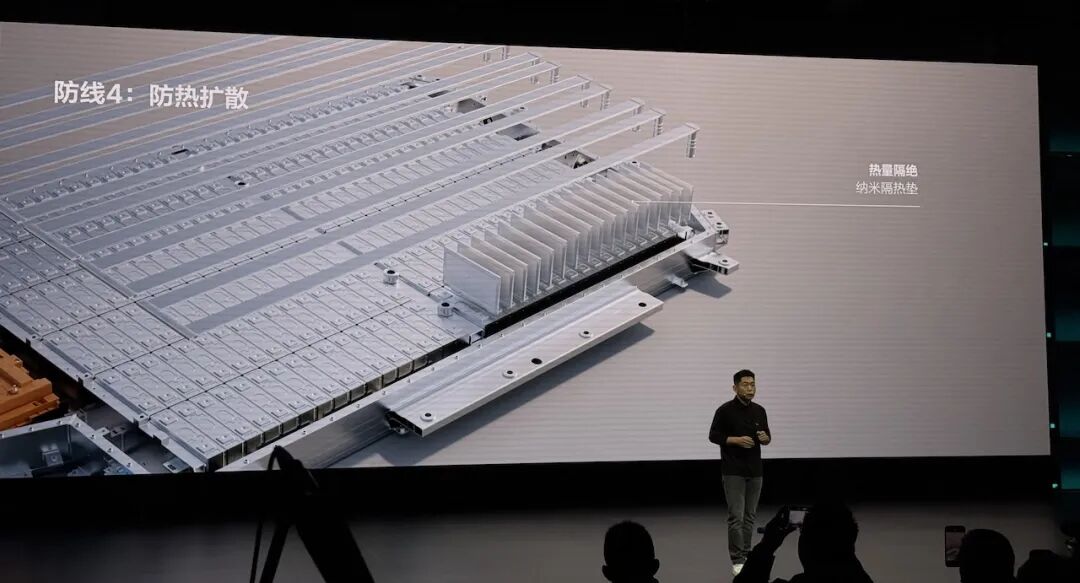
▲ Li Auto safety design
In response to the risk of coolant leakage, Li Auto has increased the wall thickness of the internal cooling pipeline of the battery by 25%, and adopted a partitioned compartment design to reduce the risk of high-voltage short circuit caused by local liquid leakage.
In terms of thermal runaway protection, Li Auto adds heat insulation materials between cells, and discharges high-temperature gas directionally through explosion-proof valves.
Once the thermal failure of the cell is detected, the system can also start emergency water cooling. Even if the whole vehicle is powered off, the cooling circuit can still work.
The test results released by Li Auto show that in a high-temperature environment of 50℃, even if a single cell suffers thermal failure, the entire battery pack can remain non-flammable for 24 hours.
In terms of manufacturing, Li Auto has set up a total of 9960 quality control points in the links of raw materials, cell manufacturing and battery pack assembly, and introduced online CT and AI detection technology.
At the same time, Li Auto establishes an independent electronic identity file for each cell, recording raw material batches, manufacturing processes and test data, realizing 20-year traceability.
After vehicle delivery, Li Auto also continuously monitors the battery status through the linkage of vehicle, charging pile and cloud.
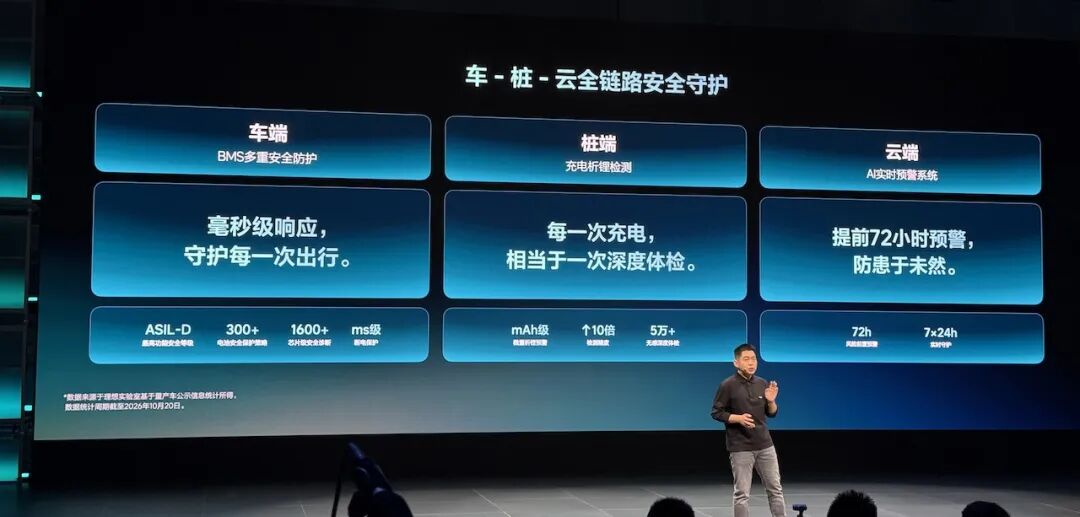
▲ Li Auto 3D safety protection
The on-board battery management system reaches the ASIL-D functional safety level, and continuously carries out 300 safety detections during vehicle operation; when replenishing energy at Li Auto 5C ultra-fast charging stations, the system can also synchronously carry out battery health detection to identify potential lithium precipitation risks.
The cloud side analyzes battery operation data through AI models, and Li Auto says it can issue warnings for some potential safety risks 72 hours in advance.
Based on these technologies, Li Auto has further launched the "Battery No Spontaneous Combustion Lifetime Guarantee" and "Battery No Fire After Collision Lifetime Guarantee" this time, and the specific compensation conditions have been clearly stated at the beginning of the launch event.
In addition to safety, Li Auto also responded to the concern that high-frequency ultra-fast charging may accelerate battery degradation.
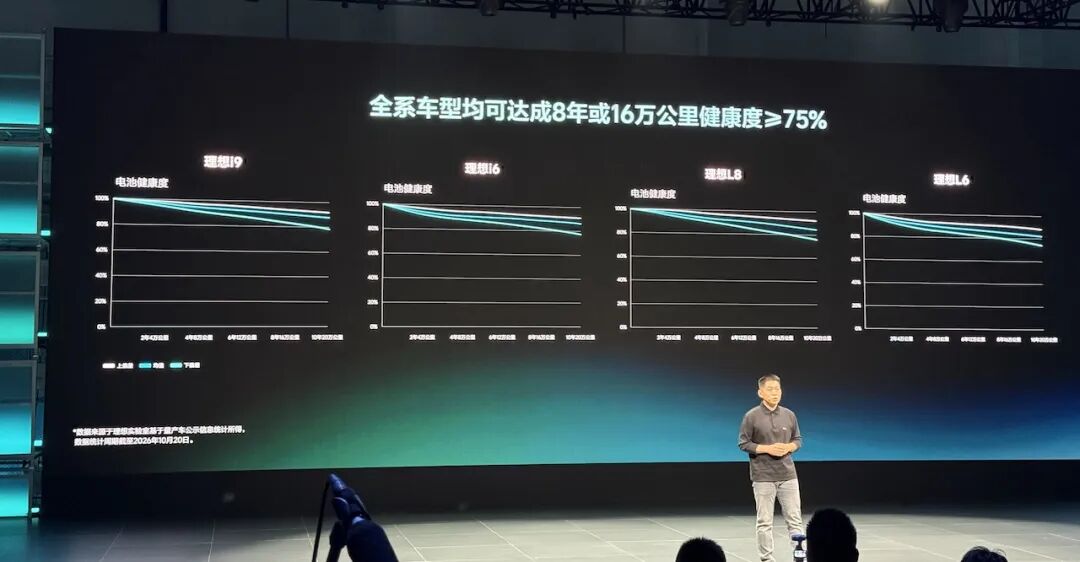
▲ Li Auto battery degradation curve