From the 2026 Nobel Prize in Economics, let's talk about how to make consumers "spend money"
Whether an enterprise should add a new production line or a family should buy a new car seems to be scattered, trivial calculations made by each party separately. But when added up, these decisions directly affect the warmth and coldness of the macroeconomic performance.
These decisions depend not only on how much money enterprises and households have at the moment, but also on how people judge the future. Estimates of next year's income and expectations for next quarter's orders may all change the direction where money flows today.
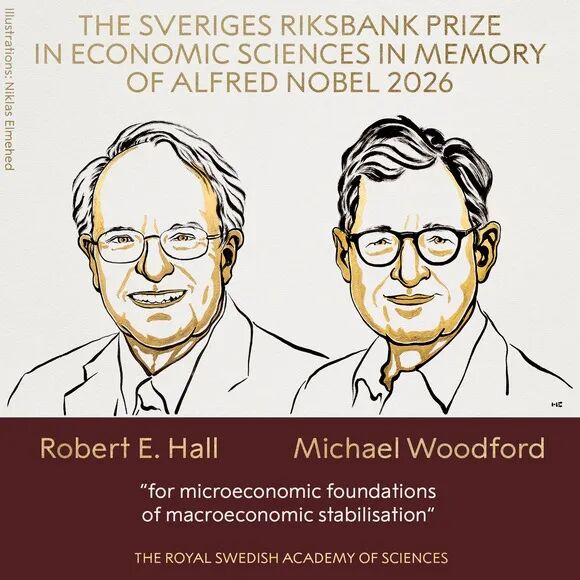
Beijing time, October 12, the 2026 Nobel Memorial Prize in Economic Sciences was awarded to American economists Robert E. Hall and Michael Woodford, in recognition of their "micro-foundations laid for macroeconomic stabilization".
Their research incorporates the decisions of enterprises and households into macro analysis, and also allows policymakers to re-understand how the actions of governments and central banks affect economic operation through the choices of millions of people.
This forms a thought-provoking echo of China's current economic situation. Data released by the National Bureau of Statistics on October 19 shows that in the first three quarters of 2026 (January to September), China's economy grew by 4.6% year-on-year, and the value added of high-tech manufacturing above designated size increased by 14.3% year-on-year. Meanwhile, the total retail sales of consumer goods rose by 1.1% year-on-year, while private investment dropped by 10.4% year-on-year. The driving force of growth is being updated, and the recovery of demand remains unbalanced.
How do growth expectations translate into enterprise orders and residents' income, and then into the next round of consumption and investment? Against China's current economic background, how can the support released by policies enter the ledgers of households and enterprises?
One of Hall's important contributions is to provide a testable theoretical benchmark for understanding consumption. Under this framework, households arrange their consumption based on their judgment of future income, and changes in expectations brought by new signals will promote the adjustment of consumption plans. Therefore, when observing a household's purchase decisions, it is necessary to combine the current salary with its estimate of future life.
From this perspective of China, expanding consumption requires taking into account both current purchasing power and long-term sense of security. An immediate subsidy or preferential policy can reduce the cost of purchases today, while stable jobs, predictable income, and clear arrangements for pension, medical care and childcare burdens will affect whether households are willing to make longer-term expenditure plans.
Woodford further incorporates the behaviors of households and enterprises into the macro framework to explain how monetary policy affects production, employment and prices. Policy effects also depend on the public's understanding of the future situation: how an interest rate adjustment will be interpreted and amplified; whether the implementation of a subsidy will be regarded as a cyclical turn or a precise fine-tuning, which will ultimately determine people's willingness to consume and investment actions.
This reminds us that improving expectations requires perceptible and verifiable real changes. When residents can feel the improvement of income and security, and enterprises can see the continuity of policies and the implementation of commitments, it will be easier for future factors to be incorporated into today's consumption plans and investment budgets. The formation of expectations is always connected with the real economic situation.
Following the research of the two winners, Tianxia Wanshang had an exclusive dialogue with Shi Jinchuan, Doctor of Economics from Fudan University and Senior Liberal Arts Professor of Zhejiang University, to discuss the practical enlightenment of this year's Nobel Prize for China's economy.
"The 2026 Nobel Memorial Prize in Economic Sciences reveals multiple factors behind boosting consumption. Future economic growth will not be achieved by vigorously stimulating traditional demand, which will yield half the result with twice the effort; instead, it should meet the new demand generated after the transformation of demand structure," Shi Jinchuan told Tianxia Wanshang in the exclusive interview.
Shi Jinchuan's research experience precisely provides a Chinese perspective for this discussion. For many years, he has been immersed in the study of macroeconomics, private economy and regional development, and law and economics. In his academic works, the growth of enterprises, private finance, market organizations and the behavior of local governments are often placed in a macro institutional change picture, which echoes with micro topics such as residents' consumption, entrepreneurship and innovation. His published works include *A Brief History of China's Private Economy*, *The Mode of Economic Growth and the Mechanism of Inflation*, *Institutional Change and Economic Development: Research on the Wenzhou Model* and so on.
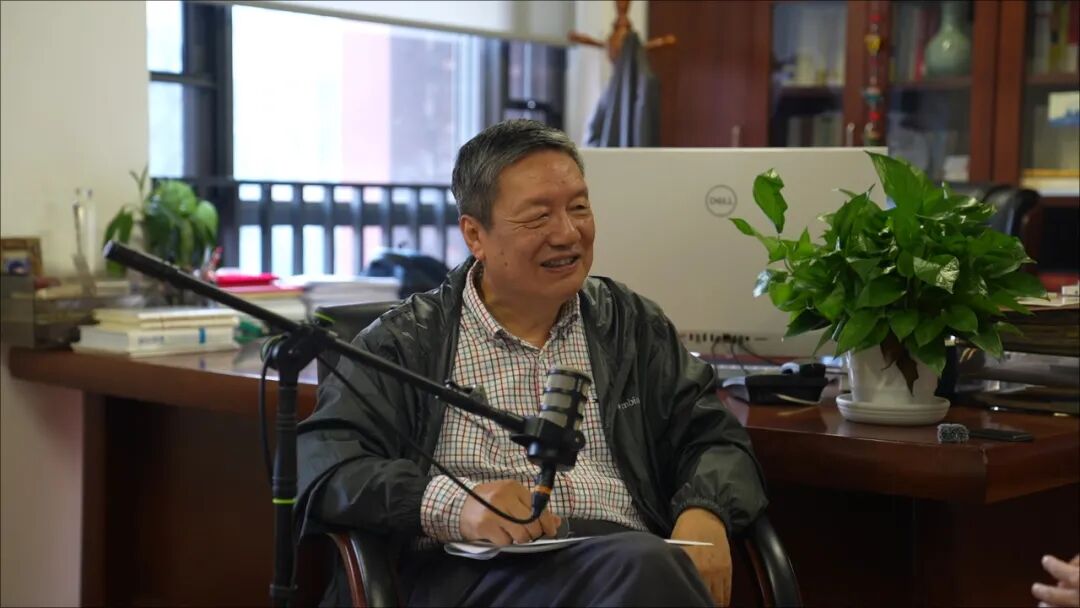
Shi Jinchuan, Economist and Senior Liberal Arts Professor of Zhejiang University
Starting from this year's Nobel Prize, this conversation reviewed China's economic development process over the past 30 years, and jointly discussed the practical connection between macro economy and micro decision-making, as well as many noteworthy topics: At present, how should we boost and expand consumption, what segmented areas are worthy of enterprise attention; how can policies more effectively reach households and enterprises to practically improve expectations; and how to understand the driving effect of AI and scientific and technological innovation on demand and supply.
The following is the dialogue between Tianxia Wanshang and Shi Jinchuan, Senior Liberal Arts Professor of Zhejiang University, edited and abridged:
How to interpret the 2026 Nobel Memorial Prize in Economic Sciences?
Tianxia Wanshang: The two winners of this year's Nobel Memorial Prize in Economic Sciences, Robert E. Hall and Michael Woodford, have their research and theories already become a consensus in the academic circle and entered the policy level many years ago?
Shi Jinchuan: The origin of this theory can be traced back more than 100 years, that is, in the 1920s, when the entire Western society experienced a very serious economic crisis, which we called the "Great Depression".
After the Great Depression, British economist John Maynard Keynes of the University of Cambridge wrote a book called *The General Theory of Employment, Interest and Money*, which laid the foundation of macroeconomics in modern economics. Before Keynes, many economists also studied various macroeconomic issues, but these studies did not form a relatively independent and systematic theory.
From the publication of *The General Theory* in 1936 to the present, the discipline of macroeconomics has been exactly 90 years old. After the publication of *The General Theory*, many economists in developed countries such as Britain and the United States followed Keynes to study macroeconomic issues: Why does the imbalance between aggregate supply and aggregate demand occur in economic life, and why do serious economic crises break out?
In addition, the US government also implemented some anti-crisis policies in the 1930s. With the combination of theory and policy, macroeconomics flourished after World War II.
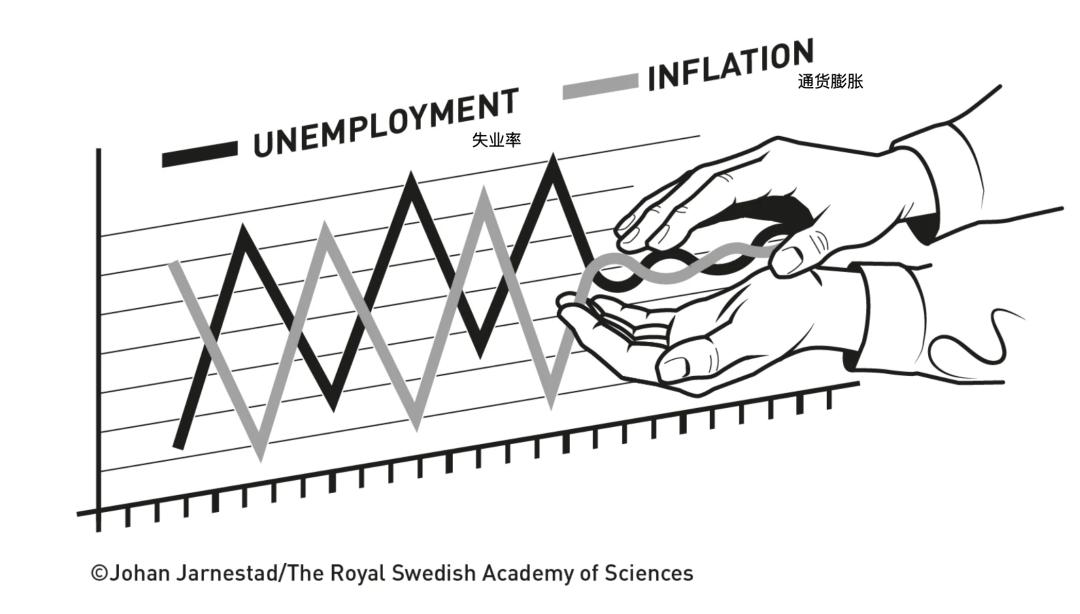
However, when macroeconomics developed to the 1960s, it encountered some problems. Especially in real economic life, both Britain and the United States experienced stagflation. After the oil crisis in the early 1970s, the original macroeconomic theory generally believed that inflation would appear when the economy was prosperous and booming; when the economy was depressed, the price level should fall, and the unemployment rate would rise at the same time.
This relationship is like a seesaw: when the economy goes up, the inflation level will also rise; when the economy goes down, inflation will fall, but the unemployment rate will rise. But at that time, economic growth slowed down or even stopped, while inflation remained at a relatively high level, which made many things difficult to explain, and the entire macroeconomics also experienced a relatively depressed period.
It was during that period that many economists began to study: Behind the total macroeconomic aggregates, there are actually scattered consumers, households and enterprises making decisions, thus developing the so-called micro-foundations of macroeconomic theory.
This time, Professor Hall and Professor Woodford took a step further. The Nobel Committee for Economic Sciences described their contribution as that they provided a more stable microeconomic foundation for the implementation of macroeconomic policies.
The research of Hall and Woodford did not emerge out of thin air, but developed on the achievements made by many economists who studied the micro-foundations of macroeconomic theory in the 1950s and 1960s.
For example, in the mid-1950s, Milton Friedman, a very famous professor at the University of Chicago, was known as a master of monetarism and market economics. He further developed the income-determines-consumption theory and formula in Keynes' economic theory. Strictly speaking, Keynes' theory is "current income determines current consumption", which is equivalent to the consumption model of "living paycheck to paycheck".
Friedman put forward the concept of "permanent income". It means that current consumption is definitely affected by current income, but also by future income. This is not short-term income, but long-term income.
Tianxia Wanshang: This is called the "permanent income hypothesis", which is intertemporal. For example, if I expect to get a pay rise next year, even if this has not yet been fulfilled, as long as I think the pay rise is certain, the household income and consumption level can be increased.
Shi Jinchuan: Yes. The two winners this year have made great contributions in this field because they took a step further. Professor Hall put forward the concept of randomness, and Professor Woodford also put forward the concept of randomness in policy. In simple terms, even if future income determines our current consumption, different types of future income will have different impacts on current consumption.
For example, I am a senior college student now, and it is rumored in my class that I will win the first-class scholarship this year. This sum of money may be relatively large, and my roommates will all coax me to treat them to dinner. I may invite everyone to have a meal in the canteen today. But the scholarship will not affect my consumption for a longer period of time, because it is a one-time income, not a long-term income.
But if I later get a job, get promoted and get a pay rise, the situation will be different, which will affect my consumption for a longer period of time. With more income and the expectation that income will continue to increase, people will increase consumption and realize consumption upgrading.
Therefore, what is very important for us today is policy expectation. For example, issuing one-time consumption vouchers may only have a relatively short-term effect on individual consumer decision-making, rather than a long-term effect.
Professor Woodford also made a good exposition of the effects at different times after the policy is introduced. For example, a short-term decline in interest rates and a continuous decline in interest rates may produce different effects, all of which will affect consumer expectations.
Tianxia Wanshang: We would also like to ask Professor Shi to talk about what the essential difference is between Hall's award-winning discovery this year and Friedman's theory. Is it built on Friedman's foundation?
Shi Jinchuan: This idea exists in both Friedman's theory and Modigliani's life cycle theory, which are all about "intertemporal choice". Hall's first contribution is to further deepen this idea, that different types of future income have different effects.
Secondly, he modeled it and incorporated it into Keynes' macroeconomic theory as a basic model. In the original Keynesian theory, if y equals f(x), where y is consumption and x is income, it means current income determines current consumption. Now we consider different periods and also consider random factors.
Tianxia Wanshang: The difference of Hall can be summarized as "consumption only responds to new information about the future".
Shi Jinchuan: The truth is very simple. If your expectation for the future is very stable, your consumption decision will not be greatly affected. But if new factors come in and these new factors have a lasting impact, the impact will be relatively large.
Key "Reform" to Drive Industries out of Growth Bottlenecks
Tianxia Wanshang: When it comes to expectations, expanding consumption is a major topic now. During the 15th Five-Year Plan period, consumption is expected to grow from 50 trillion yuan to 60 trillion yuan, and the country has been encouraging residents to consume. A lot of government subsidies have been issued some time ago. Combined with Hall's theory, what kind of consumption policies, or what measures that affect individual behaviors, can truly promote consumption to become the core driving force of growth?
Shi Jinchuan: Now many scholars emphasize that we should let people have money to spend and dare to spend money.
Some scholars have proposed whether the government can introduce some policies from the aspects of income and income distribution to raise people's income level, including issuing consumption vouchers and giving consumption subsidies, to stimulate consumption from the perspective of income, and also to improve the social security system, such as the pension and medical security system.
These practices are correct in theory. Today, the proportion of Chinese residents' consumption expenditure in their per capita disposable income is less than 50%. Compared with developed countries and even upper-middle-income countries, there is still a big gap, where the proportion reaches 60% or 70%.
Therefore, it is correct in theory to increase residents' income so that residents can consume more and increase their consumption.
At the same time, we also know that the scale of Chinese residents' savings is still very large. According to observation and estimation, a considerable part of it is precautionary savings. Precautionary savings means: what to do when children go to school in the future? What to do when you get sick and go to the hospital? What to do when you get old and retire? With so many "what to do" in mind, people will consciously prepare more.
Therefore, if we improve residents' medical security conditions, provide more support in social security, further expand the coverage of residents' pension security and raise the security level, it will partially dispel residents' motivation for precautionary savings. When the motivation for precautionary savings decreases, residents can use a larger part of their existing income or future increased income for consumption.
However, China's current economic development stage and economic operation situation may require us to go beyond the simple "income and consumption" relationship and talk about the improvement of residents' consumption and the whole society's domestic demand from a broader perspective.
A very important reason is that we need to see that China experienced a transformation of residents' consumption structure more than 20 years ago. That transformation also encountered the problems of insufficient consumption and deflation tendency in the economy.
Tianxia Wanshang: Can Professor Shi briefly describe the situation at that time?
Shi Jinchuan: In the first 20 years of reform and opening up, in order to solve the problem of people's food and clothing, we produced a large number of traditional consumer goods for food and clothing. Around 1997, the demand for these products began to saturate and supply exceeded demand. Growth continued, but the growth momentum slowed down significantly. In provinces like Zhejiang, many products could not be sold. At first, they were sold to the "Three-North Market", namely Northeast China, Northwest China and North China, then to the national market, but later it was difficult to sell them out.
Why? Residents' consumption structure began to change, shifting from food and clothing to housing and transportation. Therefore, the overall domestic demand and consumption were relatively sluggish.
Secondly, we encountered the first relatively large financial crisis, the Southeast Asian financial crisis, which had a great impact on exports. In 1998, China was facing a "deflationary situation", and at the same time, export growth was also significantly impacted by the Asian financial crisis.
Five years later in 2002, when we looked at some major economic indicators: economic growth, consumption, investment, fixed asset investment, exports, and per capita disposable income of residents, they all rebounded. What did we rely on to get out of the predicament?
First, rely on reform. One of the biggest reform measures at that time was the reform of the