The first batch of robotics unicorns are starting to line up for bankruptcy.
Let's first look at a set of comparisons.
In the first half of 2026, the global shipment of humanoid robots approached 25,000 units, a year-on-year increase of 432.1%, with a market size of 740 million US dollars, representing a year-on-year growth of 322.7%.
In the same period, CloudMinds Robotics, whose valuation once surged to 22.3 billion yuan, was ruled to be accepted for bankruptcy liquidation. K-Scale Labs in Silicon Valley shut down after burning through 6.25 million US dollars, and Axiom Robotics backed by Geely disbanded its team less than half a year after its establishment.
Shipments are doubling, while unicorns are collapsing.
The simultaneous occurrence of these two facts points to only one problem: the humanoid robot sector does not lack demand, but the speed of demand landing cannot match the cash burn rate of enterprises.
The fallen players share highly similar causes of death
CloudMinds is no minor player. It has raised a total of more than 5 billion yuan in financing, with SoftBank Vision Fund, Alibaba Group and Walden International once listed as its shareholders, and its highest valuation reached 22.3 billion yuan.
However, when it was applied for bankruptcy review, the total amount of enforced execution under the judicial caliber was only 35.3 million yuan.
A company valued at more than 20 billion yuan being crushed by a debt of 30 million yuan sounds absurd, but it is actually a typical sample of cash flow breakdown: the valuation stays at an unrealistic high level, revenue cannot support operations, once the next round of financing is blocked, the entire chain will break.
K-Scale operates in a lighter model. It was established for only one year and obtained financing with the concept of "low-cost humanoid robot", but the new round of 10 to 15 million US dollars in financing was not in place, leaving only 400,000 US dollars on the book, so the CEO directly announced the disbandment of the team and full refund to investors.
The problem of Axiom Robotics lies on the other side: with Geely as a strong backer, it has sufficient capital and talent, but its product definition and commercial path have not been verified, so the team was downsized in a very short period of time.
The three companies have different sizes, but their failures point to the same root cause: before real revenue becomes their core business, they take financing as their core business.
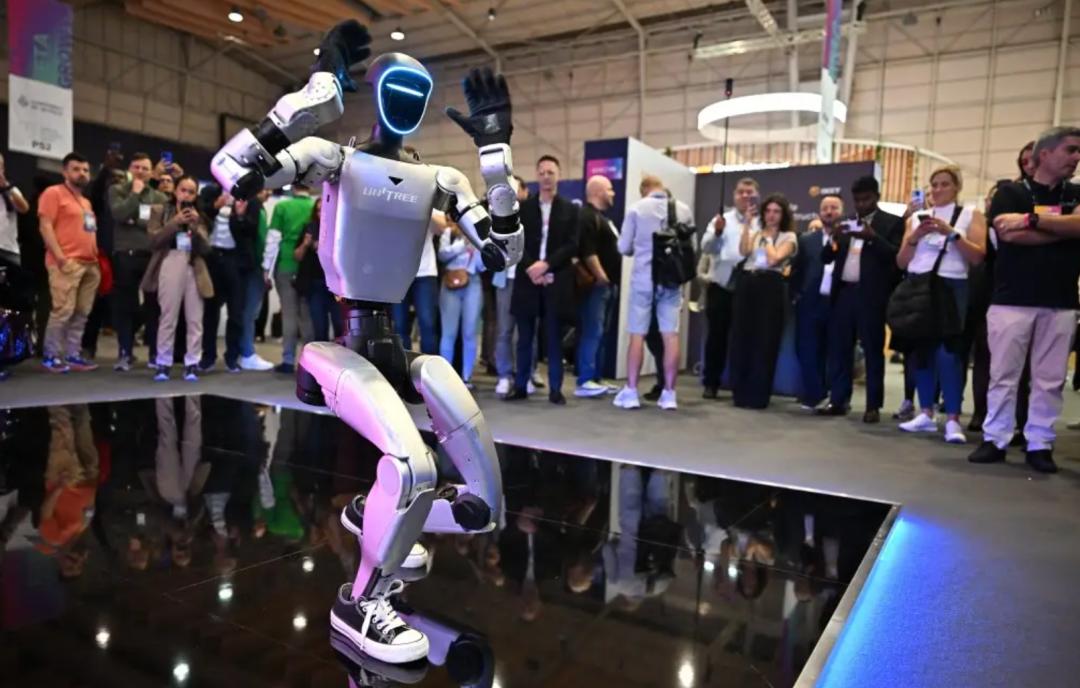
The most distorted part of this industry is not technology, but the revenue structure.
Shipments are indeed growing rapidly, but if you break down the shipment data, the number of robots that are actually "working" is surprisingly small.
The Embodied Intelligence Development Report released by the China Academy of Information and Communications Technology (CAICT) in October 2026 gives a very straightforward structure: in the first half of 2026, cultural and commercial performances, as well as scientific education and data collection, together accounted for more than 60% of global shipments, guided tours and shopping guidance accounted for about 19%, intelligent manufacturing accounted for about 13%, and warehousing and logistics only accounted for 5%.
The caliber of Frost & Sullivan is more pointed: for the whole year of 2025, the global sales volume of humanoid robots used for "production operations" was only 700 units, with a revenue of 47 million US dollars; in the first half of 2026, the figure was 1,200 units, with a revenue of 78 million US dollars.
What does 1,200 units mean? In the same period, the total global shipment of humanoid robots was 22,000 to 25,000 units. That is to say, the proportion of robots that are actually placed in production lines or warehouses to create direct economic value is less than 6%.
The remaining more than 90% are sold for commercial performances, scientific research, data collection and guided tours. These are real demands, not falsified, but they cannot support the valuation narrative of "trillion-yuan labor replacement".
Zhu Xiaohu said a very uncomfortable sentence for the industry in 2025: "Now every humanoid robot can do somersaults, but where is the commercialization?" This sentence was refuted by many people at that time.
Looking back one year later, the endings of CloudMinds and K-Scale at least prove that the cracks he pointed out do exist.

Dexterous hand is an underestimated structural trouble
If the only problem is that "scenarios have not yet matured", the problem of this industry would be very simple: just wait. The trouble is that the cost logic of a core component of humanoid robots is quite different from the "mass production for cost reduction" path familiar to China's manufacturing industry in the past decade.
The data of Morgan Stanley's disassembly of Tesla Optimus shows that dexterous hands account for 17.2% of the BOM cost of the whole machine, which is the most expensive single component.
The general industry estimate ranges from 14% to 18%. The price of a single dexterous hand has dropped from the early 100,000-yuan level to less than 10,000 yuan, but the price reduction is at the cost of configuration and degree of freedom trade-offs.
The more critical factors are yield rate and assembly.
A dexterous hand needs to fit motors, reducers, tactile sensors and precise wiring in a very small space. The assembly man-hour and calibration complexity determine that its cost curve will not automatically decline as the output doubles, just like batteries and photovoltaics.
Some industrial researches directly point out that the scale dilution effect of this category is much more gentle than most people expected.
This means that the Internet-style strategy of "seizing market share at a loss first, and then recovering gross profit through mass production" may not work for the dexterous hand segment. If the complete machine manufacturer defines products according to this logic, the larger the scale, the deeper the loss may be.
The surviving leading players draw a dividing line with their financial reports
The 2025 financial data of Unitree, UBTECH and Agibot together form a comparison of three commercial prototypes.
Unitree achieved a revenue of 1.699 billion yuan in 2025, deducted non-net profit attributable to shareholders of 591 million yuan, gross profit margin of main business of 60.13%, and shipped more than 5,500 humanoid robots, ranking first in the world.
Its foundation is not humanoid robots, but the quadruped robot dogs that first generated stable cash flow, and then migrated motion control, joint module and supply chain capabilities to humanoid robots.
In 2025, the revenue of humanoid robots reached 867 million yuan, exceeding that of quadruped robots for the first time, but quadruped robots still contributed more than 40% of the revenue base. Unitree makes profits in a very "old-school" way: selling hardware, controlling costs, and retaining profits.
UBTECH achieved a revenue of 2.001 billion yuan in 2025, with full-size humanoid robot revenue of 820 million yuan, a year-on-year increase of more than 22 times, sales volume of 1,079 units, and gross profit margin of 54.6%. But in the same period, the net loss attributable to shareholders was 703 million yuan, and operating cash flow was still negative.
UBTECH bets on the entrance of industrial scenarios, exchanging losses for delivery experience and customer relationships. The strategic logic of this path is not problematic, but its dependence on the financing rhythm is an order of magnitude higher than that of Unitree.
Agibot achieved a revenue of 1.05 billion yuan in 2025, and its valuation has reached 50 billion yuan, with a price-to-sales ratio of about 48 times. The PS of Unitree at the time of listing was about 24 times, and Agibot's PS is twice that. High PS is not a sin in itself, but the problem is that Agibot's revenue structure is highly bound to its ecological partners, and its independence and sustainability need to be continuously verified by subsequent financial reports.
All three paths are feasible. But Unitree has the largest fault tolerance space, because its profits are earned by itself, not transferred from the financing account.
Polarized situation
Is there still space in the industry? Yes.
IDC has raised its forecast for global humanoid robot shipments in 2030 to more than 750,000 units, 50% higher than the previous estimate. From 25,000 units to 750,000 units, the scale has expanded 30 times, and the iteration speed of China's supply chain in motors, reducers and joint modules is also the fastest in the world.
But between "the industry has space" and "this company has space", there is a sieve that is getting narrower and narrower. In 2025, more than 20 robot enterprises around the world went bankrupt, downsized teams or divested their businesses, and this number will only continue to increase.
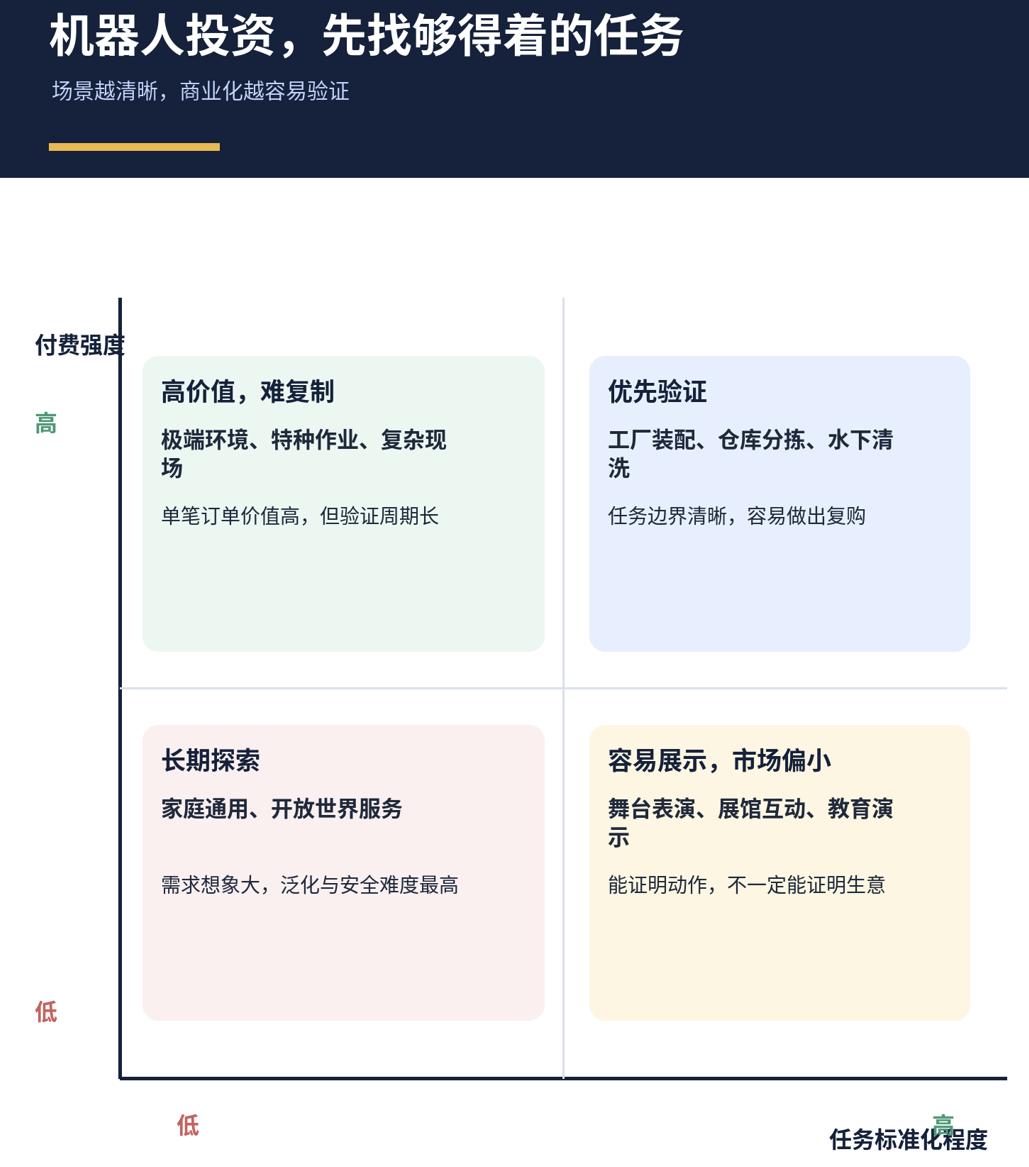
The ontology companies that can stay in the game next need to achieve at least three things at the same time: mass production and delivery with positive gross profit, cash inflow that does not depend on the next round of financing, and continuous repurchase from customers in a specific scenario. If two of the three are missing, no matter how complete the business story is, the company is just waiting for the next financing to arrive.
No one thought CloudMinds would collapse before it actually went bankrupt.
This is the most real risk in this industry at the moment: the knockout round does not look at valuation, but at bills.
This article is from WeChat official account "Investment Banking Circle", author: Qianyan Jun, published with authorization from 36Kr.