Do robots and artificial intelligence need to pay social security contributions?
During the 2026 Two Sessions of China, a labor dispute case released by Beijing Municipal Human Resources and Social Security Bureau goes as follows: a technology company fully shifted to AI automated data collection, dissolved the traditional data collection department, and terminated Liu's labor contract on the grounds of "major changes to objective circumstances".
The Beijing Municipal Labor and Personnel Dispute Arbitration Commission ruled that it was illegal for the enterprise to transfer the risk of normal technological iteration to its employees and dismiss the worker.
The truly striking part of this case is not that AI has taken away a job, but that it exposes the core drawback of the social security system: contributions have always been tied to payroll.
When enterprises replace human workers with machines, the total payroll decreases, and the contribution base shrinks accordingly;
When workers are pushed to platform jobs, gig work and self-employment, the contribution chain breaks.
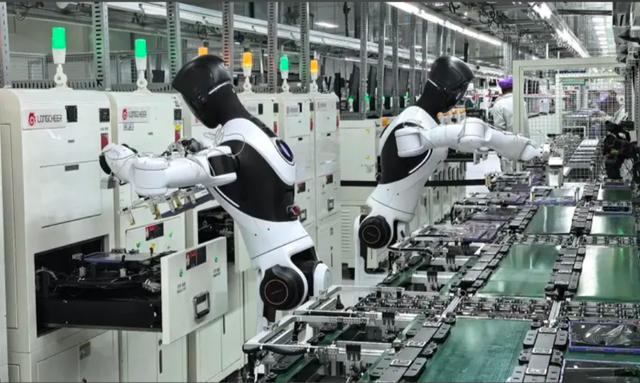
Robots are equipment, and artificial intelligence is a technical system. Neither of them is a civil labor subject, so of course they cannot "pay social security contributions".
Zhang Dongwei, an expert in technology and internet sectors, believes that the so-called "robots paying social security" essentially raises a question: should part of the cost saved by replacing human workers with machines be returned to the social security pool?
This does not mean opening accounts for robots, but ensuring that the cost of technological substitution is not solely borne by the displaced workers and public finance.
The anchor of social security has long been tied to payroll slips
China's modern social security system was initially a supporting project for state-owned enterprise reform. Its goal was very practical: enterprises should not run social services, and individuals should not be tied to their employing units.
Social security is the safety net of the market economy, but the material that weaves this net has always been labor relations and payrolls.
The urban employee endowment insurance combines social pooling and individual accounts, and its current-period balance is highly dependent on the contribution flow on payroll. Enterprises pay 16% of the total payroll, and individuals pay 8%, which is deducted from their payroll slips and transferred to the fund pool.
This system is established on three premises: there are enough contributors, the total payroll is large enough, and the contribution chain is sufficiently continuous.
If any of the three is missing, the fund pool will face shortage.
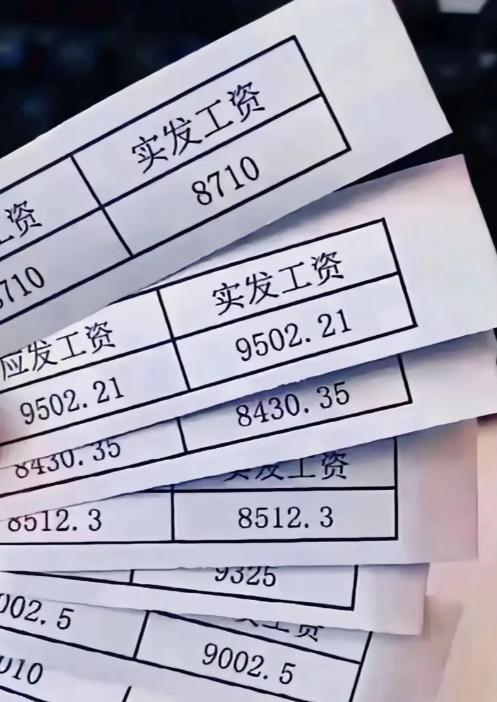
The budgeted revenue of the national social security fund in 2025 was 12.6 trillion yuan, of which fiscal subsidies were about 2.9 trillion yuan, accounting for about 23% of the total revenue; the revenue still exceeded expenditure in that year.
However, this contribution structure is already worthy of vigilance: the growth rate of fiscal subsidies is significantly higher than the growth rate of insurance premium revenue.
What is more troublesome is the other end of the contribution chain. There are about 320 million flexible employees in China, but only about 70 million of them participate in urban employee endowment insurance, with the participation rate less than 30%; among the insured, about 38% stop paying contributions halfway.
This is not a small loophole, but the contribution base is leaking.
Therefore, the erosion of the social security contribution base may not first manifest as "robots taking jobs".
The more common scenario is: jobs still exist, but the contribution relationship changes from continuous to intermittent, from being paid by the employing unit to being fully borne by the individual, or even the contribution stops completely.
The unemployment rate does not reflect this part, but the fund revenue does.
The old model of tying social security to payroll has hit a wall.
Fool! It is not the steam engine, but the computer and the internet
Some friends put forward an extreme metaphor, asking why no one questions whether steam engines or cars should pay social security contributions.
To compare the impact of technological shocks on social security, we must choose an era when the social security system already exists.
When steam engines and cars became popular, the modern social security system had not yet been established, and there was no comparable "contribution-benefit receiving" chain. Such a forced analogy is completely worthless.
The era of computers and the internet is the real comparable scenario: social security already exists, technologies both replace jobs and create new jobs, and leave behind the legacy of broken contribution chains for platform workers and flexible employees.
Zhang Dongwei, who has been engaged in relevant work since 1995, has witnessed the popularization of computers and the internet, and has summed up two experiences.
First, technological substitution has not completely collapsed the social security contribution base as a whole.
Jobs like typists, switchboard operators and traditional retail positions have disappeared, but the IT, e-commerce and platform economy have created new jobs. Urbanization and the expansion of social security coverage have advanced simultaneously, and the contribution base is still expanding on the whole.
Second, it has left an unsolved legacy: the broken contribution chain for platform workers and flexible employees.
A large number of food delivery riders, online car-hailing drivers and freelancers are in a state of "having income but no stable social security contributions". Today, the participation rate of flexible employees is less than 30% and 38% of them stop paying contributions, which is exactly this legacy.
AI and robots are likely to amplify both of these two trends at the same time.
First, substitution is concentrated in standardized, codified positions that account for a high proportion of the total payroll.
Chatting scripts for customer service, work order entry, and standard Q&A can already be handled by large models; warehousing sorting and last-mile distribution are being taken over by mobile robots and automated systems.
These positions are exactly the backbone of the social security contribution base: they have a considerable total payroll, relatively standardized participation in social security, and relatively continuous contribution chains.
Second, the displaced workers may not be "unemployed", but more likely to face "low contribution or interrupted contribution".
The era of computers and the internet has proved that even if the total employment does not collapse, the contribution chain can be broken at the individual level.
Current AI substitution is taking place in high-value white-collar positions. If the substitution rate continues to expand to middle and low-skilled white-collar and blue-collar positions, this broken chain will spread from the periphery of the platform to the core of formal employment.
Therefore, in Zhang Dongwei's view, the substitution by robots and artificial intelligence not only changes the quantity of employment, but also the contribution quality of employment.
The shrinkage of the contribution base occurs within the participation structure, not simply in the total employment volume.
The era of computers and the internet has generally maintained the contribution base, but has not solved the problem of broken contribution chains; what AI needs to answer is whether this legacy problem will become the main problem.
Enterprises calculate small accounts: replacing workers with machines saves costs;
Society needs to calculate big accounts: part of the saved cost should be returned to social security.
How to improve the system
When the concept of "robots paying social security" is implemented into policies, the first thing that comes to mind is the "robot tax".
This concept is not new and there is no consensus on it. In 2017, the European Parliament discussed granting legal personality to robots and taxing their owners, but the proposal was rejected. In 2018, South Korea reduced the tax credit for automation investment of large enterprises from 7% to 3%, which was called "quasi-robot tax" by the outside world; some studies show that the installation volume of industrial robots in South Korea has decreased compared with that in Japan afterwards.
At present, no country has formally legislated to levy the narrow-sense "robot tax".
This topic is not undiscussable, but we should not only focus on physical robots.
It is difficult to define the scope of robot tax: what counts as a robot? Does software automation count?
In addition, it will lead to double taxation: enterprises have already paid value-added tax and income tax when purchasing and using the equipment.
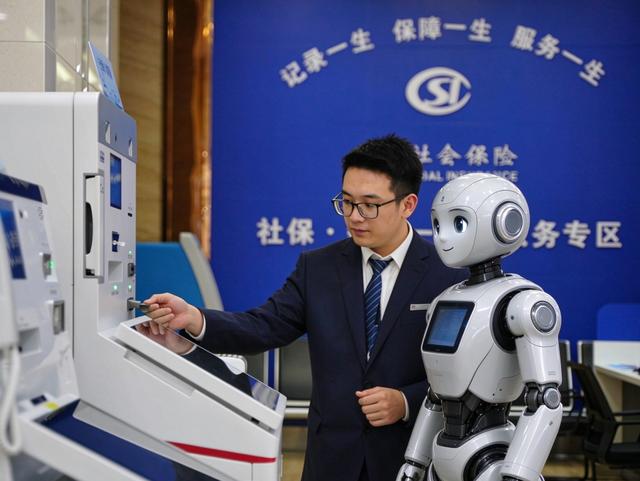
1. A more operable approach may be to target the "social costs saved by replacing human workers with machines" and build a compensation channel.
At the 2026 Two Sessions, some deputies have proposed to set up a "special fund for technological transformation" to provide post transfer subsidies, resettlement subsidies and reemployment rewards for employees in industries and enterprises that are being replaced, and appropriately adjust the tax burden of highly automated enterprises that replace a large number of workers.
This is more in line with China's policy context than the "robot tax" with a narrow tax base.
2. Prevent the contribution chain of flexible employment from breaking.
The key is not to shout slogans of "expanding coverage", but to lower the threshold and allow flexible payment of contributions.
When flexible employees participate in urban employee endowment insurance, they usually bear the full 20% of the local average wage by themselves, and only 8% of the contribution goes to their individual accounts. The annual contribution burden in large and medium-sized cities generally exceeds 10,000 yuan.
If the burden is not actually reduced, expanding coverage will become "easy to expand but hard to avoid interrupted contributions".
The legacy of broken contribution chains left by the era of computers and the internet must be prioritized in this round of technological substitution, and cannot be delayed any longer.
3. Carry out stock supplement and flow reconstruction in parallel.
The transfer of state-owned assets to enrich the social security fund has been carried out for many years to solve the historical arrears and stock gap.
The feedback of automation gains needs to solve the flow problem: as value creation shifts from labor to capital, data and technology, the social security contribution base should also adapt to this structural change.
Introducing part of the incremental gains from automation into social security through a broad tax base is more reliable than setting up a new narrow tax targeting "robots".
Insights from Dongwei
Robots will not pay social security contributions. But the cost saved by replacing human workers with machines cannot all become the net profit of enterprises;
The funds for the social safety net must be retrieved from the new mode of production.
First, robots are not the subject of contribution, but the social cost of technological substitution cannot be fully borne by the displaced workers and fiscal subsidies.
Fiscal subsidies accounted for about 23% of the budgeted revenue of the social security fund in 2025. Subsidies can buy time, but cannot replace the construction of the contribution base.
Second, the social security financing should shift from "payroll dependence" to "diversified contribution base".
The declining support ratio within the system, the less than 30% participation rate of flexible employees, and the 38% interrupted contribution rate all point to one thing: the stability of payroll as the only anchor point is declining.
The era of computers and the internet has maintained the contribution base, but left behind the broken contribution chain of platform employment; if AI expands to the core of formal employment, this legacy will become the main problem.
Third, the most operable starting point in the short term is not the "robot tax", but three parallel measures: establish a compensation mechanism for the social cost brought by replacing workers with machines; substantially lower the contribution threshold for flexible employment, and give priority to "ensuring continuous contribution" over "expanding coverage"; introduce part of the incremental gains from automation into social security financing through a broad tax base.
Let the contribution base follow the value creation, and do not rigidly stick to payroll slips.
Let the benefits and costs of technological substitution be realigned on the same social contract.
This article is from the WeChat Official Account "Zhang Dongwei", the author is Zhang Dongwei, and it is published by 36Kr with authorization.