Why doesn't BYD, which is fully capable of manufacturing chips, produce tires?
You've probably heard that one of BYD's favorite practices is to bring in-house the work that would otherwise be done by suppliers.
Batteries, motors, electronic control systems, automotive-grade chips, and even the underlying software for complete vehicles are all independently developed and produced by the company itself.
However, a close look reveals a very interesting exception: BYD never manufactures its own automotive tires, and 100% of its tire supplies are sourced from external suppliers.
This sparks curiosity: if BYD can independently produce even automotive-grade chips, why does it refuse to make tires itself?
01 The Boundary of BYD
After checking the original factory configurations of all BYD's vehicle models one by one, we can find that the choices of tire suppliers vary from case to case.
Take the Seal, which is a model mainly targeting the European market, as an example: the overseas version of this model is originally equipped with Nexen Tires from South Korea.
For mainstream high-volume family car models such as Song PLUS, Yuan PLUS, and Han EV, most of their original tires are from domestic Chinese brands including Linglong Tire and Chaoyang Tire.
For the high-end supercar Yangwang U9, its tires are also sourced from foreign manufacturers such as Michelin, Pirelli, and Giti.
From family cars to export models, and even to million-level supercars, BYD's tire procurement actually corresponds to different supply systems.
But no matter whether domestic brands or international brands are used, one thing remains unchanged: all tires are provided by external suppliers.
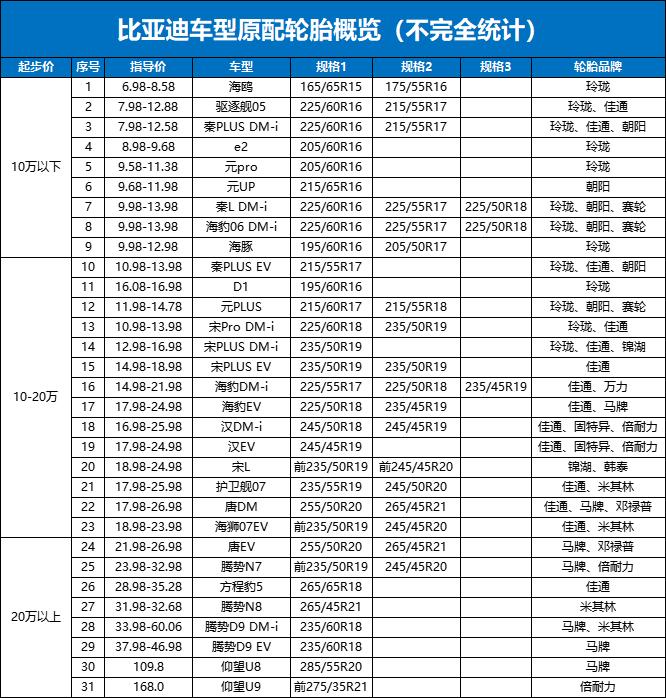
Many people have a doubt: BYD has overcome all the technical barriers of chips and batteries which are known for high technical thresholds, while tires are just rubber products with seemingly extremely low manufacturing difficulty, so why is BYD determined not to produce them on its own?
This idea does make some sense.
BYD has ranked first in global new energy vehicle sales for several consecutive years. In 2025, it sold more than 4.6 million vehicles. Calculated on the basis of four tires per vehicle, its annual procurement volume of original tires exceeds 18 million units.
Just imagine what a huge market share this is?
02 But Things Are Not That Simple
In fact, the manufacturing logic of the tire industry is a completely different track from the three core electric systems and chips.
Although power batteries and automotive-grade chips have high technical thresholds, they share a common feature: as long as the technical route is successfully verified, mass production can be replicated with equipment, capital and professional teams.
Take batteries as an example: after the material system and cell technology are developed, production lines can be built, equipment can be purchased, and production capacity can be expanded. It only takes three or four years to grow from a single test line to a super factory. The same is true for automotive-grade chips: after repeated tape-out, testing, and revision, the technology will mature and then move into large-scale production.
However, for tires, it is far from enough to simply "develop the technology". The real difficulty lies in the unavoidable "devil's triangle".
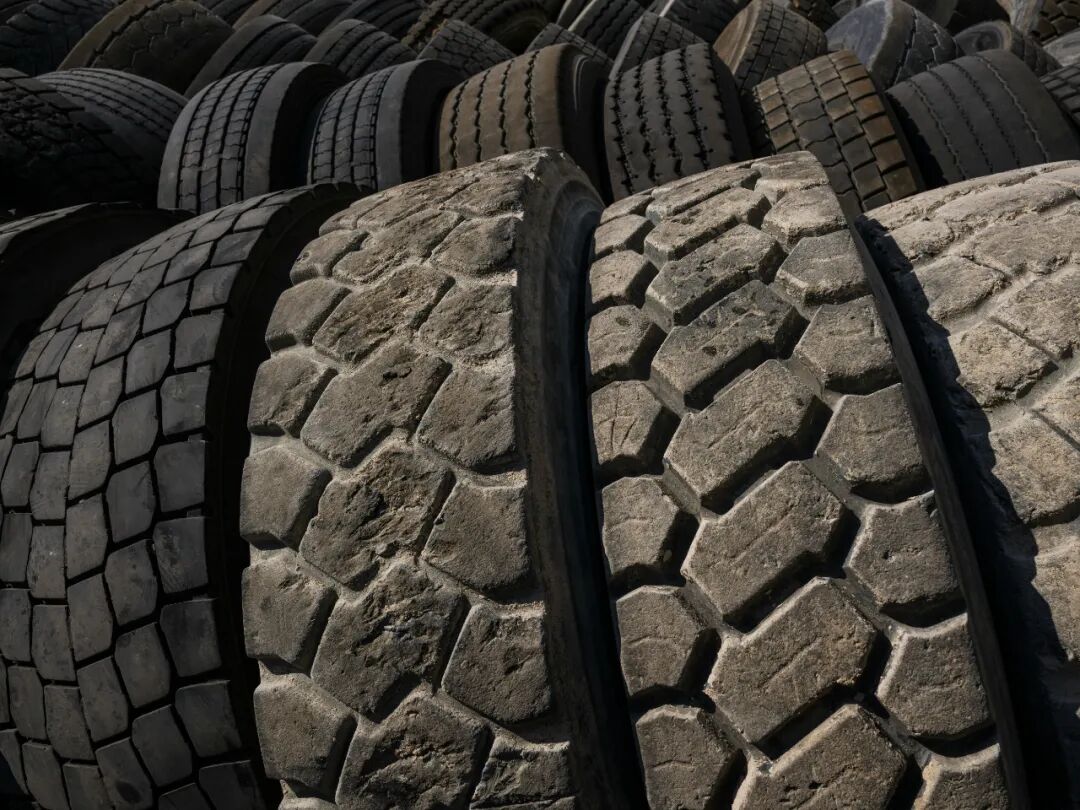
Close-up of tire tread patterns. The "devil's triangle" composed of rolling resistance, wet skid resistance and wear resistance means there is no optimal solution for formula deployment.
A qualified tire needs to ensure the vehicle runs power-efficiently, guarantees the vehicle can brake safely on rainy days, and also withstands long-term wear. First, let's talk about rolling resistance. The less effort the tire takes to roll, the less electric energy the car consumes, and the longer the cruising range of the electric vehicle will be.
But here comes the problem: when the resistance is reduced, the grip performance is often affected.
Especially on rainy days, when the road surface is covered with water, the tire needs to drain water and firmly grip the ground at the same time to ensure that the braking distance will not be too long and the vehicle will not slip easily. At the same time, the tire cannot be too "non-durable". If the tire wears out quickly and needs to be replaced after tens of thousands of kilometers, consumers will definitely not be satisfied. Therefore, tire engineers have been working hard to balance the three mutually restricting performances of power saving, grip and wear resistance, trying their best to achieve all three at the optimal level at the same time.
If you adjust any one of the three performances to a higher level, the other two often have to make compromises accordingly.
A third-party test once did a similar comparison: researchers only adjusted the rubber formula of the tire by adding more silica, which is a kind of fine powder mixed into rubber, and the resistance that the tire needs to overcome when rolling can be reduced by about 12%. It sounds cost-effective: with lower resistance, the car consumes less power, and the cruising range of the electric vehicle can be increased by about 4%.
However, synchronous test data shows that at a speed of 80km/h, the wet braking distance increases by 3.7 meters; the wear resistance of the tire drops by 22%, and the expected service life under normal household use is shortened from 60,000 kilometers to about 46,000 kilometers.
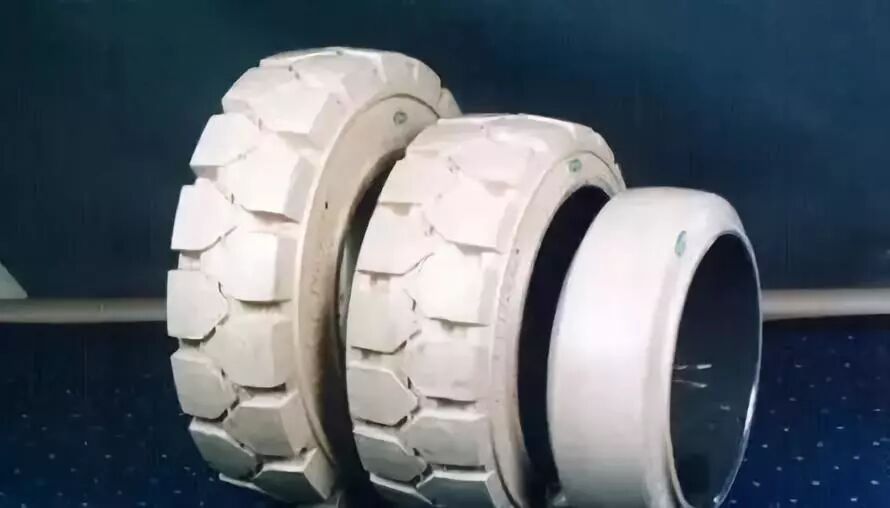
The world's first tire was actually pure white.
If for the sake of safety on rainy days, we optimize the tread formula to make the rubber softer, the wet braking distance can be shortened by 4 meters, and the grip safety will be significantly improved. But the cost is that the tire wear speed increases greatly, and it will reach the legally specified wear limit in China after only 32,000 kilometers of daily urban commuting.
If we focus on durability and increase the hardness of the rubber, the tire can run stably for more than 60,000 kilometers, but the rolling resistance will rise by 8% at the same time, and the actual cruising range of the whole vehicle will be directly reduced by 3%.
Every slight adjustment of the material ratio requires re-producing test samples, re-conducting bench tests, carrying out real-vehicle tests under different working conditions such as high temperature, low temperature, dry ground, wet ground, high speed, and bumpy roads, and re-accumulating test data.
Since 1891, Michelin has conducted more than 60,000 sets of rubber formula tests in total over more than 130 years, and its cumulative global real-vehicle road test mileage has exceeded 80 billion kilometers, gradually building its exclusive formula database little by little.
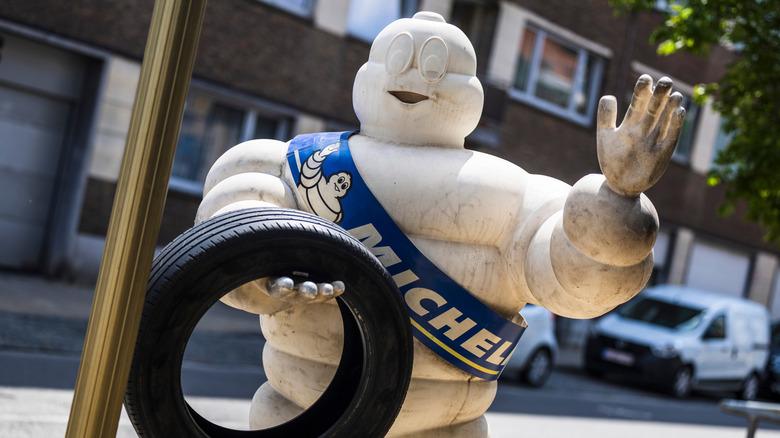
Michelin's high-performance tires have built a hard-to-replicate data moat with more than 130 years of development, over 60,000 sets of formula tests and 80 billion kilometers of road tests.
These data accumulated through time, mileage and repeated trial and error cannot be replicated in the short term by any amount of capital, equipment or teams.
03 How Difficult Is It to Make High-Quality Tires
In addition to the technical accumulation threshold, the tire industry is also a typical industry with heavy investment, long cycle and low profit.
First, let's look at the investment. The total cost of plant construction and equipment for a modern fully automatic steel-belted tire production line can exceed 3.5 billion yuan. After the money is invested, production cannot start immediately. It takes at least two years from the completion of the factory construction to the official operation.
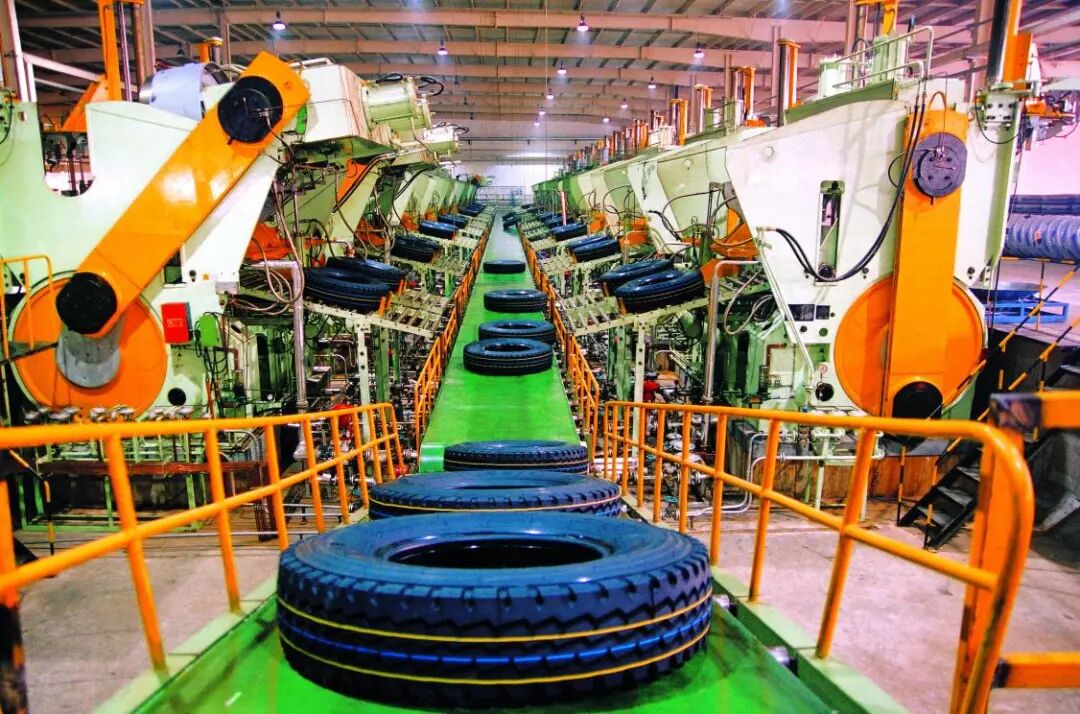
Intelligent tire production workshop of Sailun Group.
From the R&D of a brand new tire formula to the final adaptation to a specific vehicle model, the whole process includes calibration, testing, and verification, before the tire can be stably installed on mass-produced vehicles. The entire cycle may take 8 to 10 years.
What's more realistic is that the profit brought by such a long cycle is not high.
The average net profit margin of leading domestic listed tire companies is only about 3% to 5%.
In addition to high investment, slow return and low gross profit, there is an even higher threshold for the tire industry: production equipment.
The five-component extruder used for high-end passenger car tires is not an ordinary industrial equipment. It needs to process a variety of rubber materials at the same time, and has extremely high requirements for temperature control, material ratio and molding precision. For a very long time in the past, these core technologies and equipment were mainly controlled by European enterprises.
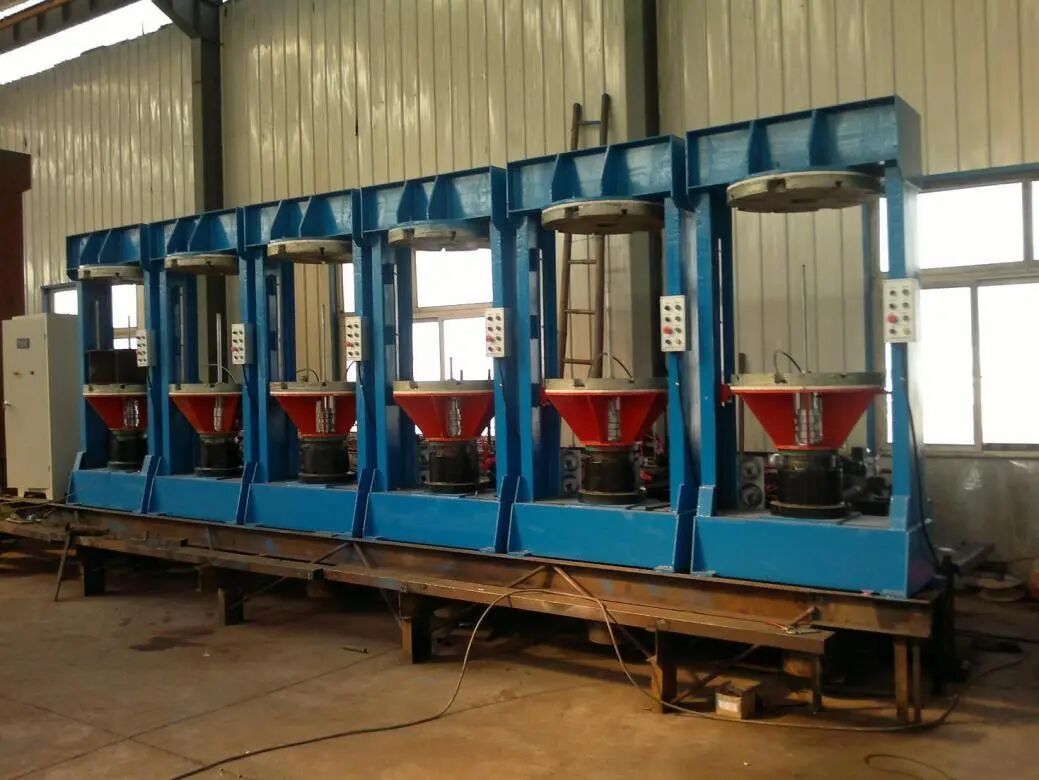
Tire shaping and vulcanization equipment. The core equipment in the high-end tire molding process has long been dominated by European equipment manufacturers.
Domestic tire companies still rely on imported high-end precision production equipment. The procurement cost of a single unit exceeds 10 million yuan, and the technical adaptation and patent authorization cycle takes more than two years.
For automobile manufacturers, capital, talents, land and production capacity are all limited. BYD's resource investment is all concentrated in high-value, high-barrier, high-autonomy core tracks such as three core electric systems, automotive-grade chips, intelligent chassis, and high-end complete vehicles.
Tires are general-purpose parts with global standardization, full competition and extremely sufficient suppliers, so there is no need at all to build self-owned production capacity.
Since there are already a group of professional companies in the market that can produce mature and low-cost tires, why would BYD take up its own production capacity, maintain a dedicated team, and invest billions of yuan to start all over from scratch?
Not only BYD, but also all mainstream global automakers including Tesla, Volkswagen, Toyota, BMW and Mercedes-Benz adopt the tire outsourcing model. Leading automakers basically do not build their own tire mass production factories. This is the normal division of labor formed by the global automotive industry over a long period of time.
04 China's Tire Business
Stepping out of BYD's choice and looking at the entire Chinese tire industry, we can better understand the real industrial status behind it.
The 2023 industry white paper released by the Global Rubber Industry Association shows that China's annual tire output accounts for more than 33% of the global total output, ranking first in the world for many consecutive years.
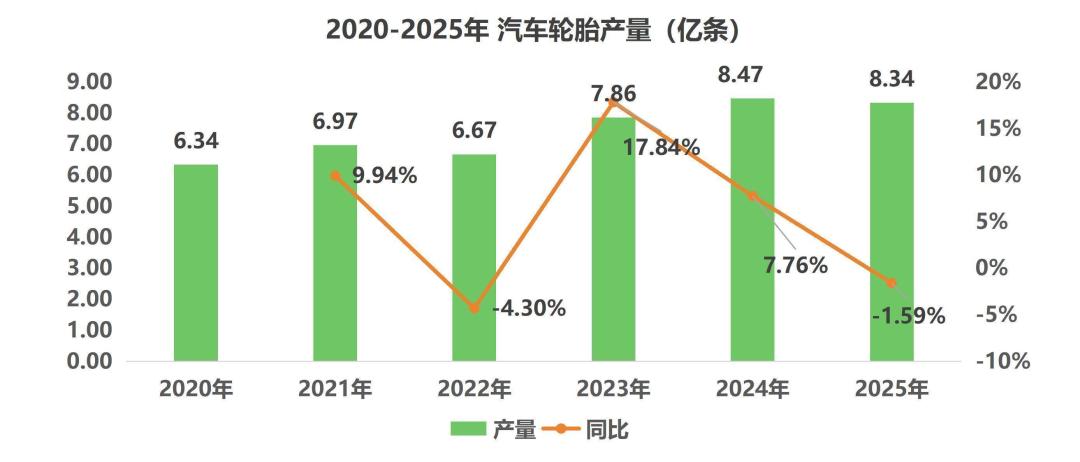
The production capacity of four Chinese enterprises, namely Zhongce Rubber, Linglong Tire, Sailun Tire and Triangle Tire, ranks among the top in the world.
Among them, Zhongce Rubber has an annual production capacity of more than 80 million tires, and Linglong Tire has an annual production capacity of more than 70 million tires. The scale of their single factories is completely comparable to the global core production bases of Michelin and Bridgestone.
Not only is the production capacity huge, the actual performance of domestic tires has also achieved substantial catch-up long ago.
From 2023 to 2024, many third-party institutions have conducted horizontal tests, and domestic tire brands such as Linglong, Sailun and Chaoyang have been able to compete head-to-head with international brands such as Continental and Dunlop in indicators including dry ground braking, high-speed noise and rolling resistance.
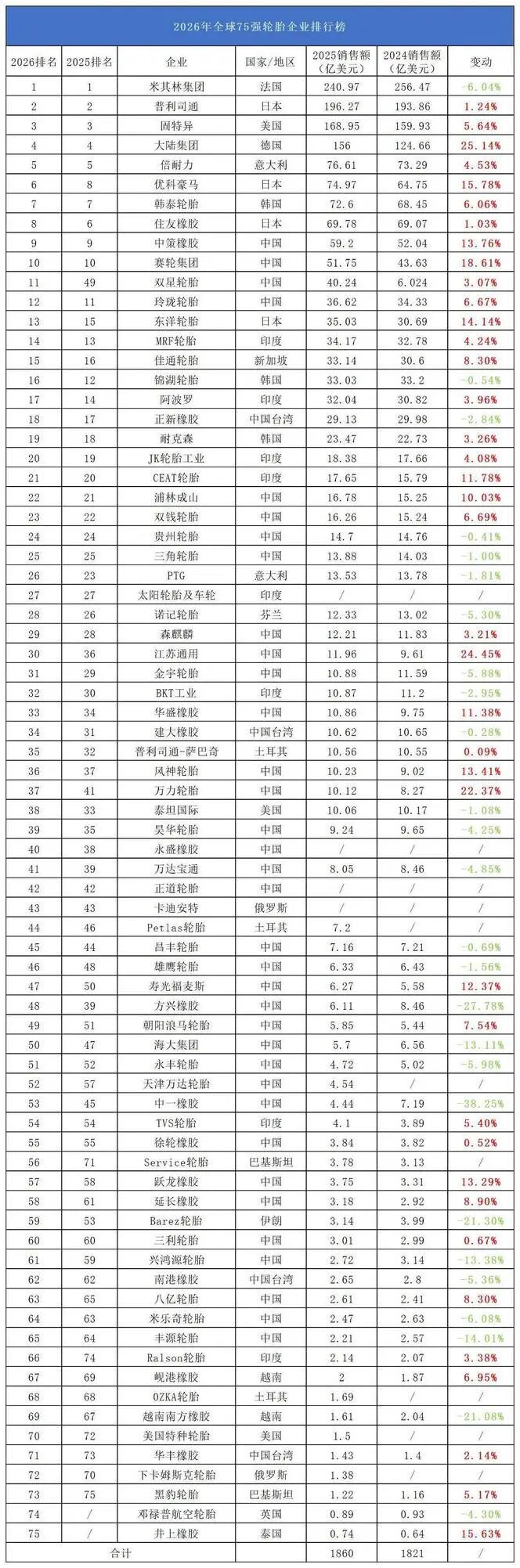
The world's top 75 tire enterprises in 2026.
Especially for low-rolling-resistance tires developed for new energy vehicles, the actual performance of some products even exceeds that of overseas products at the same price range.
But another problem arises: the performance has caught up, but the profit has not.
Take Michelin as an example, its global operating revenue in 2023 was 28.3 billion euros, and its business line operating profit reached 3.6 billion euros.
However, the largest domestic tire enterprise only had a net profit of 1/20 of that of Michelin in 2023.
This is also the most real status quo of China's tire industry: the output ranks first in the world, but the profit always stays at the low level.
Even if the factory scale and tire performance have caught up, there are still several difficulties that keep the profit low. Most of the most critical rubber raw materials for tires need to be imported, and most of the cost of rising raw material prices has to be borne by domestic manufacturers themselves. There are a large number of domestic tire factories with little difference in their products, so they can only compete for customers by cutting prices. Overseas consumers prefer international big brands, so domestic tires cannot be sold at high prices.
These shortcomings in profitability have also become obstacles for domestic tires to enter the overseas original equipment market of complete vehicles.
05 Can Domestic Tires Go Global Along With New Energy Vehicles
To win the original equipment supply orders from overseas automakers, the first step is to break through the deeply rooted consumer perception and supporting rules in overseas markets.
According to the 2026 overseas automotive aftermarket survey statistics, in the European replacement tire market, the purchase proportion of Michelin accounts for 37%, and Continental accounts for 21%; in the North American replacement market, the combined purchase proportion of Goodyear and Bridgestone exceeds 54%.
In the eyes