After working as a film and television producer for a decade, I now spend every day tinkering with "AI toys" alongside my boss.
No one is free from the anxiety brought by AI, but what makes people more anxious is encountering a boss who uses AI to inspect your work outcomes.
All meetings are talking about models, and no one mentions scripts. The reporting sessions turn into a competition showing who can name the newly released version that came out just yesterday, and no one cares about the project progress.
Over the past year, there have been fewer and fewer projects in the film and television industry, while bosses hold more and more meetings, with only one single theme: AI.
Statistics show that over 90% of the micro short dramas launched in the first quarter of this year are generated by AI.
AI has greatly reduced the cost. For the same short drama, shooting with real people costs around 300,000 RMB and takes 1 month; making it with AI only costs 10,000 to 20,000 RMB, requires 10 people, and takes only two weeks.
The saved money did not stay in the hands of the production teams, and 80% of it was spent on purchasing traffic. The revenue per 10,000 views has dropped from 30-100 RMB last year to 5-10 RMB.
This issue of Micro Stories tells the stories of four practitioners in the film and television industry. Among them:
One has been a producer for ten years, and now his daily work is to accompany his boss to "tinker with gadgets"; one switched from film and television planning to a large model company, translating his years of camera experience to AI line by line.
One's first job was writing code for an interface that exposes its flaws the moment it is opened; another one did the accounting and found that among more than 70 projects, only 1 can break even.
The four people are in different positions, but they are facing the same thing: AI has entered the company, but no real projects have come in.
The following are their real stories:
The boss held up his laptop,
forcing us to "tinker with gadgets" one by one
Xiao Wen, Producer of a film and television company
Since the beginning of this year, I have often been in a trance. Am I working in a film and television company, or an internet company?
Our company used to be a leading film and television company, but in recent years, its development has encountered obvious bottlenecks. I have been a producer in this company for more than ten years, and I have witnessed all stages of this industry from its peak to the current impact of AI and business contraction.
The biggest impact came from Seedance 2.0 in February this year. As soon as this product was launched, almost the entire industry was discussing it and feeling anxious, and my boss was exactly among the most anxious group of people.
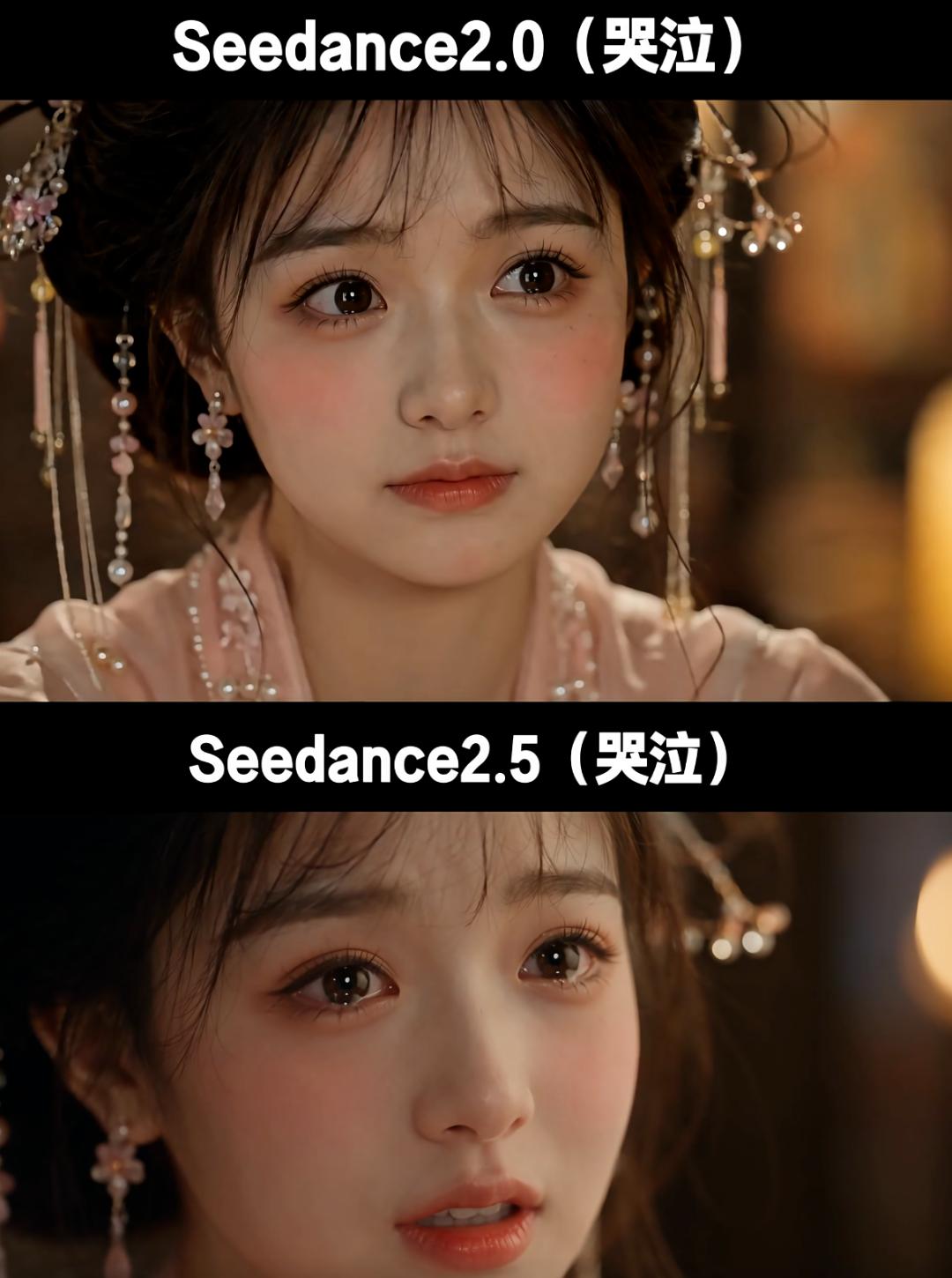
Figure | Seedance has now been updated to version 2.5
Since then, the atmosphere of the company has changed completely. The boss began to require a company-wide AI mobilization meeting every week. This meeting is quite "unrealistic", it does not discuss specific projects or progress, only talks about what new technologies have emerged in the industry, how technologies transform the film and television industry, and discusses the iterated AI technologies of different versions recently.
The boss's most frequent words are "time waits for no one". Anyone who can accurately name the AI technology news that came out yesterday is a hardworking good employee, while the rest are labeled as "leftover people from the old era" who are about to be eliminated.
Especially in the months when "Lobster" was popular at the beginning of this year, the boss believed in all-round automation.
He firmly believes that AI can penetrate every link of our work and improve efficiency, and he forces every employee to use AI tools in their daily work.

It is mandatory that every employee must use AI tools in their daily work.
He is also very "obsessed" with it, and takes the lead in doing so. Holding his own laptop, he walked to everyone one by one, forcibly recommending all kinds of AI tools he just learned to use, requiring us to download them on the spot, learn them on the spot and show him our learning results.
The meeting room was very quiet, and only the boss's voice could be heard.
Some people would open the interface to cope with it for the sake of face, while some people just stared at the project progress they prepared for the report in a daze and kept silent. No one discussed projects anymore, no one cared about the project plan, whether the script was well written, or whether the budget could be controlled.
The focus of everyone's work has become catering to the boss's anxiety.
Later, it became even more absurd. The company built an AI script evaluation system, claiming that it can simulate the evaluation methods of the platforms to score projects. I have been optimistic about a project that has been on my hands for more than a year, but the boss has always hesitated. After throwing it into the system for testing, the score was unexpectedly not low.
The boss was overjoyed at that time and asked me what the next promotion plan was.
I had very mixed feelings at that time. In the past, I should have been happy that the project could start, but that day, staring at the rating given by AI, I suddenly felt confused. I have been a producer for ten years, and my judgment accumulated from countless projects I have handled and countless pitfalls I have stepped into, in the end, is not as useful as the score generated by a tool.
At that moment, I really felt that the experience I had accumulated over so many years seemed to depreciate all of a sudden.
After a long time, my colleagues and I have figured out this set of survival rules. We began to develop some functions that look very smart and cutting-edge, but are actually completely unworkable and cannot be used in the actual project process, to cope with the boss's "sudden inspection".
For example, we used AI to make an "IP Development Assistant": throw the original text of IP materials such as online articles and novels into AI, let AI extract segments and output story outlines, and then tell us what type of film and television drama these IPs are suitable to be developed into.
Strictly speaking, AI can give more or less some suggestions, but people in this industry can see at a glance that AI does not really understand those IPs, the outline it extracts will make you feel that the most charming part of this IP is completely tasteless.
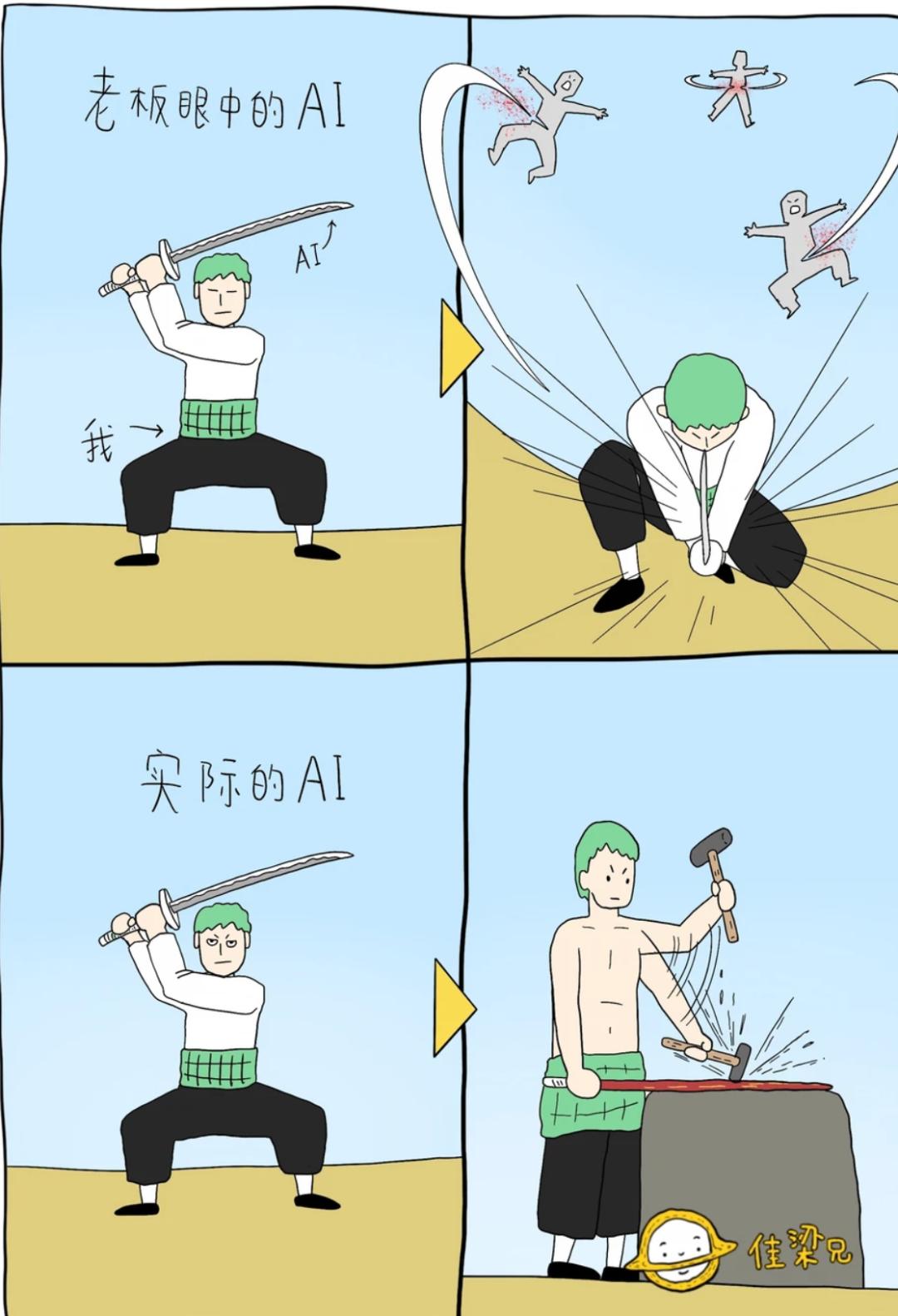
Figure | Image source (@Jialiangxiong's Vitality Bullet)
I analyzed that its mechanism is very simple and crude, which is to simply use theme tags to mechanically match and classify the public information obtained from the Internet, without much "human touch". But the boss just believes in these conclusions, and even takes it as the core reference for the department's IP development at present.
We privately call this kind of thing "tinkering with gadgets" — no matter whether it is useful or not, as long as it looks valuable and can be used to report to the boss, it is enough.
Sometimes, when the boss occasionally reads a reference book related to screenwriting and project development, he immediately asks us to feed the whole book to AI, and then use the theories in the book to build tools for script writing or project evaluation.
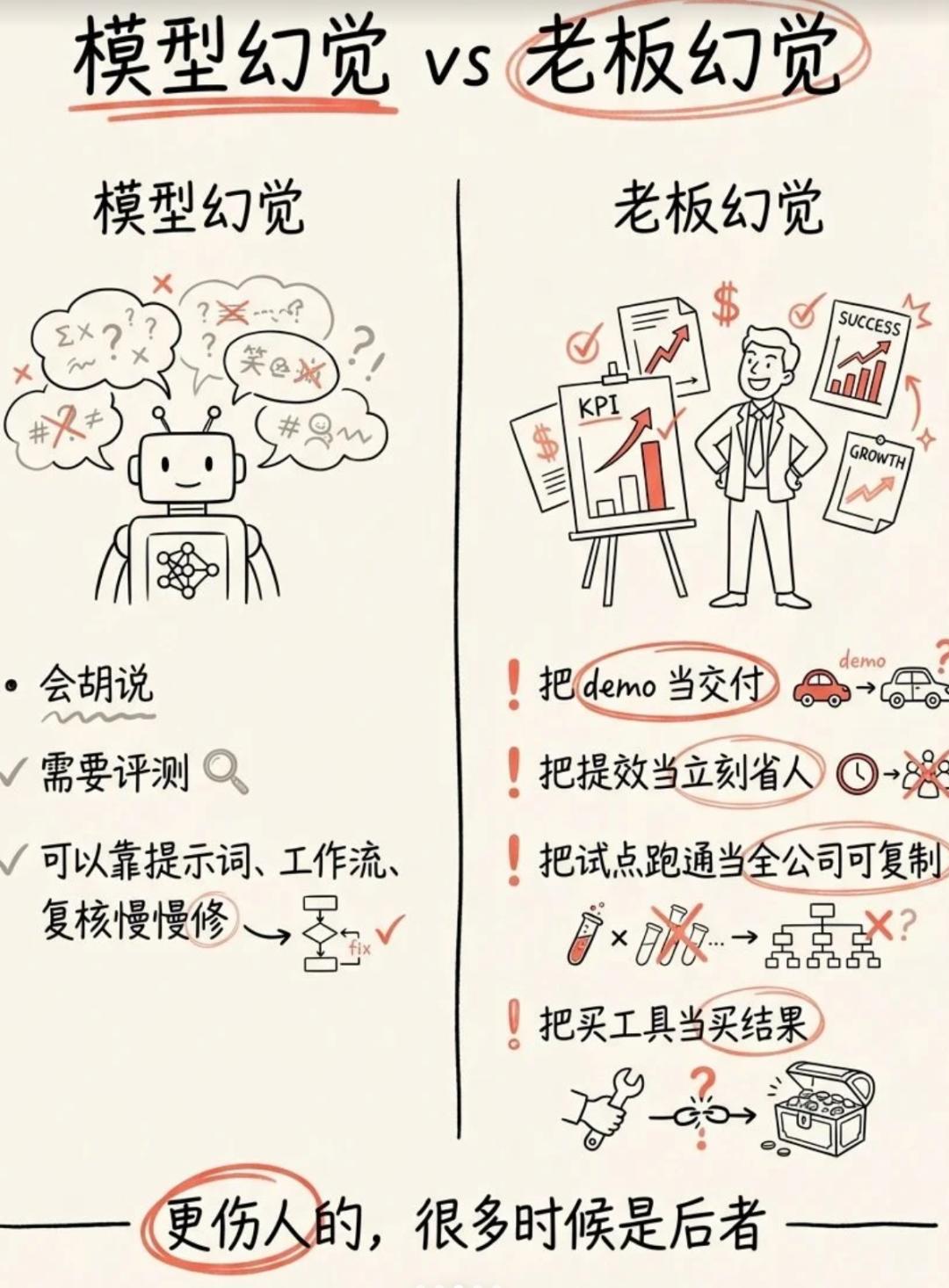
But the actual situation is that this kind of tool only rigidly applies the dogma in the books, and it will be disconnected when facing the changeable character and plot choices in real projects, and AI often fabricates non-existent drama cases and industry conclusions, which is what everyone often calls hallucinations, and it cannot be put into real projects at all.
This is not the most absurd thing. What makes me most incomprehensible is that the boss asked us to use AI to develop a tool for video project review meetings.
He asked us to use AI to find the methods of the seven major evaluation dimensions "Script Workshop" and the three-dimensional evaluation system for drama evaluation shared by platforms such as Tencent, Youku and iQiyi, and then directly use AI to apply these systems to build a simulation project review tool.
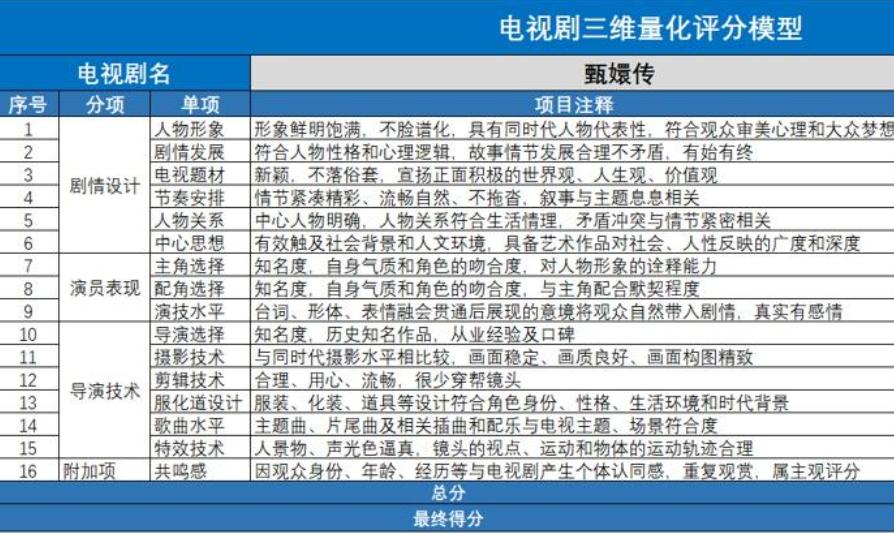
Figure | The rumored three-dimensional quantitative scoring model for TV dramas
This is the most "nonsensical" project we think. Everyone knows that AI is inherently inclined to cater to users. If you tend to be optimistic about a project, it will fully demonstrate the advantages of the project. If you want to find faults, it can also forcibly dig out a bunch of problems, and there is no objective and independent judgment at all.
In the past, the internal review process of our video platforms was a mechanism with cross-participation of multiple departments and multi-dimensional three-dimensional judgment. The preliminary script review and finished film evaluation belong to different positions. Different reviewers stand in the position of their own departments, and their evaluation standards are completely different. The whole set of evaluation logic will also be dynamically adjusted according to the project type and schedule, which theoretically cannot be completely replicated.
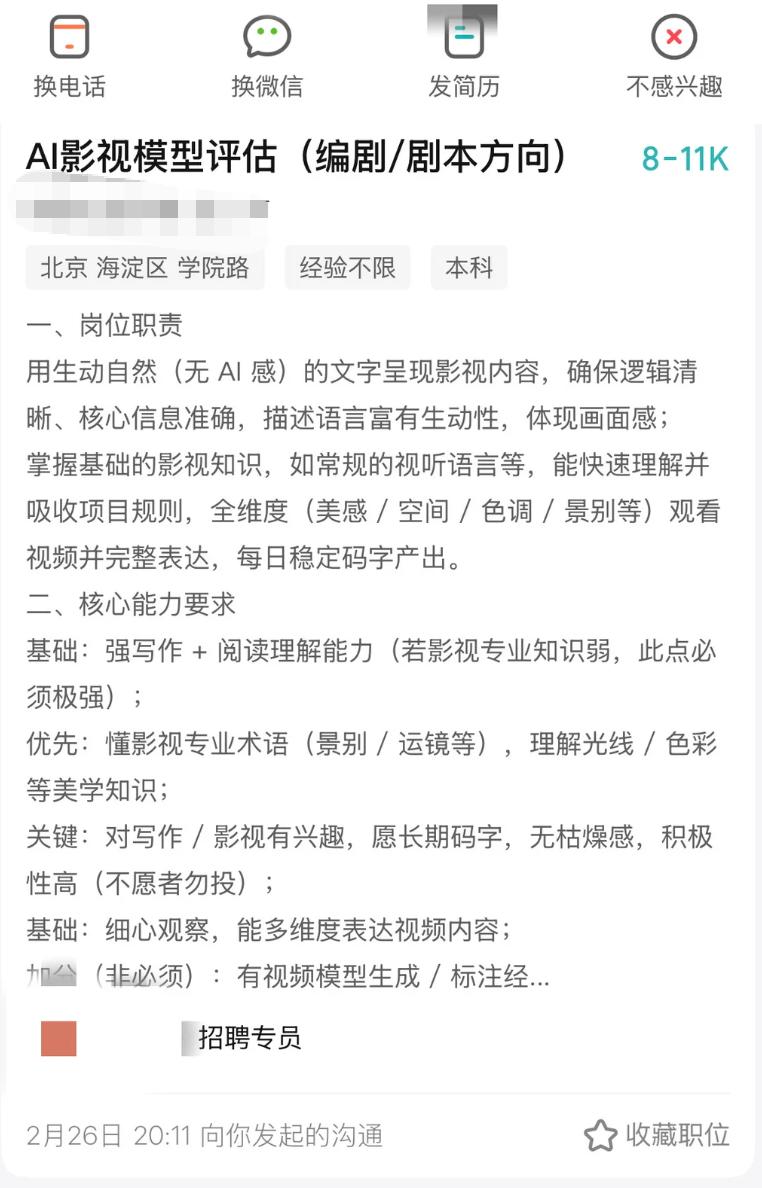
Figure | AI film and television model evaluation position on Boss Zhipin
AI has this kind of "magic power". Its fast response speed makes you feel that you are omnipotent, but in fact, most of the things it delivers are difficult to apply to the market scenarios. I have been doing this kind of work for more than a year that "looks very busy, but actually nothing has been achieved".
The basic salary in the film and television industry is not high, and the main part of the income comes from project bonuses. In the first few years when I just joined the company, there were sufficient projects, so I could get some bonuses. In recent years, the overall market has shrunk, and there are fewer and fewer projects. I haven't had a serious project landed for a year or two, so there is no need to think about bonuses.
But what actually makes me most anxious is my future career planning.
At the age of 35, it should be the golden period for a producer, when the accumulation of experience, energy and resources is at its best to produce good works.
But we happen to be in such a period, projects cannot be launched, and the income cannot go up. The most pity thing is that the best career time is wasted like this.
I want to change jobs, but the whole industry is like this, there is no place to go; if I stay here, I feel upset watching the time being wasted day by day.
I translated my camera experience,
line by line to AI
Xiao Wei, Large Model Video Generation Test Specialist
I used to be a film and television planner, but the leading domestic film and television company I worked for was merged at the beginning of last year, so I was eliminated from the team.
After being eliminated from the team, I took a gap for more than half a year. When I wanted to go back to work, I found that "the times have changed". The number of positions in the film and television industry has decreased sharply. I have submitted countless resumes, either there is no response at all, or the salary is directly cut in half.
In the end, I joined the AI video generation test position of a leading large internet company. The job description says they are looking for someone who "understands film and television camera work and content logic", and the salary is much higher than when I was a planner.
The average salary of the previous film and television planner position is about 10k RMB. If you can't follow a project, you can only get the fixed basic salary every month. The starting salary marked for this position is 15k RMB (usually marked as 15~25k RMB), and large companies also have considerable overtime pay.
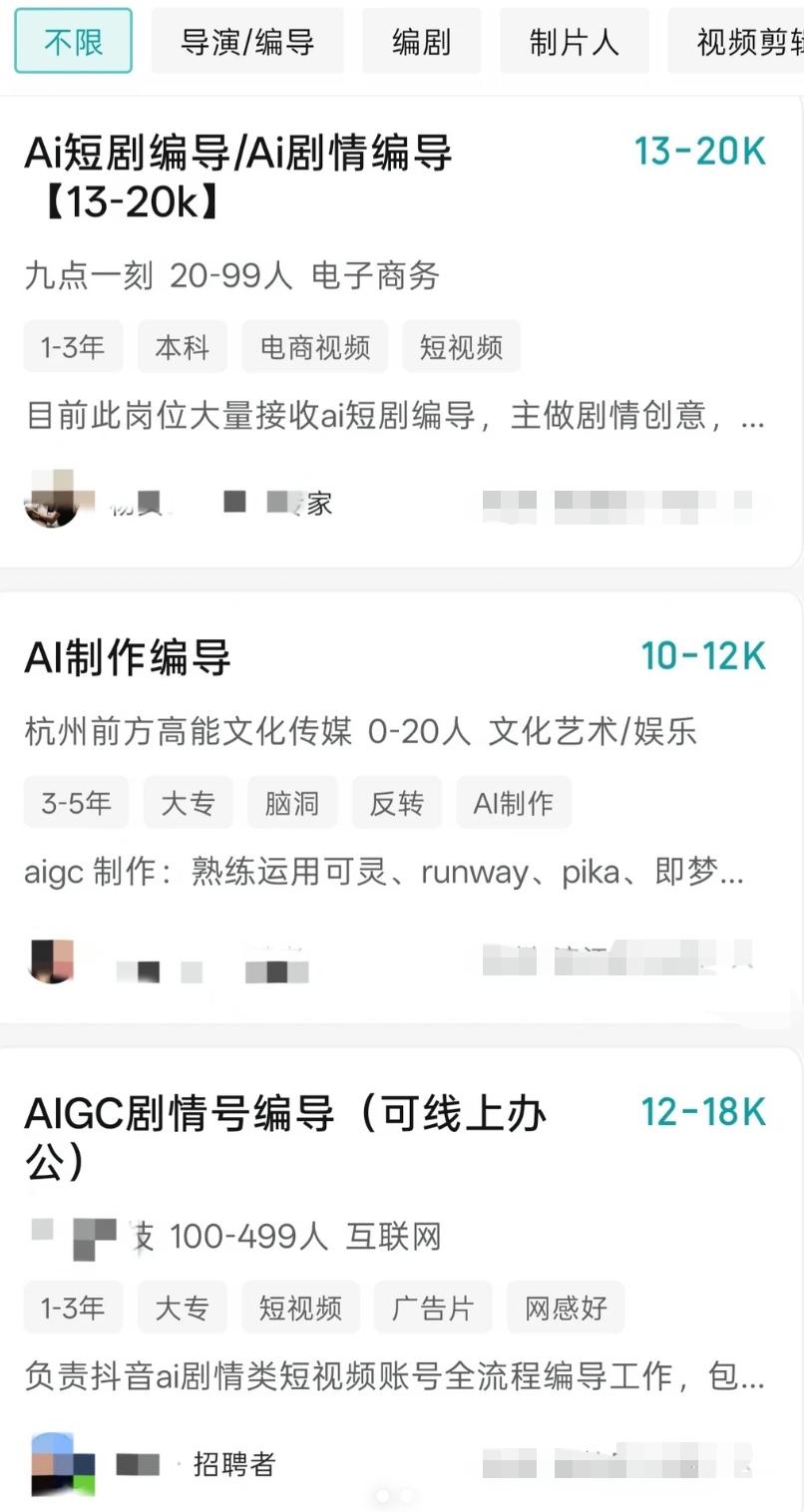
I got the offer soon.
After joining the company, I suddenly felt that my current work made me feel like I was back in school. I am responsible for translating the short, vague, perceptual and colloquial scene descriptions into professional film and television camera language accurately, and feeding them to the AI model.
For example, for a simple sentence "the alley at dusk", I need to disassemble the camera position, light, color tone, dynamic details of the scenery or objects, and calibrate them little by little, so that the pictures generated by AI conform to the film and television aesthetics.
There are many people in the company who have the same professional background as me. Some are from formal film and television academies such as Central Academy of Drama and Beijing Film Academy, and some are from Tencent, iQiyi and Youku. We jokingly call this place the "re-employment base for film and television practitioners".
After work, we get together to chat, and all of us are sighing that in the AI era, we seem to be slowly overdraw our years of industry accumulation.
We are like an "experience container", distilling all the camera aesthetics, shooting logic and content perception we have accumulated for years and transmitting them to the AI model. While working, we are also very sober — the harder we calibrate the model now, the faster we will be replaced in the future.
But what really makes me feel creepy is not how realistic the pictures generated by AI are, but that one day I suddenly figured out the essence of