Yu Minhong Builds the Offline Dream for East Buy
Another year of the "Double 11" shopping festival has kicked off, with major domestic e-commerce platforms successively announcing their promotion rules.
On October 15, Tmall held its 2026 Double 11 launch event in Shanghai, while JD held its corresponding event in Beijing on the same day. The "Double 11 Goodies Festival" of Douyin E-commerce also officially launched on that day.
The key theme of 2026 Double 11 can be summed up as "streamlining operations". JD has abolished the deposit pre-sale model, and directly launched spot sales with simplified rules, focusing on official direct price cuts. Tmall has phased out the previously widely criticized cross-store full reduction and order pooling mechanisms, and unified all promotions as official direct discounts. Douyin E-commerce continues to adopt the "instant discount" and "single-item direct price cut" policies, and distributes platform consumption vouchers throughout the entire promotion cycle.
Platforms have adopted a tiered support strategy for merchants. Taking Douyin and Kuaishou E-commerce as examples: for Kuaishou E-commerce, high-potential top-tier merchants can get exclusive subsidies and public domain traffic, mid-tier and tail merchants can obtain incentives such as traffic vouchers through nationwide campaigns, and new merchants can get cold start traffic support. For Douyin E-commerce, brand merchants can get commodity subsidies and special traffic support, while small and medium-sized merchants participating in challenge campaigns or new merchant incentives can get grants from the Ocean Engine Qianchuan platform after completing set targets.
In sharp contrast to the tilt of traffic and subsidies towards merchants, the super top-tier live streamers have faded out of the spotlight. The super top streamers that used to dominate social media around past promotion seasons can barely stir up much attention now. Apart from Li Jiaqi and Dong Yuhui who still stick to their live streaming rooms, and the "Two Big Yang Brothers" who made a short comeback after returning to the live streaming scene, Xin Youzhi from Xinxuan, Luo Yonghao from Jiaoge Pengyou and other figures have all faded out of public view. Developing self-owned brands, expanding offline scenarios, introducing AI technology, and even going global with live streaming businesses have become the new directions that domestic leading live e-commerce institutions are focusing heavily on.
Among all these institutions, East Buy has made the most dramatic transformation. As a subsidiary of New Oriental Education & Technology Group, East Buy was formerly known as New Oriental Online, a leading domestic education and training institution. After the national "double reduction" policy was introduced in July 2021, under the strong leadership of Michael Yu Minhong, the founder of New Oriental, New Oriental Online transformed into live e-commerce, established the East Buy brand, and gradually blazed a new path. It completed the company name change in January 2023, then sold its education business to the parent company in November the same year, and fully completed its transformation into a live e-commerce company.
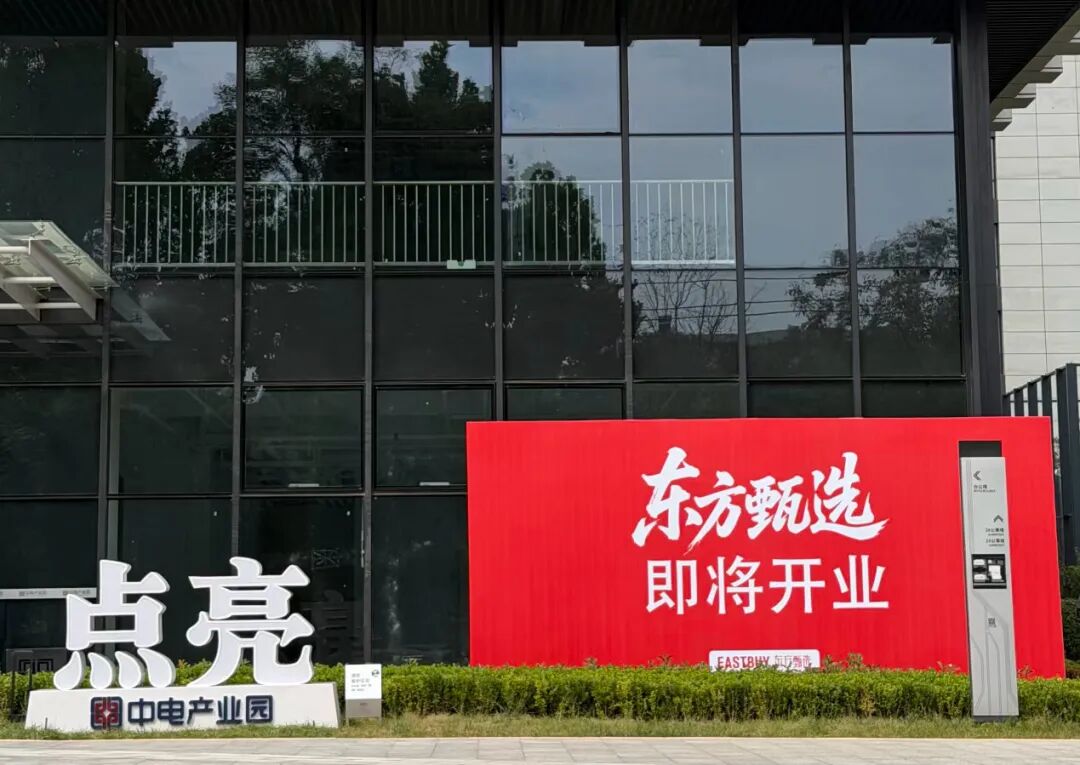
Since opening its first offline experience store in the New Oriental Building at Zhongguancun, Beijing in May 2026, East Buy has opened a total of 4 physical stores in Beijing, Xi'an, Zhengzhou and Chongli of Zhangjiakou, with different store formats. Two more stores are counting down to their opening: the first store in Anhui, located in the New Oriental Building in Hefei, has started trial operation on October 17, and is scheduled to officially open on October 23. The first store in Hebei, located in the Zhongdian Industrial Park in Shijiazhuang, will start trial operation on October 24 and officially open on October 31.
The pace of East Buy's offline store expansion has accelerated significantly. At the 2026 Yabuli Forum Summer Annual Meeting held in Chengdu in early September, Yu Minhong once again talked about East Buy's offline plan, and the target has "leaped" from the "dozens to hundreds of stores" proposed when the first store opened, to 1,000 stores in three years. In his many public sharings, the combination of self-owned brands and offline stores is regarded as a key direction to reduce dependence on platforms, weaken the influence of live streamers, and build a long-term business foundation.
However, moving from live streaming rooms to offline retail, and then realizing the integration of online and offline, to achieve the perfect business closed loop of building East Buy into a product company as conceived by Yu Minhong in practice, is extremely difficult. It is impossible to draw a conclusion now on how far East Buy can go on this path. Through East Buy's attempts in this direction, we can get a glimpse of the current situation and possible future of China's live e-commerce industry.
01
Store Model Yet to Be Verified
East Buy is quickly testing offline retail in a parallel manner with multiple store formats.
The latest store format is East Buy's first "scenic offline experience store" across the country, which has been settled in the Thaiwoo Town, Chongli, Zhangjiakou on September 12, 2026. According to Heke Finance, the store covers an area of about 170 square meters. In addition to self-operated products, the store also features local specialties of Chongli and ice and snow cultural tourism resources.
Earlier in July 2026, the New Oriental Building store in Beilin District, Xi'an and the 21st Century Community store in Jinshui District, Zhengzhou opened one after another, with obvious differences in formats: the former integrates New Oriental's education, cultural tourism, and Dayu Bookstore, forming a mixed format of "education + retail + cultural tourism"; the latter is a community store with an area of less than 300 square meters, equipped with a book borrowing corner and a city check-in area.
The first Beijing Zhongguancun store opened in May 2026, relying on the property of New Oriental's own campus, covering an area of about 400 square meters. It is mainly focused on retail, with drinks and light meals, and has more than 1000 SKUs, with the proportion of self-operated products rising to over 75%.
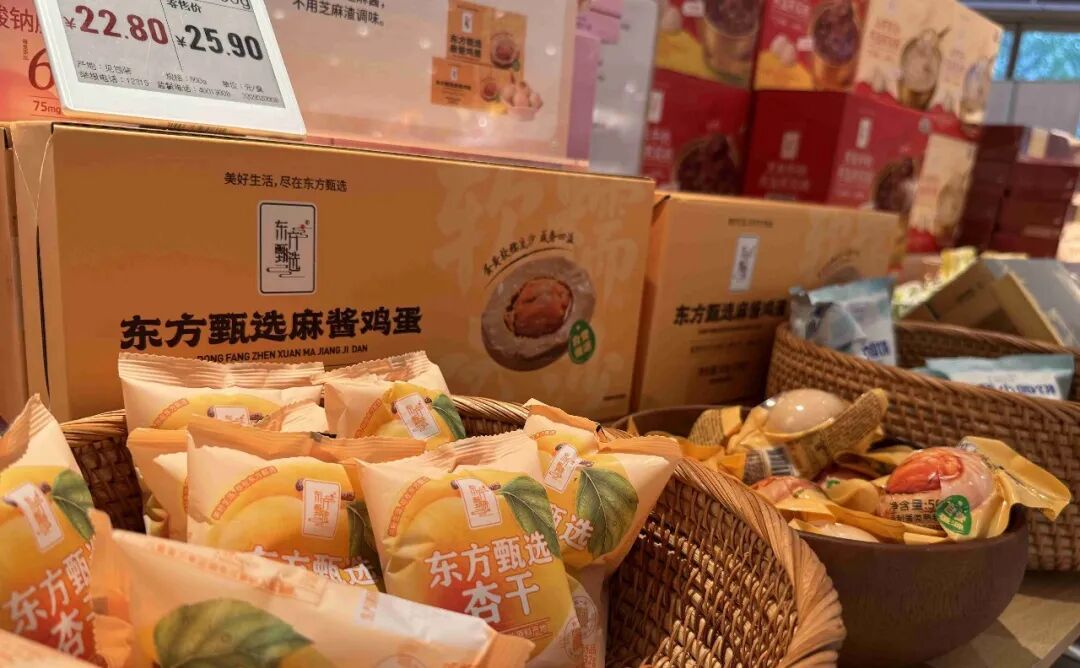
A comparison of the 4 existing East Buy stores shows that their formats are closer to convenience stores. They mainly sell packaged food, snacks, daily necessities, home products, etc., and lack high-frequency repurchase categories such as fresh food and ready-to-eat meals, so their "small but complete" convenience attributes are not fully formed. The function of the stores is more inclined to brand display, product tasting and offline check-in, and shopping guides will guide consumers to place orders on the APP, on the grounds that the online product selection is richer.
Opening offline stores is a heavy-asset business, but East Buy has chosen a relatively light path. According to East Buy's 2026 fiscal year performance report as of May 31, 2026, in July 2026, East Buy has cooperated with campuses under the New Oriental Group to open stores in Zhengzhou and Xi'an respectively, extending its offline experience from benchmark directly-operated stores to the "cooperative operation" model. Specifically, East Buy outputs the product system and digital operation system, while local New Oriental branches are responsible for site selection, personnel recruitment and training, and daily operation. In other words, the stores rely on the original campus properties of New Oriental, so the rent cost is relatively controllable, and the investment is not as high as the outside world imagines.
The financial report does not disclose the operation status of cooperative stores, but these stores relying on related party resources can hardly be directly equated with a replicable single-store model in a market-oriented environment. The expansion logic of the retail industry is usually to first verify a viable single-store model, precipitate a standardized operation plan, and then replicate it in batches on a large scale. At present, East Buy has not yet completed the verification of the single-store model. In this case, large-scale store opening will also amplify subsequent risks such as operation fluctuations and overstocked inventory.
In addition to offline physical stores, instant retail and vending machines form the terminal network. In May 2026, East Buy cooperated with JD Logistics to develop instant retail, set up front warehouses in Beijing and Shanghai, with a single warehouse covering a 5-kilometer radius around it, and settled in platforms such as JD, Taobao and Meituan. According to the observation of Heke Finance, the product structure of the front warehouses is similar to that of offline stores, with East Buy's self-operated products classified separately, and the marked price is consistent with the original price of other channels. As for vending machines, the financial report shows that as of May 31, 2026, East Buy has deployed more than 100 vending machines in 26 domestic cities, which are currently mainly concentrated in New Oriental campuses.
Looking at the whole industry, many leading domestic live e-commerce institutions have tried to enter the offline sector. The self-owned clothing brand "Reload" under Jiaoge Pengyou adopts the light model of store owner joint operation, opened its first Beijing store in Mentougou in October 2024, but the store has now closed. Xinxuan opened the offline "Xinxuan Supermarket" store in Guangzhou in May 2022, but the plan fizzled out later. The self-owned brand "Yangge Select" under Three Sheep opened its first national offline franchised store in Mengcheng, Anhui in October 2025, but it was only a single-store pilot. On the whole, other live e-commerce institutions have only made superficial offline attempts, and East Buy has gone relatively further.
02
Insufficient Differentiation of Self-owned Brands
Self-owned brand is another key focus in East Buy's transformation, and also the commodity support for Yu Minhong's 1000-store plan.
East Buy launched its first self-operated product "Golden Pillow Durian Pulp" as early as April 2022, and has since continued to expand its product categories, extending from the initial agricultural products and pre-made food to multiple categories such as snacks and baking, beauty and personal care, maternal and child products, nutrition and health care, home textiles, etc. It also released its first self-operated down jacket at the 2026 China International Fair for Trade in Services, basically completing the coverage of full-category household consumer goods from food and fresh products.
The proportion of GMV contributed by self-owned brands has also continued to rise. According to East Buy's 2025 fiscal year performance report as of May 31, 2025, East Buy had a total of 732 SPU (Standardized Product Unit) for self-operated products, the GMV of self-operated products accounted for 43.8% of the total live e-commerce GMV, and the scale of self-operated GMV reached 3.8 billion yuan. By the end of the 2026 fiscal year, the number of self-operated SPUs increased to 1009, the proportion of self-operated GMV rose to 52.6%, and the scale of self-operated GMV reached 5.4 billion yuan.
However, behind the scale, the perceived differentiation on the product side is still relatively weak. Most of the self-operated standard products adopt the OEM model, and the supplier selection logic also confirms this point. According to a report by the Southern Weekly, East Buy will give priority to factories that have cooperated with large retailers such as Sam's Club and Freshippo, and require the latter to have standardized production and food safety management capabilities.
OEM itself is not a flaw, but when East Buy tends to choose the same group of OEM factories shared by its peers, and focuses on OEM cooperation with a low proportion of in-depth customization, it is difficult for its products to form gaps in raw materials, formulas and processes. In addition, East Buy is not known for cost-effectiveness, so it is naturally difficult to form its own characteristics. A typical example is East Buy's best-selling sausage, which is produced by the same supplier Jiaozuo Chenghui Food as the "Fengweipai" sausage under Nicholas Tse's brand; the self-operated green shrimp is OEM produced by Zhanjiang Guolian Aquatic Products, which is a major shrimp supplier for many retail brands such as Freshippo and Yonghui; dairy products are produced by manufacturers such as Ningxia Saishang Jinhe and Anhui New Hope Baiyi, and these OEM factories also serve multiple retail and catering channels at the same time.
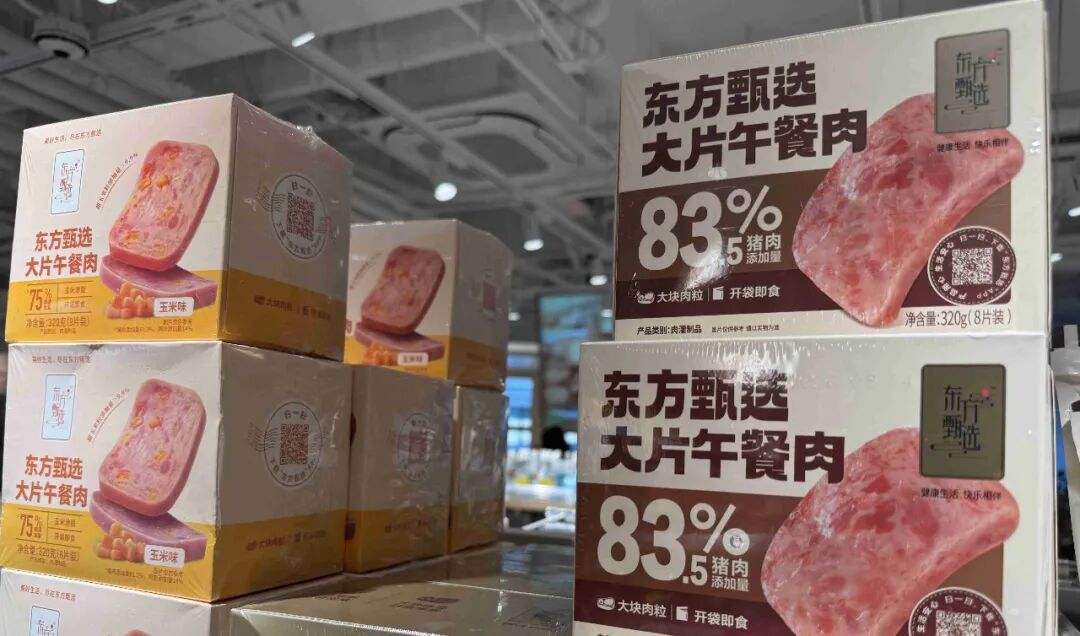
This exposes the shortcomings in product development and supply chain control. Although in terms of supplier selection, East Buy is aligning with large retailers, their product logics are not the same. Mature supermarkets conduct R&D based on long-term consumer data, with stable and predictable demand, which supports them to establish long-term in-depth cooperation with OEM factories. For example, Sam's Club can require suppliers to open exclusive production lines and customize specifications and formulas.
Live e-commerce represented by East Buy is currently still traffic-driven in product selection, with orders tied to promotion rhythms and traffic popularity, featuring large fluctuations and strong uncertainty, and its control over the supply chain is relatively limited. This is another logic to understand why Yu Minhong wants to open stores on a large scale: stores are not only sales channels, but also the foundation for building supply chain capabilities. Only when the sales scale reaches a certain level, can it have greater say in the upstream industry.
Self-owned brands have become a standard move for leading institutions, but dependence on OEM and traffic-driven operation are common problems. Take Meiyi One as an example. When it launched "Meiyi One Select" in June 2024, Li Jiaqi introduced in the live stream that its products are sourced from domestic manufacturers of many international big brands. The self-owned brand "Yangge Select" under Three Sheep is the same, most of its products are OEM produced, for example, the wet toilet paper is produced by Anhui Hanbang Daily Chemical, which also does OEM for Walmart, Yonghui and other brands.
However, East Buy is also trying to break through the pure OEM model. According to Qichacha, an enterprise information query platform, in February 2023, East Buy invested in a 30% stake and established "East Buy (Henan) Food Technology Co., Ltd." as a joint venture with Jiaozuo Chenghui Food. The purpose of participating in and building a self-owned factory is to independently control the formula and quality control, but such cases are still rare, and most product categories are still dominated by OEM.
It is a consensus in the industry that self-owned brands have high gross profit margins, but for consumers, what is more important is differentiation, that is, the reason why the product is "irreplaceable". In East Buy's offline expansion, product power will directly determine the passenger flow retention ability of the stores. Otherwise, even if store locations are spread out, it will be difficult to form sustained user repurchase.
03
Retail Capability Cannot Be Built Overnight
The retail industry emphasizes "people, goods and scenarios". East Buy's layout of offline stores is the "scenario", the launch of self-owned brands is the "goods", and its interpretation of "people" is to build a full-domain membership ecosystem.
At present, the annual membership fee of East Buy is 199 yuan, which is valid both online and offline. The stores implement a dual-label system of "member price / non-member price", and members can enjoy a 21% to 42% discount on all products in the store. In other words, the stores are designed as touchpoints for membership experience and new membership registration. According to the field experience of Heke Finance at East Buy's first Beijing store, there are many free gifts and coupons for activating membership, free delivery for instant retail within 5 kilometers, and the official also promises that "if the total discount amount within the year is less than 199 yuan, the price difference will