A 400,000-yuan investment in opening a milk tea shop comes with a 3-year payback period. Has the beverage franchising industry entered the "era that dissuades new entrants"?
"Now opening a milk tea shop takes more than three years to recoup the investment."
Lao Chen from Nanjing, Fujian, invested 400,000 yuan to take over a franchised tea drink shop. Nearly two years have passed. After deducting rent, labor and raw material costs, the monthly profit is only enough to cover his living expenses, and he still needs one and a half more years to get his money back.
Xu Fei (a pseudonym) from Nanjing invested 200,000 yuan to join Cuonei Xiaojiancun, with the brand promising to recoup the investment in half a year. But in reality, he loses a steady 20,000 yuan every month.
The dividend period for milk tea franchise has faded. Is it still suitable for ordinary people to enter this track?
1
Payback Period Extended to Three Years
The Account of Beverage Franchise Is Getting Harder to Calculate
In Nanjing County, Zhangzhou, Fujian Province, Lao Chen who runs a milk tea shop recently went through his account books again.
In 2024, he raised 400,000 yuan to take over a tea drink shop. The investment promotion materials stated that the payback period would be 12 to 18 months. At that time, he thought that even by the most conservative estimate, he could get his investment back in two years.
But nearly two years have passed, after removing rent, labor and raw material costs, the monthly profit he gets is just enough to cover living expenses, and it will take at least another year and a half to really recoup the investment.
"If the daily turnover is 100 yuan less, the payback period will be greatly extended." Lao Chen said. Revenue is declining, but rigid expenses such as rent, utilities and labor will not be reduced at all. If another shop opens next door, the takeout subsidies decrease, or the weather is bad, any unexpected occurrence will push the payback line further backward.
Lao Chen's experience is not an isolated case. In Nanjing, Jiangsu Province, Xu Fei (a pseudonym) invested 200,000 yuan this year to join Cuonei Xiaojiancun. The shop is located in a shopping mall, with a monthly rent of 8,000 yuan, plus 6,000 yuan for labor and social security.
The brand promised to recoup the investment in half a year at the beginning, but in reality, the shop loses 20,000 yuan steadily every month. "After half a year of hard work, 300,000 yuan has gone down the drain." He said that he plans to close the shop at the end of this month.
Another franchisee who runs multiple milk tea shops in Suzhou also admitted that the revenue of his shops is generally declining. Some shops still have decent gross profit, but after deducting fixed costs, it is difficult to generate positive cash flow.
At the beginning, everyone held the idea of "open the shop first, and things will get better slowly later". But when it comes to actual operation, the hardest part is often not that you can't make a good drink, but that you have to face a series of interrelated variables every day: you can't negotiate a lower rent, you can't decide the price of raw materials by yourself, whether to participate in platform activities, and whether another new shop will open next door.
"Before opening the shop, we calculate the input-output ratio. After opening the shop, we calculate whether we can cover the fixed costs every day." He said.
The payback of scenic spot shops is also full of uncertainty. Wang Fenglong, founder of Super Man Oriental Chinese Tea & Coffee, introduced that for scenic spot shops that are opened with an investment of less than 100,000 yuan, about 20% to 30% of the shops that catch the peak season can recoup the investment in about 4 months, while some need more than one and a half years.
A practitioner who has been purchasing second-hand equipment for beverage shops for many years revealed that he would take away a large number of beverage shop equipment every year, and this year many shops have just finished decoration but closed down before they have been in operation for half a year.
At a regional investment promotion meeting of a certain brand, a franchisee said bluntly: "I don't care how many more shops can be opened. I only care about how many months it will take for my shop to recoup the investment."
The matter of recouping investment is becoming more and more uncertain.
In the past, brand investment promotion usually marked the payback period at 12 to 18 months, and some promotions even advertised "payback in half a year"; when the market was good, many shops did recoup their investment in about a year. But now, the payback line is generally extended to two or three years.
2
Three Forces Are Tightening at the Same Time
It Is Getting Harder and Harder for a Single Shop to Recoup Its Investment
Why is it getting harder and harder to recoup the investment when opening a beverage shop now? After communicating with a number of shop owners, small and medium-sized brand practitioners, and industry equipment suppliers, we can see three unavoidable realities.
1. The number of shops has exceeded 620,000, and the stock market competition has intensified
Data from Zhaimen Canyan shows that as of October 2026, the total number of milk tea and coffee shops nationwide is about 622,000. 160,000 new shops opened in the past year, with a net growth of -59,000, which means that 219,000 beverage shops have closed down in the past year.
The annual growth rate of the single tea drink market has dropped from more than 20% to about 10%, and Hóngcān Big Data predicts that the growth rate in 2026 will be around 7%.
The growth of market size has slowed down significantly, and the stock market competition has further intensified. With brands continuously penetrating downward, this trend is particularly obvious in county and township markets.
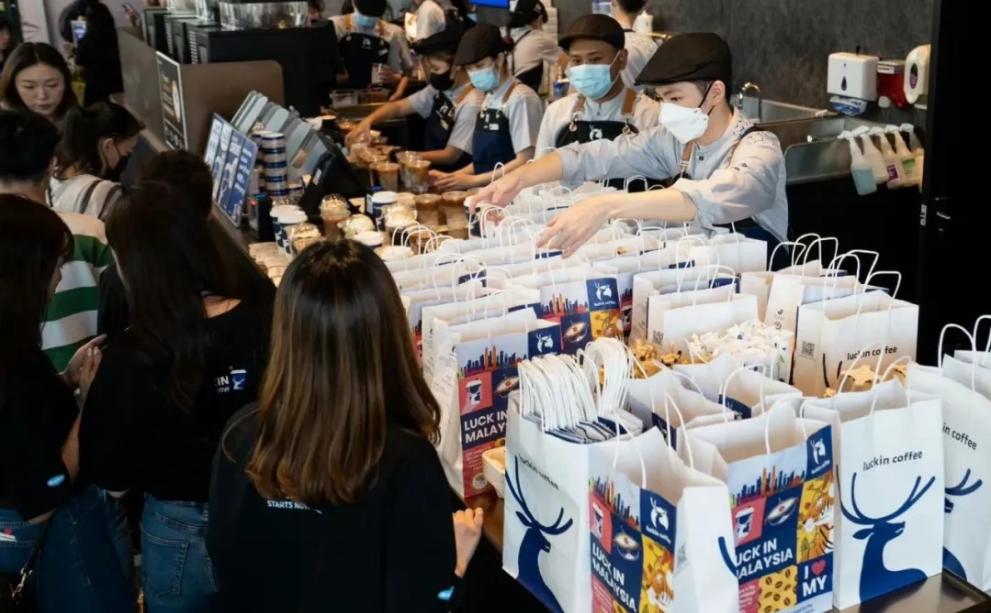
In Fujing Town, Shenqiu County, Henan Province, there are two Mixue Bingcheng shops on a main street hundreds of meters long, with Luckin Coffee, Lucky Coffee, Guming, and YeeCha nearby.
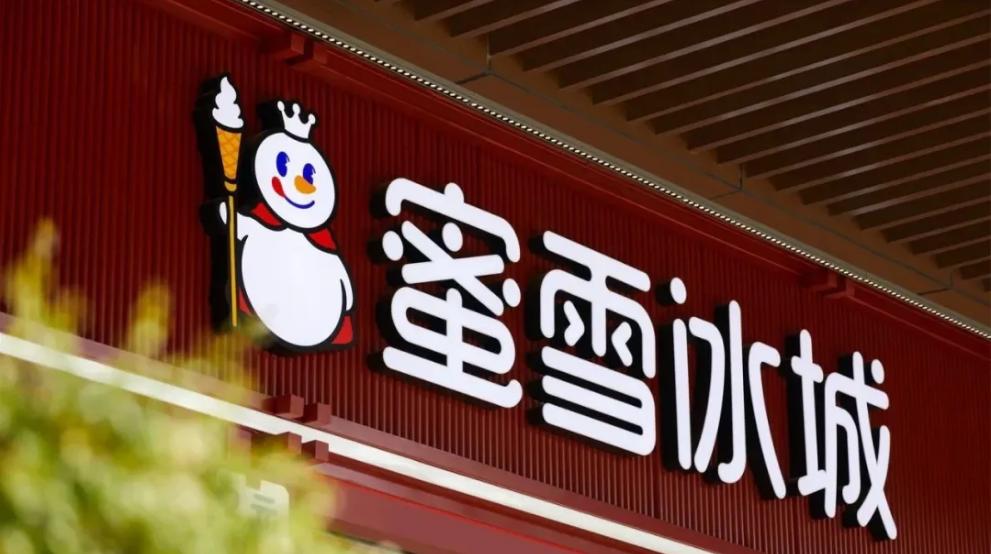
A shop owner said, "The total number of consumers in the township is fixed. Opening a new shop will not bring new customers, but only take away the existing customers."
2. Promotion involution superimposed on cost pressure leads to continuous shrinking of single-shop revenue
Platform commission, seasonal fluctuations, promotion subsidies, and surrounding competition, any of these fluctuations will compress the profit space of the shop.
Many franchisees reported that now brands often launch 9.9-yuan activities, buy-one-get-one-free offers, and 40% to 50% discounts for takeout. Activities can increase order volume, but most of the costs are borne by the shops. Some brands only subsidize 1 to 3 yuan per order for buy-one-get-one-free activities, and some shops feedback that "the order volume increases by 20%, but the actual revenue decreases".
"The pressure of price reduction is all passed on to the franchisees." Superimposed on fixed expenses such as labor and utilities, these seemingly hot orders actually increase the burden on the shops. Some franchisees sigh that after all the hard work, the business is almost selling materials for the headquarters.
Even the profit of single shops of leading brands is declining. According to Huxiu's calculation based on financial report data, in the first half of 2026, the purchase amount of Mixue Bingcheng's single shops from the headquarters in the first half of the year decreased by about 17.9% year-on-year.
The second-quarter financial report of Bawangchaji shows that the same-store GMV in Greater China decreased by 16.1% year-on-year. The financial report data of Nayuki's Tea shows that the average daily sales of directly-operated single shops dropped from 7,600 yuan in the first half of 2025 to 7,000 yuan in the same period of 2026. If leading shops are in such a situation, it is undoubtedly more difficult for ordinary shops that have no advantages in resources and passenger flow to maintain profits.
3. Product homogenization shortens the brand dividend period
"Brands such as CoCo and 1Dian Dian used to enjoy brand dividends for more than ten years; now the dividend period of a new brand is often only two or three years." A second-hand equipment dealer in Guangzhou described the market change in this way.
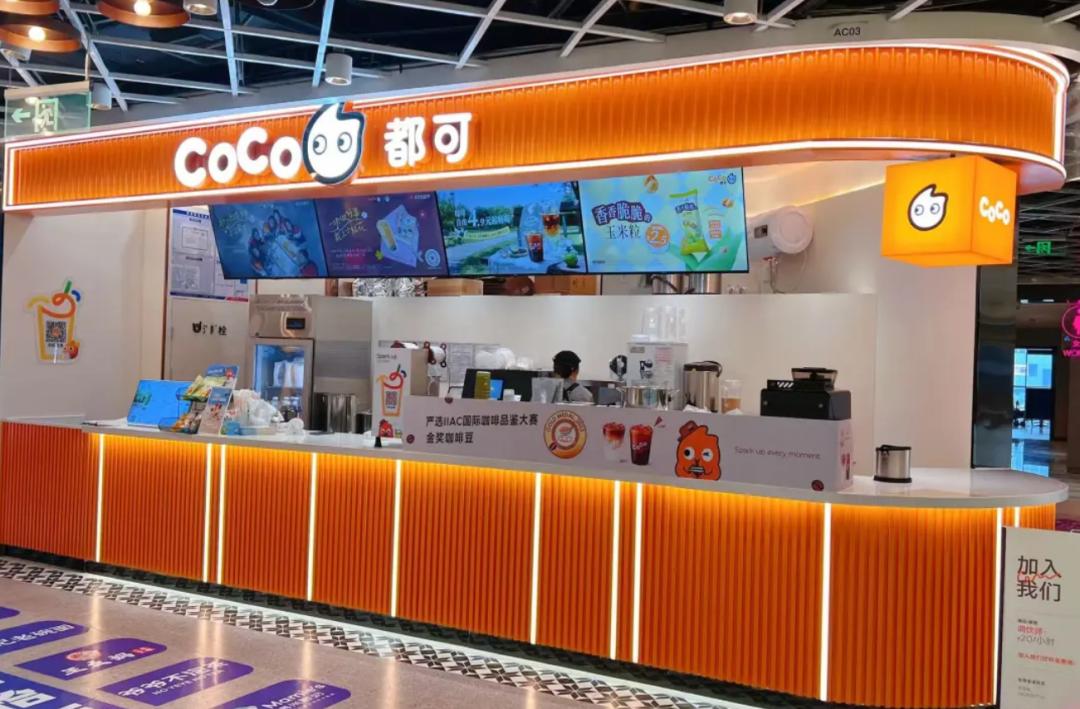
From bubble tea, fruit tea to fresh milk tea, in the early stage, almost everyone who opened a milk tea shop could make money, and the payback period was as short as 3 months. But driven by profits, a large number of new shops poured in, and the formula was very easy to imitate. After a short period of popularity, even with brand effect, it is getting harder and harder to make money.
Many second-hand equipment dealers also revealed that now many shops are unable to sustain their business just after the opening period, and they are eager to resell the equipment in less than half a year, or even three months.
3
Brands Start to "Loosen Restrictions"
But Franchisees Are Still Calculating Accounts
Facing the rising shop closure rate, leading brands can't sit still. They generally take the initiative to slow down the pace of opening shops and turn to quality growth; at the same time, they reduce franchise fees to attract new franchisees and increase operating subsidies for franchisees.
The most direct change is to lower the threshold for opening shops. Since September 2026, Guming has adjusted the one-time new shop franchise fee of 98,800 yuan to an annual fee of 15,000 yuan per year; for coffee machines and the first batch of designated equipment, the down payment can be 65%, and the remaining 35% can be paid in 24 interest-free monthly installments.
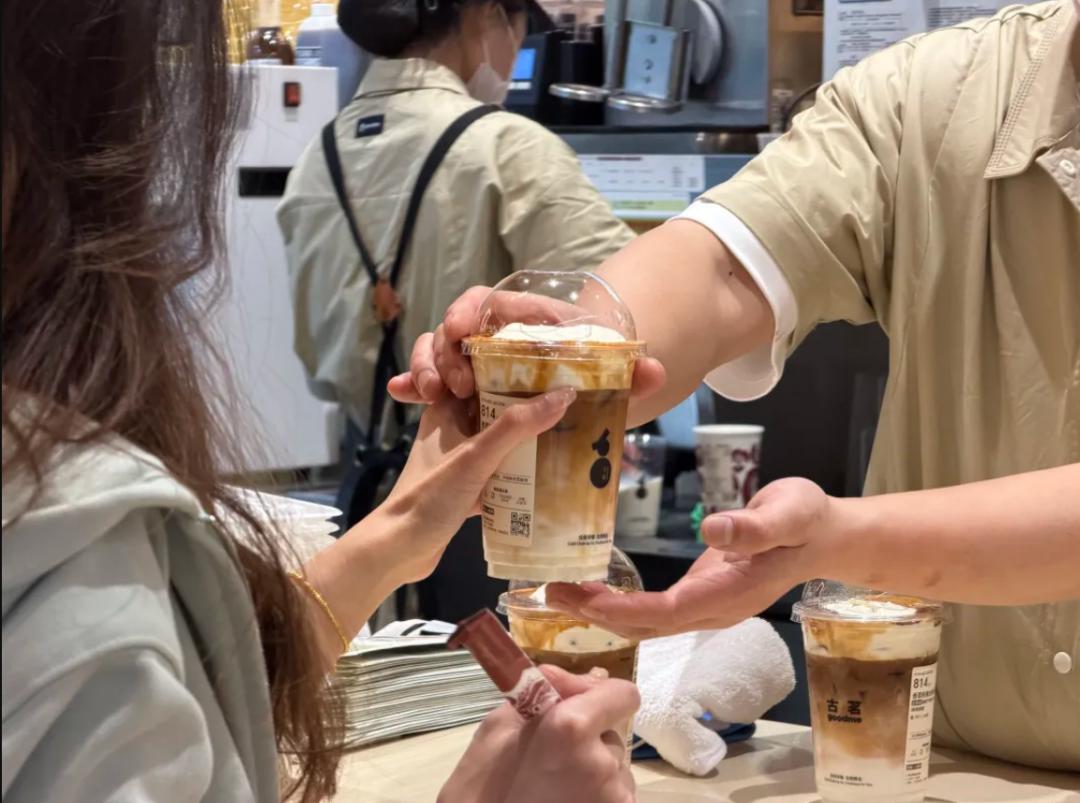
At the same time, brands also begin to underwrite the risk of shop closure: if the shop is closed within half a year of signing the contract, a subsidy of 50,000 yuan can be obtained, and if the shop is closed for more than half a year but less than one year, a subsidy of 35,000 yuan can be obtained. Guming said in the announcement: "Franchise cooperation is not just about completing a signing, but more importantly, ensuring the long-term operation and sustainable profitability of the shop, and gaining a firm foothold in the local market."
On the other hand, brands are also actively adjusting the expansion rhythm, increasing investment in existing shops.
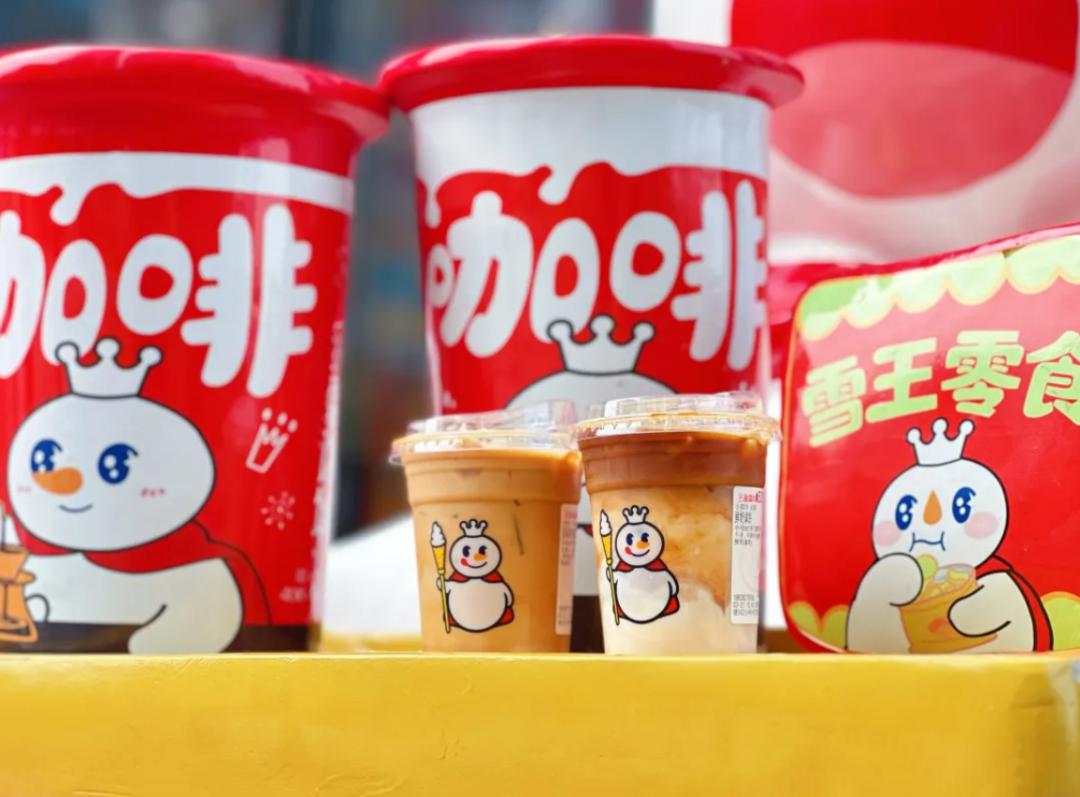
Mixue Bingcheng has allocated 1 billion yuan of special funds to support franchisees to introduce fully automatic coffee machines to help increase the revenue of single shops; Lucky Coffee has made it clear that no more than 1,000 new shops will be added in the second half of the year, and 500 million yuan will be invested in brand upgrading and shop support.
Brands are providing underwriting support, and franchisees are calculating accounts. Behind all these changes, there is an increasingly clear consensus: The focus of the beverage track has shifted to the quality of single shops.
4
The Industry Is Still Growing
Only the Growth Mode Has Changed
The extended payback period and accelerated shop replacement do not mean that the new tea drink industry has stopped growing. The industry is still expanding, but the growth logic has changed.
In the first half of 2026, the total revenue of six listed tea drink enterprises was about 36.78 billion yuan, a year-on-year increase of about 9.0%; the attributable net profit was about 5.34 billion yuan, a year-on-year decrease of 2.7%. This means that the overall industry market is still growing, but the profit space is being compressed, and the dividend period of extensive expansion has passed.
A more obvious change is that the boundary between tea drinks and coffee is being further broken. It is not new for tea drink brands to sell coffee and coffee brands to sell tea drinks; now, they have started to sell meals.
Bawangchaji is testing tea eggs in some shops in Shanghai, Guming is testing freshly brewed beer in shops in Hangzhou, and Hey