Chip prices have risen sixfold, student-targeted mobile phones are priced close to 5,000 yuan, and mobile phone manufacturers are frantically competing for young users.
For a long time, college student users have been the core user base of mobile phone manufacturers. However, driven by the cost surge that pushes up product prices, this long-standing business logic is undergoing fundamental changes.
Back in August this year, the topic "mobile phone prices rose by more than 20%" once topped the trending search list. A campus survey in September showed that nearly 40% of college students have a phone replacement cycle longer than 3 years, and over 70% of them replace their phones only after more than 2 years of use.
Manufacturers are finding it increasingly difficult to hold the bottom line of pricing.
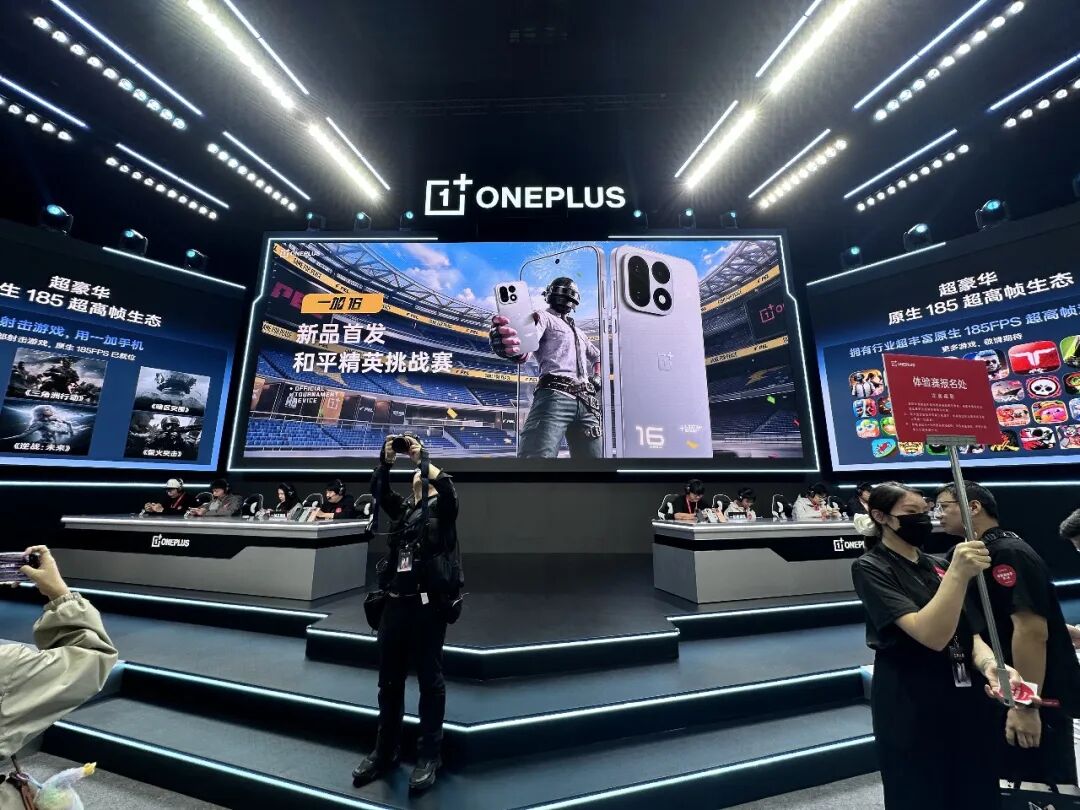
On the evening of October 12, when the price announcement session of the OnePlus 16 launch event began, Li Jie, President of OnePlus China, announced the price of 5699 yuan on stage, but there were no cheers or applause from the audience, and some people even whispered in dissatisfaction.
Over the hour before that, every keyword of the launch event was precisely tailored for the "gaming community" in universities. With the 185FPS high frame rate performance in *Peacekeeper Elite*, a 9000mAh large battery, and the industry-leading 520Hz touch sampling rate, Li Jie stated on stage that the OnePlus 16 aims to become the "185FPS Ultra-fast Gaming Champion".
However, the starting price is a full 1700 yuan higher than that of the previous generation OnePlus 15, which is enough to make many young people hesitate to replace their phones. Li Jie added: "We have done our utmost to offer every possible configuration we can."
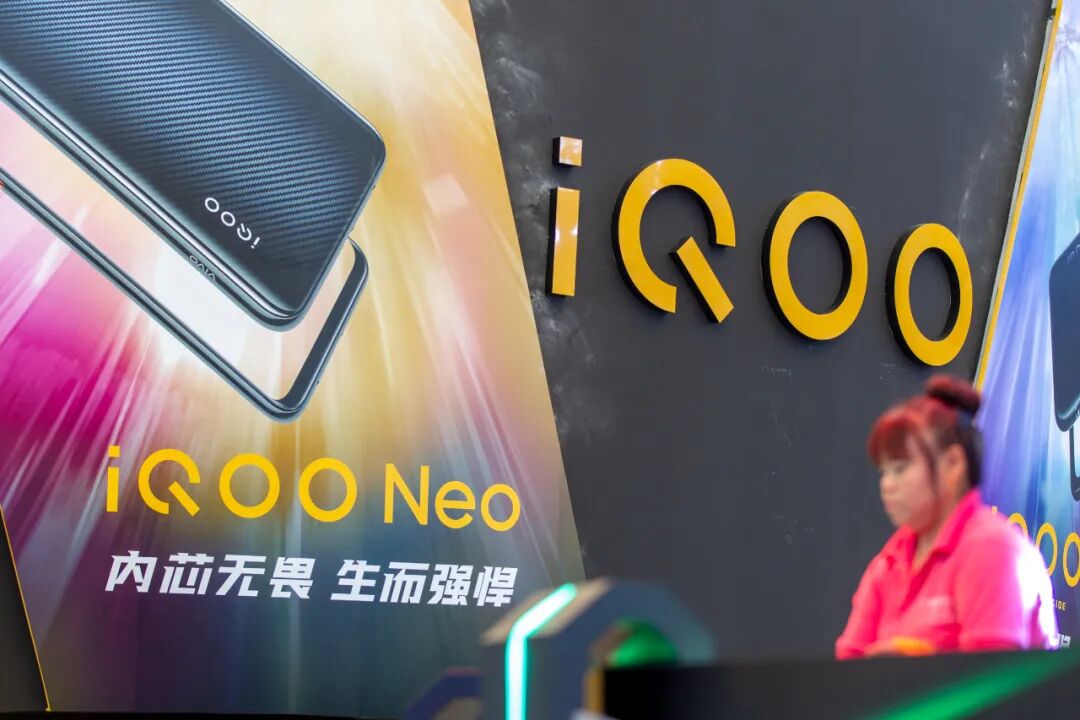
This awkward situation is not unique to OnePlus. Most of the models purchased by college students are concentrated in the price range of 2000 to 3500 yuan, where the OnePlus Ace series, iQOO Neo series, and Redmi K series have all made key deployments. Over the past month, various manufacturers have successively released their autumn flagship models, but the price ranges have become increasingly fragmented.
Source: Visual China
The starting price of OnePlus Ace 6 rose from 2599 yuan to 3099 yuan; the iQOO Neo 11 starts at 2699 yuan, 400 yuan higher than the previous generation; the Redmi K90 starts at 2599 yuan, 100 yuan higher than the previous generation, marking the smallest price increase. However, if you upgrade the memory to the top configuration, the price of Neo 11 will reach 4499 yuan.
There is no end in sight for this price hike cycle. Meng Pu, Chairman of Qualcomm China, said that in his decades of industry experience, he has never seen the price of storage products surge 4 to 5 times within a year. Lu Weibing, CEO of Xiaomi Group, judged that this high storage price period will last at least until the end of 2027. That means the freshmen admitted to universities this year may spend their entire college years in this price hike cycle.
01
Student-oriented phones have entered the price range of Apple and Huawei products
To understand the impact of this round of price hikes, we first need to recognize what college students mean to mobile phone manufacturers.
China's mobile phone market has long entered a stock competition phase, and more than 10 million new college students every year have almost become the only annual renewable increment in the market. Student groups are usually in the brand awareness cultivation period, and the first mobile phone they use often determines their future phone replacement path.
Each manufacturer has its own way to target this group of consumers, and e-sports marketing is mainly aimed at male college students.
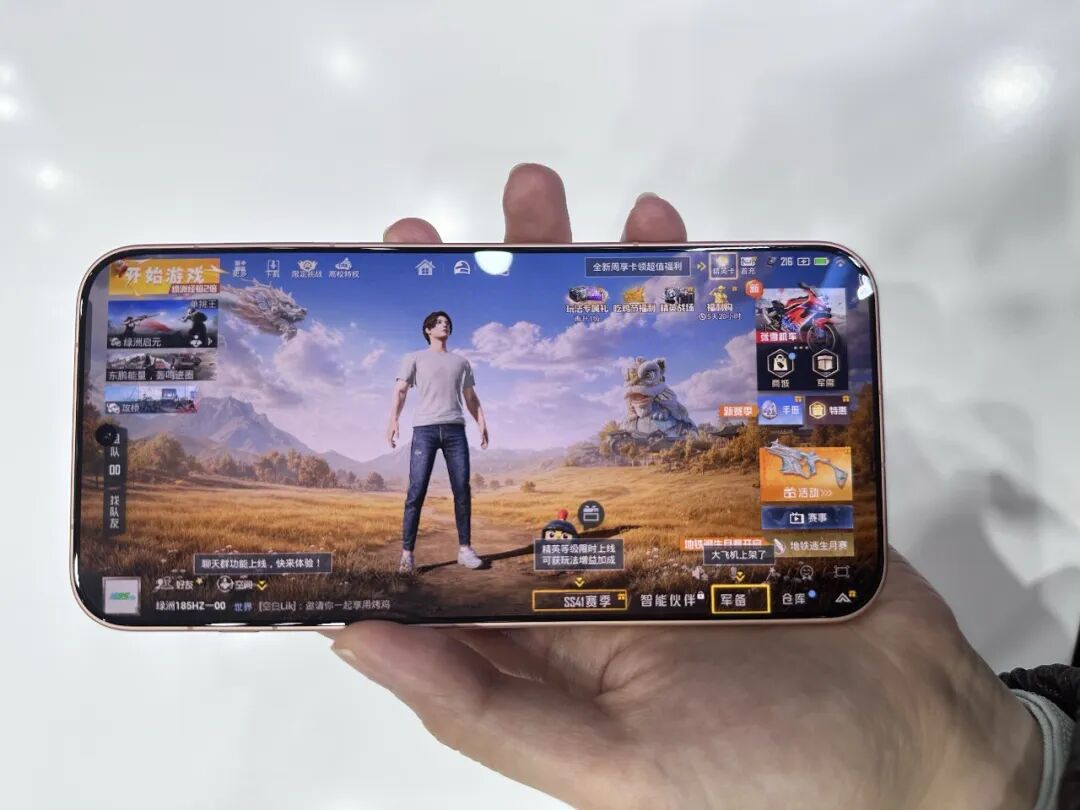
Among them, OnePlus is closely bound to the Peacekeeper Elite Professional League (PEL). Starting from the OnePlus 10 Pro in 2022, it has been designated as the official competition phone for the event for consecutive years, and the OnePlus 16 has additionally obtained the identity of the official designated phone for the Valorant Mobile National Tournament.
Photography by Lin Qiuyi
iQOO, on the other hand, is bound to the Honor of Kings Professional League (KPL). It has been designated as the official competition phone since the brand was founded in 2019, and the partnership has lasted for 8 years. At the iQOO 16 launch event on September 29, 16 KPL teams all replaced their phones with the new model, and swimmer Pan Zhanle also showed up to endorse the product.
Redmi took a different path, adopting a mass traffic marketing strategy and inviting Wang Yibo as its brand ambassador. Honor separated the GT series in December 2024 to focus on the performance track, later renamed it "Honor WIN", and signed up Nuo Yi, a KPL champion player, as its performance tuning officer.
The other half of the female student group on campus is targeted by brands focusing on imaging and selfie features. On the "JD Mobile Phone Purchase Ranking for College Entrance Examination High Scorers" in July, the top two domestic mobile phones were the e-sports oriented iQOO 15 and the selfie oriented OPPO Reno16.
Now, the former pattern where each brand operated independently has been broken.
Zhong Xiaolei, analyst at Omdia, told *China Entrepreneur* that in 2025, the shipment volume of mobile phones in the 5000-6000 yuan price range in Chinese Mainland was about 23 million units, with Apple and Huawei flagships as the mainstream, leaving limited market space for performance-focused models. This means that if models like OnePlus 16 and iQOO 16 all rise into this price range, their competitors will no longer be each other, but Apple and Huawei.
These two giants never sponsor e-sports events, but attract users through educational discounts and their product ecosystems. Multiple campus surveys show that Apple's brand share among college students is about 30%. When Huawei launched new models of the nova series in June this year, it specially prepared educational discounts for current college students and new students who had just received admission letters, offering one-year video and audio membership and 200GB cloud storage space for eligible users after verification.
02
Raising prices while cutting configurations
The change that has reshaped the competitive landscape of manufacturers comes from a tiny storage chip.
Over the past year or more, the surging demand for AI servers has eaten up the global storage production capacity. Samsung, SK Hynix, and Micron have shifted a large number of their advanced production capacities to server memory products with higher profit margins. Data from TrendForce shows that the spot price of DDR5 16Gb particles rose from 5.5 USD in May last year to 40 USD in May this year, more than 6 times the price within a year.
Passed down to the mobile phone industry, the proportion of storage chips in the total bill of materials cost of mid-range mobile phones has risen from more than 10% in the past to 30% to 50%. This year, the industry even saw the first ever inversion in mobile phone history where the storage component is more expensive than the processor. The procurement price of a "12GB+256GB" storage combination rose from about 500 yuan to about 2200 yuan.
The price hike has thus become an endless relay race with no end in sight.
Last October, the starting price of iQOO 15 was 4199 yuan, 200 yuan higher than the previous generation. On March 16, OnePlus directly raised the price of the OnePlus Ace 6, which had been on sale for more than four months, by 500 yuan from 2599 yuan to 3099 yuan. This was the first time a leading domestic mobile phone manufacturer raised the price of an existing model that was already on the market.
Photography by Lin Qiuyi
A person familiar with the matter told *China Entrepreneur* that this was a stress test of the market by OPPO, paving the way for subsequent price adjustments of the Reno and Find series. Two days later, Vivo followed up, raising the price of the top "16GB+1TB" version of the mid-range phone iQOO Neo 11 from 3799 yuan to 4499 yuan, a full increase of 700 yuan.
By October 9, the Huawei nova 16 series had its price raised by 400 yuan, and the Xiaomi 17 Ultra by 1000 yuan, marking the fourth wave of price hikes implemented within the year.
The price hike has also broken the long-standing release and purchase rhythm of the industry. After Apple's autumn launch event in September, the prices of old iPhone models were collectively raised by 600 to 2300 yuan, which meant the old rule of "new model launch, old model price cut" failed for the first time. The price of the "16GB+1TB" version of iQOO 15 has been adjusted from the initial 5499 yuan all the way to 6999 yuan, with a cumulative increase of 1500 yuan within a year.
Smaller manufacturers even face the problem of barely surviving. At the end of February, Meizu stated in an official announcement that "the continuous sharp rise in memory prices has made the normal commercialization of new products impossible to achieve".
The continuous price hike has also made how mobile phone manufacturers explain and absorb the cost the top priority. Many manufacturers choose to offset the pain of price increases by highlighting the rich configuration of their products.
The management of a leading domestic mobile phone sensor supplier told *China Entrepreneur* that some companies have reverted to the specifications of the previous generation of chips, and the specifications of components such as lenses and sensors are also being quietly "downgraded". "Products that used to cost 10 yuan each may now be adjusted to 7 or 8 yuan, and a 20% to 30% reduction in component cost is possible." According to his understanding, 60% to 70% of mobile phone customers are doing this.
This also means that the extra money consumers pay does not all turn into better components.
"There is no unified critical point between price increase and sales volume. The key lies in whether the price breaks through users' budget and whether there are alternative choices at the same price point," Zhong Xiaolei told *China Entrepreneur*. "If the improvement in user experience is not enough to support the price difference, consumers may turn to other products or postpone their phone replacement."
However, Zhong Xiaolei also believes that the cannibalization of new models by old models is relatively limited. The cost of old products is also rising, so their product life cycle will not be long, and they are mostly used to clear inventory.
03
Difficult solutions
For manufacturers to sell their more expensive products, the first step is to make their pricing logic reasonable to consumers.
Li Jie explained to the media back in March this year that the cumulative increase in memory cost in this round has exceeded 400%, "it can be described as a crazy surge", and he specially added that this is a problem faced by the entire industry, and no manufacturer can completely avoid it. Lu Weibing also said, "We are also bearing the cost which is very painful for us." Yu Chengdong, Chairman of Huawei Terminal BG, said bluntly: "The memory price hike has increased the cost of each mobile phone by more than 200 US dollars."
All manufacturers are trying to make consumers empathize that the price hike is forced by the market cycle. But in the end, to survive this cycle, each manufacturer has to find its own way out.
OPPO's solution is brand restructuring. Realme focuses on overseas markets, while OnePlus takes full charge of the domestic young consumer market, and also tests the market acceptance of price hikes for the main brand.
In January this year, Li Bingzhong, founder of realme, was promoted to Senior Vice President of OPPO, taking unified charge of the two sub-brands. After realme withdrew from the Chinese market in July, the two sub-brands were merged into the same business unit. During the expansion period, the group used three independent brands to grab users separately, and during the contraction period, it consolidated resources to secure profit.
Vivo's way of survival is to lock in its target user group. Also focusing on e-sports marketing, iQOO, relying on the 8-year partnership with Honor of Kings, is betting on the price tolerance of heavy gamers and performance enthusiasts.
The stakes have been rising continuously. The iQOO 16 is priced at 5999 yuan, 1800 yuan higher than the starting price of the previous generation. The Neo series used to be responsible for high volume sales. After all, iQOO won the bet last time: the sales volume of iQOO 15 exceeded 2 million units.
Xiaomi's way of survival is to "hold on" and rely on its strong capital base. Redmi is backed by the entire Xiaomi Group, and the profit cushion from IoT, internet services and automobile business allows Redmi to keep its profit margin as low as possible. Lei Jun publicly advised consumers in May that now is the best time to replace their mobile phones. Lu Weibing predicted that by the end of 2026, the price of some domestic flagship phones may exceed 10,000 yuan.
Honor is in the relatively most difficult situation. Facing the pressure of independent listing, the GT series has been independent for less than two years, and the brand lacks the profit support from a large group, so how to achieve high sales volume will be a major test for Honor.
The first round of market judgment has quietly come out. Channel data shows that the first-sale sales volume of iQOO 16 is about half of that of the previous generation; this year will also be the first Double 11 where manufacturers cannot launch price wars targeting students. When the discount season ends, the competition among mobile phone manufacturers will inevitably become more fierce.
This article is from the WeChat official account "China Entrepreneur Magazine" (ID: iceo-com-cn), written by Lin Qiuyi and Wang Yijie, edited by Li Yuan and He Yifan, and published with authorization from 36Kr.