Philips has turned its electric shavers into portable accessories. Can its youth-focused strategy open up new markets? | Frontline
36Kr learned that on October 16, Philips launched its third-generation portable shaver "Firefly" in Shanghai. Unlike traditional electric shavers that emphasize shaving efficiency, blade head technology and battery life, this product features a compact body, six color schemes, magnetic opening and closing design and breathing light, aiming to connect daily grooming with young people's outfit matching, travel and social scenarios.
Behind this move is Philips' further segmentation of the male grooming consumer group. Compared with traditional shavers targeted at mature consumers, Philips hopes to attract younger users through its design, portability and relatively affordable price, and make this electric shaver their very first shaver.
Wu Pinhui, Senior Vice President of Philips Greater China and General Manager of the Health & Well-being Business Group, said in a group media interview that China's shaver market is relatively mature, but a large number of consumers still use manual shavers. Philips hopes that the new product can lower the threshold for consumers to try electric shavers, transforming it from a purely functional tool into a consumer product that integrates grooming, skin care and personal expression.
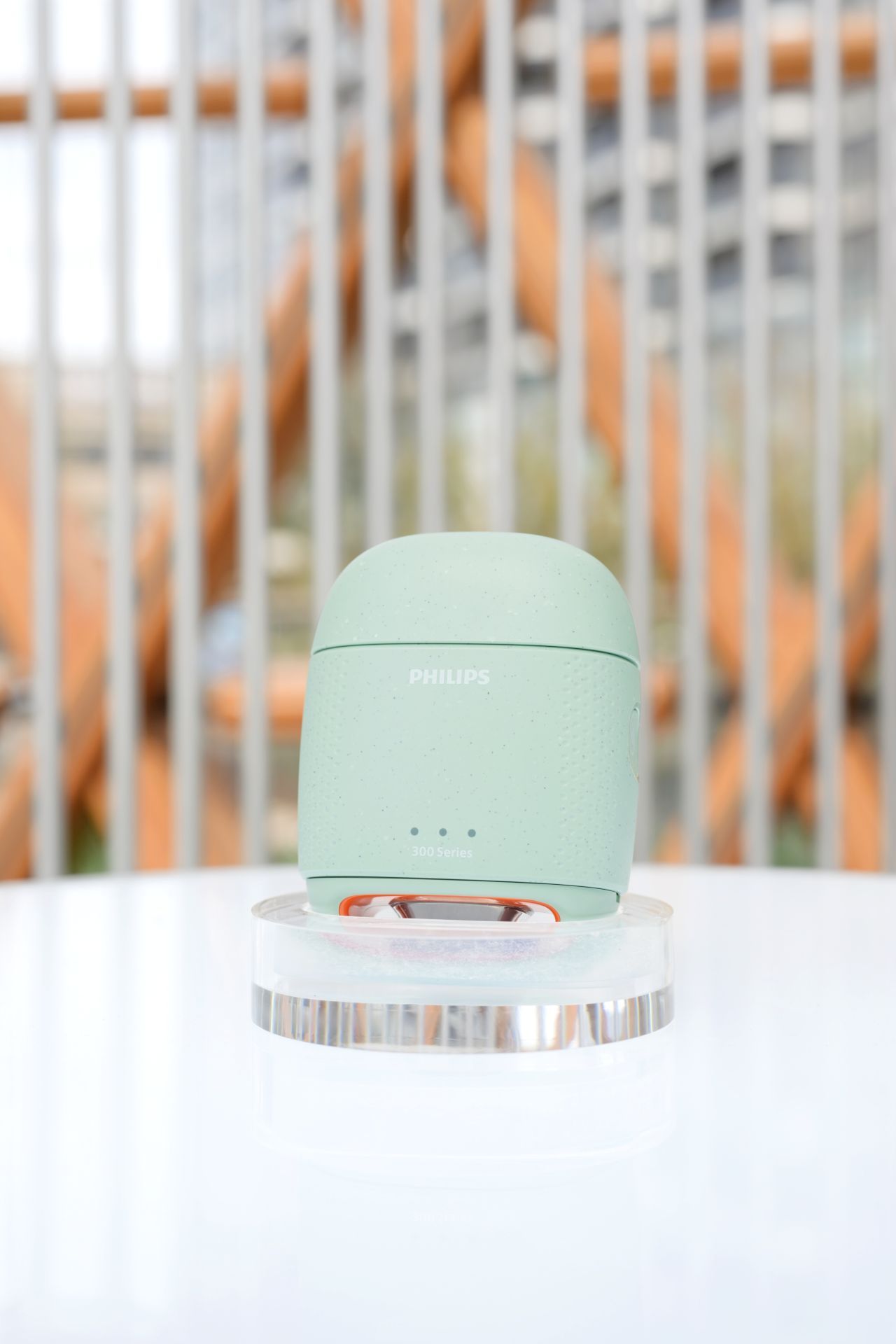
Philips third-generation portable shaver "Firefly"
This idea is not based solely on appearance changes. Feng Xue, General Manager of the Male Grooming Division under Philips Greater China's Health & Well-being Business Group, stated that the brand started conducting research targeting young consumers three or four years ago, followed consumers on their trips and sports activities to observe how the product is used in real life. The team found that consumers under 29 not only want to finish shaving quickly, but also pay attention to product appearance and user experience, hoping that daily items can reflect their personal style.
The design of Firefly thus features several characteristics different from traditional shavers. Weighing only 119 grams, the product adopts a magnetic top cover and buttons with light feedback, with different lights corresponding to different shaving modes. In terms of functions, it is equipped with a 3D floating blade head and provides a sensitive skin mode. According to the information released by Philips, the product supports 3-minute fast charging and has a maximum battery life of 40 days. The company tries to combine portability, fast shaving and visual design, so that the product can be used in scenarios outside the bathroom such as commuting, fitness and camping.
However, making shavers more like fashion items does not mean that functional competition has taken a back seat. For shaving products, shaving performance, skin irritation, ease of use and durability are still important factors that determine repurchase. Light effects and color schemes can bring freshness for the first purchase, but the formation of sustained demand still depends on the product's performance in daily use. Philips emphasized in the interview that Firefly does not sacrifice performance due to its smaller size, but the relevant performance advantages still need to be tested through actual use and consumer feedback.
In terms of product matrix, Firefly is not an isolated attempt in Philips' portable shaver business. In 2024, Philips launched the Pebble series, which mainly targets mid-to-high-end consumption and gifting needs; this time, Firefly further extends the product line to younger consumers. At the same time, Philips is also launching new products with functions such as screen customization and intelligent sensing on its high-end product line, trying to cover groups with different consumption capacities and grooming needs.
This means that Philips' strategy is not to make all consumers buy the same type of shaver, but to build a more detailed product echelon through differences in price, function and design. For an enterprise that already has mature products and brand recognition, launching products targeted at young people can expand new consumption scenarios without completely changing the core technical route.
Price is another key to the success of this strategy. Wu Pinhui said that the brand hopes that through relatively affordable pricing, electric shavers can become the entry-level choice for more young men. However, for young consumers, although appearance and emotional value can influence purchase decisions, if the product price exceeds their budget for daily supplies, the scenario-based design may not be enough to support the purchase.
Philips also hopes to build the Chinese market into an important source of global innovation. Wu Pinhui said that the brand has continued to promote local R&D and product innovation in China in the past few years, and hopes to bring products and marketing experiences recognized by Chinese consumers to other markets. The localization direction embodied by Firefly is to integrate the aesthetic preferences and lifestyles of young consumers into product design, rather than just introducing mature overseas products to China for sale.
From the perspective of industry operation, whether this attempt can generate actual increment ultimately depends on sales performance, user structure and repurchase rate. Youth-oriented design can make a mature category regain public attention, but it does not necessarily mean that consumers are willing to increase their budget for it. For Philips, what Firefly really needs to verify is not only whether young people like a shaver that glows and can be carried around, but also whether this design can be transformed into stable purchase demand and bring new consumers to the mature electric shaver market.