Will the Anker of today choose Yang Meng as he was back then?
Yang Meng has to frequently step into the public eye.
As an introvert, appearing in public goes against his natural disposition, but what Anker wants to do now has far exceeded what its current reputation can attract talents for. In most people's impression, Anker is just a power bank company.
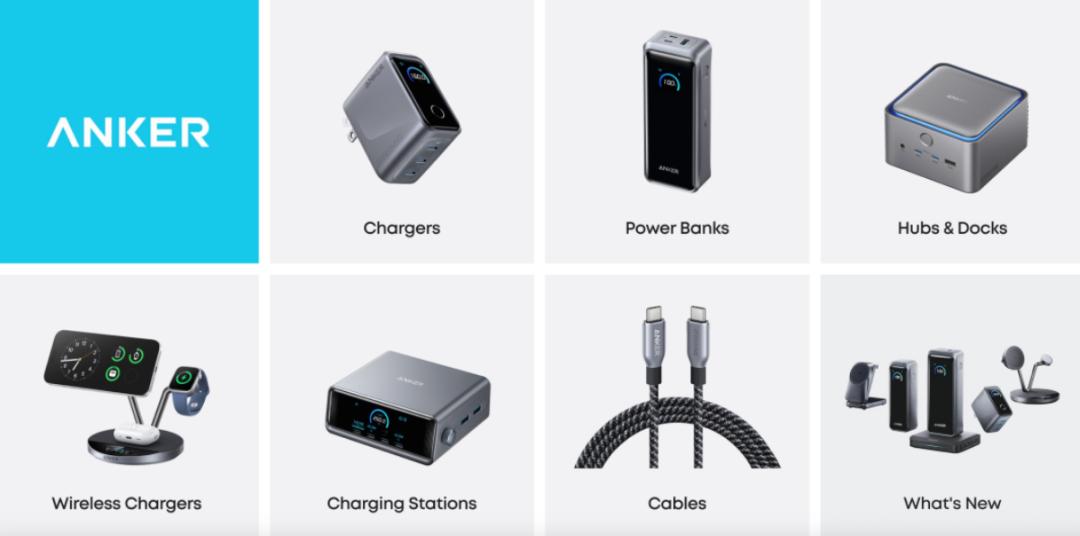
In fact, revenue from power banks only accounts for about 10% of Anker's total revenue. Its business has expanded to multiple categories including headphones, security, energy storage, sweeping robots, projectors, UV printers and chips. In the future, it will further extend its reach to products with higher technical thresholds such as robots. Yang Meng needs to recruit talents, but the talent pool that the "power bank" label can attract is far too limited to meet the demand.
Embarrassingly, Yang Meng himself is far less recognizable than Anker.
The hardware industry has seen a rare boom of star entrepreneurs in the past two years: Wang Tao sent drones into the sky, Tao Ye brought 3D printers into ordinary people's studies, Liu Jingkang made the selfie stick disappear from photos... Their products are not only commodities, but also the ID cards of the founders. But all the limelight belongs to them. Yang Meng, who started his career with the identity of an "e-commerce brand", seems far less appealing, which has posed huge obstacles to his original intention of recruiting top-notch talents.
What goes around comes around.
Yang Meng once compared Anker with DJI: "When you win a hard category, you accumulate excellent underlying technologies and a group of people with high values, and it becomes easier to expand to other categories. We chose a relatively easy model at the very beginning, so when we want to move upward and compete for higher ground, it becomes extremely difficult."
Anker is stuck right here: it needs first-class talents to make first-class products, but first-class talents are willing to join precisely because the company can make first-class products here. Talents and products complement and restrict each other, which is a bit like a Möbius strip.
No one has come up with a solution yet, but Yang Meng has to understand that the chicken-or-egg dilemma is Anker's problem, not the talent's problem.
Desperate for talents, the four notorious employers in Shenzhen
Yang Meng has repeatedly conveyed to the outside world Anker's vision of building a "paradise for creators".
In his description, working at Anker sounds quite attractive: for those who have proven themselves in big factories but have never got a full stage to give full play to their abilities, and are not willing to take the risk of starting a business on their own, Anker is the perfect destination. Here, you will move from participating in others' success to directly leading the success of a business; outstanding campus recruits can also give full play to their abilities here, and the fastest ones will get the chance to take charge of a business worth tens of billions of yuan in only three or four years.
Anker can not only provide sufficient financial support for new businesses, but also offer a lucrative option pool. In addition, creators at Anker do not have to fear failure. The company leaves huge room for trial and error. As long as you are a high-value creator, the company will not deny you just because of one or two failures, and it also allows selected new projects to operate at a stable loss for three to five years.
Offering both sufficient funds and great opportunities, it is not an exaggeration to call Anker the "dream company" for office workers. However, another statement circulating in the job market is completely contrary to the "paradise" narrative —
Anker is a regular on the list of "the four notorious employers in Shenzhen", and it always secures a stable spot on the list even when the list is updated.
"Joining Anker is not getting a job, but signing a bet agreement", "A company that operates with 'Google' level of thinking, does 'Huaqiangbei' level of work, and pays 'Foxconn' level of salary", "Anyone who has worked at Anker for a month is already considered a senior employee"... On social media, complaints from former employees have drawn various "pitfalls" of Anker for people outside the company.
Yang Meng is well aware of all these criticisms. He explained in an interview that many people left during the implementation of new values, and some departing employees attributed the problems to "internal political struggles" or "the boss's capriciousness". In his view, this personnel turnover is a necessary process to attract people who share the same new values.
But even the paradise depicted personally by Yang Meng itself contains disturbing elements.
For example, Yang Meng once built his own logic around the "35-year-old career crisis" theory prevalent in big tech companies:
"In the internet industry, a single 'battle' from project planning, development, launch to operation takes about 3 to 6 months. After graduating with a master's degree at the age of 24, one can already become a 'veteran' who has experienced 20 to 30 battles by the age of 30." After that, the battles may only differ in quantity, and the dividend of experience will soon be exhausted, but the employment cost of these "veterans" is much higher than that of young people. In Yang Meng's view, this is where the 35-year-old career crisis originates.
The hardware industry is just the opposite: "The cycle of a battle in our industry is very long. It may take 6 to 9 months to finish one battle, and it takes even longer for the chip business." According to his judgment, the accumulation of experience is linear and continuous. So although the hardware industry seems less sexy and the income does not rise that fast, the career span here will be much longer.
"When considering the upper limit of your career, you must also consider your lower limit." Yang Meng reminds job seekers to calculate their position at the age of 35 under these two different working rhythms respectively.
Sounds like a very attractive trade: accept the relatively slower growth and return for now, in exchange for a position that is harder to be replaced in the future.
But at Anker, the personnel turnover rate is much higher than expected.
Yang Meng revealed in an interview in 2025 that since 2023, the replacement rate of first-level department heads in the company has exceeded half. Campus recruits, who are "like a blank sheet of paper and can most easily be shaped by the organizational culture into what we expect", have become the key training targets for him. But insiders revealed that 70% to 80% of the campus recruits will leave the company within three years.
There is a rumor in the industry that the average tenure of Anker's employees is only 0.75 years. This news may never be confirmed, but on social media, employees who have worked for more than one year at Anker have already been jokingly called "senior employees".
Whether experience can resist the 35-year-old career crisis still needs time to verify, but those who previously worked in big factories have already encountered immediate troubles.
When interviewing an insider, China Entrepreneur once mentioned that some people who previously managed teams of hundreds of people may only be in charge of a few people after joining Anker, which means they need to dive into all technical details, and the team and division of labor they relied on to carry out work in big factories need to be rebuilt from scratch.
Yang Meng has experienced major business setbacks. In 2022, 20 out of Anker's 27 product lines "failed to beat competitors". At that time, he "fell into a depressed and desperate mood". After adjustment, in order to quickly verify whether new businesses can form a closed loop, he greatly shortened the verification cycle of new businesses, and the assessment period also became very tight.
For the middle managers who need to rebuild the order, these moves mean that they have to build their teams from scratch while being urged to deliver results.
"Anker's salary level is on par with DJI, Ugreen, Dreame and other peers, but its bonus coefficient and partner mechanism are rarely seen in the industry", a headhunter described Anker's attractiveness in the recruitment market.
Yang Meng is not a stingy boss. According to him, Anker's first new business option pool established in 2017 has been repurchased twice since then, paying 400 to 500 million yuan to the creators of this business, and half of the pool has not been repurchased yet. The recruitment materials released by Anker show that the 2025 operating shared bonus pool is nearly 900 million yuan, and the number of employees with "annual salary of one million yuan" has reached 977.
The option pool for new businesses is indeed very lucrative, and the bonus pool is also generous enough, but whether you can overcome the current challenges makes this job look like a "bet agreement".
In fact, Anker has undergone many changes after 2022. Yang Meng later shrank the product lines by 10, and a large number of colleagues left the company passively. He went to Suzhou to say goodbye to his colleagues. In a hotel downstairs of a cleaning appliance company, a colleague mentioned to him that he had used his connections built over many years to build the team, and even invited old colleagues to join at 12 o'clock in the midnight. But no one expected that everyone would be asked to leave just one or two years later.
"The final result is bad, I am hurt, and you must be hurt too. Why did you do this?" The colleague asked: "Steven, with that amount of money, why don't you just buy a building?"
Regarding that major business setback, Yang Meng attributed the main reason to the mismatch between talents and positions. "The direction is right, but there were big problems in the execution level, especially in the identification and appointment of talents." So if the expected result does not come out, he will continue to look for the person who can deliver the result.
To some extent, this explains why Anker is so desperate for talents while its talent turnover rate remains so high.
A rather absurd thing once happened to Yang Meng. In 2012, he participated in the design of a thin and light power bank with a built-in cable that can be attached to the back of a mobile phone, which sold 100,000 units in two years. Meanwhile, an improved model sourced from the factory sold 1 million units in a single year. Years later, he reviewed this case and believed that what he lacked at that time was marketing capability.
So here comes the question: if the person sitting in front of him today is the old version of himself who held the sales performance sheet back then, will he continue to look for a more suitable person, or make up for the missing capabilities for this person?
The sales performance sheet cannot give all the answers. Now, what Yang Meng relies on to screen talents is values.
Anker's values are not unique at all: First Principle, Pursuit of Perfection, and Common Growth, which are very common for consumer electronics companies. What makes Anker unique is that its interpretation of these concepts can directly determine whether a person stays or leaves.
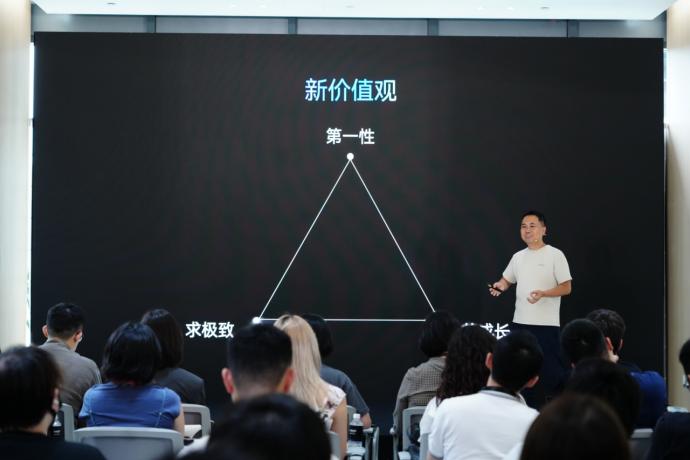
Caption: On April 22, 2026, Anker Innovations' internal technical communication meeting
A former engineer told China Entrepreneur that departments at Anker would score each other, and the scores would affect bonuses and awards. His department had a very heavy workload, but got a low score in this evaluation system. He felt that his efforts had not been correspondingly rewarded, which became one of the reasons for his resignation.
And in the complaints about the difficulty of becoming a regular employee at Anker on the Internet, "inconsistent values" is the reason that has been mentioned over and over again.
In Yang Meng's view, he is selecting like-minded partners for the "paradise", but those who are rejected may never figure out what exactly they did not do well in the end. The boundary between "paradise" and "notorious pit" becomes blurred from this point.
To understand this gap, we have to go back to Yang Meng himself: what kind of method does he want to use to make different teams successfully develop products at Anker?
Yang Meng's Way of Understanding Business
To understand Yang Meng, an unavoidable keyword is "abstraction".
"I like theoretical exploration and abstract thinking, and I like building systems. When I was in college, everyone said that I could work in a consulting company after graduation." This is how he explains "abstraction": Step back from specific things, and try to find the essential laws behind them. He also repeatedly mentions his MBTI personality: INTP (Logician).
"Yang Meng has extremely strong abstract thinking ability... It is almost impossible to win a debate with him, because his logic forms a self-consistent closed system." "Sean's Blog", a self-media blogger who once worked at Anker, summarized Yang Meng in his eyes like this.
It is not impossible for outsiders to get a more specific taste of this characteristic of Yang Meng — go and watch his interviews with different interviewers. Soon you will find that no matter what questions the interviewers raise, his answers often return to the same set of frameworks.
Just like how he treated the college entrance examination.
"If you want to get a good score in the college entrance examination, you'd better learn to abstract. Because many knowledge points in the college entrance examination are highly repetitive, when you can abstract them into several knowledge points and question types, you can finish the exam very quickly."
This methodology is obviously effective. Yang Meng was admitted to Peking University, and later went to the University of Texas at Austin (UT-Austin) for postgraduate study (he did not finish his PhD).
The questions that interviewers will ask are most likely abstracted by him into several "question types", and he has prepared the corresponding answers to match them.
The habit of "staying abstract" has brought Yang Meng huge benefits for a long time, for example, in his career.
During his PhD study, Yang Meng interned at Google. He said that he did not write much code, and his main work was to do abstract thinking with his colleagues: problem decomposition and problem definition — a born leader. Very soon, he was promoted from intern to the technical lead of the team, leading the team to take charge of specific module tasks, communicating with external parties about problems, and building system architecture internally.
Another example is starting a business.
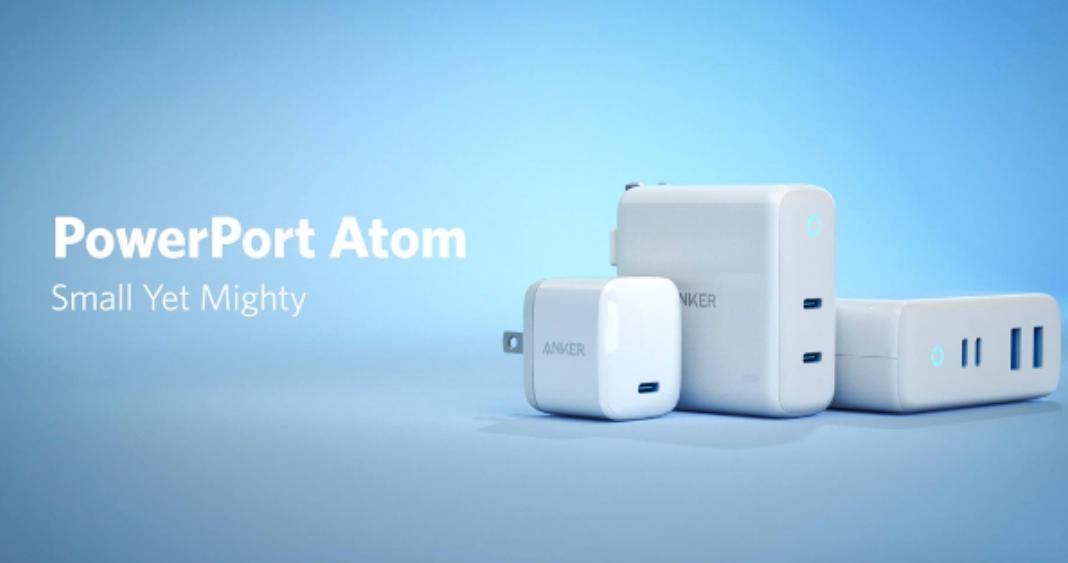
In 2012, Anker's first self-developed power bank was launched. Yang Meng participated in its design: a thin piece attached to the back of the mobile phone, with a built-in cable that can be connected to the phone. After the development process was completed, he quickly lost interest in the specific product.
"Polishing a product is the creation of many details, but I am more interested in building a relatively macroscopic logic. Seeing the abstract laws behind problems through a large number of specific phenomena, and using them to help everyone create more interesting things, this process makes me very enjoy."
He wanted to build a team and let different people develop products in different fields.
Since the company's second product, Yang Meng no longer participated in the whole process of R&D, but Anker's products have become more and more diverse:
It launched speakers in 2015, headphones in the following year, and started making sweeping robots and security products in 2017. The experience abstracted from one business also helped him achieve success in other categories: speakers priced at 30 to 40 US dollars have ranked first in sales on Amazon for many consecutive years; soundcore headphones have ranked sixth in the global wireless headphone market by revenue; consumer-level security products have also occupied more than half of the high-end market above 500 US dollars in Europe and the United States.