Xiao Zhan officially announced his concert, why have local cultural and tourism departments across the country all gone viral with their over-the-top, wildly creative promotional stunts?
After Xiao Zhan officially announced his tour, cultural and tourism official accounts from more than ten regions collectively moved to compete for the tour stop.
Cultural and tourism accounts of Wuhan, Sichuan, Xi'an, Shenzhen, Shanxi, Chengdu, Chongqing, Shandong, Hebei, Inner Mongolia, Zhejiang, Liaoning and other places have shouted out to Xiao Zhan one after another. Henan's cultural and tourism account made enthusiastic impromptu appeals, and Chongqing's cultural and tourism account even wrote a song to invite him. Netizens in the comment area frantically tagged their local cultural and tourism accounts to urge "Hurry up", making the scene extremely lively.
On the surface, what urban cultural and tourism departments are competing for is the right to host a star's tour stop, but in essence, cities are competing for the attention of millions of people, the willingness of tens of thousands of people to travel across cities, and the entire consumption chain behind a ticket that covers transportation, accommodation, catering and scenic spots.
When a city is chosen by young people, what it gains is not just the box office revenue of one night, but an opportunity to be re-recognized by the public.
A battle for Xiao Zhan's tour stops
5 million people are looking forward to the show, but the venue can only hold 20,000 people. The huge gap between supply and demand is extremely staggering, which is the current situation of Xiao Zhan's Nanjing concert.
On October 13, after Xiao Zhan officially announced the upcoming "Exit · Us" concert tour, the number of people who marked "want to watch" for the first stop in Nanjing has exceeded 5.2 million so far, and the number for the second stop in Shanghai is nearly 2.4 million. The total number of people who marked "want to watch" for the two stops has exceeded 7.5 million, topping the 2026 Damai "want to watch" list. This figure is even more striking when viewed across the entire Chinese live performance market.
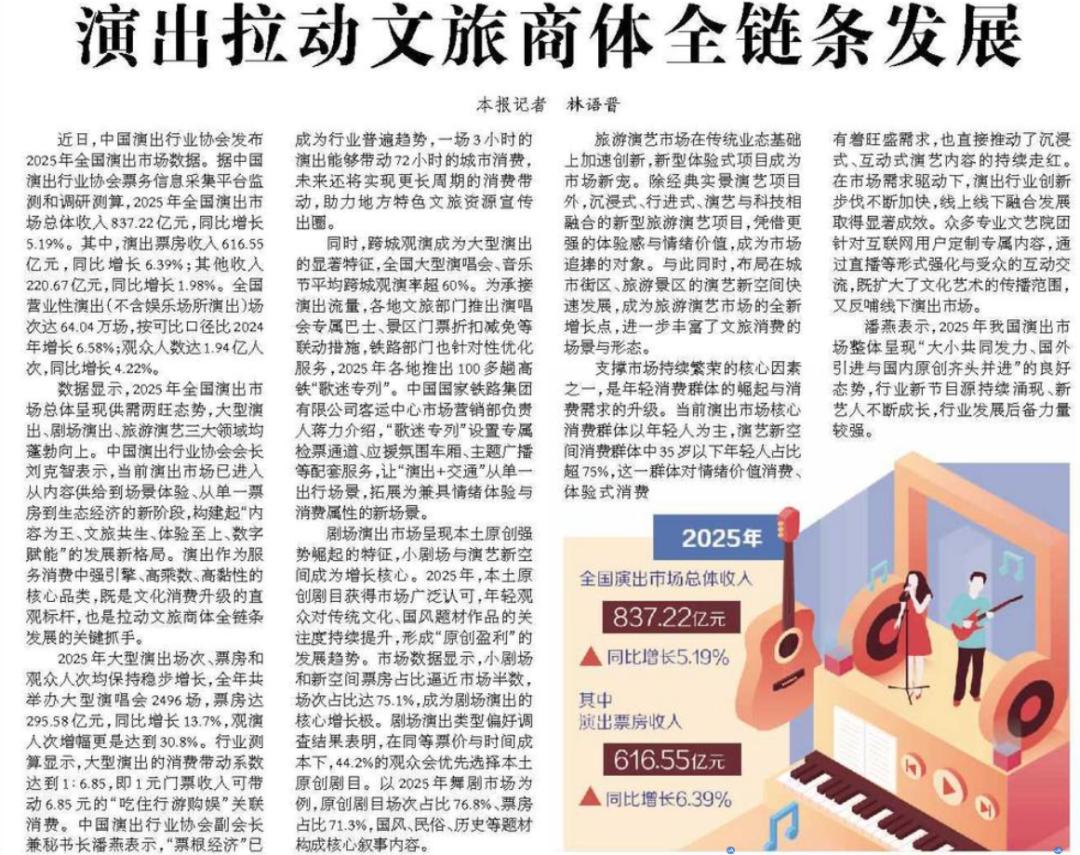
In 2025, a total of 2496 large-scale concerts were held across China, with a box office revenue of 29.558 billion yuan. However, there are only 20 to 30 top artists who can fill 10,000-capacity venues. The number of shows each artist can hold every year is also restricted by physical strength and schedule, so the scarcity of supply is structural and non-adjustable.
When the supply-demand ratio of an IP reaches such a huge disparity, it is no longer just a performance, but a competition for scarce resources between cities.
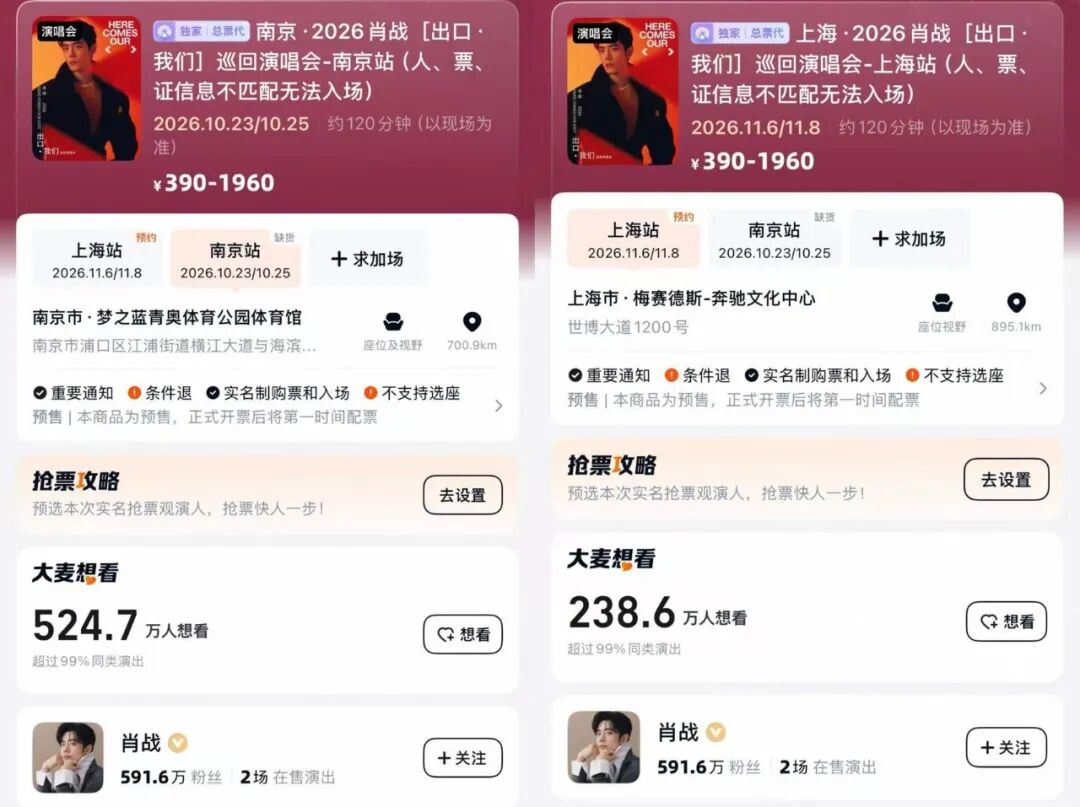
However, the number of people who want to watch the show alone is not enough to explain the collective action of cultural and tourism departments across the country. What makes Xiao Zhan special is that his popularity has been continuously verified for ten years, and he has an extremely wide conversion path for commercial value.
From the perspective of his performing career, Xiao Zhan's popularity is not a flash in the pan. In 2019, *The Untamed* made him a top-tier star, with the total play count across the internet exceeding 10 billion. After that, he continuously produced high-quality works. In 2025, *The Legend of Zanghai* won multiple annual championships including the national total play count of full episodes and the national total play count of TV dramas, and he was nominated for Best Actor at the 31st Shanghai Television Festival Magnolia Award.
In the film sector, his movie *The Legend of the Condor Heroes: The Great Hero* grossed 730 million yuan at the box office, and *Leisurely Production* won him the Most Popular Actor Award at the 33rd College Student Film Festival. The transition from idol-derived popularity to work-derived popularity is exactly the key that distinguishes Xiao Zhan from most top-tier artists.

What is more noteworthy is the operation of Xiao Zhan's team at the ticketing level. When signing the contract with the ticketing platform, the studio voluntarily gave up the 15% internal ticket reservation that is allowed by industry conventions, requiring 100% of tickets to be sold publicly, supported by a strong real-name verification mechanism. Each account is limited to 2 tickets, and the ID card, electronic ticket and face information must be consistent for admission.
This set of practices blocks the space for scalpers to hoard tickets, and also turns ticket-grabbing itself into a national public topic. Everyone who participates in ticket-grabbing, whether they get a ticket or not, is actually contributing attention resources to the potential host city.
What cities are competing for is not just a single person, but a traffic entry point that has been verified for ten years, has an extremely wide conversion path, and comes with a fair narrative and public topic attributes.
What kind of account are cities calculating after winning the tour stop?
Behind the lively scene of cultural and tourism accounts shouting out to Xiao Zhan, the logic is actually very simple: the concert economy is a consumption chain that has been repeatedly verified.
According to the data collection, research and calculation of the China Association of Performing Arts, in 2025, the average driving coefficient of large-scale performances to other consumption reached 1:6.85, which means 1 yuan of ticket revenue can drive 6.85 yuan of related consumption covering "food, accommodation, travel, shopping and entertainment". The large-scale commercial performances with more than 5,000 attendees across the year directly drove consumption of more than 220 billion yuan outside the box office.
Pan Yan, Vice President and Secretary-General of the China Association of Performing Arts, judged that: a 3-hour performance can drive 72 hours of urban consumption.
In the past few years, the tours of many top artists have made this calculation very clear.
For Jay Chou's 2025 Sanya concert, 82% of the audience came from outside the island, driving comprehensive consumption of more than 1.1 billion yuan. In the same year, at the Jinan stop, the three-day performance attracted 300,000 tourists, 87% of whom were out-of-town fans, including 59% of fans from other provinces. According to Trip.com data, during the concert, the number of Jinan's tourism orders increased by 77.4% year-on-year, hotel transaction volume increased by 345%, and the driven comprehensive consumption exceeded 1 billion yuan.
The 10th anniversary concert of TFBOYS in Xi'an directly drove 416 million yuan of tourism revenue, with the total number of travel orders increasing by 738% year-on-year, 79.73% of the audience being overnight tourists, and 81% of the audience coming from other provinces. Mayday held 12 consecutive concerts at the Beijing National Stadium, driving more than 150,000 people to gather in Beijing for carnival in the first three days of the May Day holiday, gathering passenger flow in business districts, transportation, cultural tourism and other formats around the venue, and continuously boosting the city's nighttime consumption.
It is obvious that a concert is not only the box office revenue of one night, but a whole-chain urban consumption behavior covering transportation, accommodation, catering, scenic spots, business districts and shopping.
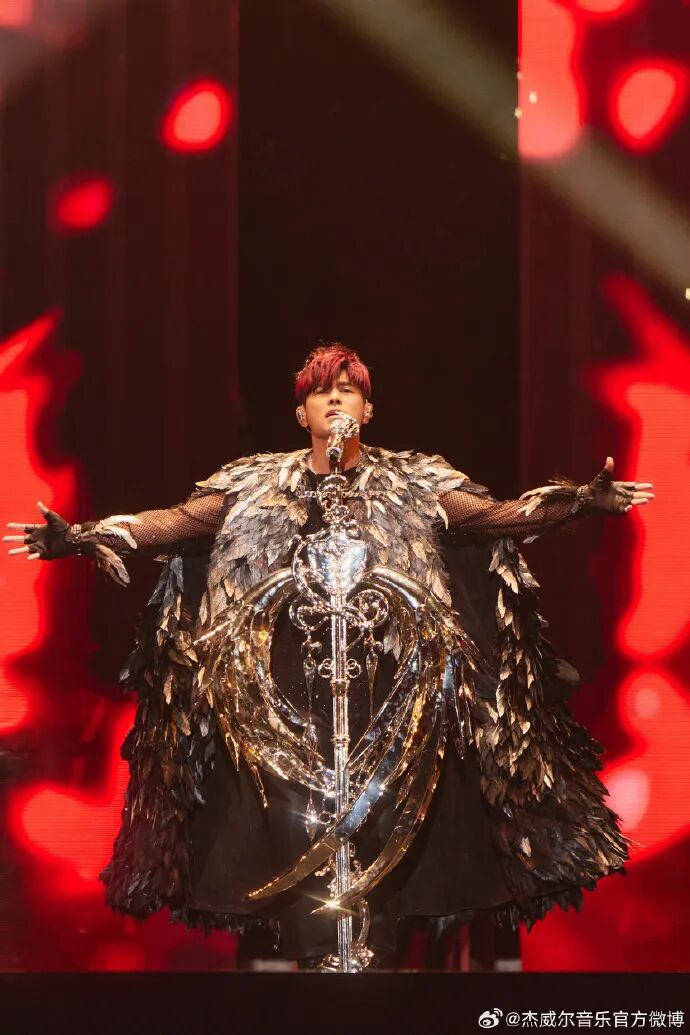
For a city, a concert by a top-tier artist is equivalent to a precisely targeted short-term golden week holiday.
This calculation is especially valid for Xiao Zhan, whose audience is mainly professional women aged 25 to 44, with sufficient economic capacity, strong willingness to consume across cities, and the ability to quickly translate emotional recognition into consumption actions.
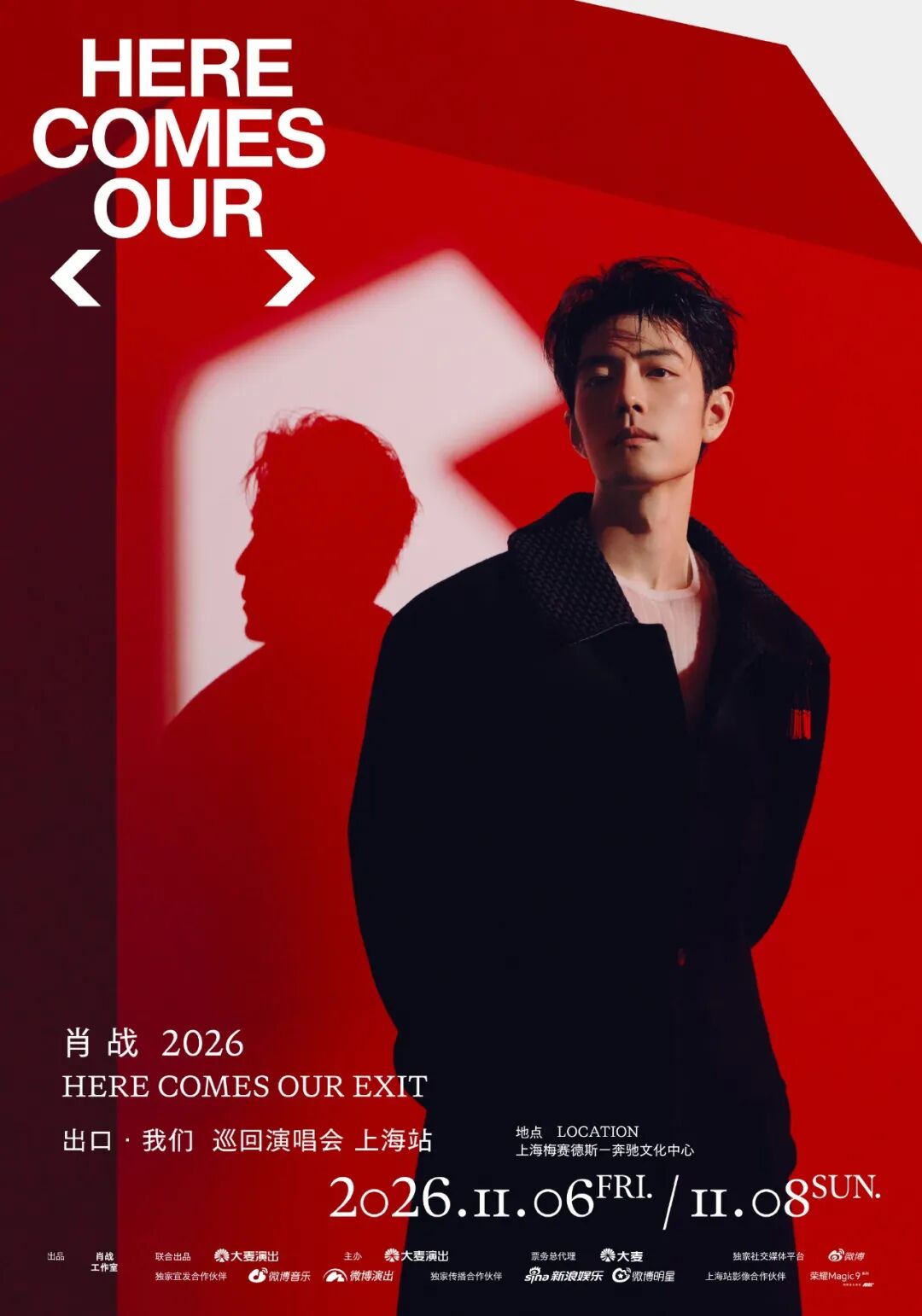
Taking Xiao Zhan's Nanjing concert as an example, calculated based on the official ticket price ranging from 390 yuan to 1960 yuan, the total ticket revenue of the two shows with about 22,000 tickets is at the 10 million yuan level. Calculated according to the 1:6.85 driving coefficient, the driven surrounding consumption easily exceeds 100 million yuan. Many audiences from third- and fourth-tier cities choose to travel across cities to attend the show, further expanding the consumption scale of transportation and accommodation.
The data of Taiyuan can be used as a reference. Since 2023, Taiyuan has successively hosted 73 large-scale concerts of well-known artists such as Jay Chou, Phoenix Legend, Zhou Shen and Dao Lang, with a total box office revenue of more than 1.26 billion yuan, driving related consumption of nearly 8 billion yuan, and the proportion of out-of-province audience exceeds 60%.
Three years, 73 performances, nearly 8 billion yuan of related consumption, this set of figures does not illustrate how profitable a single concert is, but that concerts are having a continuous and structural impact on a city's consumption ecosystem.
Behind the cultural and tourism accounts shouting out to Xiao Zhan, they are calculating this economic account that has been repeatedly verified.
What to focus on after the lively hype?
No matter how clear the account is, it is only the theoretical upper limit.
After the concert ends and the audience leaves the venue, whether the subway can evacuate the crowd in time, whether hotels will jack up prices arbitrarily, and what reasons the city has left for them to stay one more day after waking up the next day, the answers to these questions determine how much economic benefit of the concert can be finally realized.
In other words, winning the right to host the concert is only getting an admission ticket, and the real exam has already started before and after the performance.
The most basic and most visible part is service support. The concentrated influx and evacuation of tens of thousands of people on the concert day tests the city's systematic capabilities in traffic scheduling, security organization and accommodation guarantee. Any broken link will greatly reduce the effect of all previous inputs.
Taiyuan provides a referable sample in this regard. For each concert, more than 420 buses are dispatched, the free shuttle lines run a total of 9512 trips, transporting 442,200 fans. The subway extends its operation hours, serving 31,600 inbound passengers. A total of 192,200 free public transport tickets are redeemed with concert tickets. These actions do not rely on star resources, but on the service framework that the city has built before the performance is held.
Only when the supporting services are in place can the consumption be retained. Whether the concert ticket can be turned into a consumption route depends on the joint design of related rights and benefits.
In Taiyuan, with a concert ticket, people can take buses and subways for free across the city for 3 days before and after the performance, and all 6 scenic spots including Jinci Temple, Tianlong Mountain and Shanxi Merchants Museum are free of charge, and ticket holders can get one more free admission to these scenic spots within 1 year from the date of ticket purchase. Sanya upgraded the concert ticket to a "city travel discount pass" that connects food, accommodation, travel, shopping and entertainment, linked nearly 20 enterprises to launch more than 150 exclusive products, and the total sales of 4 outlying island duty-free stores reached 155 million yuan during the concert. The value of a concert ticket depends on how many consumption scenarios the city is willing to connect it to.
The hardest but most valuable part is brand support. Fans come for their idols with highly specific travel routes: arrival, check-in, watching the show, and return. The proportion of fans who spontaneously visit surrounding scenic spots is not high. If the city only receives the passenger flow without travel route design and consumption guidance, the popularity will disappear completely once the event ends.
The micro short drama *Taiyuan Appointment* recently launched in Taiyuan provides a new idea, which turns the concert into a narrative entry point, making the audience yearn for the city before they set off. The essence of this approach is to transform the behavior of "traveling to a city for a star" into "remembering a city after visiting it for a star".

In the past, the logic of urban investment attraction was to introduce projects, but now it is turning to competing for traffic entry points. Concerts are no longer just cultural and entertainment activities, but are included in the short-term hit projects of urban cultural tourism investment promotion.
However, the value of the entry point depends on what is behind it. Taiyuan spent three years accumulating 73 concerts to build a complete support system covering traffic shuttle, scenic spot linkage and ticket-derived economy. Luzhou blazed a trail with policy support and refined governance even without top-level scenic spot resources. Their experience points to the same judgment: the competition of urban cultural tourism is shifting from "who can attract concerts" to "who can make concerts leave long-term assets for the city".
The borrowed temporary popularity cannot become the confidence of a city. The real urban assets are never the traffic peak brought by a single concert, but the service system, travel route design and brand awareness that have been built long before the arrival of the traffic.
Shouting out is easy, but supporting the event well is difficult. When cities compete for Xiao Zhan's tour stop, they are actually competing for an exam paper. The exam does not test who shouts the most fancy slogans, but who has already prepared the services, travel routes and guarantees before the arrival of the huge passenger flow.
Traffic will leave, but reputation will stay, and reputation is never created by a single short video shout.
This article is from WeChat official account "Mou Yu", author: Mou Yu, published with authorization from 36Kr.