Mobile Phone Displays: The Victory of Domestic Industry Players Banding Together and the Real-World Growing Pains
Among flagship domestic smartphones, Samsung-branded screens are becoming increasingly rare. Last year, among all panels Samsung Display supplied to Chinese manufacturers, high-end flexible OLEDs accounted for only about 5%, while almost all the rest were mid-to-low-end rigid OLED orders.
In mid-September, a large group of Chinese media personnel visited Samsung Display's headquarters in South Korea. They were not invited by Samsung, but brought there by iQOO. Samsung Display specially held a screen technology launch event for iQOO at its headquarters.
This scenario was quite rare in the past, though the cooperation between the two parties was nothing new: iQOO's flagship smartphones have long been equipped with Samsung screens. What matters is Samsung's attitude. Samsung Display, which used to prioritize iPhone as its core client, not only held a launch event for a single brand at its headquarters for the first time, but also rolled out its latest M-series materials and opened a dedicated custom screen production line exclusively for iQOO.
Behind Samsung's exceptional emphasis lies the shifting supply-demand dynamics in the smartphone screen industry. Back in the day, domestic phone manufacturers followed the unwritten rule of "no Samsung, no flagship": consumers recognized Samsung's screen quality, and manufacturers had no other viable options. Samsung only needed to provide standardized OLED products, yet manufacturers still queued up to pay deposits in advance.
Interestingly, several weeks later, OnePlus and BOE also hosted a screen technology launch event. The two sides have jointly developed four generations of screens since 2022, featuring brand-new display materials and a global 165Hz ultra-high refresh rate. Back then, OnePlus 7 Pro even spent nearly 100 million yuan on R&D to customize screens from Samsung. Today, OnePlus has long switched to domestic screens as its core supplier.
In fact, in the past two years, except for a few models such as those from iQOO, most flagship smartphones in China are equipped with domestic screens. Compared with the past when they had to cater to Samsung's demands, domestic phone manufacturers and domestic screen makers reached a near-instant consensus on cooperation. The former obtained more favorable pricing and greater room for product differentiation, while the latter absorbed excess production capacity and gained opportunities to polish their technologies through flagship product verification.
From the earlier partnerships between Huawei and BOE, to the later collaborations between Xiaomi and TCL CSOT, OPPO and Tianma, vivo and Visionox, the parties either co-built laboratories or set up exclusive production lines. It is precisely with the joint efforts of the huge domestic market and domestic phone manufacturers that domestic screen makers are gradually eroding Samsung's market share.
However, when people assumed that domestic screen makers would replicate the success they achieved in the LCD sector and overtake South Korean players in the OLED market, a black swan event of memory price hikes disrupted the domestic screen makers' breakout rhythm once again. Domestic screen makers that have poured massive investments into 8.6-generation OLED production lines have fallen into collective losses once more. By contrast, leveraging its technological advantages in OLED and stable partnership with iPhone, Samsung not only saw rising profit margins, but also witnessed a rebound in its high-end market share.
Chinese and South Korean screen manufacturers have been competing for more than two decades. The LCD battlefield has come to an end, while on the OLED track, Chinese manufacturers have secured scale advantage for now, and South Korean manufacturers have reaped handsome profits.
01
In 2025, a Bilibili user launched a massive "LCD Self-Rescue Signature Campaign". Participants set up groups, recruited members, and distributed questionnaires, planning to negotiate with phone manufacturers with thousands of signatures to persuade them to produce phones equipped with LCD screens.
This retrogressive move ultimately failed to reverse the historical trend. Compared with OLED panels that are thin and flexible, self-luminous and support dynamic refresh rates, LCD has almost no remaining competitive advantages.
Smartphone screens have roughly gone through two development phases: LCD and OLED.
The earliest iPhone models used LCD panels, and iPhone was a long-time loyal user of LCD screens. Although iPhone X was already equipped with OLED panels, some of its product lines still used LCD screens as late as 2024. The public generally believes that LCD adopts standard RGB arrangement, has no low-frequency flicker, and is more eye-friendly, while early OLED panels could not achieve high-frequency PWM dimming under low brightness. This is the reason why many people insist on the slogan "LCD will never be enslaved".
However, China's LCD panel manufacturers started later than their Japanese and South Korean counterparts. From 2003, when BOE spent huge sums to acquire South Korea's Hyundai's liquid crystal business, to 2008 when it built its own production lines, domestic liquid crystal displays remained the fourth largest imported product in China, only after oil, iron ore and chips, before 2014. "Lack of chips and screens" was once a collective memory of China's industrial sector.
Domestic screen manufacturers and local governments decided to make counter-cyclical investments, just like South Korean manufacturers used this strategy to overtake Japanese counterparts in the past, the more losses they made, the more investments they poured in. In 2008, Hefei, in order to support the settlement of BOE's high-generation production line, even preferred to suspend the construction of subways and allocate its annual fiscal revenue to invest in BOE. Before the new energy and memory sectors boomed, Hefei rose to fame by betting heavily on the panel industry.
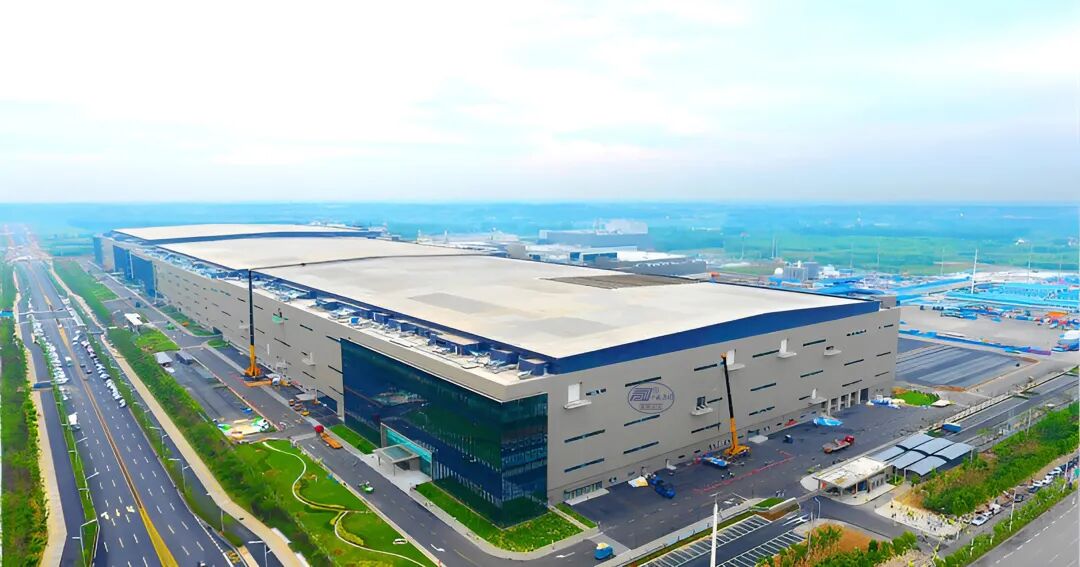
The peak of domestic LCD production capacity came between 2017 and 2019. According to statistics from securities firms, domestic panel manufacturers launched as many as 13 new LCD production lines, with total investment exceeding 450 billion yuan.
Soon, with the explosive growth of domestic LCD production capacity, LCD panels were priced as low as cabbage. South Korean manufacturers including Samsung and LG were forced to surrender. In 2022, Samsung closed its last LCD production line. The following year, LG sold its last LCD production line located in Guangzhou to TCL CSOT, and South Korean manufacturers eventually completely withdrew from the LCD market.
Although LCD is still the mainstream in large-screen markets such as PCs and TVs, and mature LCD products have generated considerable profits for later-entering domestic screen manufacturers, which remains a major profit source for them to this day and supported the first overtake of South Korean manufacturers by domestic players, LCD is no longer popular on small-screen terminals such as smartphones.
Phone manufacturers are more aware than anyone that the slogan "LCD will never be enslaved" is nothing more than wishful thinking from netizens. Especially as the price of OLED continues to drop, LCD, which once had a place in the mid-to-low-end market, has been fiercely squeezed by OLED.
After South Korean manufacturers voluntarily withdrew from the LCD market due to lack of profit, they concentrated resources to bet on the OLED track with obvious inherent advantages and high profit margins. This move proved to be wise in hindsight: OLED with better display performance, lighter weight and flexibility is gradually replacing LCD in the smartphone market and becoming the preferred screen for flagship phones. As early as 2024, the global shipment of OLED screens surpassed that of LCD for the first time, marking a historic structural shift in the smartphone screen sector. In the highly competitive Chinese market, this transformation was even completed as early as 2021.
South Korean players are shrewd, and they always keep top-tier technologies and products for their own use. Although Samsung mass-produced the first AMOLED phone in 2009, it was only used on its own flagship models. It was not until 2015 that Samsung found its own flagships facing sluggish sales, while OLED production capacity increased sharply with the launch of new production lines, so it began to shift OLED panels from internal use to large-scale external sales.
The widespread popularity of OLED among phone manufacturers gave Samsung enormous confidence, making its supply strategy extremely tough. Back then, there was a popular saying in the industry: top-tier screens are kept for Samsung's own use, first-class screens are supplied to Apple, and only average screens are provided to Chinese manufacturers.
Lei Jun, founder of Xiaomi, must have the deepest impression of this. In 2015, Xiaomi, which was at its peak, offended Samsung. The cause was that Xiaomi's supply chain head made disrespectful remarks to Samsung's China region executives, who then sent an email to complain to Samsung's global headquarters. Eventually, Samsung decided to cut off OLED screen supply to Xiaomi.
Later, Lei Jun took charge of the supply chain in person: he accompanied Samsung executives to dinners, asked industry friends to pass messages to Samsung, and made multiple personal trips to South Korea to apologize to Samsung. In the end, Samsung agreed to resume screen supply to Xiaomi two years later, and many of Xiaomi's flagship products had to delay their launch due to the screen supply crisis. This story was later included in Xiaomi's officially authorized official biography.
In fact, Cher Wang's HTC was also once constrained by Samsung on screen supply. Samsung, jealous of HTC's strong phone sales, cut off screen supply to HTC. Cher Wang traveled to South Korea twice but failed to persuade Samsung, and later she had to lament: "When Samsung wanted to launch its own Galaxy series, they cut our orders to supply their own products, which is really a sad thing."
Moreover, Samsung Display rarely met customers' personalized demands, resulting in all clients getting almost identical products for a long time, making it difficult to create differentiated user experience. Lu Weibing once said: "In the past, imported screens had fixed parameters, we could only buy whatever they sold, and could not add our own ideas and optimizations."
02
In 2018, Samsung Display's OLED market share once exceeded 90%, leading the industry by a huge margin. Even a powerful player like Apple was firmly constrained by Samsung in screen supply. At that time, domestic manufacturers had just started mass production of OLED, with a combined market share of only 4%.
But scale expansion is always China's strength. As domestic screen makers made relentless efforts in OLED development, Samsung Display's share of OLED phone panels fell below 70% for the first time in 2021, and its market share kept declining year by year in the following years. In 2024, the shipment of domestic OLED panels surpassed that of South Korean manufacturers for the first time. Among the multiple flagship models launched at the end of that year, only realme GT7 Pro continued to use Samsung OLED screens, while other mainstream brands all chose domestic screens.
Realizing the unfavorable trend, Samsung once hoped to recapture market share by launching new screen products in the Chinese market. But reality did not go as Samsung expected. Last year, among all panels Samsung Display supplied to Chinese manufacturers, high-end flexible OLEDs accounted for only about 5%, while almost all the rest were mid-to-low-end rigid OLED orders.
Today, foldable screens have become one of the few remaining strongholds for Samsung Display in the Chinese market. OPPO and vivo's current foldable phone strategy is to use Samsung panels for the inner screen and domestic panels for the outer screen, balancing product performance and cost. Huawei and Xiaomi are more thorough: Samsung screens are barely seen in their high-end product lines.
However, the overtake of South Korean manufacturers in terms of domestic OLED shipment did not go smoothly. In 2019, actress Zhou Dongyu posted a confusing question on Zhihu: "Is the Zhou Dongyu arrangement really that powerful?" This post received 10 million views on Zhihu.
This technical term named after Zhou Dongyu is actually a spoof from netizens. When you magnify a screen, you can see the regular arrangement of various sub-pixels. LCD panels, which are backlit, can achieve standard RGB arrangement, while OLED is self-luminous. As blue luminescent materials have the shortest lifespan, how to arrange blue sub-pixels and extend their lifespan has become a very tricky problem.
Domestic manufacturers made many attempts to bypass Samsung's patents, but the early immature technologies led to grayish, non-transparent screens that were ridiculed as "rag screens". And because the sub-pixel arrangement under the microscope looked very similar to Zhou Dongyu's classic "little yellow duck staring" meme, netizens playfully named it "Zhou Dongyu arrangement".
While Zhou Dongyu could resolve the embarrassment through self-deprecation, domestic manufacturers were widely criticized by consumers for this issue.
Huawei was the first manufacturer to adopt domestic OLED screens on its flagship models. In 2018, the flexible OLED panels used on Huawei Mate 20 Pro were supplied by BOE and LG. Later, due to US sanctions, South Korean screen manufacturers successively cut off supply to Huawei, and Huawei began to switch its screen suppliers to several major domestic screen makers.
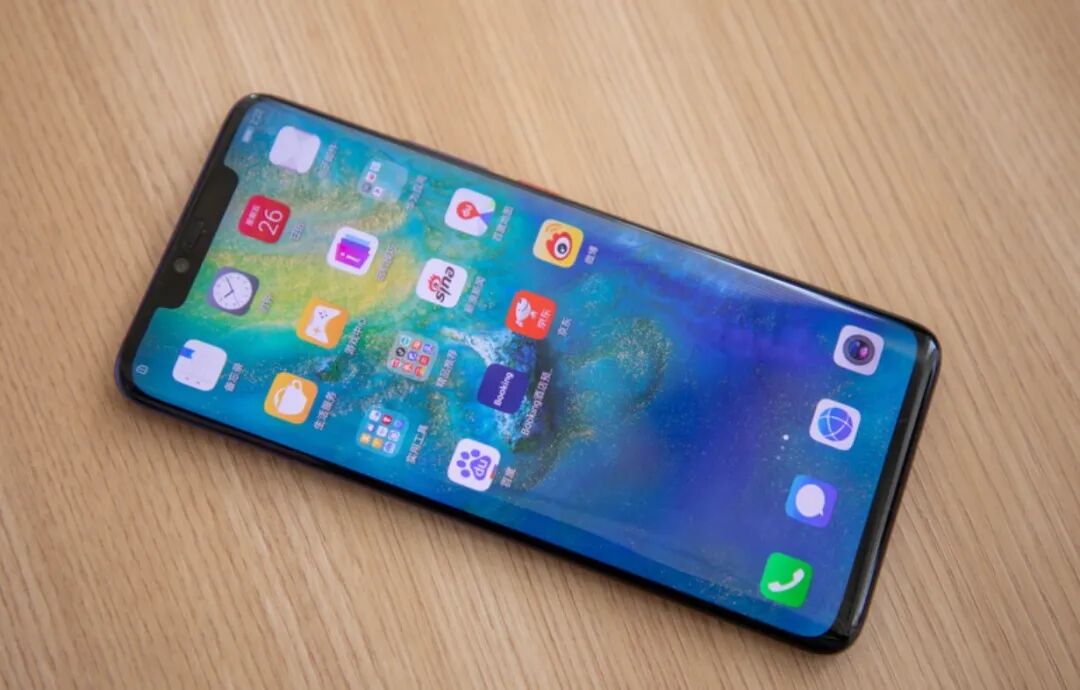
In 2019, Huawei officially signed an agreement with BOE. Huawei promised to grant BOE the status of "strategic supplier", and BOE in return promised to give Huawei the status of "strategic customer". The screen shipment of BOE and Tianma surged several times that year. Half of the OLED development timeline that BOE later showed in its PPT was related to Huawei phones. Even Honor, which was spun off from the Huawei system, basically uses domestic screens across its entire product line.
However, in the early days, domestic OLED screens were not competitive enough: they started late, with insufficient technological accumulation and low yield rates. Phone manufacturers had to adopt a long-term strategy of mixing different screen suppliers, so that consumers buying a new phone were like buying a lottery ticket, which drew countless complaints from users.
While Huawei was supporting BOE, Xiaomi chose to partner with TCL CSOT. In 2020, Xiaomi's digital flagship model was first equipped with TCL CSOT's screens, which was also TCL CSOT's first mass production of flexible OLED. Xiaomi's support gave the new entrant a valuable opportunity to grow. But due to the special period of pandemic, the supply was unstable. Xiaomi's strategy was to use Samsung panels in the early stage and TCL CSOT panels in the later stage. Although the practice of mixing different screens was heavily criticized at that time, TCL CSOT's progress was obvious to all, and Xiaomi's flagship products including foldable phones have long been using TCL CSOT's screens.
Interestingly, right after iQOO held its launch event at Samsung Display's headquarters, it hosted another screen technology launch event with Visionox at Tsinghua University. This diversified supply system has become very common in the screen sector, and mainstream phone manufacturers basically use screens from multiple suppliers. This also means that against the backdrop of excess screen production capacity, phone manufacturers are gaining greater discourse power.
Compared with Samsung's tough attitude, domestic screen manufacturers are extremely cooperative. For the cooperation between Xiaomi and TCL CSOT, Xiaomi's screen team directly stationed at the panel factory, and specially opened new production lines for non-standard customized screens. OPPO also enjoyed this high-standard treatment: Tianma customized and built an exclusive top-tier screen production line exclusively for OPPO. BOE provides OnePlus with its best screens every year. As Li Jie, CEO of OnePlus, said, BOE has made huge concessions and sacrifices for its new production lines.
In the era when domestic screens were not trusted, the support and endorsement from a group of domestic phone manufacturers not only brought a large number of orders to domestic screen makers, but also gave them the opportunity to polish their technologies and products on flagship-grade screens.
At the same time, domestic screen manufacturers launched massive investments in OLED, with more than a dozen 6th-generation OLED production lines in total. As a major manufacturing country, once the supply chain matures, China is bound to achieve large-scale production at affordable prices, leading to a sharp drop in screen prices.
03
However, Chinese manufacturers only got the scale, while South Korean manufacturers took all the profits.
In 2025, Samsung Display's operating profit reached 22 billion yuan, higher than the total profit of all Chinese screen manufacturers combined. In fact, most domestic OLED production lines are still in the red.
Samsung Display can capture almost all the profits of the industry for two core reasons: first, it started layout early, with stable production capacity and obvious technological advantages.
Leveraging its three core advantages in manufacturing equipment, pixel arrangement and luminescent materials, Samsung has built a deep moat in the OLED track. Back then, Samsung monopolized Japan's Tokki's advanced evaporation machines by signing exclusive agreements with upstream equipment manufacturers, so other manufacturers could not buy these machines even with sufficient capital. It was not until 2017 that BOE managed to purchase one advanced evaporation machine.
As the equipment monopoly gradually lost effect, Samsung picked up the patent stick. Since 2022, Samsung Display has sued BOE multiple times, accusing BOE of stealing Samsung's OLED patents. In 2025, the two parties finally reached a