Can the trillion-level robot market become Midea's second growth curve?
Beneath the aura of the trillion-yuan track, Midea's robotics business is caught in the gap between ideal and reality. It holds capital, component resources and the industrial foundation of KUKA, yet cannot avoid the reality of insufficient scale, profit pressure and how to further translate scale into profits in the future.
Recently, the International Federation of Robotics released data pointing out that China's industrial robot market is expected to maintain an average annual growth rate of 5% to 10% from now to 2029. At present, the imaginative space of the entire robotics track has indeed been continuously expanded.
Other institutions predict that the global robot market size will exceed 2 trillion yuan ten years later. The story of embodied intelligence is sweeping the industrial circle. In the robotics track, home appliance giant Midea is an existence that cannot be ignored, and has even poured huge sums of money into betting on this track.
Fang Hongbo, Chairman and President of Midea Group, once stated that Midea will firmly deploy sub-core businesses such as robotics and new energy in the second half of the year. In terms of early results, in the first half of the year, the revenue growth rate of its robotics business outperformed the core home appliance business. KUKA also obtained a top-ranking seat in the industry. However, the paradox of reality is that the hot industry trend has indeed not yet been transformed into a solid performance foundation at the group level.
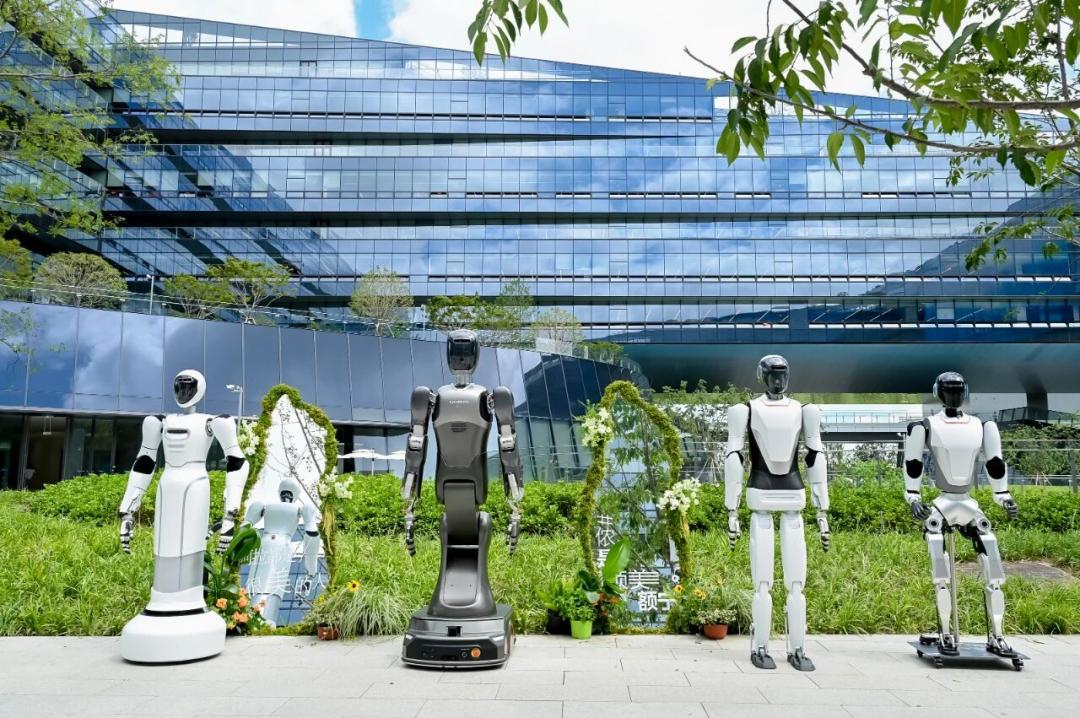
Under the grand narrative of the trillion-yuan market, Midea's robotics business is still in the stage of revenue growth without profit growth, and there are many practical hurdles to cross before it can become a real second growth curve that can support the group's performance.
In particular, Midea's robotics sector maintains high revenue growth, but its volume is small and gross profit is under pressure, making it difficult to hedge the growth pressure of the core home appliance business. The company's industrial robot line and household humanoid robot line coexist. Even if home appliance manufacturers have accumulated capital and component technology, turning the industry trend into real profits remains a major challenge for Midea.
01
Midea's robotics business presents two distinct sides
Public data shows that as of June 2026, the group's robot usage density has exceeded 750 units per 10,000 employees. If you look at Midea's 2026 first-half financial report, the robotics and automation sector shows distinct two-sided characteristics.
On the one hand, the sector achieved revenue of 16.621 billion yuan, a year-on-year increase of 10.27%. Compared with the 4.27% growth rate of the smart home business, its growth momentum is very prominent, making it one of the most promising incremental tracks within the group.
Although Midea's business has shown impressive revenue growth, another detail is that the profitability of this sector is not perfect. According to the financial report, the gross profit margin of this business fell 1.86 percentage points year-on-year to 20.9%. Revenue is rising, but profits have not kept pace, falling into the real quagmire of revenue growth without profit growth.
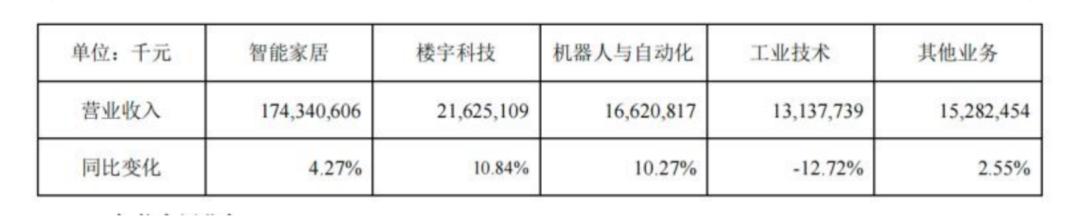
When placed in the overall context of Midea Group, the volume shortcoming of the robotics business becomes more intuitive. At present, the robotics and automation sector as a whole accounts for only 6.39% of the group's total revenue. Its scale is not yet large enough to become a mature second growth curve, and cannot undertake the important task of supporting the group's performance.
Obviously, behind this situation is a set of structural contradictions: the new business has not yet grown in size, while the traditional core home appliance business is facing considerable downward pressure.
Large home appliance categories have collectively entered a shrinking volume cycle, and the performance of air conditioners, Midea's core basic business, is particularly obvious. Public retail data shows that in the first half of 2026, the retail volume of air conditioners was 40.96 million units, down 13.1% year-on-year; total retail sales reached 122.1 billion yuan, down 15.9% year-on-year, of which the year-on-year decline in June alone reached -20.7%.
The pressure on the core business has been transmitted to the group's overall statements. In the first half of 2026, Midea achieved revenue of 261.052 billion yuan, a year-on-year increase of 3.55%; attributable net profit was 26.446 billion yuan, a small year-on-year increase of 1.66%; deducted non-attributable net profit was 19.595 billion yuan, a sharp year-on-year decrease of 25.31%.
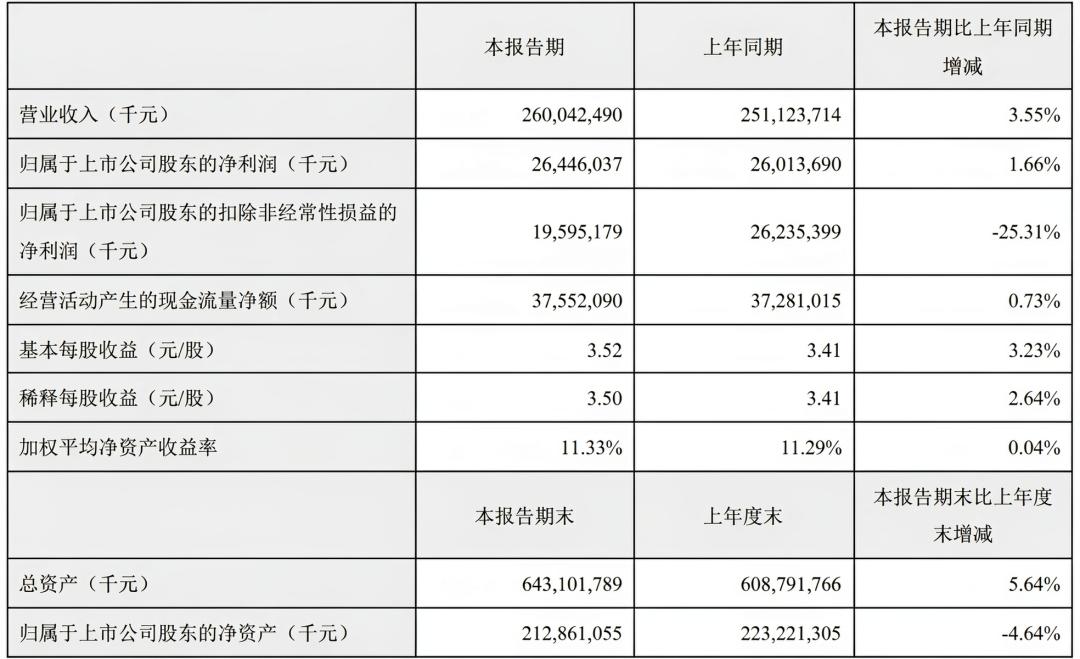
The group's revenue maintains a slight upward trend, but deducted non-profit has dropped significantly, and growth momentum has weakened significantly. Although the robotics business has a bright growth rate, limited by scale and gross profit performance, it can only act as a role for the group to cultivate brand diversification, and cannot hedge the pressure of the core home appliance business. Behind the impressive growth, the structural pressure within the business and from large home appliance manufacturers crossing borders to develop robotics has also emerged.
02
Under the melee of embodied intelligence,
Is taking a multi-pronged approach a paradox?
It is reported that Midea's robots are mainly divided into industrial robots, self-developed humanoid robots, household service robots, logistics and medical automation robots, etc. Among them, industrial robots are the important mainstay in terms of revenue, shipment volume and commercial contribution; household-oriented humanoid robots have not yet formed a main business with large external sales. As far as the entire industry is concerned, the trend of humanoid robots seizing market entry points and industrial robots seizing profits is very prominent.
Therefore, in the process of Midea taking a multi-pronged approach, industrial robots (including KUKA) are more noticeable. Objectively speaking, in terms of future prospects, the above-mentioned household-oriented humanoid robots and pan-industry-oriented industrial robots are the two key priorities. Even so, the external environment Midea faces is not easy.
As far as the humanoid robot track is concerned, an oligopolistic pattern has emerged at present. According to the first-half statistics from SAG institutions, Agibot shipped 8,400 units in the first half of the year, accounting for 44% of the global market share; Unitree Robotics shipped 5,900 units, taking 31% of the global share, and the two leading companies together account for more than 70% of the global market.
The shipment volume of small and medium manufacturers at the tail of the track did not exceed 1,000 units per company in the first half of the year, and the scale gap between leading players and mid-tier players continues to widen. Compared with the industry's fiery external shipment competition, the competition that Midea's humanoid robots have to participate in is very fierce.
If we turn our attention back to the industrial robot track that contributes the main revenue, the domestic market involution has entered a white-hot stage, and the highlights and pressures of Midea's robotics business coexist.
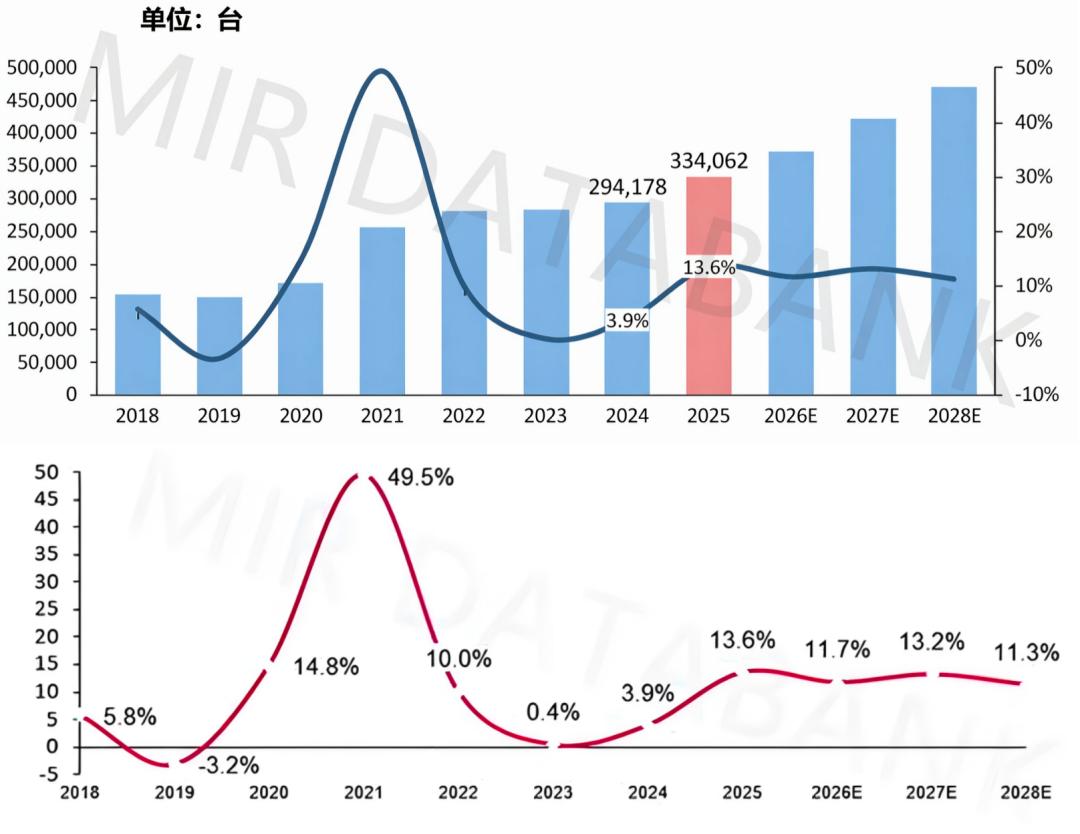
The highlight is that according to statistics from MIR, the domestic shipments of KUKA industrial robots in the first half of the year exceeded 18,000 units, a year-on-year increase of more than 19%, and its domestic market share reached 9.7%, rising to the second place in the industry; in the field of heavy-duty robots above 300kg, the domestic market share exceeded 50%, and the products are widely deployed in high-value-added scenarios such as auto parts, energy storage batteries, ships, aerospace and other fields.
However, the entire domestic industrial robot market is full of strong players. In 2025, Estun, Fanuc and KUKA all achieved annual sales exceeding 30,000 units, Inovance and ABB shipped more than 20,000 units, and Epson, Effort, Yaskawa, Rokae and other enterprises all achieved annual sales of more than 10,000 units. In the first half of 2026, Estun once again took the first place in the domestic industrial robot shipment volume of all brands, becoming the first independent brand with quarterly sales exceeding 10,000 units, maintaining its leading position for six consecutive quarters, and ranking first in domestic brand shipments for eight consecutive years, forming a leading advantage over Midea.
In the fierce competitive environment, the advantage of home appliance players crossing borders to develop robots lies in their complete set of industrial capabilities accumulated over decades. But success cannot be achieved simply by replicating manufacturing capabilities. Because the motor and control hardware capabilities accumulated in home appliance manufacturing can be reused in robot products, the factory customers, project channels and delivery service systems faced by B-end industrial robots are actually separated from the home appliance retail for ordinary consumers.
Midea's own factories can be used as internal test scenarios, but when expanding to external industrial customers, it cannot reuse the home appliance dealer network spread all over the country, and there are also customer acquisition costs for external expansion.
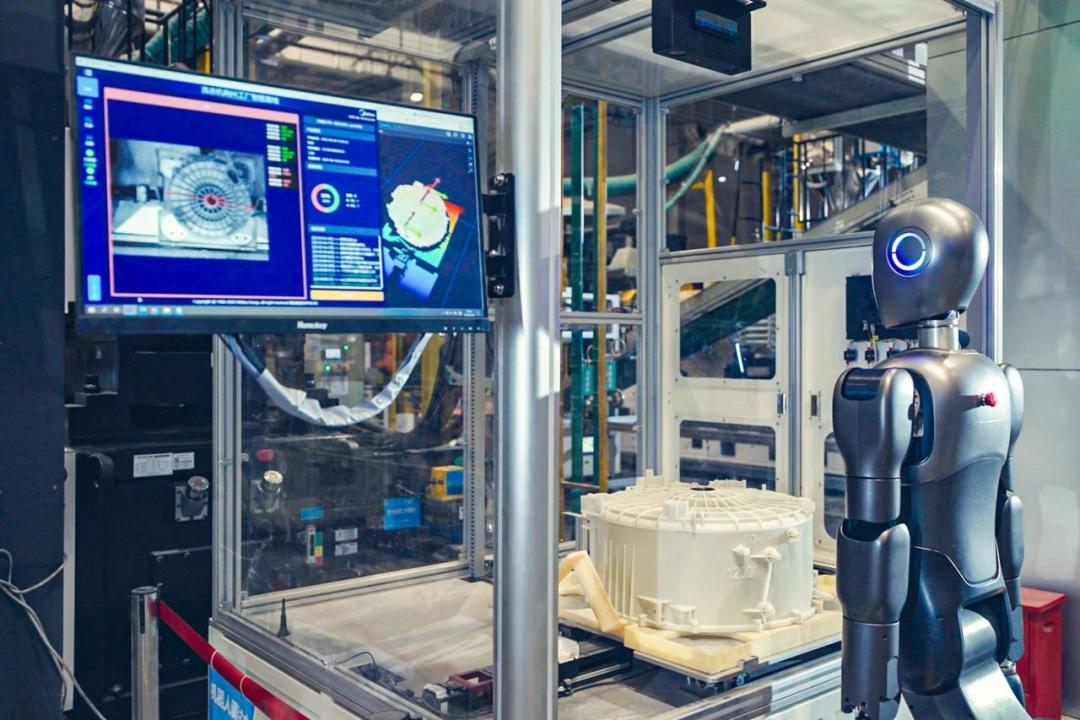
There are also conflicts in the profit cycle. Relying on a large number of channel outlets, the home appliance business has fast turnover and stable cash flow. Industrial robot projects have high upfront investment, long project delivery cycles, and have to continuously bear after-sales maintenance costs.
After Midea acquired KUKA, it took many years to help KUKA gradually move towards large-scale development. This kind of long-cycle and heavy-investment business is difficult to fully match the performance rhythm of the core home appliance business in the short term.
Another pressure worthy of attention is that when home appliance enterprises deploy robotics, on the one hand, they need to find the group's second growth curve, and on the other hand, they have to share resources such as the group's overall R&D funds with other internal businesses, which is also the realistic situation Midea must face. Since the beginning of this year, Midea Group has obtained at least 1,651 new patent authorizations, a decrease of 19.11% compared with the same period last year. Combined with the company's 2026 mid-term financial data, the company invested 8.467 billion yuan in R&D in the first half of this year, a year-on-year decrease of 3.41%.
Conversely, Midea still has a gap from the embodied intelligence giant expected by the market. To truly see its situation clearly, it is necessary to jump out of the product hardware itself and return to the core proposition of commercial profit.
03
The pressure does not lie in product definition,
but in how to turn the industry trend into commercial profits
At present, forecasts from many industry institutions have laid a grand imaginative space for the robotics track.
Cainiao Group, in conjunction with Roland Berger, released the "2026 Robot White Paper" which concludes that the global robot market will usher in a ten-year golden outbreak period, with the market size expanding from about 400 billion yuan in 2025 to 2.12 trillion yuan in 2035, and the volume will increase by more than 5 times in ten years.
The capital side is also constantly hot. In 2026, the total financing amount in China's embodied intelligence field has exceeded 1 trillion yuan, and the number of embodied model companies that have obtained financing has exceeded 140, which is 1.5 times that of the same period last year.
In the midst of the industry wave, Midea has also made substantial real-money investments. In March this year, Midea announced that it will invest 600 billion yuan in the next three years to deeply cultivate fields such as AI and embodied intelligence.
At present, Midea has also made progress on the component side. In the first half of 2026, Midea's precision reducer shipments reached 26,000 units, and heavy-duty servo motor shipments reached 58,000 units, achieving a substantial year-on-year growth. The self-developed core component production capacity and market recognition continue to improve.
In terms of hardware, supply chain and capital investment, Midea has a good foundation, so product definition is naturally not the biggest obstacle. However, the phenomenon that Midea's robotics and automation business achieved revenue growth without profit growth in the first half of the year shows that capital and self-developed supply chain can only solve the problem of product availability, but cannot directly solve the profit problems brought by market competition and project delivery.
The specific problems can be broken down into two layers: one is the current practical blocking point of profit conversion, and the other is the numerous tests of long-term market penetration. The two together affect the final quality of commercialization.
The core home appliance business is under cost pressure affected by upstream raw materials and consumer demand. Taking industrial robots as an example, the dilemma of the industrial robot sector comes from white-hot market competition. STEP mentioned in its semi-annual report that the fierce competition in the industry has not eased, and price competition superimposed with technological iteration continues to accelerate.
According to statistics from Gaogong Robotics, the price war in the industrial robot industry continued to escalate in the first half of 2025. For large customers in the automotive and 3C industries, the unit price of SCARA robots dropped to 10,000 yuan, a 50% drop in one year; the price of 6kg load six-axis industrial robots reached more than 20,000 yuan, and the bottom price of some collaborative robot products has been lower than 20,000 yuan.
Considering that embodied intelligence is in the ascendant, it is probably not easy for the trend of price fighting to turn completely and obviously in 2026 and later.
On the product side, KUKA is still supplementing its product matrix. In the first half of 2026, a number of new products were launched, including the second-generation KR TITAN ultra long-distance heavy-duty handling robot that can carry 1500kg,