Liang Wenfeng has made another investment in a former veteran of Tencent's robotics division.
Look, the embodied intelligence circle has been clamoring every day that the "DeepSeek moment" for robots is coming.
And now, DeepSeek is truly here~
According to the latest news from Top Chinese Tech Innovation Community, DeepSeek has been exposed to plan to invest in the startup company founded by Yu Tao, former head of humanoid robot foundation model at Tencent AI Lab and LimX Dynamics.
Just a couple of days ago, there was also news that DeepSeek intended to lead the investment in Winverse AI founded by former Tencent scientist Hu Han.
Meanwhile, Liang Wenfeng, founder of DeepSeek, is also intensively meeting with embodied intelligence entrepreneurs, considering whether to build his own team to enter the track, or get involved first through investment.
It can be said that in just one week, with two consecutive investment news coming out, DeepSeek's presence in the embodied intelligence circle has suddenly reached full level.
Not only that, if you look back further, you will find that DeepSeek's name has long appeared in the IPO strategic placement list of Unitree Robotics.
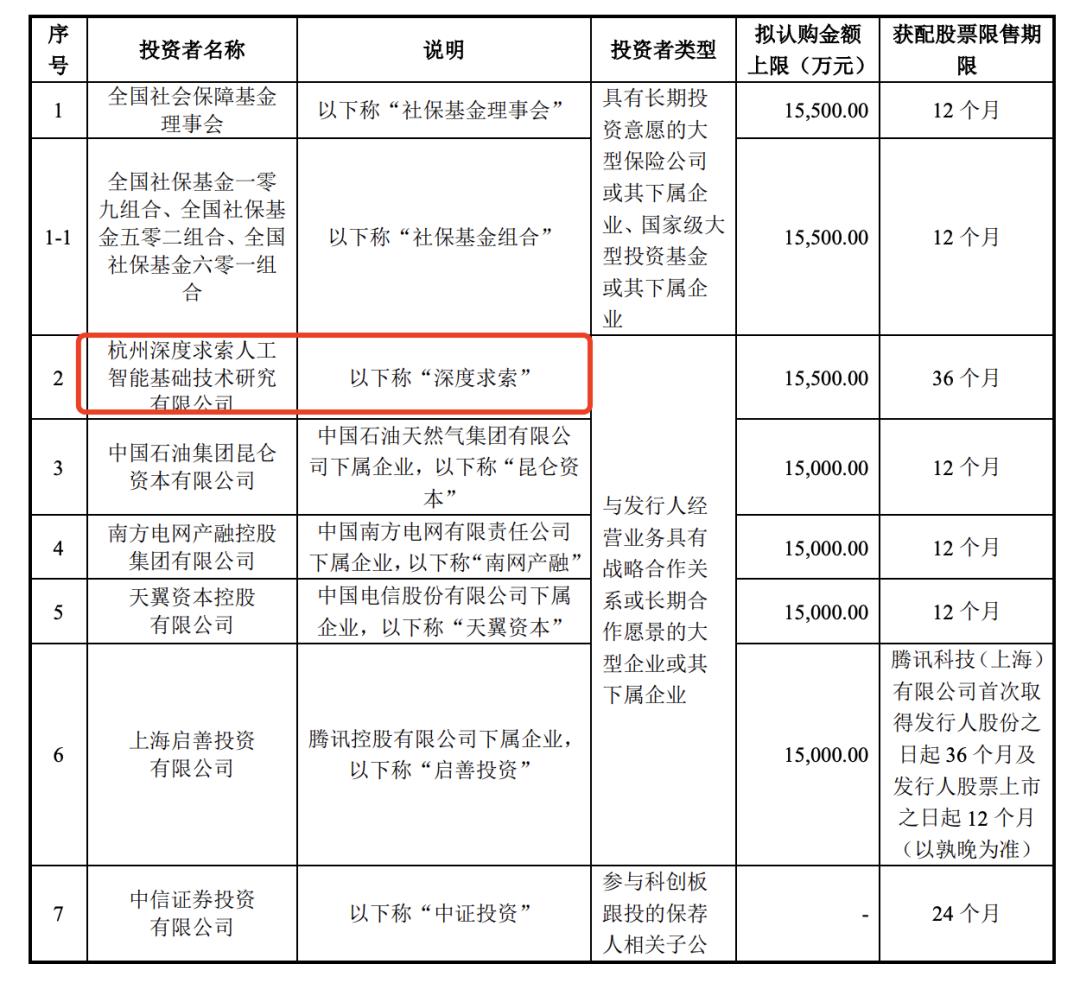
Although it is not clear whether Mr. Liang intends to earn back the "loss" he made on Unitree, it is obvious that DeepSeek, whose investment scope covers robot manufacturers and model startup teams, is about to expand its business layout rapidly.
By the way, it has become a trend for large model companies to get involved in embodied intelligence. Even Artificial Analysis, which ranks large models, moved its evaluation scene in front of robotic arms yesterday.
At this pace, I am afraid that no one will have the face to call themselves a frontier lab if they do not participate in robot-related rankings in the future.
From Yu Tao, Hu Han to Unitree, what is DeepSeek targeting?
Let's start with the latest news about Yu Tao.
Yu Tao is the former head of humanoid robot foundation model at LimX Dynamics. His new startup is focusing on LLM + embodied intelligence.
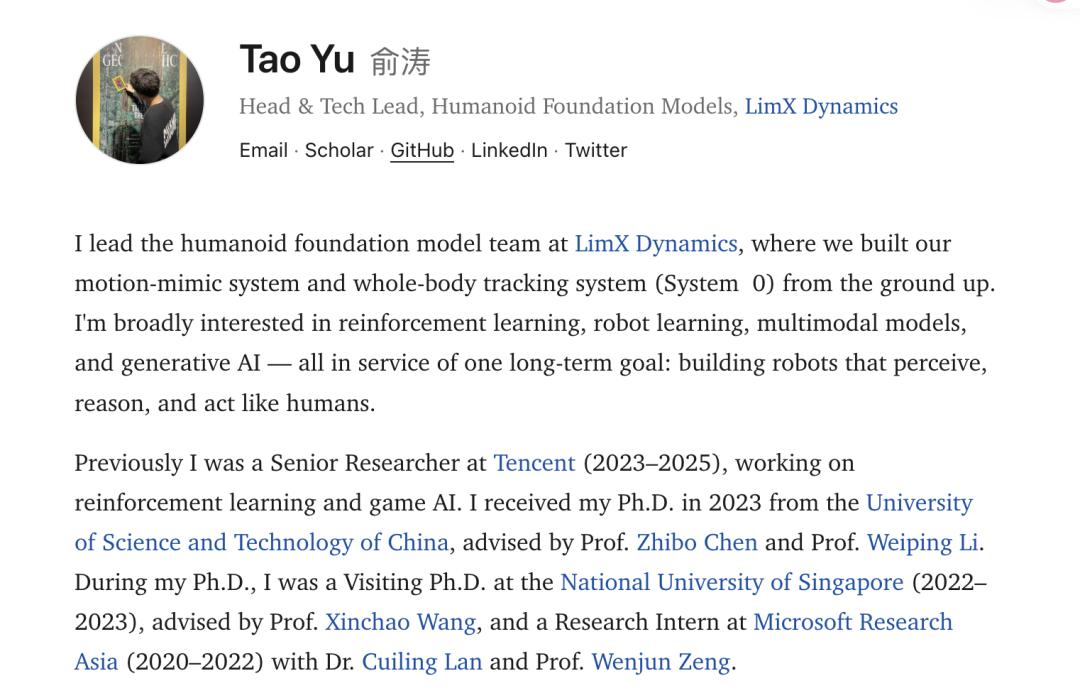
According to Top Chinese Tech Innovation Community, his new company has two rounds of valuation at about 70 million US dollars and 200 million US dollars respectively. DeepSeek is also listed in the rumored investor list, and the transaction has not been confirmed yet.
Yu Tao used to work on reinforcement learning in the Juewu team of Tencent AI Lab, then joined LimX Dynamics and led the team to build the LimX-WBT whole-body control system, namely System 0.
Right before the news about Yu Tao came out, DeepSeek was exposed by Bloomberg that it intended to lead the investment in Winverse AI founded by Hu Han. The company plans to raise tens of millions of US dollars, with a post-investment valuation of about 400 million US dollars. Meituan Longzhu is also among the participants, and the transaction has not been finally closed.
Hu Han is a former Tencent scientist, who was once in charge of research on vision-language and embodied foundation models, and is also one of the main researchers of Swin Transformer. This paper won the Best Paper Award at ICCV 2021.

If Yu Tao's experience is more related to System 0 that focuses on "how the body moves", Hu Han's research accumulation is more inclined to "how AI understands the world in front of it".
However, the specific product roadmap of Winverse AI has not been made public, so we cannot directly treat it as a company that develops robot brains for the time being.
Finally, let's talk about Unitree, which is more familiar to the public.
In August this year, DeepSeek invested about 141 million yuan to participate in the IPO strategic placement of Unitree Robotics, obtaining about 0.23% of the equity with a lock-up period of 36 months.
The two sides also signed a memorandum of strategic cooperation, planning to jointly carry out R&D of large models and embodied technologies, and give priority to cooperation in robot procurement, model training services and other aspects.
From Yu Tao and Hu Han to Unitree, the parties DeepSeek has contacted include not only researchers who are proficient in motion control and models, but also manufacturers that directly produce robots.
It has not been decided yet whether Liang Wenfeng will set up his own team or cooperate with partners first. But it is certain that DeepSeek is determined to find a "physical carrier" for its large models.
Why do large model companies start to get involved in embodied intelligence?
This all starts with Robocurve, the root of all the hype.
In early September, Robocurve made GPT-6 Astra manipulate a real robotic arm to put a red block into a bowl, and it succeeded 19 times out of 20 attempts.
Although it still gets stuck in fine insertion tasks, the scene that large models can already perform physical work has completely ignited the entire embodied intelligence community.
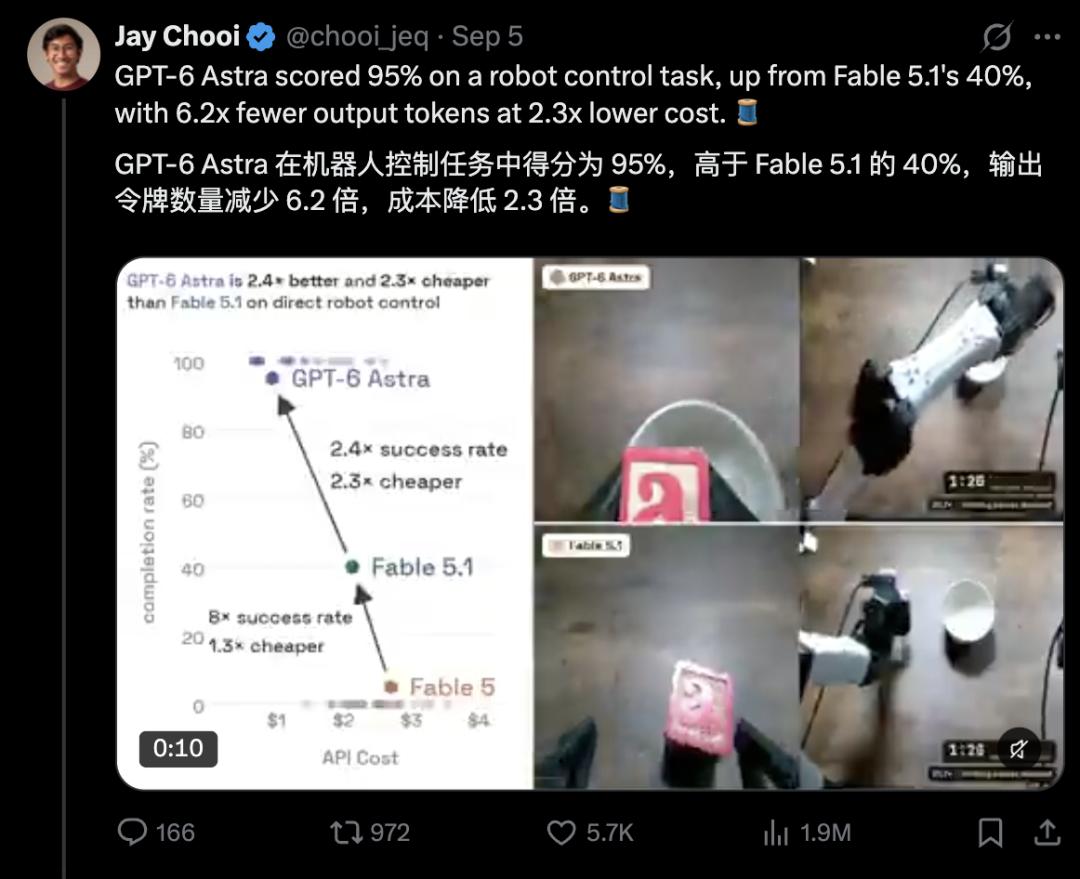
After that, various evaluations and demos emerged one after another. Even Boris Power, head of applied research at OpenAI, publicly shared their idea of using large models to help train robots and then distilling the capabilities into small models in a recent conversation.
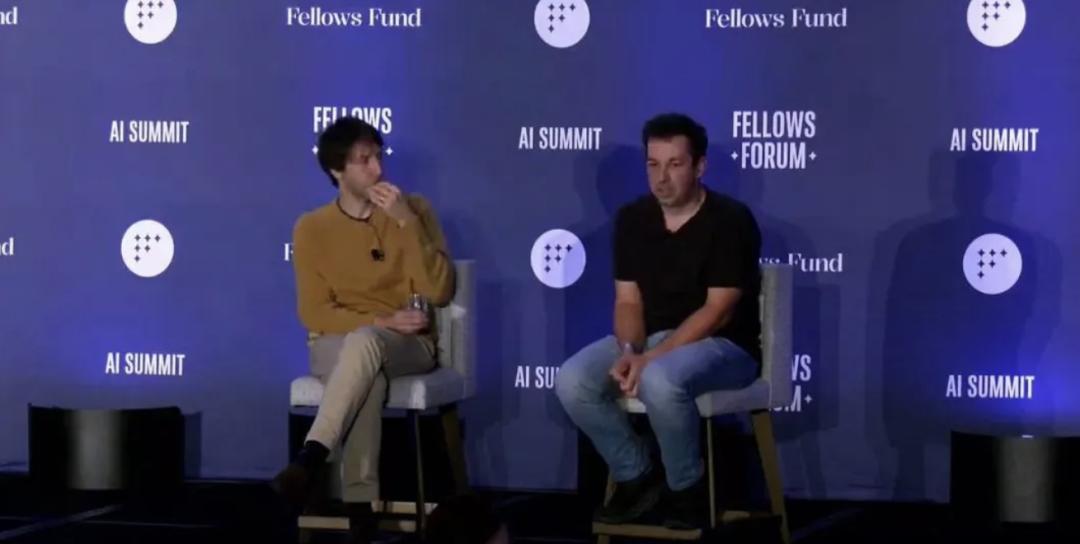
Boris envisioned that more capable large models would act as the teacher role in the training process, and then the capabilities would be transferred to smaller models that run faster and are suitable for specific tasks, so as to balance training capability and deployment speed.
If you take a broader view, you will find that the three leading large model providers GPT, Claude and Gemini have actually started their layout in the embodied intelligence field long ago.
Previously, OpenAI invested in robot companies such as 1X and Figure. This year, Sam Altman officially announced the restart of the robot project, and integrated the former Sora team into the new robot team.
The team is led by Aditya Ramesh, who has participated in the research of DALL·E, Sora and world simulation.
At present, OpenAI has even started recruiting positions related to custom electromechanical actuators, which clearly shows that it is not satisfied with only being the "brain" of robots.
Anthropic has already made Claude try to control robotic arms and quadruped robots. According to reports, Caitlin Kalinowski, former head of robotics at OpenAI, has also joined its research team. The robotics team is led by Jan Leike, who previously focused on AI alignment research.
In the article When AI builds itself, Anthropic even proposed that embodied intelligence is likely to come right after RSI, namely Recursive Self-Improvement.
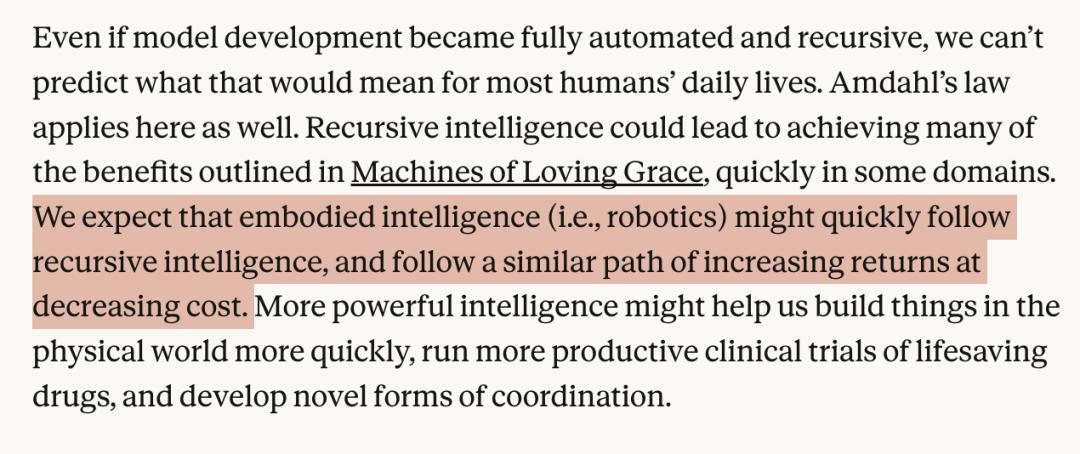
The most notable move is that in this spring, Anthropic once contacted Physical Intelligence, a robot foundation model company, for acquisition, but the deal was not closed in the end.
Google has launched the Gemini Robotics series. It covers the whole process from understanding tasks, planning steps to generating actions. Then it connects these capabilities to real robots through cooperation with manufacturers such as Apptronik and Boston Dynamics.
In China, Kimi was reported in September to recruit talents for embodied intelligence, and relevant employees of some related companies have received recruitment calls. Zhipu AI took an earlier step, and jointly established Matrix AI-Tuo with Topste to develop embodied models.
So when you look back at the recent moves of these large model companies, you will find that obviously they did not suddenly become "interested in robots" collectively ——
This is the natural extension of large models from chatbots and Agents to the physical world.
It is completely reasonable that DeepSeek follows up in this field.
Reference Links
[1]https://x.com/0xLogicrw/status/2110688074648932450
This article is from WeChat Official Account "QbitAI", author: henry, published with authorization from 36Kr.