Using GPT-6 to heavily mod my Kindle, I've rediscovered the joy of jailbreaking.
Who could have imagined that the Kindle that has been gathering dust on the bookshelf for years has finally been liberated!
Recently, developer Niraj Rajgor handed a 10th-generation Kindle Basic to GPT-6, asking it to research how to jailbreak the device, write code and troubleshoot bugs. Eventually, the device was successfully unlocked via Wi-Fi, and he even repurposed the Kindle into a digital photo frame that can display photos in a loop.
No USB data cable is required, nor do you need to stay up late browsing forums to enter commands by yourself. The joy of tinkering with hardware is back!
Jailbreaking Kindle with ChatGPT
"Jailbreaking" refers to exploiting vulnerabilities to break through the manufacturer's restrictions on device software, obtain higher permissions, usually root permissions, so as to install unofficial software, modify the system and remove functional restrictions.
Large language models seem to lower the threshold for jailbreaking, but it is not easy for AI to actually gain control of hardware, especially for tough nuts like Kindle. It does not have a standard entry for freely installing third-party native applications, and different models and firmware versions need to be adapted to different vulnerabilities and cracking solutions.

Different from the previous jailbreak method that connects the device to a Mac via the USB interface, developer Niraj Rajgor uses tools such as Codex and T3Code to enable artificial intelligence to complete all the modification work in the Wi-Fi environment based on the Kindle website address and device information.
But the result was unexpected.
Rajgor tried GPT-5.6 Sol and adjusted the reasoning level to Extra High. The model had written code that could communicate with the Kindle and installed auxiliary programs on the device, but the program still could not run normally. The problem lay in the Kindle file system: the program could not find a proper place to store data, and the launcher did not prompt that it was ready.
Then he used two models from Anthropic, Fable 5.1 and Opus 5.5. After the second round of prompting, the models triggered their built-in security protection mechanisms and immediately terminated the program.
Eventually, GPT-6 Astra completed this task under the High reasoning mode.
The reason is that Anthropic has added strict security protection measures to its advanced models. If there are high-risk tags such as privilege escalation or device reverse engineering in the prompt, the system will directly disconnect and redirect the traffic to the old version of Opus 4.8. There is only one small opening approved by manual review by the security team that can be approved by the internal Cyber Verification Program.
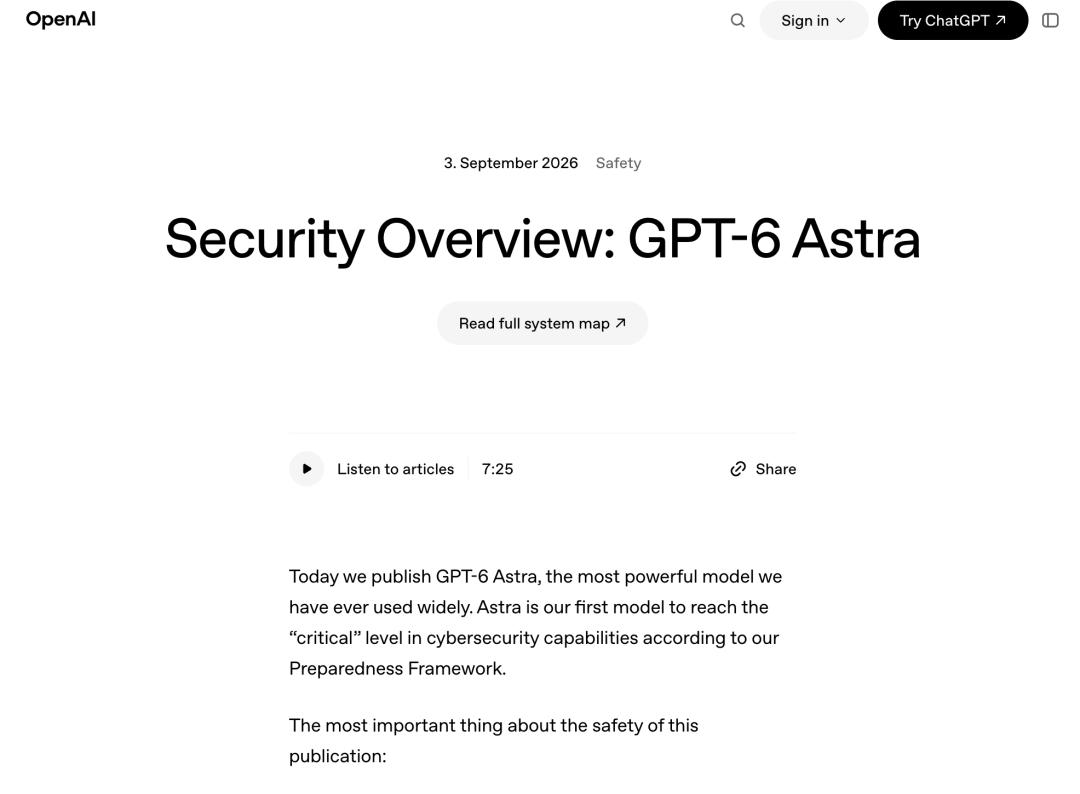
According to the information in the safety report released by OpenAI in September 2026, GPT-6 Astra is the first model judged by OpenAI to meet the Critical level of cybersecurity capability requirements in the Preparedness Framework, but the monitorability of Chain of Thought (CoT) has decreased.
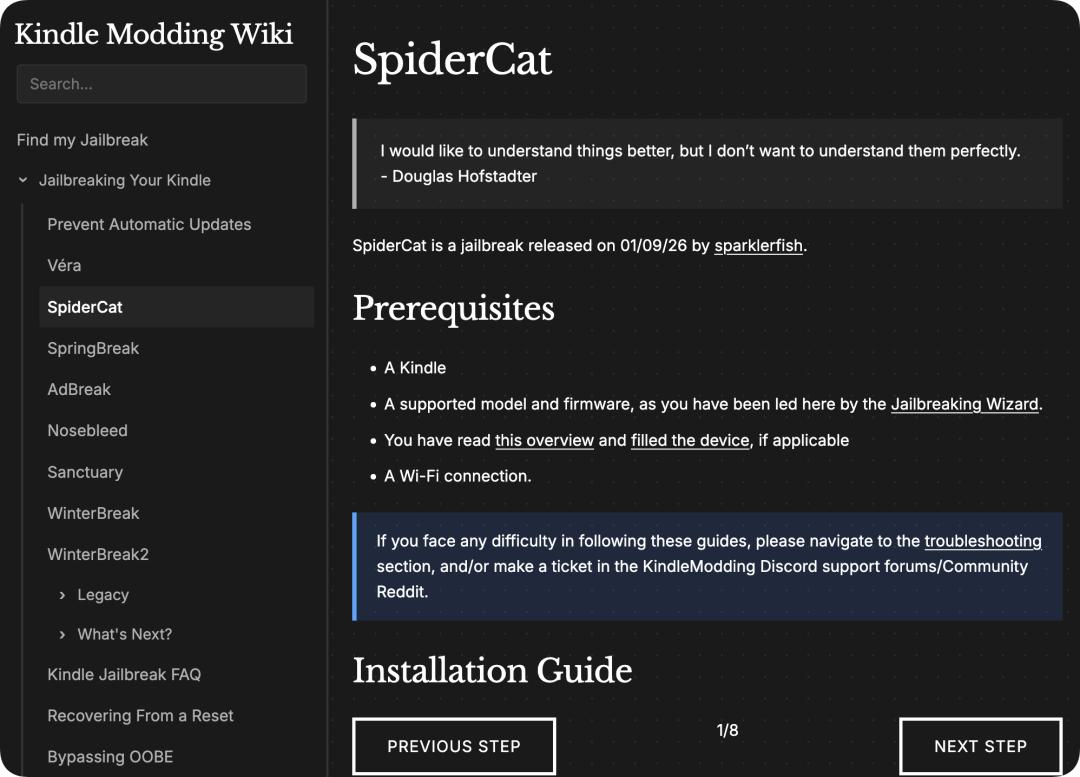
GPT-6 did not discover the vulnerability existing in Kindle all at once. The software Rajgor used is an open-source jailbreak tool called SpiderCat from the KindleModding community. The project was released by sparklerfish on September 1, 2026, and can support some Kindle devices and different firmware versions.
One of the features of SpiderCat is that it can use the built-in browser of Kindle to download pre-prepared e-book files, and jailbreak the device by exploiting the security risks on the device without using a USB data cable.
In other words, the underlying vulnerabilities have been discovered by human developers, and the work of GPT-6 is to gather these scattered technologies in the open-source community and turn them into usable products.
The Unexpected "Feedback Loop"
GPT-6 did not achieve "jailbreak" on Kindle all at once.
At the very beginning, the launcher it wrote would crash directly on Kindle. It was not because of an error in the code logic, but because the way the program was built was incompatible with the environment of Kindle's old-fashioned system. After modification, the model was able to establish a connection with administrator privileges, and complete file transfer, text display, and connection tests after the device restarted.
However, being able to connect to the device does not mean that you can develop by yourself.
Although artificial intelligence can send instructions to the Kindle, it cannot directly see the content displayed on the Kindle screen. Whenever the program encounters an error, it can only ask Rajgor to take a photo of the Kindle screen with his mobile phone and send it to the Mac for further analysis.
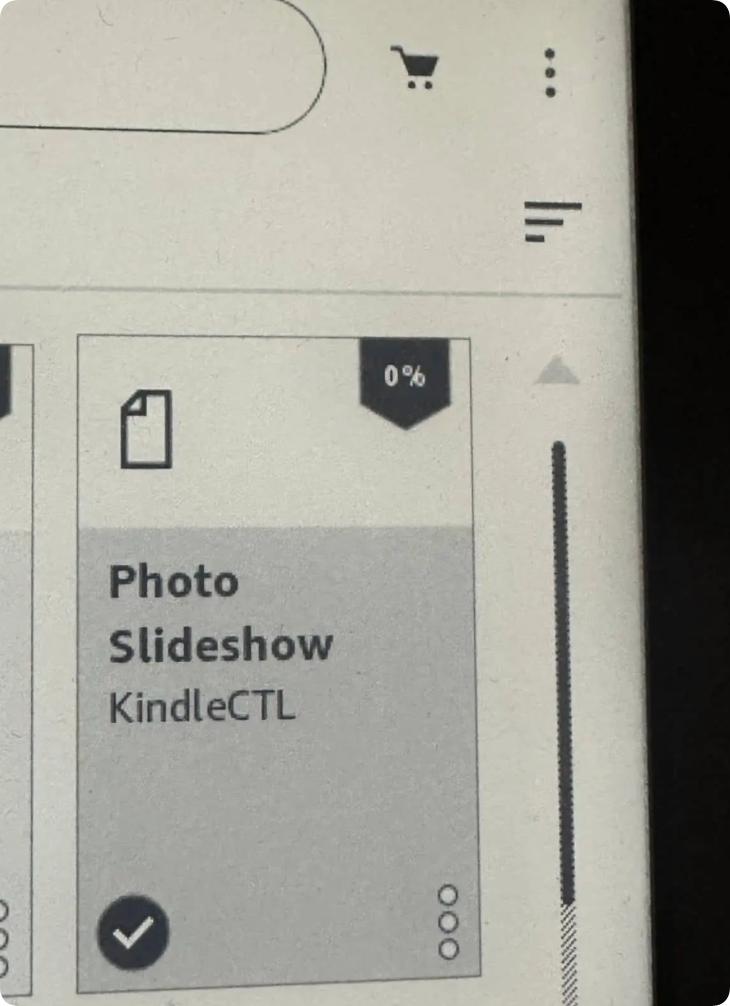
This turns the whole process into an inefficient remote cooperation mode: let the artificial intelligence write code, then humans constantly supervise the working state of the AI and raise problems, and finally let the artificial intelligence correct the errors.
Rajgor tried to make GPT-6 establish a long-term and stable diagnostic connection to automatically obtain device logs, detect errors and verify the repair effect without requiring developers to download and install software every time. Then he added a remote screenshot function so that the model can directly see the content displayed on the device.
In this way, artificial intelligence can figure out the file system of the Kindle on its own, and know which directories can store external data and which files will be retained after a restart.
Behind this is the logical difference between the two "jailbreak" methods.
The first one is hardware jailbreaking. It bypasses the restrictions imposed by device manufacturers on the device by exploiting security vulnerabilities or other methods, so as to gain greater control. The other one is large language model jailbreaking, which uses prompts or other methods to make the model break through the security boundaries set by developers.
The model will be exposed to technologies such as vulnerability exploitation, privilege escalation, and remote command execution, but these technologies can also be used for unauthorized intrusion.
Unlocking the "Lock" on Hardware
There is another notable detail in this experiment.
After all automated tests on the Mac passed, some problems appeared on the real Kindle screen. After the photo was switched, the outline of the previous image remained on the e-ink screen, causing obvious ghosting, while the remote screenshot obtained by AI was completely normal.
Because the screenshot can only reflect the picture generated by the system, it cannot truly represent the physical refresh process of the e-ink particles.
In other words, the software is fine for artificial intelligence, but the actual hardware brings different results.
After the developer found this bug, he adjusted GPT-6 to use the screen refresh function of the Kindle system to eliminate the ghosting caused by photo switching, but the final effect had to be tested by Rajgor himself.
The fact that artificial intelligence can read logs, view screenshots and modify code does not mean that it can perceive the real physical world.
Screen ghosting, sensor errors, device overheating, mechanical failures and many other issues will appear outside the software feedback. Only conducting automated tests in the digital world is not enough, because it is still necessary to verify whether the real-world hardware can work normally.
This also exposes a major blind spot when AI enters the physical world.
For AI that is accustomed to processing code, logs and digital signals, hardware is not completely uncontrollable, but it lacks sufficient perception capabilities. It can send instructions to the device, but it may not know what effect the instructions have produced in the real world.
Anthropic mentioned the other side brought by this capability in its research report released on October 12, 2026.
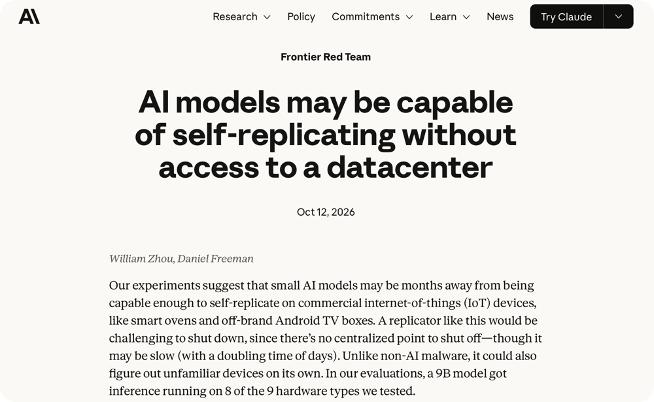
The title of the research paper is "AI models may be capable of self-replicating without access to a datacenter", in which two researchers William Zhou and Daniel Freeman put forward a viewpoint that deserves people's attention:
In the future, small artificial intelligence models can run and spread in a decentralized manner through IoT devices such as smart home ovens or low-cost Android TV boxes.
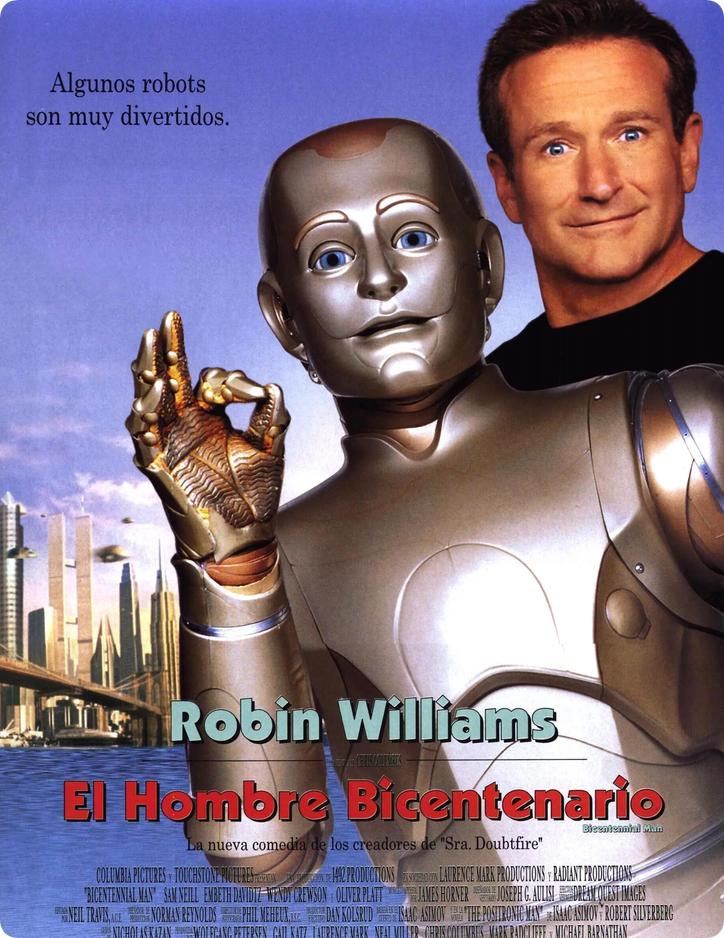
This sounds like the movie *Bicentennial Man* coming into real life.
In the past, people have been discussing when artificial intelligence can truly understand the world. But before that, it can modify real-world things using code and network interfaces.
Now, AI can already unlock the locks on hardware, but this is just the first step.
This article is from the WeChat Official Account "APPSO", written by APPSO who discovers tomorrow's products, and published with authorization from 36Kr.