How many major blockbusters suffered a disastrous flop in 2026?
How to break through the impasse?
Text by Thomas' Cranium
2026 is a year of spectacular fireworks in the gaming industry. The once impressive 1-billion-yuan development cost has now become the basic premise for producing a stunning blockbuster work.
Looking back at the past two years, there have been countless failed open-world blockbuster titles in the domestic market. Other categories with relatively lower development costs have also seen many highly anticipated products end up in failure one after another. If we count the products that were launched in the previous two years but have basically been proven unviable this year, with everyone expecting them to shut down soon, the list will be even more shocking.
Similar bad news is also widespread overseas. After being acquired by Sony, Bungie's 6-year developed title Marathon delivered market performance far below expectations. Highguard, the grand finale of TGA 2025, saw layoffs only 16 days after its launch, and announced server shutdown 45 days later. As for paid buy-to-play games that were well-received by critics but sold poorly, or even neither well-received nor commercially successful, the number is even larger.
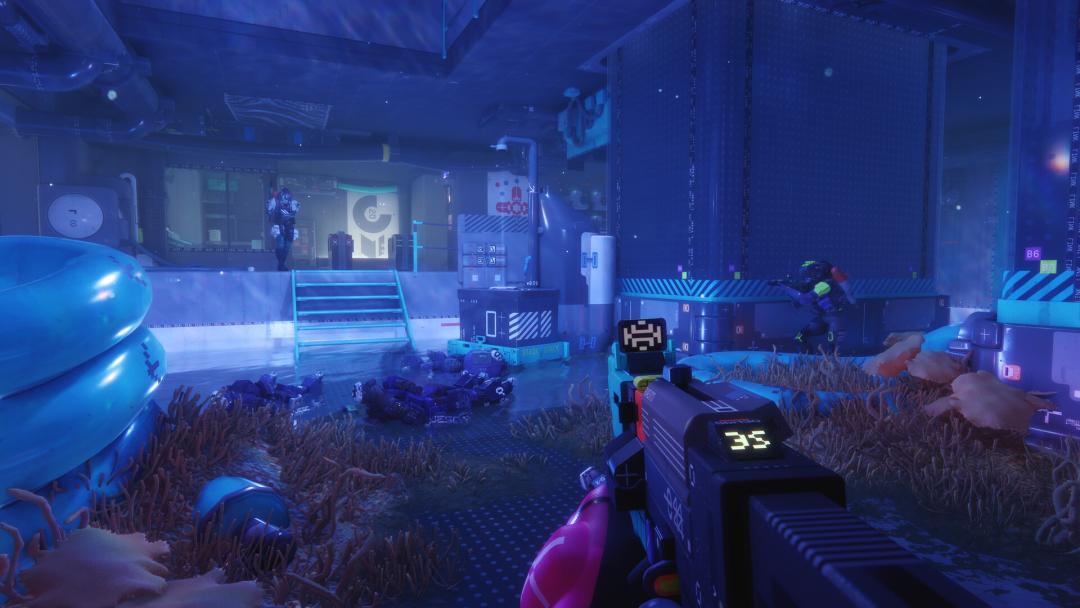
After the total flop of a blockbuster, how to clean up the mess has always been a headache for all stakeholders.
Someone must be held accountable for the failure, including producers, studio heads, senior executives and CEOs. Leaders whose core products are still generating huge cash flow and who are still making outstanding contributions will not face too harsh a situation. But if the old project has a successor to take over, and the leader has bet all their chips on the newly flopped project, they are bound to face a huge storm of consequences.
Another widely expected step is to recalculate the costs and check if there is any irregularity. Some producers who have already left their previous jobs are still being investigated by their former companies for possible corruption due to excessively high outsourcing costs. Some studio heads even ended up being placed under criminal detention on suspicion of duty-related crimes.

Ordinary employees also face a tough situation. Many people complain that after the underperformance of the launched blockbuster, their year-end bonus is even lower than what they got before the launch, as they can no longer share the general benefits brought by the project during the in-development phase.
For core game designers, the failure of a blockbuster is a huge stain on their career. With so much money invested and such a large IP adopted, the product still fails to make profits, and everyone will blame that the design must have not been well thought out. Programmers and artists are in a slightly better situation, since the R&D experience of developing a blockbuster is extremely valuable. Although they may face frequent job hopping, most of them can still find their next job. With a bit of luck, if they can join a long-running successful project, they will even gain a lot from the experience.
The most innocent group might be the players who have devoted their attention, emotions and even real money to the game. If the game only stops receiving updates, there is still a little comfort. If the servers are shut down directly, players can only consider themselves unlucky and lament the loss of their beloved game...

Image source: Haoyou KuaiBao
After seeing so many tragic cases, all decision-makers are reflecting on the causes of blockbuster flops and discussing how to avoid similar incidents from happening again.
An entrepreneur who has developed multiple top 1 products on the bestseller list says that many blockbusters are doomed to a near-death fate from the very first day of project initiation, because many people underestimate the difficulties they will face at the very beginning.
For top-tier teams, it is not that difficult to produce a stunning PV and Demo. However, the creative impulse required to form differentiated highlights in the early stage is inherently contradictory to the systematic thinking needed for the long-term operation of GaaS (Games as a Service) titles. In the subsequent R&D process, many products, in order to consolidate the core experience and adapt to the long-term content update framework, gradually lose their distinct characteristics and unique tonality as development proceeds.
What is more tricky is that the R&D cycle of modern blockbusters often lasts 3 to 5 years. During this period, the category landscape and competing products may have evolved, and user preferences may also change. If the core user group changes, should the team stick to the original design or cater to users to make new adjustments? Each of these questions highly relies on the intuition of decision-makers at all levels and their ability to grow in sync with the times.
Another common cause of failure is rigidly chasing objective metrics.
For example, a company has always regarded user retention as a key acceptance indicator for milestones. To improve retention, the producer tries various gameplay types in the early stage and finds that some casual gameplay works well. However, due to the lack of in-depth thinking and genuine passion for the project, after the project is approved, the retention rate either keeps dropping, or the team has to stitch more and more strange mechanisms to maintain retention, until the game completely collapses.
Many entrepreneurs believe that the solution to this problem is, on the one hand, to verify whether the producer has enough passion for the project, and on the other hand, to figure out which problems behind the data will truly determine the life and death of the project. Whether the team can find the core crux of the problem, recognize its importance, and have the ability to continuously identify the crux, solve problems and eliminate uncertainties, is the core that milestones should assess.
Another possible reason for a blockbuster flop is that the team starts large-scale asset production before they have a clear and complete plan. In the end, either the large-scale production process is not scientific enough and the product quality fails to meet standards, or the team produces a huge number of assets only to find that the design direction is wrong. Both scenarios will waste massive costs and trap the project in a dead end.
The head of a company told me that in recent years, they have begun to consider adding a 6-month to 1-year phase after the vertical slice verification and before the official large-scale production, to assess whether the leader's cognition and ability are sufficient to support large-scale R&D, and whether all team members understand the subsequent R&D pipeline. The premise of doing so is that the project does not need to chase fleeting trends, but only needs to focus on those unchanging core values.
There are also some blockbusters that become increasingly awkward during development and eventually fail due to the trust crisis between the producer and the company's management.
When the project has already consumed huge sunk costs and is about to be completed, but the progress of key issues is far below expectations, should the team continue to invest? If they stop investing, all previous investment will be lost. If they continue to invest, they are likely to face a bottomless pit that requires endless capital injection. A lot of suspicion and wrangling will arise in this process, and the team's actions will inevitably become distorted.
The head of a company says he will strictly limit the budget of each milestone of in-development projects, but according to the annual profitability of the studio, he allows them to allocate a limited, fixed total amount of additional "blood packs" for their products flexibly. Apart from fully empowering the team and exercising their capabilities, another benefit of this mechanism is that when producers synchronize information with him, both sides do not need to guess whether the other party is trying to compete for more resources, but can focus on discussing design issues relatively.
Since developing blockbusters is so difficult, can companies choose not to develop them? Unfortunately, more and more industry leaders believe that there will only be two types of successful products in the future: super blockbusters that break all barriers with outstanding quality, and creative works with ultra-small scale. The development of AI seems to be accelerating this trend.
If this assumption is true, unless a company is confident enough to build a mechanism to discover and support small teams, all commercial game companies will sooner or later need to have the ability to develop blockbusters. That is why even though many blockbusters have flopped, companies are still stepping forward to develop new ones.
An entrepreneur sighs that all people who have made money in this industry are no fools. Any company that pours more than 1 billion yuan of real money into a project has fully justified reasons, such as business transformation, exploring new categories, building underlying capabilities, and establishing a mature 3D R&D pipeline... But for a game to succeed, there are far too many correct decisions that need to be made. Even if most decisions are made correctly, a few wrong key decisions will lead to total failure. It can only be said that in this industry with extremely high odds, companies always have to face the cruel reality of low success rates.
From your perspective, will there be more or less flopped blockbusters in the gaming industry in the future? How do you view the current industry dilemma of successive blockbuster flops? Welcome to share the stories you know and leave your answers in the comment section.
This article is from the WeChat Official Account "Game Grapes" (ID: youxiputao), written by Game Grapes' editor, and is authorized for release by 36Kr.