Even if those new Chinese EV automakers dare to sell their technology, who on earth would dare to buy it?
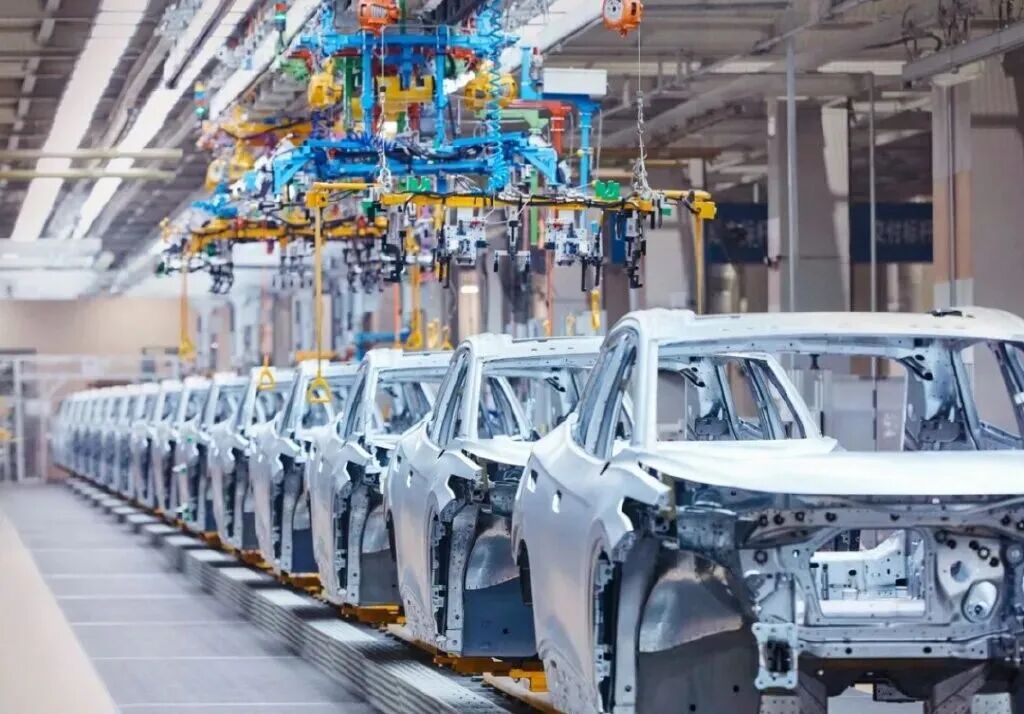
Everyone knows that selling shovels makes good money, but it is absolutely a highly technical task.
The Internet era gave birth to Alibaba and Tencent; the AI era made NVIDIA and OpenAI stand out; in the era of new energy vehicles, who will become the real trendsetter?
No matter your answer is the "big disruptive catfish" Tesla, the "dominant giant" BYD, or the increasingly competitive new EV startups, you cannot avoid one core point: technology.
It seems too abstract to talk about technology alone. To put it simply, the core technologies in the fuel vehicle era are the "three major components": engine, transmission and chassis. Relying on this mechanical system, German, American and Japanese automakers have set up layers of technical barriers for Chinese auto companies.
Now when the new energy vehicle era arrives, the core technologies have evolved into the three-electric system (battery, motor, electronic control) + smart cockpit + autonomous driving, completely rewriting the rules of the entire market.
It is precisely because of the change of underlying logic that Chinese automakers have got the opportunity to overtake at the curve; and it is also the improvement of Chinese automakers' technical capabilities that makes those once arrogant "veteran players" start to learn from us.
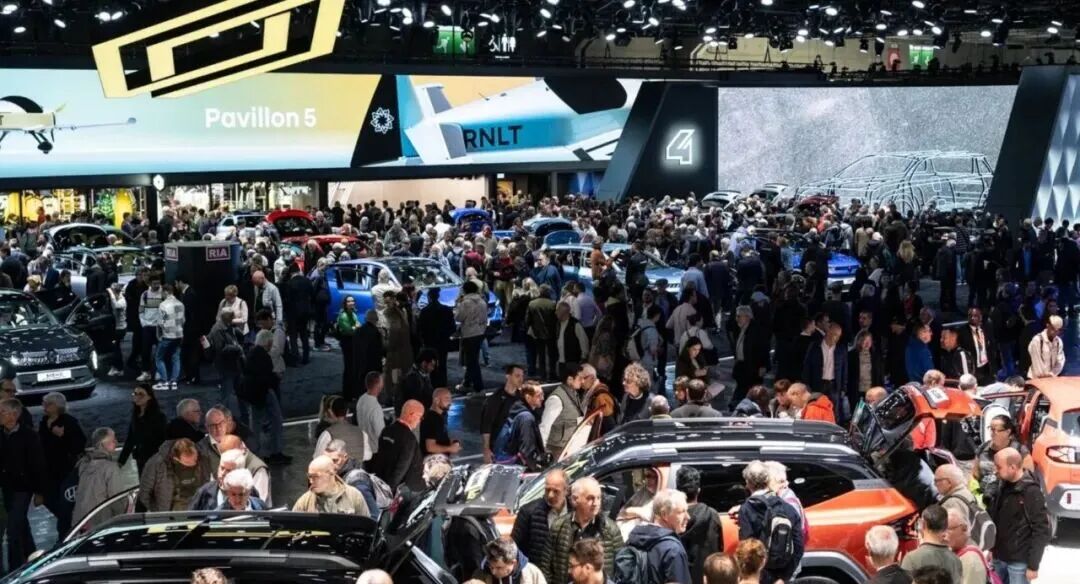
During the Paris Motor Show, the two major European auto giants Volkswagen and Stellantis released signals that they will draw experience from Chinese automakers to boost their electric vehicle businesses.
Stellantis CEO Carlos Tavares said that the company is relying on joint venture projects to study the technical competitiveness of Chinese enterprises and find mutually complementary spaces for both sides.
Volkswagen CEO Oliver Blume said that the Chinese market is like the "gym" of the industry, and Volkswagen has accumulated sufficient practical experience after years of operation in China.
These multinational auto giants are certainly not learning how to "involution" from Chinese automakers, but learning a series of capabilities derived from technology: technology implementation, product definition, standardized quality improvement, large-scale cost reduction, etc.
There is no doubt that new energy is the certain future of the global automotive market; and in the emerging new energy vehicle sector, China has absolute say.
It is precisely because of these advantages that new EV startups that have been deeply tempered by involution have seen a new turning point of "exchanging technology for profits".
01Making solid investment to secure independent technology rights
One R&D investment brings lifelong benefits! Technologies in the new energy vehicle era are being attached with extremely high importance. In the chaotic period when the industry has not yet been "solidified", all automakers are pursuing the "maximization of technical benefits".
It is no wonder that all parties are scrambling to invest, after all, Chinese automakers have suffered a lot in the old fuel vehicle era:
They had to pay patent royalties because the patents of the three core components were locked by overseas enterprises; they also had to pay market taxes, and got very little gains from the strategy of "exchanging market for technology"; finally they were trapped in the low-end market and only earned meager assembly profits as the "profit tax".
A fall into the pit, a gain in your wit. In the new energy vehicle era, the first priority that Chinese automakers seize is the independent right of technology.
Driven by strong collective will, "self-research" has become the "basic narrative" of all automakers, and new EV startups have poured real money into building their "technical labels".
According to statistics, from 2018 to 2025, NIO has accumulated 63.5 billion yuan in R&D investment, Li Auto 46.1 billion yuan, XPeng 36.6 billion yuan, and Leapmotor 13.3 billion yuan.
The returns are also very impressive: NIO has obtained the unique battery swapping system around the world, XPeng's intelligent driving system dares to compete head-on with Tesla FSD, Li Auto has self-developed the third-generation range-extender system and intelligent driving chip, and Leapmotor has successfully reduced costs by mastering six core modules of the whole vehicle.
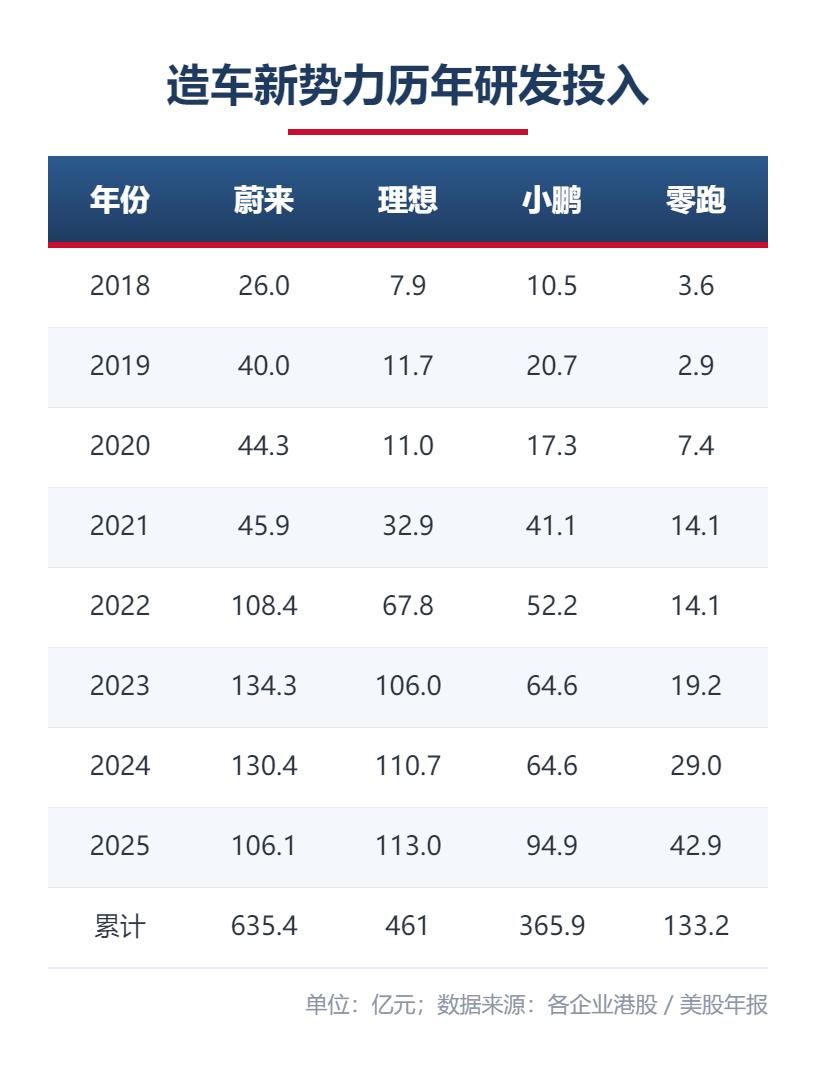
Of course, the R&D investment of NIO, XPeng, Li Auto and Leapmotor mostly covers multiple technologies, but from their brand images, each has its own focus.
NIO's strongest label is battery swapping, but it has also self-developed the world model for intelligent driving, taped out the Shenji chip, and even conducted in-depth research on the chassis. Its Tianxing intelligent chassis that completed the "Champagne Tower Challenge" has caused huge shocks in the industry.
XPeng's intelligent driving capability is very strong, and its self-developed range-extender system is also remarkable. It is worth noting that XPeng's self-developed underlying automotive electrical and electronic architecture has been supplied to Volkswagen and achieved mass production.
Li Auto has created the "golden age of range extenders", and its self-developed third-generation range-extender system, Mach M100 automotive-grade chip, Mach VLA large intelligent driving model, and mass-produced full-by-wire chassis, have put the three underlying cores of power, intelligent driving and chassis under full control.
Leapmotor focuses on reducing costs through technology, and has achieved full-stack self-research in six sectors: LEAP vehicle platform, four-leaf clover central domain control electrical and electronic architecture, eight-in-one oil-cooled electric drive, CTC battery-chassis integration, smart cockpit and LWM world model intelligent driving, mastering 65% of the high-value core components of the whole vehicle by itself.
Then there comes the realistic problem: can these technologies developed with huge investment be sold to third parties to "subsidize their own income"?
02Selling technologies is never a new business in the industry
At the 2026 Paris Motor Show, He Xiaopeng announced that XPeng Motors will open intelligent vehicle technology cooperation to the global market, covering three core sectors: vehicle platform, modular technology and full tool chain.
The vehicle platform part includes vehicle platform architecture and electrical and electronic architecture; the modular technology covers intelligent driving, AI BOX, chips, batteries and electric drives; the supporting tool chain includes remote XCP calibration, vehicle EOL, AI diagnosis and other functions.
In fact, XPeng is one of the first batch of pioneers who "sell technologies". Especially its cooperation with Volkswagen has brought huge profits.
According to XPeng's financial report for the first half of 2026, XPeng's gross profit margin for vehicle sales is 12.1%, while the company's overall gross profit margin is as high as 20.6%; with the support of XPeng's output of vehicle platform, electrical and electronic architecture and other services to Volkswagen, the gross profit margin of related business has soared directly to 71.4%.
Perhaps it is precisely by seeing the profit space here that XPeng has firmly embarked on the road of "selling technologies".
At the same time, other competitors are also taking accelerated actions.
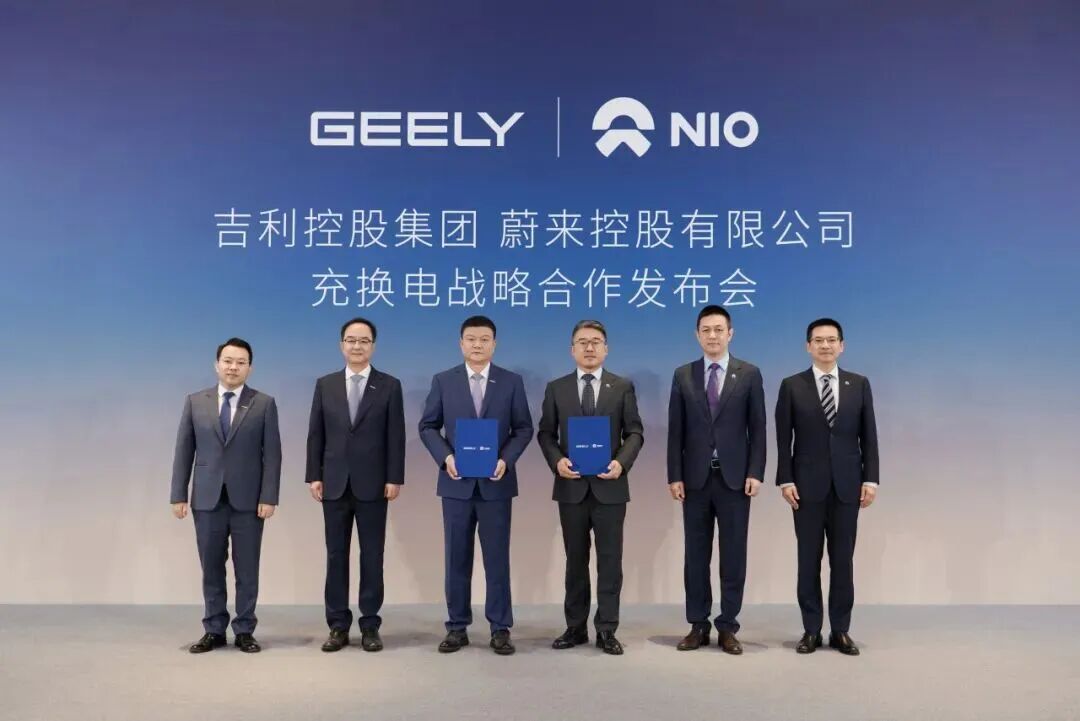
On September 28, NIO and Geely reached a comprehensive strategic cooperation in the field of battery swapping. The two sides will "jointly invest" in the main operating companies of their respective battery swapping businesses, share battery swapping technologies and standards, and jointly build a battery swapping service network.
According to the agreement, Geely will take a stake in NIO Energy with its 100% equity of Yiyi Internet and 640 million yuan in cash. After the transaction is completed, Geely Holding Group will hold 30% equity of NIO Energy, and the vehicle battery swapping business of Yiyi Internet will be merged into NIO Energy.
In the follow-up, the two sides will jointly build unified C-end battery swapping technologies and standards. Geely Holding Group will develop C-end battery swapping models, and NIO Energy will provide services for Geely Holding Group's C-end battery swapping models.
From another perspective, NIO packages and sells its own battery swapping technologies and standards to Geely to "make profits", which is also selling a kind of highly certain "technology implementation capability".
Similarly, Leapmotor is also making profits quietly.
It is understood that Leapmotor is currently providing FAW and Stellantis with "platform + three-electric system + complete set of domain control supply + technology authorization", which is not just selling scattered parts, but outputting packaged vehicle electrification solutions.
The Hongqi G117 model cooperated by Leapmotor and FAW will be jointly developed based on Leapmotor's platform, focusing on the Middle East and European overseas markets, and is planned to be mass-produced in the second half of 2026.
The Opel O3U model cooperated by Leapmotor and Stellantis adopts the B platform homologous to Leapmotor B10, Leapmotor outputs the complete set of core components of the three-electric system, and Opel is responsible for the exterior and interior design. The new car will be produced in Zaragoza, Spain (Opel's local factory), sharing the same production line with B10.
It is worth noting that Leapmotor has equity binding with both partners. Perhaps it is this connection point that makes Leapmotor's "technology selling" much more natural.
03Automobile industry is always a game for the brave
In the final analysis, the premise of being able to sell technologies is first strong strength, and second the existence of buyers.
In the past few decades, Chinese automakers basically purchased platforms and technologies from foreign parties and paid high patent fees; now the situation has reversed, and established giants such as Volkswagen and Stellantis are willing to pay, which essentially acknowledges that:
In the new rules of the new energy vehicle era, the technical solutions of Chinese new EV startups have sufficient mass production value.
But every coin has two sides.
New EV startups selling core technologies to external parties is in itself a high-risk game. Once the packaged technologies are delivered, they will encounter various unavoidable problems, such as intellectual property protection, technology leakage, quality control responsibility division and so on.
In other words, after the partners get the platform, will they quickly digest these capabilities and turn into competitors?
Once a fault occurs in the cooperative model, who will take the responsibility, the vehicle manufacturer or the technology exporter?
Even the review involving the geopolitical level and the game of local market competition are all the Sword of Damocles hanging over this business.
So finally, let's go back to the original question: can new EV startups dare to sell their technologies, and who dares to buy them?
The answer is actually hidden in the cooperation cases. The automotive industry has always been a game for the brave.
They dare to sell, because years of solid investment have built a complete self-research foundation, they are no longer assembly plants that only rely on external procurement, they have real technologies and full confidence.
They dare to buy, because after careful calculation, traditional giants do not want to spend a long time on R&D from scratch, they use technology procurement to exchange for time, and use capital to exchange for the admission ticket of the new track.
There is no doubt that the barriers in the fuel vehicle era have been broken. The automotive market that has entered the new energy era is no longer at the stage where whoever has more sales can sit back and relax.
The real market competitiveness lies in who can make their technologies standardized, reusable, and bring sufficient cost reduction or strong enough product power, so that they can master the discourse power to define the industry.
This "technology trading" belonging to China's new energy vehicle era has just started. Whether it can operate sustainably in the end and keep the core barriers still depends on whether new EV startups can continue to iterate their technologies.
After all, only by maintaining their own competitiveness while outputting technologies can they avoid being eliminated by the new era and their partners.
This article is from the WeChat official account "Auto Community" (ID: iAUTO2010), written by Zhang Zhidong, and authorized for release by 36Kr.