The people Wall Street labels as "dishonest" are making massive bottom-fishing bets on Puma and Under Armour.
After Anta announced the acquisition of Puma, Frasers Group became Puma's second-largest shareholder in 37 days. Seven months later, the company appeared on Under Armour's shareholder list.
On October 1, Frasers Group submitted a Schedule 13G filing to the U.S. Securities and Exchange Commission, disclosing that it holds 16,576,500 Class A common shares of Under Armour, accounting for approximately 8.8% of the outstanding shares of this class, with a market value of about 80.1 million U.S. dollars based on the stock price at that time. In its report on this transaction, Bloomberg used this sentence: expanding its bets on "distressed sportswear brands".
Where on earth did Frasers Group come from?
The company's founder, Mike Ashley, a British man who never attended university, opened a sporting goods store in Maidenhead, Berkshire in 1982 with £10,000 borrowed from his family. In 2007, the company was listed on the London Stock Exchange. In the same year, he also acquired Newcastle United, a Premier League football club, and in 2021, he sold the club to a consortium backed by Saudi Arabia's sovereign wealth fund for about £305 million. The year after selling the club, he stepped back from the front line of management.
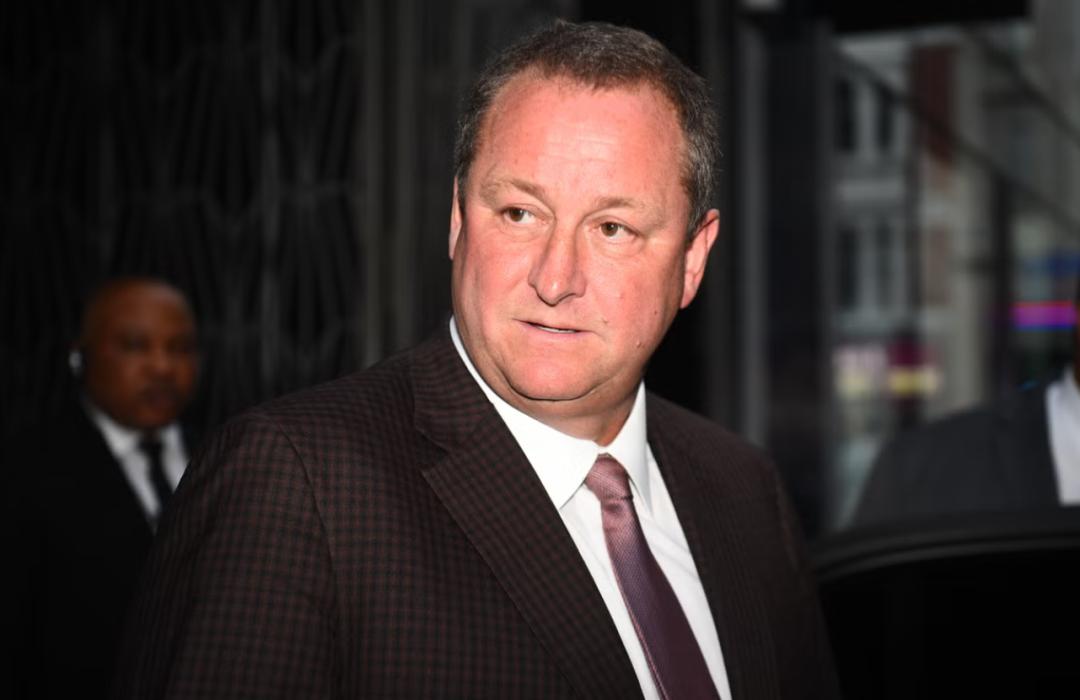
▲ Frasers Group founder Mike Ashley (Image source: Kirsty O'Connor/PA Wire)
At present, Frasers Group has a market capitalization of about 3.76 billion pounds, with revenue of 5.326 billion pounds in the latest fiscal year. The company's stock price once hit an all-time high of 1001.5 pence (about 10.02 pounds) in July 2022, then fell back to about 598 pence (about 5.98 pounds) in 2025, and has rebounded to 848.50 pence (about 8.49 pounds) since 2026, with an increase of about 25% year to date. According to Forbes' real-time rich list, as of October 15, his personal wealth stood at 6.3 billion U.S. dollars.
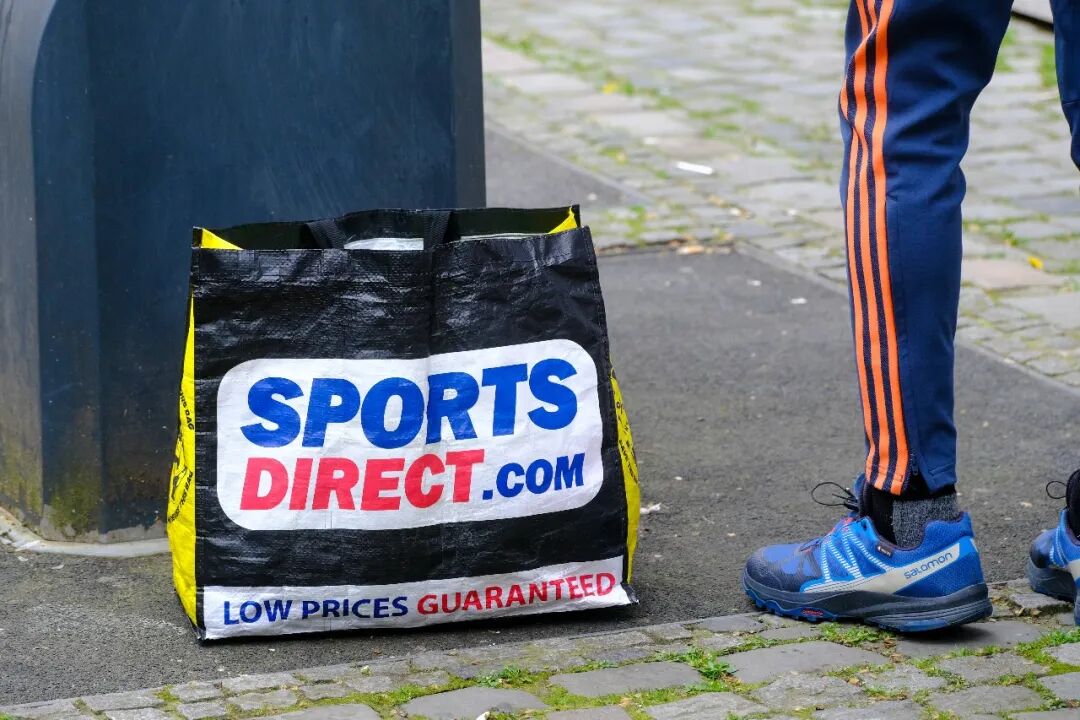
The company's business focuses on three directions: sports, premium and luxury. The core of the sports segment is Sports Direct, which has more than 500 stores in its home market and about 715 stores globally. The premium segment includes brands such as Flannels, House of Fraser, Jack Wills, Gieves & Hawkes, and the luxury segment includes Flannels, Harvey Nichols and The Webster in the United States. Its private brands include Everlast, Slazenger, Lonsdale, Karrimor, USA Pro, etc. Among them, Sports Direct is the largest sporting goods retailer in the UK, with a long-term leading market share over competitors such as JD Sports, and its online traffic reached 5.83 million in 2025, surpassing Nike and JD Sports.
In terms of sportswear and footwear brands, it has only invested in Puma and Under Armour so far, both of which were completed this year. Moreover, the way it bought these two sport brands is different from traditional institutional investors, most of its shareholdings are obtained by selling put options, and the number of directly held shares is extremely small.
Puma is the first sport brand in which Frasers took shares in this way. Its stock price fell from 115.40 euros in November 2021 to 15.30 euros in November 2025, a drop of about 87%, which is the lowest level since 2016. When Frasers Group took a stake in March 2026, Puma's stock price was about 22.50 euros, having rebounded by about 47% from the low point. Frasers Group bought a 5.77% stake for about 200 million euros.
Frasers Group is not only the second largest shareholder of Puma, but also a discount channel operator. The interests of these two roles are in opposite directions. To understand why Frasers Group buys brands in this way, let's first look at Wall Street's evaluation of Mike Ashley.
"Dishonest Person"
Morgan Stanley once asked Frasers Group in 2021 to make up $915 million in margin for its position in Hugo Boss, otherwise it would force liquidation. The former tried to force Frasers to abandon the transaction in this way. Frasers Group subsequently sued Morgan Stanley, accusing the bank of making this decision out of "snobbery".
Internal communications disclosed during the trial showed that Simon Smith, co-global head of Morgan Stanley's investment banking division, described Mike Ashley as "dishonest" and said he was "a client we don't want to do business with". Another involved Morgan Stanley executive, Christopher Good, stated in a written testimony that Simon Smith told him that Mike Ashley liked to sue, so Morgan Stanley had previously rejected Frasers' application to open an institutional trading account.
Frasers Group publicly accused Morgan Stanley of its actions stemming from "snobbery", arguing that the bank refused to do business with Mike Ashley because of his origin and background. The two sides finally reached a settlement in May 2024, but these statements disclosed during the trial have entered the public record.
Top Wall Street investment banks have defined Mike Ashley as a client not worth doing business with at the internal decision-making level. This reputation problem in the capital market directly affects the situation of Frasers Group. According to data from ADVFN, the institutional shareholding ratio of Frasers Group is only about 21%, which means that large funds and asset management companies hold very few shares.
A London-listed retail company with a market capitalization of more than 3 billion pounds has so few freely tradable shares on the market and such a concentrated equity. For large asset management institutions, such stocks lack sufficient liquidity to accommodate the entry and exit of large capital, and it is difficult for external shareholders to form constraints on the absolute control of the founding family.
Mike Ashley has built a retail-driven acquisition model from the very beginning, using the cash flow of retail channels to acquire brand assets that are undervalued by the market in a specific cycle but still recognized by consumers, and then using Sports Direct's huge store system to monetize the brands. If brand owners rely on Sports Direct's channels while facing Frasers' shareholding in the capital market, the balance of negotiation will tilt.
But this model has an unavoidable problem. The relationship between Sports Direct and Nike and Adidas was once tense for a long time. In 2019, Sports Direct issued a public statement criticizing the channel strategies of Nike and Adidas, calling on competition regulators in the UK and Europe to investigate the market dominance of these two brands. Nike once stated that Sports Direct's distribution method "no longer conforms to Nike's channel strategy".
However, the Elevation strategy promoted by Michael Murray after he took over as CEO has earned Sports Direct "Tier 1" status from Nike, Adidas and Hugo Boss (that is, the highest-level retail partner of the brand). Retailers with this status can get priority access to limited-edition and co-branded products that ordinary retailers cannot get. Frasers Group clearly stated in its 2025 fiscal year financial report that the relationship with these brands "is the best in history".
Even with improved relationships, Frasers Group still needs to ensure that it has enough competitive products on its shelves. If it cannot get enough good products from Nike and Adidas, it needs to own the brands itself.
In 2022, Mike Ashley handed over the position of CEO to his son-in-law Michael Murray and stepped down from the board of directors. The background of this handover is that Mike Ashley is good at opening stores and selling goods, but the company's next step is to make brand acquisitions and move upmarket, which requires managers who know more about brands and consumers. After taking office, Michael Murray promoted the Elevation strategy, the core of which is to transform Sports Direct from a discount retailer to a brand retailer, and expand its layout in the premium and luxury sectors at the same time.
In this situation, Frasers Group has to take a different approach to make brand acquisitions.
Shareholder Without Holding Shares
The way it chose is put options. Direct shareholding requires a lot of cash, public disclosure to regulators, and will push up the stock price. Put options allow Frasers Group to build positions without attracting market attention, using less capital to gain greater influence in the target company.
The specific operation is that Frasers sells put options to the counterparty and collects option premiums. If Puma's stock price falls, Frasers buys the stock at a price lower than the market price; if the stock price rises, the options expire, Frasers earns the option premium, and retains the room to continue increasing its holdings.
Of the 5.77% stake disclosed in March 2026, directly held shares accounted for only 0.17%, and the remaining 5.61% was established through a series of put option contracts, corresponding to about 8.5 million Puma shares, with option expiration dates in April, September and December 2026 respectively.
This strategy allows Frasers Group to exert influence on the target company without actually holding a large number of shares, while avoiding stock price fluctuations and regulatory disclosure requirements caused by large-scale buying in the open market. The same strategy is also used on Burberry. All 7.42% of the voting rights held by Frasers are obtained by selling put options, and the number of Burberry shares directly held is zero.
Hugo Boss is another example. Frasers was initially only a minority shareholder, then continued to increase its holdings, and finally launched a full acquisition offer in June 2026. By August this year, Frasers' shareholding increased to 47.89%, and it clearly stated that it intends to increase its shareholding to more than 50% to achieve majority control.

▲ Frasers Group CEO Michael Murray
Michael Murray later publicly explained Frasers Group's acquisition logic: "If it does not fit the positioning of sports, premium or luxury, or cannot add value to our ecosystem, we will not buy it."
Traditional financial investors buy minority stakes and sell them after the stock price rises, and there is only a capital relationship with the invested enterprise. Frasers Group's shareholding is superimposed with a commercial relationship at the same time: it is the channel customer of the brand owner, the brand owner's products reach consumers through its stores, and part of its profits also come from the sales of the brand owner's products.
Sports Direct is Puma's core retail channel in Europe, and Puma is an important supplier of Sports Direct, contributing the bulk of Frasers' profits. When it also becomes a shareholder of the brand owner, it has two layers of bargaining chips in channel negotiations. As a channel operator, it can use shelf space and order volume to exert pressure. As a shareholder, it can put forward strategic-level demands at the supervisory board or general meeting of shareholders. Reuters clearly pointed out this model in its report: Frasers has used its minority stakes in companies as leverage in the past to push for strategic changes, or to encourage these companies to sell their products or adopt their services.
This dual identity has created a specific contradiction at Puma. Puma's new CEO Arthur Hoeld is pushing for a "brand restart", one of the core directions of which is to reduce dependence on discount channels and increase the proportion of DTC. 2025 is Puma's "reset year", 2026 is defined as a "transition year", and the brand plans to resume growth in 2027. When Arthur Hoeld took over in 2025, he promised to clear brand inventory and stop excessive discounts at large retailers. Frasers Group's Sports Direct is precisely one of Puma's largest discount channel operators.
If Puma wants to reduce its dependence on discount channels, the first to be affected is Sports Direct. As a channel operator, Frasers hopes that Puma will continue to ship goods on a large scale through Sports Direct, so that its stores have goods to sell and profits have sources. As a shareholder, if Puma wants to enhance brand premium, it must reduce exposure in discount channels, and Sports Direct is one of Puma's largest discount channels.
Frasers' channel interests and shareholder interests are opposite here. This contradiction will surface sooner or later, and Frasers has a seat on Puma's supervisory board. When Puma discusses channel strategies, Frasers' position will be directly related to its own interests.
Where Does the Money Come From
The reason why Frasers Group can continue to make acquisitions is its financing capacity far exceeding the actual borrowing scale.
In July 2025, Frasers Group signed a new loan agreement with the bank with a total line of 3 billion pounds, replacing the old agreement of 1.65 billion pounds. This sum of money can be used in two ways: term loan and revolving credit. There is also an "accordion facility" in the agreement, which allows an additional 500 million pounds to be borrowed with the consent of the bank, up to a maximum of 3.5 billion pounds.
But the cost of expansion is rising debt. Frasers Group's latest fiscal year financial report looks somewhat contradictory: revenue and retail profits are both growing, but net debt has risen sharply, interest payments to banks have increased, and pre-tax profit after excluding one-off items has declined. Among them, the group's domestic sports retail and premium businesses in the UK are both declining.
Michael Murray admitted in the financial report that since the second half of the year and entering the 2027 fiscal year, the company has continuously felt "difficult trading environment, sluggish consumer confidence and excess inventory across the industry", and the company refused to provide profit guidance for 2027 on the grounds that the acquisition offers for Hugo Boss and Accent Group are still in progress.
The problem faced by the "Elevation strategy" is that the domestic sports retail business in the UK is shrinking, while the company uses debt and cash flow to acquire overseas brands and premium assets, betting that the long-term value of these assets can be realized when the cycle reverses. The cash flow brought by sports retail supports acquisitions, and the targets of these acquisitions are luxury brands and brand equity. But if British consumer confidence remains sluggish, and the window period for sport brand valuations to remain under pressure is longer than expected, the 1.2 billion pounds of debt will become an increasingly heavy burden.
In addition to acquiring equity in brands and retailers, Frasers Group is also investing in real estate. According to Bloomberg's analysis, the group currently owns a retail real estate portfolio worth about 2 billion pounds. Murray said this portfolio could grow tenfold in the next ten years.
From the end of 2025 to the beginning of 2026, Frasers successively acquired many British shopping centers and outlet malls. The dual layout of retail and real estate means that Frasers Group is investing in the physical space where brands and channels are located while buying brands and channels.
Analysts have very divergent views on Frasers Group. Such companies usually have low valuations in the capital market. When its strategy shifts from "discount retailer" to "brand owner", the market needs longer time to understand its new strategy. In this process, its debt level, interest cost and the weakness of its domestic business in the UK will all become factors that suppress valuation.
Who Is Buying the Dip
Under Armour's predicament provides a buying window for Frasers Group. In August 2026, Under Armour released its financial report for the first quarter of fiscal 2027 ending June 30. Revenue fell 3% year-on-year to 1.1 billion U.S. dollars, revenue in the North American market fell 9% to 610 million U.S. dollars, and the footwear category fell 8% to 245 million U.S. dollars. The company lowered its full-year revenue forecast from "slight decline" to "mid-single-digit decline".
The capital market's view of Under Armour is equally pessimistic. As