Tibo's Codex Turnaround Story: It surpassed ChatGPT less than a year after he took over.
A couple of days ago, Dan Shipper, co-founder and CEO of tech media outlet Every, published a long in-depth report titled How Codex Happened, which fully restores the entire process of OpenAI's programming agent Codex turning the tide from its trough over the past year or so.
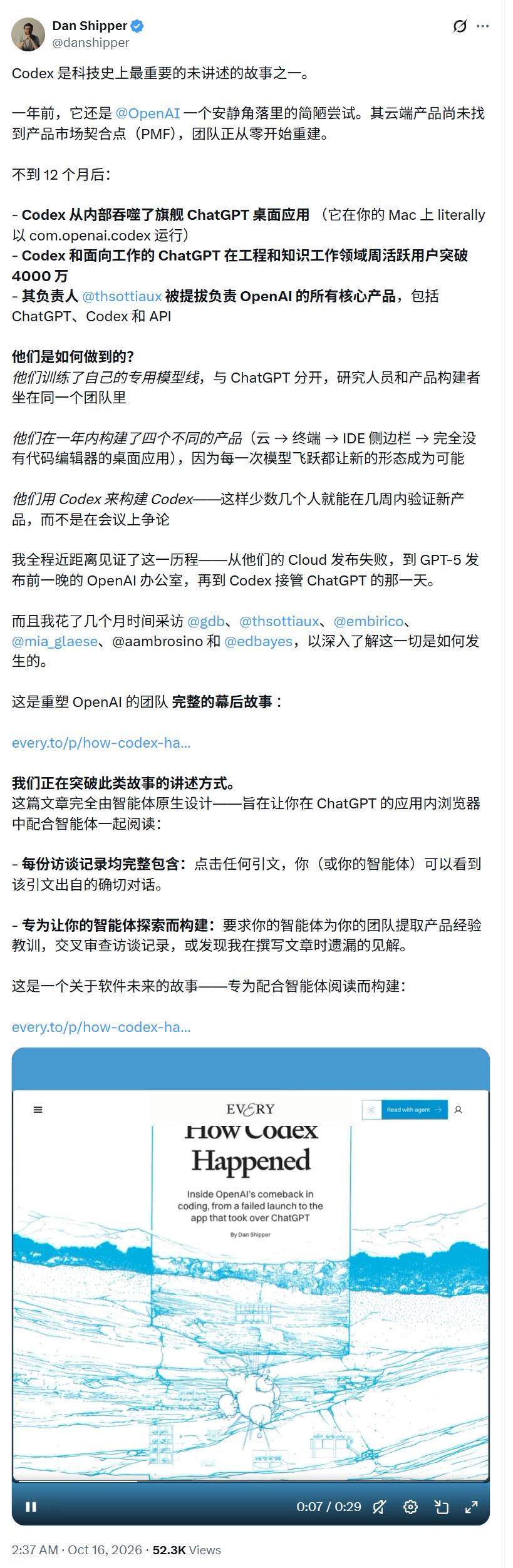
For this article, Shipper spent months interviewing six core participants of Codex:
Greg Brockman, President and Co-founder of OpenAI
Thibault Sottiaux, head of Codex (also known as Tibo)
Alexander Embiricos, former Head of Product for Codex
Mia Glaese, Researcher
Andrew Ambrosino, Designer and Engineer
Ed Bayes, Designer
Shipper himself is also an eyewitness: Every has long obtained test access before the release of new models and published "Vibe Check" evaluations. On the eve of the GPT-5 launch, he was sitting in OpenAI's office.
The form of this report is also very special. Shipper calls it an "agent-native" article: the complete transcripts of the six interviews are all attached with the text, clicking on any quote will jump to the original dialogue, and readers can even have their own agents cross-compare the transcripts, extract product experience, and even dig out insights missed by the author. According to Every, this report itself was completed with the help of Codex for reporting and writing.
There are many thought-provoking details in the article. The current ChatGPT desktop application still reports its own name as com.openai.codex in the Mac system, Codex "swallowed" ChatGPT from the inside. The outside world thought that Codex having an independent model line was a far-sighted decision made by senior management, but Tibo bluntly said that no such decision ever existed at all.
Within a year, the team successively developed four product forms: cloud, terminal, editor sidebar, and finally a desktop application with no code editor at all. To verify whether this application that "prevents people from modifying code manually" works, Embiricos would go around the office every day to ask his colleagues: Did you use it as your primary tool today?
The results are quite astonishing. According to Every's report, Codex had more than 5 million weekly active users in June this year; in July, the Codex desktop application directly became the new version of the ChatGPT desktop application; now Codex and ChatGPT for Work together have more than 40 million weekly active users, Tibo has also been promoted to head of all core products and platforms of OpenAI, overseeing ChatGPT, Codex and APIs.
Below, we sort out this story along Shipper's narrative context.

The Awkward Conversation on the Eve of GPT-5's Release
The story began in the summer of 2025. Every got GPT-5 a month in advance, and was very satisfied with its daily use, but when it was put into Codex to write code, the performance was rather mediocre: it was fast and smart, but always stopped prematurely, as if it dared not cross the allowed boundary, more like a pair programming partner.
At that time, Every had already changed its working method: use Claude Code to hand over the entire task to Opus 4, then walk away, and wait for a complete function or even the entire application to be returned.
So in the conference room of OpenAI's Mission Bay office, Shipper shared these observations with Embiricos: you can let Claude Code run wild without restraint, but GPT-5 seems timid. When he said "we actually barely look at the code anymore", he blushed himself, after all, the person in front of him is working on building an autonomous programming agent.
When he left that night, a thought popped into Shipper's mind: OpenAI might be building the perfect tool for a workflow that is about to die out.
It All Started With "Thinking..."
To understand Codex's comeback, Shipper traced back to the birth of the reasoning model.
Early large language models were like improvisational actors, who could only think and speak word by word. In September 2024, OpenAI launched the o1 preview version, training the "think step by step before answering" capability into the model itself: the same model, if given more time to think, can perform better on difficult problems.
Programming is the biggest beneficiary. Writing code is naturally a closed loop: modify, run, and you know whether it is correct within a few seconds, the model can test and correct itself. Theoretically, as long as there is enough thinking time, the reasoning model can independently complete any programming task.
The name Codex itself has had several "beginnings": the earliest Codex was a model fine-tuned based on GPT-3 in 2021, which supported the first generation of GitHub Copilot. After o1, several teams inside OpenAI re-chased this dream from different directions.
Two Hidden Lines: A Moment of "Feeling AGI" and a "Bootstrapping"
One line comes from Embiricos. He joined OpenAI in 2024 when Multi, the programming collaboration tool he co-founded, was acquired. He tried human-computer collaboration on the ChatGPT desktop application and the Atlas browser successively, but the models at that time were slow and clumsy at reading screens. Until the end of 2024, he saw the reasoning model connected to the terminal, reading files, running commands, and handling errors by itself, which was the first time he truly "felt AGI".
The other line comes from Tibo, the person who now oversees all core products of OpenAI.
Shipper interviewed him in OpenAI's staff canteen. In Shipper's description, Tibo has bright brown hair combed to one side, wears thin-rimmed metal glasses, and looks like an architect from the bridge of his nose upwards; below the nose, he looks exactly like a programmer: with a face full of brown stubble, wearing a dark brown hoodie printed with "Research and Deployment Co", and holding a pepperoni pizza in his hand. His popularity in the team is evident: his colleague Ambrosino once posted a post on social media with only the word "tibo", which got thousands of likes. In China, he even has the title of "God of Reset".

What is more noteworthy than his appearance is his resume. Tibo has spent most of his career building infrastructure for researchers, first at DeepMind, then at OpenAI. The so-called research infrastructure is the set of shared code that AI researchers rely on to run, evaluate, reproduce and deploy experiments.
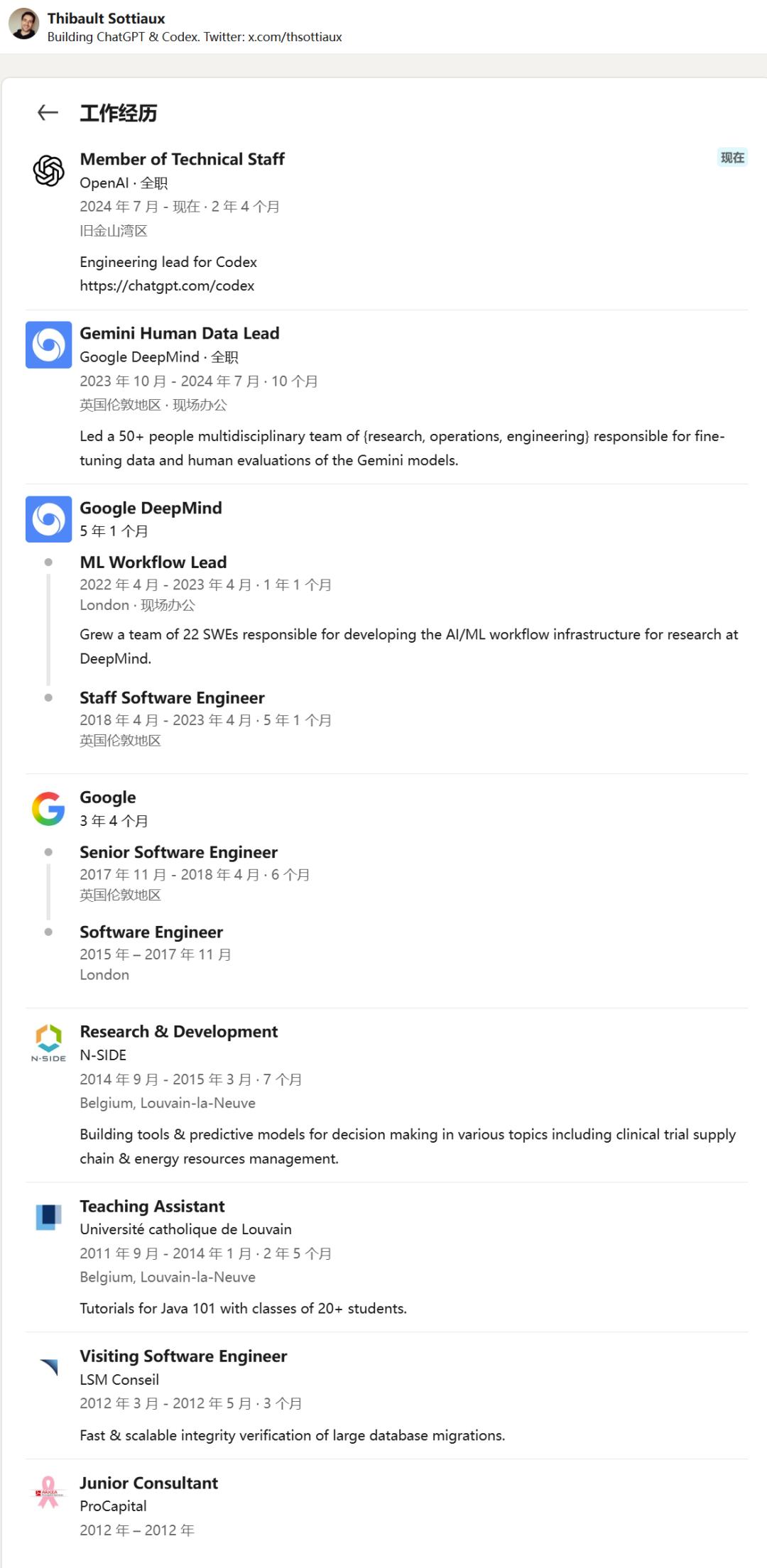
In many people's impression, infrastructure is like the water pipes in the tech world, which is essential but ignored by everyone until there is a leak. As the person who will take charge of Codex later, such an origin seems a bit unexpected. But in the AI field, research infrastructure is precisely where many key advances take place: shortening the time of one experiment allows you to run more experiments and get a better model earlier.
This idea of "building tools for people who build models" also became his starting point to enter the field of programming agents. In December 2024, Tibo started working on programming agents, with the goal of helping OpenAI write infrastructure and conduct research faster. His team trained internal programming agents on OpenAI's single code repository (monorepo), which researchers use every day, with an extremely short feedback loop. As for what specific training techniques were used, he, like his peers in major laboratories, keeps tight-lipped.
When Shipper asked "how did you decide to separate the model line", Tibo calmly replied: there was no such decision, it was just a research exploration at the beginning, aiming to improve their own speed. Researchers use these models to experiment, build stronger models, and then use them to do better experiments. Engineers call this "bootstrapping".
A Set of "Internal Startups" in the Company
At the end of 2024, programming became a company-level goal of OpenAI, and several teams were tackling the same problem. Brockman said that the real pending issue is the "product form": should the agent stay in the terminal, editor, or a dedicated computer of its own in the cloud?
Sam Altman once said that OpenAI is in a sense betting on a series of startups, all of which are inside the company. This parallel exploration seems chaotic and wasteful to some insiders, but Shipper believes that it is almost necessary in the AI field where the frontier is constantly moving: a model that can complete a line of code is suitable for auto-completion, a model that can think for 30 seconds is suitable for sidebar Q&A, and a model that can work for an hour requires a brand new form.
Then the teams began to merge, in Brockman's words, "merged two, then merged two more". The new Codex team brought together product-oriented people like Embiricos, engineering experts like Tibo, and researchers like Glaese. Product managers put forward "how great it would be if the model could do this", and researchers turned it into reality.
The Cloud Version Rushed Out in Seven Weeks and Its Failure
In February 2025, Anthropic released the Claude Code research preview. It works directly in the terminal on your computer, uses your existing files and tools, and can be interrupted at any time, which was quickly accepted by developers.
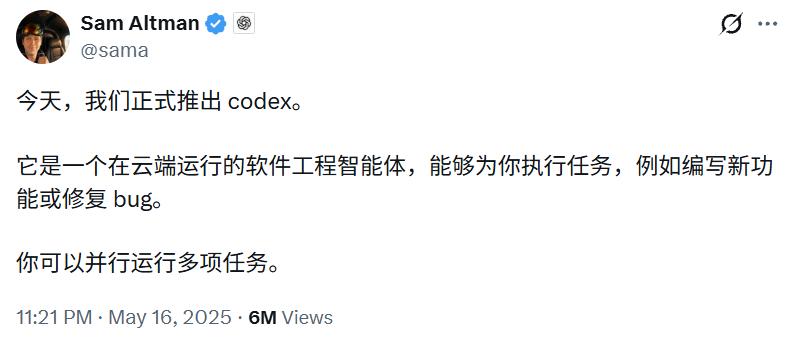
The Codex team bet on the cloud instead, spent about seven weeks building Codex Cloud, and launched it on May 16, 2025: describe the task in ChatGPT, Codex modifies the code and runs tests on an isolated cloud machine, and finally returns a button to submit a PR.
It was a great success inside OpenAI, but well-received by critics while unpopular among the public. Developers had to spend hours rebuilding the software, permissions and configurations on their own computers in the cloud; tasks could not be corrected halfway, and even a follow-up question required starting a new cloud machine. The standardized development environment inside OpenAI concealed how high these requirements were for ordinary users. Embiricos admitted that the model was not smart enough at that time; Glaese reflected that the team, with a future-oriented vision, did not "go where the users are", that is, on their laptops.
In fact, the team did not skip the terminal route. Tibo revealed that they had made a terminal prototype internally, but gave it up a month later, and then fully bet on the cloud. At OpenAI, the ideal form of agents has always been considered to work autonomously for you in the cloud, and keep running even when you close your laptop. Brockman's statement is: the correct form is a cloud AI that has its own laptop.
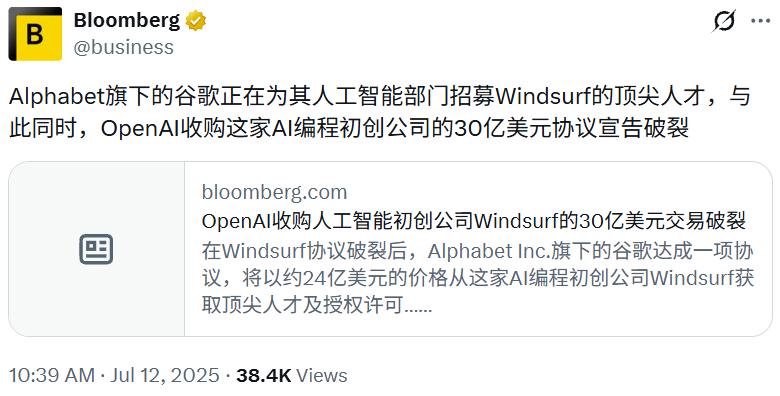
But the reality is that the team's engineering manager jumped to Cursor, and OpenAI's reported $3 billion acquisition of Windsurf also fell through in July. The Codex team got lost in the wilderness for the first time.
Turn Back Like a Reasoning Model
The power of reasoning models lies in their ability to backtrack: when they find that they have taken a wrong path, they re-examine their assumptions and take another path. The next thing the Codex team did was exactly this.
At that time, Codex was described by designer Bayes as OpenAI's "remote corner". If you wanted to be a glamorous designer, you should go to work on ChatGPT. At this point, Tibo took over the team and made a major direction change: shift to local.
He didn't rush to pile features on the CLI, but rewrote the agent itself in Rust, decoupling the underlying mechanisms of reading files and running commands from the terminal interface, so that it can run in editors, desktop applications, the cloud, and even ChatGPT in the future.
On the model side, Michelle Pokrass led the team to make GPT-5 better at real-world programming. Brockman's metaphor is that OpenAI's models can get high scores in programming competitions, but have never seen messy codebases. Pokrass's team sat next to programmers to observe, and turned the places where the model made mistakes into training tasks.
This also explains the "timidity" Shipper felt that night: OpenAI, which had been burned by the cloud version, made a cautious collaborator, which was exactly what most engineers wanted at that time. The VS Code and Cursor extensions launched after the release of GPT-5 saw their usage increase by more than ten times by October. For Embiricos, the rebuilt local agent finally had a model that could drive it: "It's finally time to fight."
A Programming Application That Cannot Write Code
According to common sense, the next step should be to add more features to the CLI and editor extensions. However, the Codex team bet their next largest investment on native desktop applications.
Tibo saw that the tasks the model can complete are getting longer and longer, and people will soon run several agents at the same time and stay with them all day long. It seems absurd to use a pure text window from the 1970s to manage everything. Embiricos saw the workflow that the cloud version failed to achieve: first cooperate closely with the agent, then gradually figure out which tasks can be handed over, just like bringing a new colleague.
After Ambrosino joined, this four-person small team drew inspiration from chat applications instead of VS Code, and made the most risky decision: no built-in code editor, if you want to modify any code, you have to let the agent do it. His reasoning is that once users are allowed to type code, everyone will expect everything that an editor has, such as undo, search, and shortcuts. Codex cannot win by being a bad editor, it can only win by making the agent so easy to use that people no longer miss the editor.
Embarrassingly, they are still using VS Code to develop this VS Code alternative. Embiricos went around the table every day and asked "are you using it as your primary tool", and the answers were all negative at first. Some colleagues complained that they had to write a special prompt just to replace a single sentence; Ambrosino himself admitted that "not being able to edit files" was the decision he doubted the most. When Google